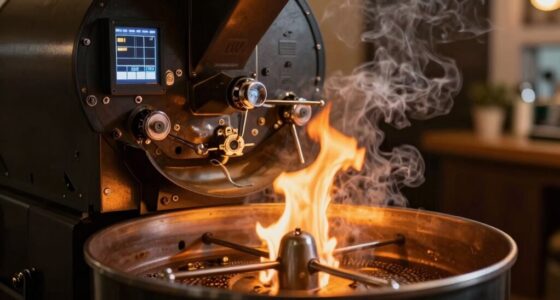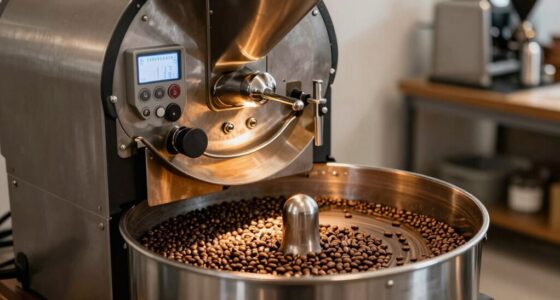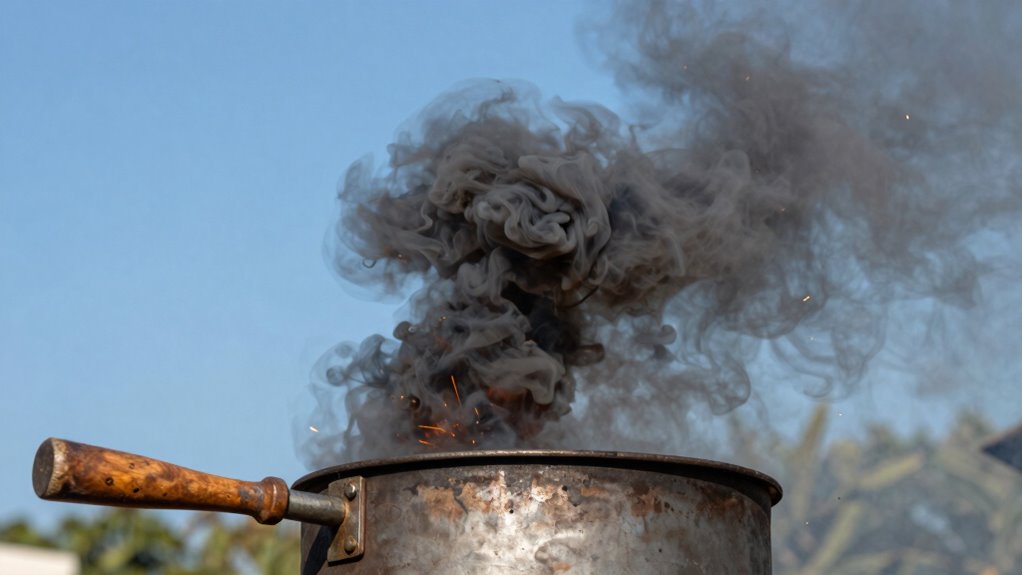

Before choosing a coffee roaster, you need to assess how much smoke your space can safely accommodate. Consider your ventilation, size of the area, and the type of roaster you want—some produce more smoke and require advanced filtering or venting systems. Small or enclosed spaces need better smoke control to prevent odors, off-flavors, and health concerns. Understanding these factors helps you pick the right equipment and guarantee quality, flavor, and safety. More tips await if you keep exploring.

Get kitchen gear delivered free with Prime
- Fast, free delivery on millions of items
- Prime Video, Amazon Music and more included
- Member-only deals all year
Key Takeaways
- Assess your space’s ventilation capacity to ensure it can effectively handle smoke without odor or health issues.
- Determine your roasting frequency and volume to select a machine with appropriate smoke control features.
- Choose roasters with advanced venting, filtration, or extraction systems to maintain flavor integrity and environment quality.
- Consider the size and enclosed nature of your workspace when evaluating smoke management needs.
- Ask manufacturers about smoke production levels at different roast profiles to ensure your setup can manage expected smoke output.
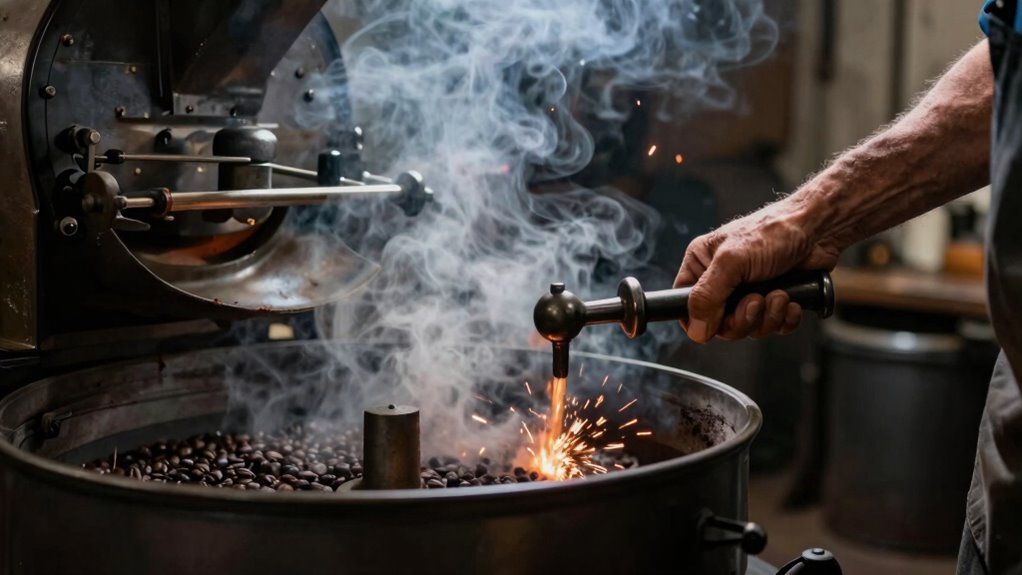
If you’re considering investing in a coffee roaster, it’s crucial to understand how much smoke it produces and whether your space can handle it. Smoke management isn’t just about avoiding neighborhood complaints—it’s about preserving the quality of your coffee flavor. As you explore different roaster options, ask yourself how much smoke you’re comfortable with and how it might impact your environment. Some roasters generate more smoke than others, especially during the initial crack, when the beans release a burst of aromatic smoke. If your space isn’t equipped with proper ventilation, excess smoke can quickly become a problem, affecting both air quality and the taste of your coffee.
Consider your space’s ventilation needs and smoke levels to protect coffee flavor and maintain a healthy environment.
The amount of smoke a roaster produces directly influences the overall coffee flavor. When smoke isn’t properly managed, it can cling to your beans, introducing off-flavors that mask the nuanced notes you want to highlight. Good smoke management means controlling the smoke output during the roasting process, ensuring it doesn’t settle into your workspace or your beans. A roaster with advanced venting systems or built-in filters can help maintain a cleaner environment and preserve the delicate balance of flavors in your coffee. Without this control, smoke can overpower the beans’ natural characteristics, resulting in a less desirable cup.
As you consider different models, think about your space and how much smoke it can realistically handle. If you’re in a small or enclosed area, you’ll need a roaster with efficient smoke extraction or filtration. Otherwise, you risk lingering odors and potential health concerns. For larger setups, a dedicated venting system can make a significant difference, allowing you to manage smoke levels without compromising the quality of your roast. Remember, effective smoke management isn’t just about complying with regulations—it’s about creating the best environment to develop rich, complex coffee flavor without interference from unwanted smoke. Additionally, understanding smoke production can help you choose a machine that aligns with your roasting frequency and setup. Ultimately, the right roaster will balance smoke output with your ability to control it. Ask manufacturers about the smoke production during different roast levels and what features they offer to help manage it. Consider how often you’ll roast and whether you’ll need to adjust your setup over time. If you can’t properly handle the smoke, it might be better to choose a smaller or more sophisticated machine that prioritizes smoke control. In doing so, you’ll safeguard your environment, protect your coffee flavor, and enjoy roasting with confidence.
coffee roaster with smoke filtration
As an affiliate, we earn on qualifying purchases.
As an affiliate, we earn on qualifying purchases.
Frequently Asked Questions
What Types of Smoke Filters Are Available for Home Roasters?
You can choose from several smoke filters for home roasters, including activated carbon filters, HEPA filters, and custom-built duct systems. Activated carbon filters are popular because they absorb odors and smoke effectively, especially when roasting different coffee bean varieties at varying roasting temperatures. HEPA filters trap fine particles, improving air quality. Make sure your filter choice matches your roasting habits to keep your space fresh and smoke-free.
Can Indoor Roasting Be Done Safely Without Smoke Detectors?
Indoor roasting can be done safely if you prioritize home safety and smoke mitigation. You should use proper ventilation, like a quality range hood or exhaust fan, and make certain your smoke detectors are working and placed correctly. Additionally, consider installing a smoke filter or using a roaster with built-in smoke control features. These measures help reduce smoke buildup, keeping your indoor environment safe while you enjoy fresh roasted coffee.
How Do Different Woods or Fuels Affect Smoke Production?
Wood types wildly influence smoke flavors and the smoke’s volume. Hardwoods like oak and hickory produce hearty, dense smoke, creating more robust flavors, but also more fumes. Softer woods, like fruitwoods, yield lighter, sweeter smoke, with less smoke production. Different fuels, such as charcoal or pellets, also impact smoke intensity. So, you’ll want to match your wood or fuel choice to your smoke tolerance, ensuring safety and flavor balance.
What Are the Best Ventilation Options for Smoke Management?
You should prioritize airflow optimization by installing a high-quality exhaust system that effectively vents smoke outdoors. Use adjustable vents to control airflow and reduce excess smoke indoors. Incorporate odor neutralization options, like charcoal filters or air purifiers, to keep your space smelling fresh. Regularly maintain and clean your ventilation system to guarantee it works efficiently, helping you manage smoke levels comfortably while enjoying your roasting experience.
How Does Climate Impact Smoke Dispersion and Odor?
Climate can turn your smoke dispersion into a wild rollercoaster. When it’s windy, air flow speeds up, blowing smoke and odors far and wide, making pollutant levels higher and harder to control. Humidity and temperature also play a role: warm, humid days trap smoke closer, intensifying odors, while cooler, dry weather helps disperse pollutants faster. Understanding these factors helps you manage smoke better, no matter what the weather throws at you.
home coffee roasting venting system
As an affiliate, we earn on qualifying purchases.
As an affiliate, we earn on qualifying purchases.
Conclusion
Before you buy that roaster, honestly ask yourself how much smoke you can handle. The truth is, roasting can produce more than just rich aromas—it can fill your space with thick, persistent smoke. If you’re not prepared for that, you might end up frustrated or even risking your safety. So, be honest about your limits. A perfect roast isn’t worth sacrificing your comfort or peace of mind. Know yourself, and choose wisely.
electric coffee roaster with smoke control
As an affiliate, we earn on qualifying purchases.
As an affiliate, we earn on qualifying purchases.
professional coffee roasting machine
As an affiliate, we earn on qualifying purchases.
As an affiliate, we earn on qualifying purchases.
Halloween Picks
halloween
As an affiliate, we earn on qualifying purchases.