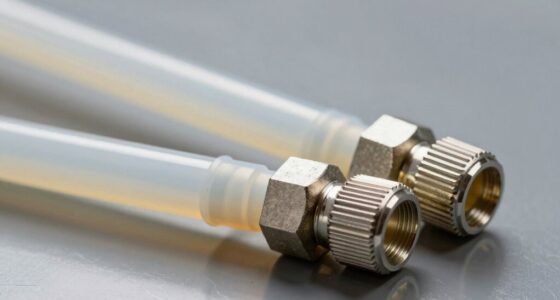
When handling descaling chemicals, always wear gloves, safety goggles, and protective clothing to prevent skin and eye irritation. Work on stable surfaces, pour chemicals carefully, and keep containers tightly closed when not in use. Immediately contain spills with absorbent materials and rinse appliances thoroughly afterward with clean water, making certain no residue remains. Proper ventilation and disposal are also crucial. To guarantee safe practices at every step, discover more essential tips below.

Get kitchen gear delivered free with Prime
- Fast, free delivery on millions of items
- Prime Video, Amazon Music and more included
- Member-only deals all year
Key Takeaways
- Always wear appropriate PPE, including gloves and safety goggles, when handling descaling chemicals.
- Use spill containment measures like trays and absorbent materials to manage accidental spills safely.
- Pour chemicals carefully, avoid mixing unless specified, and contain spills immediately with spill kits.
- Rinse appliances thoroughly with clean water after descaling to remove residual chemicals and prevent buildup.
- Maintain a clean workspace, inspect equipment regularly, and dispose of waste following hazardous waste regulations.

Descaling chemicals are vital for maintaining appliances like coffee makers and boilers, but their effectiveness comes with safety risks if not handled properly. When working with these chemicals, you need to prioritize safety by wearing appropriate protective gear. Gloves are a must to prevent skin contact, as many descaling agents contain acids or other corrosive substances that can cause burns or irritation. Safety goggles are equally important to shield your eyes from splashes that could lead to injury or irritation. Long sleeves and a lab coat or apron add extra protection, reducing the risk of accidental spills on your skin or clothing. Remember, no matter how experienced you are, always treat descaling chemicals with respect and caution.
Always wear gloves and goggles when handling descaling chemicals to ensure safety and prevent injuries.
Spill containment is another essential aspect of handling these chemicals safely. Before you begin, set up a designated work area with a spill tray or absorbent materials nearby. This way, if you accidentally spill the solution, you can quickly contain and clean it up without risking damage to surrounding surfaces or exposing yourself to harmful substances. Keep the container tightly closed when not in use to prevent leaks or accidental releases. Always work on a stable, flat surface to avoid tipping over bottles or containers filled with descaling agents. If you’re working in a confined space, ensure proper ventilation to disperse any fumes and reduce inhalation risks. Using spill containment measures not only protects your workspace but also minimizes cleanup efforts and potential hazards. Regularly inspecting your equipment and containers helps prevent leaks or accidental spills before they occur.
When applying the descaling chemicals, pour them carefully to avoid splashes, and never mix different chemicals unless specified by the manufacturer. If a spill occurs, immediately contain it using absorbent pads or spill kits, and dispose of the waste according to local hazardous waste regulations. After finishing your task, rinse the appliance thoroughly with clean water to remove any residual chemicals. Proper rinsing is essential to prevent chemical buildup, which could damage the appliance or pose health risks during future use. During rinsing, continue to use spill containment methods and wear your protective gear. Never leave residual chemical solutions in the appliance or on surfaces, as they can be corrosive or produce harmful fumes over time. Additionally, be aware that proper ventilation helps disperse fumes and ensures safety during the entire process.
Handling descaling chemicals safely is about being prepared and cautious at every step. Wearing protective gear, setting up spill containment measures, and thoroughly rinsing appliances guarantee you minimize risks and keep your workspace safe. Taking these precautions not only protects you but also extends the lifespan of your appliances by ensuring descaling is done correctly and safely. Remember, safety always comes first when working with chemicals, no matter how routine the task may seem.
descaling chemical safety gloves
As an affiliate, we earn on qualifying purchases.
As an affiliate, we earn on qualifying purchases.
Frequently Asked Questions
Can Descaling Chemicals Be Reused Safely?
You shouldn’t reuse descaling chemicals unless you follow strict reuse guidelines. These chemicals can become contaminated or less effective after use, compromising safety and cleaning quality. Always check manufacturer instructions for chemical disposal and reuse guidelines—if reuse isn’t recommended, dispose of the chemicals properly. Reusing chemicals improperly can pose health risks and damage equipment, so prioritize safety and proper disposal over reuse unless explicitly advised.
What Should I Do if I Ingest Descaling Chemicals?
If you accidentally ingest descaling chemicals, act fast. Don’t induce vomiting; instead, immediately call emergency services or poison control. Stay calm and follow their instructions. Chemical exposure can be dangerous, so it’s essential to seek professional help promptly. While waiting for help, rinse your mouth with water if possible, but avoid swallowing it. Quick action can make all the difference in managing this emergency effectively.
Are There Environmentally Friendly Descaling Alternatives?
Yes, there are eco-friendly options for descaling your appliances. You can use natural descalers like white vinegar or lemon juice, which are effective and safe for the environment. These eco-friendly options break down mineral buildup without harmful chemicals, reducing your ecological footprint. Always follow proper instructions when using natural descalers, and rinse thoroughly to guarantee no residue remains. Switching to natural descalers helps protect your appliances and the planet.
How to Store Descaling Chemicals Safely at Home?
You should store descaling chemicals in a secure, labeled container out of reach of children and pets. Keep them in a cool, dry place away from food and water sources. In case of a chemical spill, clean it immediately with protective gear and ventilate the area. Always follow proper disposal guidelines to prevent environmental harm, ensuring you don’t pour chemicals down the drain and dispose of them at designated facilities.
Can Descaling Chemicals Damage Certain Plumbing Materials?
Descaling chemicals can be like a double-edged sword, slicing through build-up but risking damage to your plumbing. You must consider plumbing material compatibility because some chemicals may cause corrosion risks, especially with metals like copper or aluminum. Always check the label or consult a professional to prevent chemical corrosion risks. Proper handling guarantees your pipes stay healthy while you keep your appliances running smoothly, avoiding costly repairs.
As an affiliate, we earn on qualifying purchases.
Conclusion
Think of descaling chemicals as powerful tools—when handled properly, they keep your appliances running smoothly like a well-oiled machine. Always follow safety tips, wear protective gear, and rinse thoroughly to avoid any mishaps. Remember, rushing or neglecting safety is like sailing into rough waters unprepared. By respecting these chemicals, you steer clear of hazards and ensure your appliances stay in top shape. Handle them with care, and your cleaning journey will be safe and successful.
descaling chemical protective goggles
As an affiliate, we earn on qualifying purchases.
As an affiliate, we earn on qualifying purchases.
kitchen appliance descaling rinse
As an affiliate, we earn on qualifying purchases.
As an affiliate, we earn on qualifying purchases.
Fall Picks
fall essentials
As an affiliate, we earn on qualifying purchases.