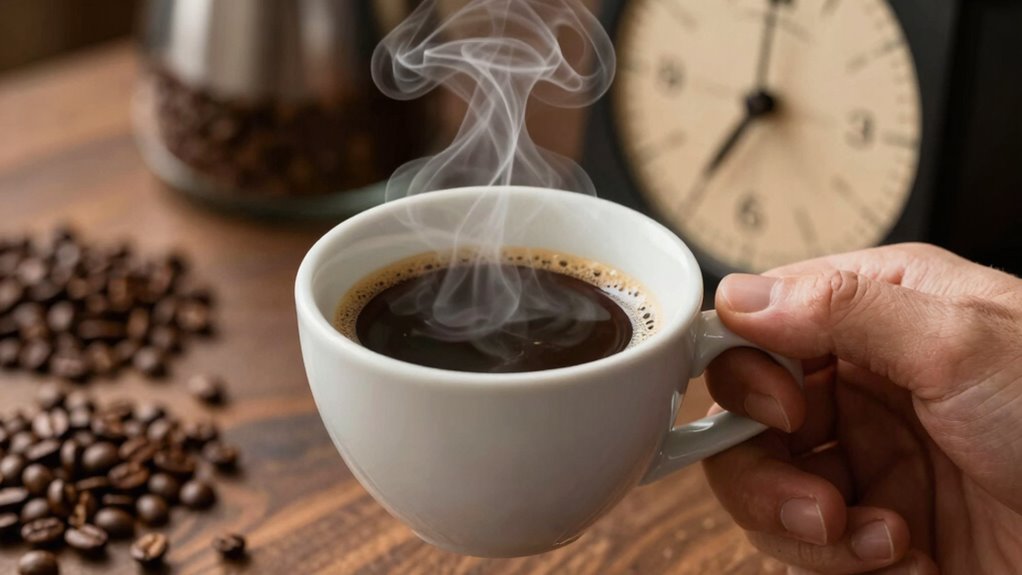

By focusing on the aroma first, you can predict how coffee will taste without even tasting it. Your brain interprets scents—fruity, nutty, floral, or spicy—giving you clues about flavor, acidity, and body. Recognizing these aroma patterns helps you assess quality and authenticity while enhancing enjoyment. Developing your scent skills turns each cup into a sensory adventure. Keep exploring, and you’ll discover how mastering this smell test can transform your coffee experience.

Get kitchen gear delivered free with Prime
- Fast, free delivery on millions of items
- Prime Video, Amazon Music and more included
- Member-only deals all year
Key Takeaways
- Aroma evaluation provides an early prediction of coffee’s flavor profile before tasting.
- Recognizing specific scent notes can indicate whether the coffee will be bright, smooth, or complex.
- The brain interprets aromas to form expectations, influencing overall perception and enjoyment.
- Developing sensory skills in aroma detection enhances quality assessment and authenticity recognition.
- Engaging the sense of smell transforms routine coffee tasting into a mindful, sensory experience.
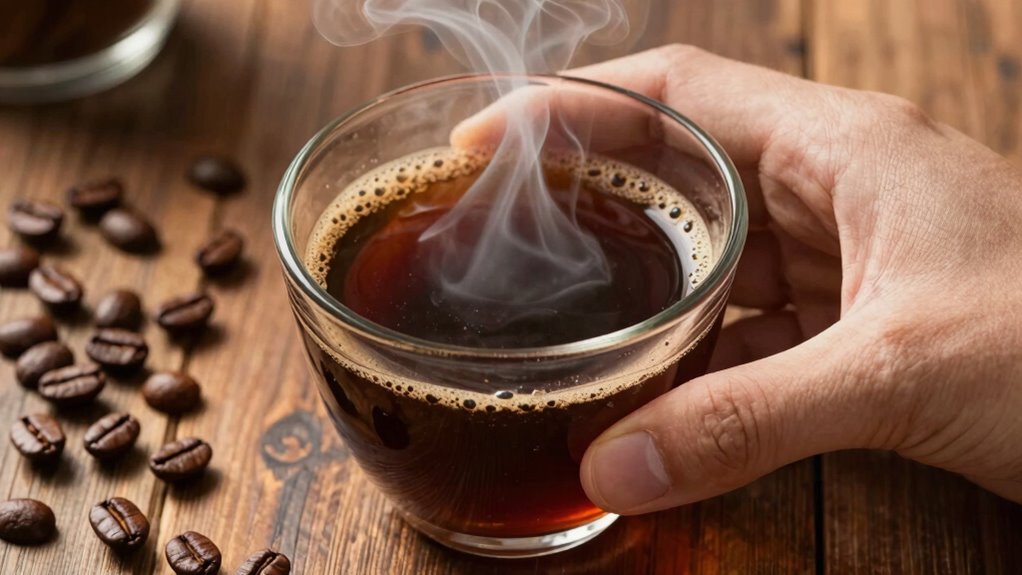
Have you ever wondered why some scents instantly elevate your mood while others go unnoticed? It’s all tied to your sensory perception—the way your brain interprets the aromas you encounter. When it comes to coffee, aroma evaluation plays a vital role in predicting how it will taste. Before you even take that first sip, your nose begins the process of aroma detection, which provides a wealth of information about the coffee’s flavor profile. This initial olfactory experience influences your overall perception and sets expectations for the taste experience to come.
Your sensory perception is incredibly sensitive to subtle differences in aroma compounds. As you bring a cup of coffee closer, your nose picks up a complex mixture of scents—fruity, nutty, floral, spicy, or earthy. These elements combine to create a unique aroma signature. By consciously evaluating these aromas, you can develop a more refined sense of what to expect from the coffee’s flavor. This process, often called aroma evaluation, involves actively analyzing the intensity, complexity, and balance of the scents. Over time, you might notice that certain aromas tend to predict specific flavor notes, giving you a mental shortcut to assess quality even before tasting.
Consciously evaluating coffee aromas sharpens your palate and predicts flavor profiles.
The aroma acts as a preview, guiding your expectations and influencing your perception of the coffee’s taste. For example, a bright, citrusy aroma might hint at a lively, acidic flavor, while a rich, chocolatey scent could suggest a smooth, full-bodied experience. When you practice aroma evaluation, you’re fundamentally training your brain to recognize these patterns and make predictions. This skill allows you to discern quality and authenticity in different coffee beans and roasts, making you a more informed consumer or connoisseur.
Understanding how aroma impacts your sensory perception can also heighten your enjoyment. When you consciously pay attention to the aromas, you engage more deeply with the coffee experience. Instead of rushing through a cup, you savor the nuances and anticipate the flavors, enhancing your overall satisfaction. The smell test becomes a valuable tool—not just for baristas and coffee enthusiasts, but for anyone who wants to appreciate coffee more fully. By honing your ability to evaluate aromas, you gain insight into the complex relationship between scent and flavor, transforming a simple morning routine into a mindful, sensory adventure.
Frequently Asked Questions
Can Aroma Testing Replace Tasting for Coffee Quality?
Aroma testing can’t fully replace tasting for coffee quality, but it considerably enhances your experience. Your scent memory helps you identify key aroma notes, giving you a preview of flavor. Aroma enhancement allows you to detect freshness and complexity early, guiding your tasting. While scent provides valuable clues, tasting reveals the full spectrum of flavors, so combining both methods offers the best way to assess coffee quality thoroughly.
How Does Age Affect Coffee Aroma Perception?
As you age, your ability to perceive coffee aroma declines due to age-related decline and olfactory adaptation. You might notice that older individuals find it harder to distinguish subtle scents, making aroma perception less sharp. To counteract this, take breaks from smelling, stay attentive, and try fresh, well-preserved beans. By understanding these changes, you can better appreciate coffee aroma and enjoy its nuances regardless of age.
Are There Specific Smells That Always Indicate Poor Coffee Quality?
Think of coffee aroma as its story; certain smells are like warning signs. If you detect sour, musty, or rubbery aroma indicators, they often signal poor quality or stale beans. These scents act as red flags, revealing flaws that can ruin your cup. Trust your nose—if unpleasant smells dominate, it’s a good sign to skip that brew and find fresher, more vibrant coffee with inviting aroma indicators.
What Tools Are Best for Capturing and Analyzing Coffee Aroma?
You should use electronic nose sensors for capturing and analyzing coffee aroma. These tools require proper sensor calibration to guarantee accurate readings. With aroma profiling, you can identify distinct scent components that predict taste quality. Regular calibration helps maintain consistency, while advanced sensors detect subtle aroma nuances. Combining these tools allows you to effectively analyze coffee aroma, leading to better quality control and more consistent brewing results.
Can Aroma Testing Predict Flavor Consistency Across Different Roasts?
Aroma testing can give you a good idea of flavor prediction, but it doesn’t guarantee perfect aroma consistency across different roasts. While strong aromas often correlate with similar flavors, variations in roasting and bean origin affect scent profiles. You should use aroma analysis as a guide rather than a foolproof method. Trust your senses and combine aroma testing with tasting to better predict how each roast will deliver its unique flavor.
Conclusion
Remember, you are what you smell. By paying attention to the aroma first, you’re setting the stage for a better coffee experience. Trust your nose; it’s often the best guide to flavor. As the saying goes, “You are what you eat,” but in this case, it’s also what you smell. So take a moment to inhale deeply, and let your senses lead you to the perfect cup. After all, a good aroma is the first step to great taste.
Halloween Picks
halloween
As an affiliate, we earn on qualifying purchases.