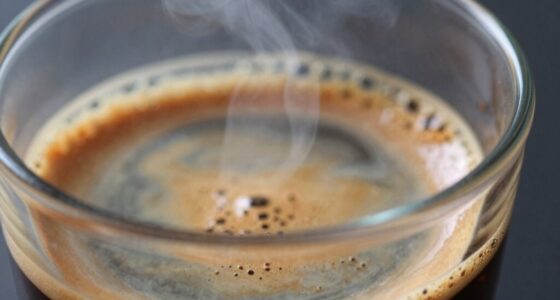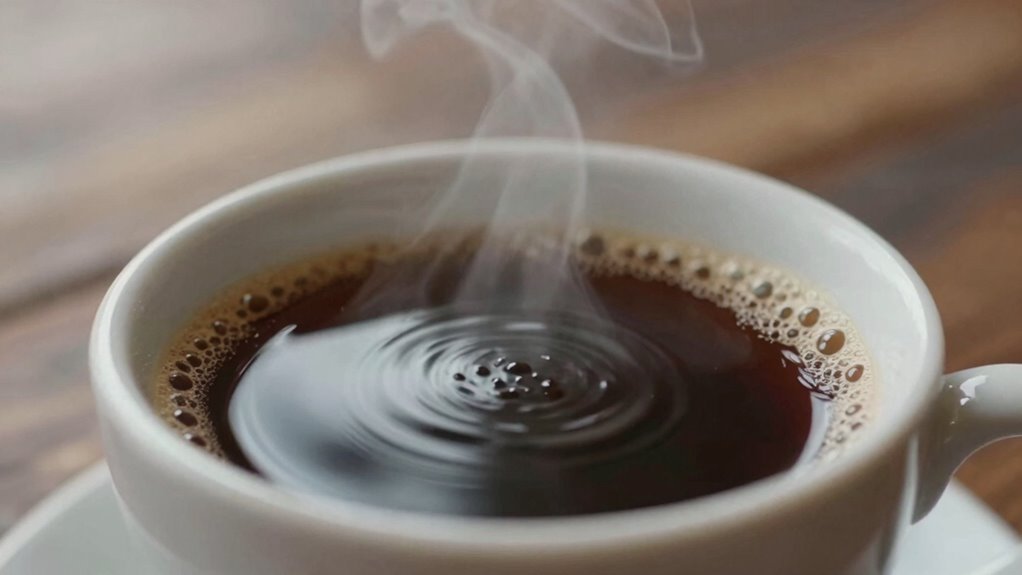

As coffee cools, its flavor and aroma change because temperature affects how volatile aroma compounds and taste receptors behave. Hot coffee releases more intense aromas and masks bitterness, making it taste smoother. As it cools, aromatic compounds become less volatile, and you notice more bitterness and acidity. Subtle fruity and tangy notes also become more apparent. If you want to understand how these chemical and sensory shifts shape your experience, there’s more to discover.
Listen free for 30 days with Audible
Thousands of audiobooks and originals — cancel anytime.
As an affiliate, we earn on qualifying purchases.
Key Takeaways
- Hot coffee releases more aromatic compounds, making flavors more intense; cooling reduces aroma and alters flavor perception.
- As coffee cools, bitterness and acidity become more noticeable, changing overall taste.
- Temperature influences how taste buds perceive sweetness, sourness, and other flavor components.
- Cooler temperatures allow subtle flavors and nuances to become more detectable on the palate.
- Chemical changes in flavor compounds occur with cooling, contributing to the evolving taste profile.
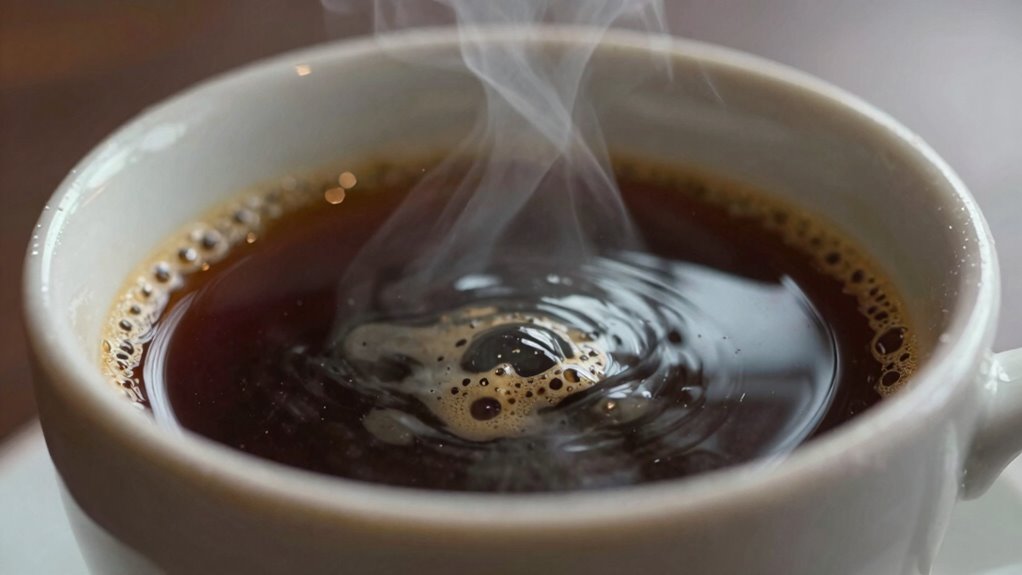
You might notice that your coffee tastes different as it cools, and there’s a scientific reason behind this shift. When you take that first sip, your taste buds respond to the hot liquid, but as the coffee cools, the flavor profile changes. This transformation primarily occurs because of how temperature affects flavor compounds. These compounds are responsible for the aroma, sweetness, bitterness, and overall character of your coffee. As the temperature drops, the behavior of these compounds shifts, altering your perception of the taste.
At higher temperatures, certain volatile aroma compounds become more active. They evaporate more easily, flooding your senses with aromatic notes that are warm and intense. This is why hot coffee often smells richer and tastes more robust. However, as the coffee cools, some of these compounds become less volatile, meaning they don’t evaporate as readily. Consequently, the aroma diminishes, and the flavor profile shifts. You may notice that some sweet or fruity notes fade, while others like bitterness or sourness become more prominent. The temperature effects on flavor compounds cause your perception to change, making the coffee seem different than when it was freshly brewed.
Additionally, temperature influences how your taste buds perceive sweetness and bitterness. Warm liquids tend to mask bitterness slightly, making the coffee seem smoother. As it cools, the bitterness may become more pronounced, revealing flavors that were less noticeable when hot. The same applies to acidity: cooler coffee can highlight subtle tangy or fruity notes that are subdued when hot. This interplay of temperature with flavor compounds means that each sip can offer a different experience, depending on how long you’ve waited. Understanding flavor chemistry helps explain why these changes happen and enhances your appreciation for the complexity of coffee. Moreover, sensory perception can adapt over time, allowing you to notice new flavors as the temperature shifts.
Your palate also adapts to the changing temperature, and your sensory receptors respond differently at various stages. When the coffee is hot, your receptors might be overwhelmed by the heat and strong aroma, overshadowing some of the more delicate flavors. As it cools, your palate can better distinguish these nuances, revealing complexities that weren’t as apparent earlier. This is why some people prefer to let their coffee sit for a moment before drinking — to access a fuller spectrum of flavors influenced by temperature effects.
In the end, understanding how flavor compounds behave as temperature changes helps you appreciate why coffee tastes different as it cools. It’s not just in your head; it’s a real chemical and sensory process working together. So next time you notice your coffee’s flavor evolving, remember that it’s a natural consequence of how temperature influences the behavior of those essential flavor compounds.
As an affiliate, we earn on qualifying purchases.
Frequently Asked Questions
Does the Type of Coffee Bean Affect How It Cools?
Yes, the type of coffee bean affects how it cools, influencing its coffee aroma and flavor profile. Darker roasted beans tend to cool faster, releasing aroma more quickly, while lighter roasts retain heat longer. The bean roasting process alters the bean’s structure, impacting heat dissipation. So, your choice of beans impacts not just taste but also how the coffee cools, shaping your overall coffee experience.
How Does the Container Material Influence Coffee’s Flavor Change?
About 60% of heat loss in coffee happens through the container material. Container chemistry plays a vital role, as different materials like glass, metal, or ceramic affect flavor change. Metal containers, for instance, can impart a metallic taste, while glass and ceramic preserve the coffee’s original flavor better. Material effects influence how quickly coffee cools and how its flavor evolves, so choosing the right container helps maintain ideal taste.
Can Adding Milk or Sugar Alter the Cooling Taste?
Adding milk or sugar can considerably alter your coffee’s cooling taste by providing flavor enhancement and affecting temperature perception. Milk cools the coffee slightly, smoothing out sharp flavors and making it feel less hot, while sugar masks bitterness and adds sweetness, influencing how you perceive the temperature. These additions can make the coffee seem less hot and more palatable as it cools, enhancing your overall drinking experience.
Is There an Ideal Temperature to Enjoy Coffee’s Best Flavor?
For the best flavor, aim for a temperature around 140°F (60°C). You’ll preserve the coffee’s rich, robust flavor while avoiding bitterness from overheating. Temperature impact is essential—you want it hot enough to reveal aroma and taste, but not so hot that it burns your palate. By sipping at this ideal temperature, you enjoy the full depth of flavor without sacrificing freshness. Keep it cozy, cool, and flavorful!
How Does Ambient Humidity Impact Coffee’s Flavor as It Cools?
Ambient humidity effects can markedly influence your coffee’s flavor as it cools. High humidity may cause your coffee to absorb moisture from the air, diluting its rich flavors and masking subtle notes. Conversely, low humidity helps preserve flavor by reducing moisture absorption, keeping your coffee tasting fresh longer. To enjoy ideal flavor preservation, serve your coffee in a controlled environment with moderate humidity levels, ensuring each sip remains flavorful and satisfying.
As an affiliate, we earn on qualifying purchases.
Conclusion
As your coffee cools, its flavors shift like a chameleon changing colors, revealing new layers of taste. You might notice the bitterness fades while the sweetness and acidity come forward, creating a richer, more complex experience. So, next time your brew cools, embrace the transformation—each sip is like a journey through a changing landscape of flavors. Just remember, patience turns a simple drink into a symphony of taste waiting to be explored.
As an affiliate, we earn on qualifying purchases.
As an affiliate, we earn on qualifying purchases.
NFL season / tailgating Picks
team gear
As an affiliate, we earn on qualifying purchases.