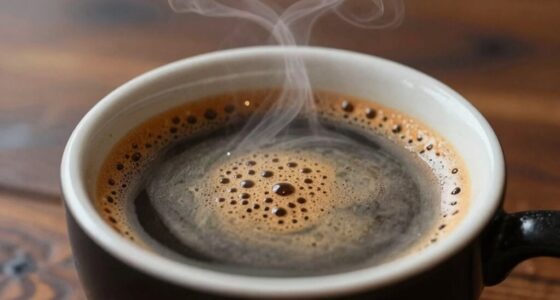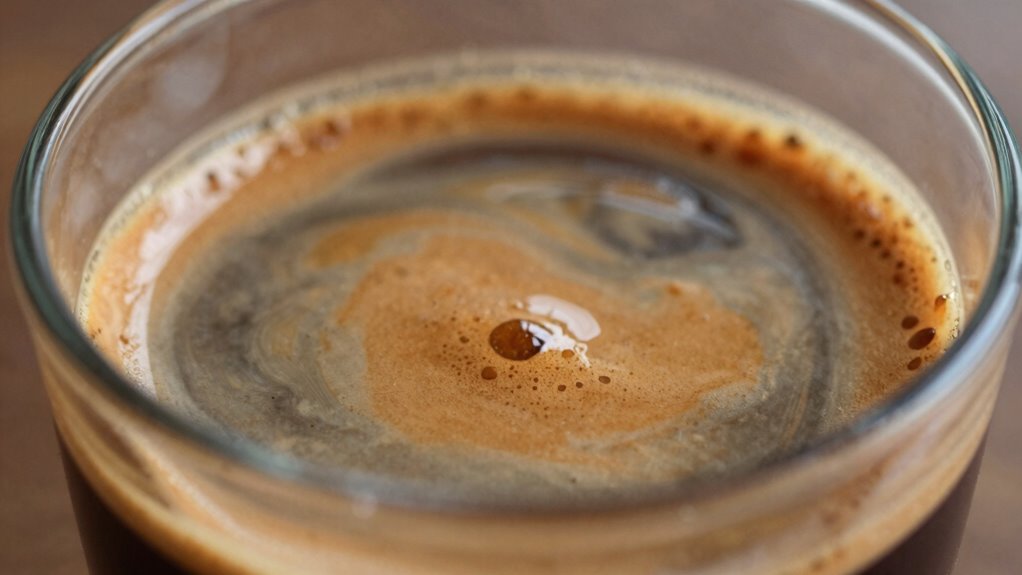

Your espresso’s aftertaste reveals the complexity of its flavor, lingering on your palate as the initial sip fades. It results from various flavor compounds that interact with your taste buds and aromatic receptors, influenced by factors like roast level, brewing method, and temperature. The duration and nature of this lingering sensation can hint at the coffee’s quality and craftsmanship. If you want to uncover more about what your aftertaste tells you, keep exploring these fascinating flavor clues.
Key Takeaways
- Aftertaste is the lingering flavor sensation after sipping, revealing the complexity of your espresso.
- Factors like roast level, brewing method, and chemical compounds influence how long flavors persist.
- Flavor compounds such as phenols and acids interact with taste buds, shaping the aftertaste experience.
- Hotter espresso releases aromatic compounds more effectively, extending the duration of the aftertaste.
- Paying attention to the evolving flavors enhances appreciation of the craftsmanship behind your espresso.
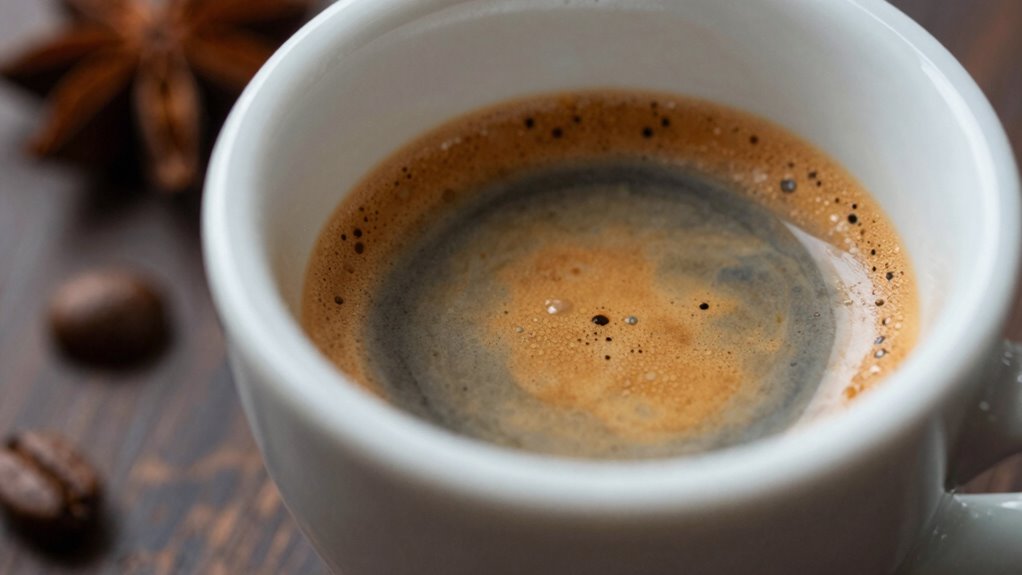
Have you ever noticed how some flavors linger on your palate long after you’ve taken a sip or a bite? That lingering sensation is what we call aftertaste, and it’s a fascinating aspect of sensory perception. When you enjoy your espresso, the flavors don’t just vanish once you swallow; instead, they continue to evolve and remain, sometimes surprisingly, on your tongue and in your mouth. This phenomenon is directly tied to flavor longevity—the duration that specific tastes stay with you after the initial experience. Understanding how your senses perceive these lingering notes can deepen your appreciation of coffee and other flavorful foods. The complexity of flavor compounds involved also plays a crucial role in how long the aftertaste endures. Your sensory perception plays an essential role in how you experience aftertaste. Every sip of espresso activates taste buds and aromatic receptors, which send signals to your brain, creating a complex sensory journey. The initial burst of flavor from the espresso involves a combination of bitter, sweet, sour, and umami notes, but what makes the experience memorable is how some of these notes persist. Factors such as the coffee’s roast level, brewing method, and even your individual taste sensitivity influence how long these flavors stay with you. For example, a dark roast might leave a smoky aftertaste, while a bright, floral coffee might produce a cleaner, shorter-lived finish. Flavor longevity is also influenced by the composition of the coffee itself. The presence of certain compounds, like phenols and acids, can contribute to a more prolonged aftertaste. When you take a sip, these compounds interact with your taste buds and aromatic receptors, creating layers of flavor that unfold over time. Your saliva and the temperature of the coffee also play roles—hotter beverages tend to release aromatic compounds more effectively, prolonging the sensory perception of those flavors. As you continue to savor, your mouth acts as a dynamic environment where these compounds linger, giving you that persistent aftertaste. Recognizing the chemical composition of coffee can help you understand why some flavors last longer than others. In essence, the aftertaste you experience is a reflection of the complexity of flavor longevity and sensory perception. It’s what transforms a simple coffee break into a multi-sensory event, leaving a lasting impression. The more you pay attention to how flavors evolve and persist, the more you can appreciate the craftsmanship behind each espresso shot. Whether it’s a subtle fruity note or a bold smoky finish, your ability to detect and enjoy these lingering flavors enhances your overall coffee experience. So, next time you enjoy a well-prepared espresso, take a moment to notice how long its flavors stay with you—because that’s where the true depth of the coffee lies.

Gerrit Posters Wheel Coffee Taster's Flavor Poster Funny Poster for Café Home Kitchen Bar Room Decor Canvas Wall Art Home Office Decor Party Gifts 16x24inch(40x60cm) Unframe-style
Size : 5 size for choice(1 inch=2.54cm)
As an affiliate, we earn on qualifying purchases.
As an affiliate, we earn on qualifying purchases.
Frequently Asked Questions
How Does Brewing Method Affect Espresso Aftertaste?
Your brewing method impacts espresso aftertaste through factors like brew ratio and grind size. A higher brew ratio can produce a richer, more lingering aftertaste, while a lower ratio results in a cleaner finish. Adjusting grind size also matters; a finer grind extracts more flavors, prolonging the aftertaste, whereas a coarser grind produces a lighter finish. Experimenting with these variables helps you control the complexity and duration of your espresso’s aftertaste.
Can Personal Taste Influence Perception of Espresso Aftertaste?
Your personal taste acts like a prism, shaping how you perceive espresso aftertaste. Sensory perception varies from person to person, so individual preferences color your experience. What’s rich and bold to one might be a fleeting ghost to another. Embrace these differences, because your unique palate turns each sip into a personal journey. Ultimately, your taste buds are the artist, painting the lasting impression your espresso leaves behind.
What’s the Difference Between Aftertaste and Finish in Coffee?
The difference between aftertaste and finish in coffee lies in flavor longevity and aroma persistence. Aftertaste refers to the lingering flavors and aroma you experience after swallowing, often revealing complexity. Finish describes the overall sensation and how long the flavor persists in your mouth. You’ll notice that a good espresso has a balanced finish with aroma persistence, making each sip memorable and inviting you to savor the remaining notes.
How Do Different Beans Impact the Espresso’s Aftertaste?
Different beans markedly impact your espresso’s aftertaste through their origin and roast level. Beans from regions like Ethiopia or Sumatra bring unique flavor notes that linger differently on your palate. A light roast preserves fruity or floral nuances, resulting in a brighter, more complex aftertaste, while darker roasts tend to produce a richer, smoky finish. Experimenting with bean origin and roast level helps you find the aftertaste that best suits your taste.
Does Storage of Coffee Beans Affect the Aftertaste?
Imagine opening your jar of coffee and releasing a burst of rich aroma—that’s coffee freshness. Yes, storage techniques directly affect your espresso’s aftertaste; poor storage lets air, moisture, and light seep in, dulling flavors and creating a stale finish. To preserve that vibrant, lively aftertaste, keep beans in airtight containers, away from heat and light. Proper storage maintains coffee freshness, ensuring every sip leaves a delightful, lingering aftertaste.

Coffee Packets Sampler – Variety Pack Ground Coffee Gift Set, Medium Dark & Flavored Roast, Low Acid Gourmet Pre-Measured Coffee Packs for 12-Cup Brewers, 2oz Individual Bags, Bulk Assortment
ORIGINAL GOURMET VARIETY PACK – This coffee sampler includes 12 gourmet 2oz coffee packets: 2 Breakfast Blend, 2…
As an affiliate, we earn on qualifying purchases.
As an affiliate, we earn on qualifying purchases.
Conclusion
So, next time you enjoy that perfect espresso, pay attention to its aftertaste. It might linger or fade quickly, but it reveals a lot about the beans and brewing method. Don’t dismiss it as just a “bad” flavor—consider it a clue to refine your technique or choose better beans. Remember, savoring the aftertaste isn’t about perfection; it’s about appreciating the journey of each sip and discovering what makes your coffee uniquely yours.

ExploNova Cocktail Bubble Gun Kit Accessories, 5 Flavour: Apple, Citrus, Coffee, Strawberry and Blueberry Mix, Apple Wood – Works with Bartender Smoke Bubble Gun(Aromatic Oils)
Don't FIT FOR AROMA BLASTER 2
As an affiliate, we earn on qualifying purchases.
As an affiliate, we earn on qualifying purchases.

watchget Professional Coffee Cupping Spoon, Round Stainless Steel Spoon for Coffee Tasting,Coffee Scoop for Roasters and Cuppers, Black, Set of 2
☕ PROFESSIONAL COFFEE CUPPING SPOON – It has good curvature and depth to permit effecting skimming from the…
As an affiliate, we earn on qualifying purchases.
As an affiliate, we earn on qualifying purchases.