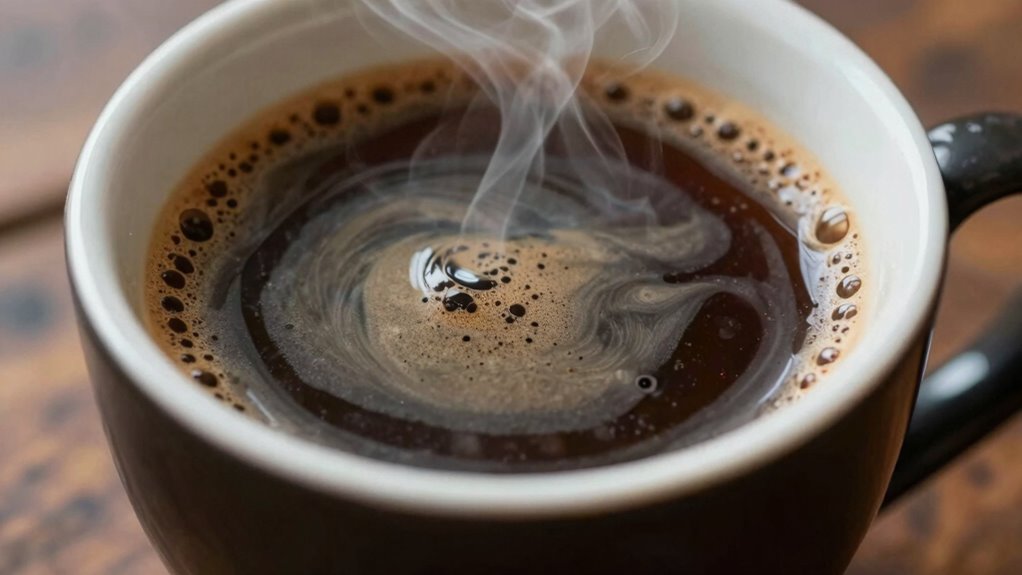

In coffee, your experience of bitterness can be sharp, cocoa, or ashy. Sharp bitterness often comes from over-extraction, making your brew taste harsh or sour. Cocoa bitterness offers a smooth, chocolate-like flavor rooted in darker roasts and proper brewing. Ashy notes might signal over-extraction or specific beans, adding a smoky or burnt taste. Understanding these types helps you tweak your brewing process for a balanced cup, and exploring more about each will reveal how to perfect your favorite brew.
Key Takeaways
- Sharp bitterness is linked to over-extraction, producing harsh, biting flavors from undesirable compounds.
- Cocoa bitterness offers a smooth, chocolate-like profile, often found in dark roasted beans.
- Ashy bitterness results from over-extraction or specific beans and roasts, creating a burnt or ashy taste.
- Light roasts may emphasize tangy or sharp notes, perceived as a form of bitterness.
- Proper brewing adjustments can minimize unpleasant bitterness and highlight desired flavor characteristics.
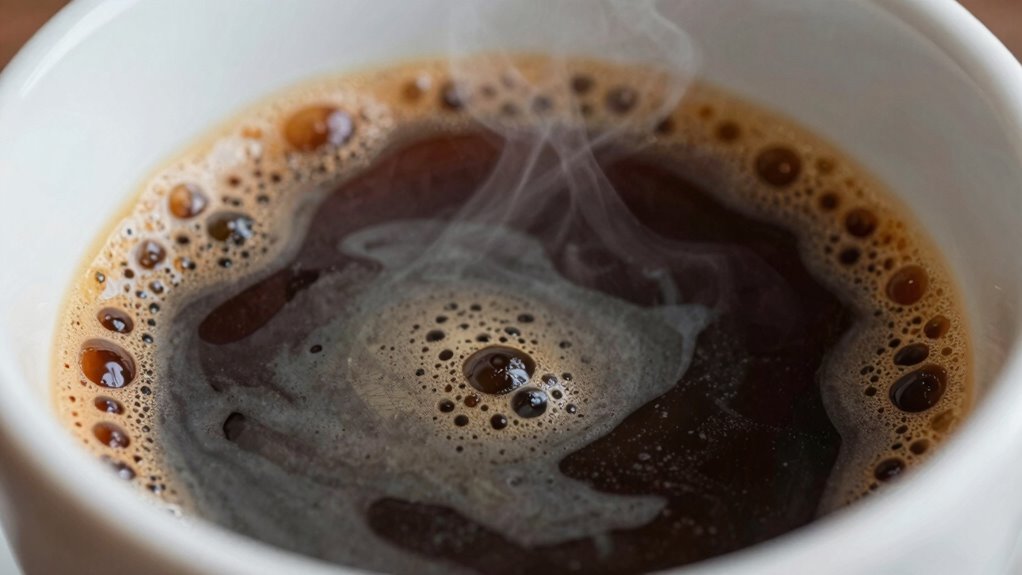
Have you ever wondered why some coffees taste bitter while others are smooth and balanced? The answer often comes down to a mix of factors, including your brewing techniques and how well you manage flavor balance during the process. Bitterness isn’t just a single taste; it can take on different characteristics, like sharp, cocoa, or ashy, depending on how you brew and what beans you choose. Understanding these nuances helps you craft a cup that suits your preference, whether you like it bold and intense or mellow and sweet.
Understanding how brewing techniques influence coffee bitterness helps you craft a balanced, personalized cup.
The type of bitterness you experience is closely tied to your brewing techniques. For example, over-extraction—when you brew coffee too long or use too fine a grind—can lead to a sharp, almost biting bitterness. This happens because you’re pulling out undesirable compounds from the beans, upsetting the flavor balance. Conversely, under-extraction leaves you with a weak, sour taste, so finding the right brewing time and temperature is vital. Techniques like pour-over or AeroPress give you more control over these variables, allowing you to fine-tune your process and avoid harsh bitterness. Properly balancing these elements ensures your coffee retains its rich, nuanced flavors without veering into unpleasant territory.
Additionally, the roast level and bean origin play roles in the type of bitterness you encounter. Dark roasts tend to have more of that cocoa or chocolate-like bitterness, which many find comforting and smooth. Light roasts, on the other hand, can sometimes reveal sharper, more tangy notes, which might be perceived as a kind of bitterness if not brewed carefully. To manage these differences, adjusting your brewing parameters becomes essential. For instance, using a slightly coarser grind or reducing brew time can mellow out a sharp, overly bitter cup, helping you restore that desired flavor balance.
Your choice of brewing method also influences bitterness. French press, with its longer steep time, can extract more compounds, sometimes resulting in a more intense, sometimes ashy, bitterness if not monitored. In contrast, espresso pulls tend to produce a concentrated shot with a richer, cocoa-like bitterness when brewed correctly. Learning how each technique affects flavor balance allows you to control the depth and type of bitterness present in your coffee. By experimenting with different methods and paying attention to how each impacts taste, you gain a better understanding of how to craft a cup that’s just right for you.
In the end, understanding the different types of bitterness in coffee and how brewing techniques influence flavor balance empowers you to refine your brewing process. Whether you prefer a smooth, cocoa-infused cup or a sharper, more vibrant brew, adjusting your methods will help you enjoy coffee that’s perfectly aligned with your taste.
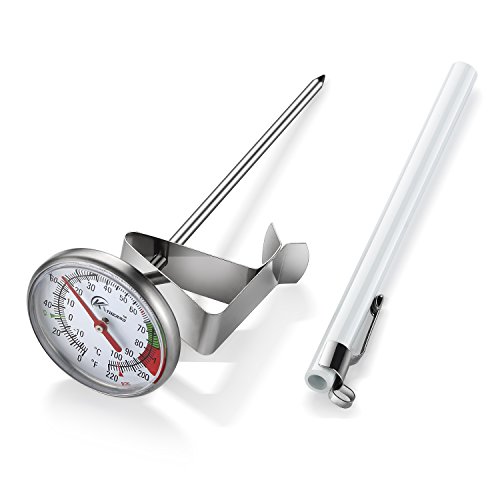
KT THERMO Instand Read 2-Inch Dial Thermometer,Best for The Coffee Drinks,Chocolate Milk Foam
DESIGN:Multi-stage design of the fixed clip, adjust the thermometer read the location of the disk surface to facilitate…
As an affiliate, we earn on qualifying purchases.
As an affiliate, we earn on qualifying purchases.
Frequently Asked Questions
How Does Water Temperature Affect Coffee Bitterness?
Water temperature considerably impacts your coffee’s bitterness, affecting the overall flavor balance. When you brew with too hot water, it extracts more bitter compounds, making your coffee sharp or ashy. Conversely, lower temperatures may cause under-extraction, resulting in a flat taste. By practicing brewing temperature control, you can optimize flavor and minimize undesirable bitterness. Adjusting water temperature helps you tailor your brew for a smoother, more balanced coffee experience.
Can Brewing Time Influence Specific Bitterness Profiles?
Yes, brewing time influences specific bitterness profiles. Longer brew times typically increase brew strength, which can enhance sharp or ashy bitterness, especially in methods like French press or drip brewing. Shorter brewing times may highlight cocoa or smoother flavors. Adjusting your brewing duration allows you to control the bitterness profile, tailoring each cup to your preference and selecting the right brewing method to achieve your desired balance.
Do Coffee Roast Levels Impact Bitterness Types?
Yes, coffee roast levels impact bitterness types and overall flavor complexity. Light roasts tend to emphasize bright, sharp bitterness, highlighting acidity and fruity notes. Medium roasts offer a balanced bitterness with cocoa hints, while dark roasts often produce ashy, smoky bitterness. Your brewing method also influences these profiles by extracting different compounds, making the roast level a key factor in shaping your coffee’s unique bitterness and flavor nuances.
How Does Grind Size Alter Perceived Bitterness?
A stitch in time saves nine, and in coffee, grind size notably influences bitterness perception. When you use a finer grind, the increased surface area releases more bitter compounds quickly, making the coffee taste sharper or more intense. Conversely, coarser grinds slow extraction, reducing bitterness and providing a smoother flavor. Understanding grind size effects helps you tailor your brew to balance or highlight specific bitterness qualities.
Are There Specific Beans Linked to Each Bitterness Type?
Yes, certain origin bean varieties are linked to specific bitterness profiles. For example, beans from Central America often have a crisp, sharp bitterness, while African beans tend to be more vibrant and sometimes ashy. South American beans usually exhibit a smooth, cocoa-like bitterness. By exploring different origin bean varieties, you can better understand and select beans that match your preferred bitterness profile, enhancing your coffee experience.

SuperCook Pour Over Coffee Kit, Coffee Maker Set, All in One Hand Drip Coffee Set, Coffee Grinder Manual Set, Ideal for Anniversary Birthday Gift
🌟 ALL-IN-1 SET: This set comes with 1pc 32oz gooseneck kettle, 1pc stainless steel coffee filter, 1pc 14oz…
As an affiliate, we earn on qualifying purchases.
As an affiliate, we earn on qualifying purchases.
Conclusion
Think of your coffee’s bitterness as a flavor map guiding your taste buds. Sharp bitterness is like a sudden gust of wind, waking you up with a zing. Cocoa offers a cozy, comforting breeze, while ashy notes feel like a smoky shadow lingering. By understanding these types, you become the captain of your coffee voyage, steering toward the flavors you love most. Embrace the journey, and let each sip tell its own delicious story.

Veken French Press Coffee Maker 34oz, No Plastic Touching Cafe,Thickened Glass Stainless Steel Brewer, Cold Brew Cafetera Tea pot for Kitchen Travel Camping, Gifts, Decor, Bar Accessories, Dark Pewter
No Plastic Touching Food: Made with 304 stainless steel and food-grade silicone, our French press keeps all brewing…
As an affiliate, we earn on qualifying purchases.
As an affiliate, we earn on qualifying purchases.

AeroPress Original Coffee Press – All-in-One French Press, Pour-Over & Espresso Style Manual Brewer, 2 Min Brew for Less Bitterness, More Flavor, Small Portable Coffee Maker, Travel & Camping
The Brewer That Started It All – AeroPress Original was the first single cup coffee maker to combine…
As an affiliate, we earn on qualifying purchases.
As an affiliate, we earn on qualifying purchases.