

Keeping a coffee journal helps you recognize subtle flavors and aromas by consistently noting your experiences. As you record details like fruity, nutty, or floral notes, your palate becomes more refined and discerning over time. It also boosts your sensory awareness, making you more mindful during each sip. This practice builds a personalized profile that guides your choices and deepens your understanding of coffee origins and flavors. Stick with it, and you’ll uncover even more about what makes each cup special.

Get kitchen gear delivered free with Prime
- Fast, free delivery on millions of items
- Prime Video, Amazon Music and more included
- Member-only deals all year
Key Takeaways
- Recording flavors and aromas helps identify subtle differences, refining your overall palate sensitivity.
- Regular documentation enhances sensory awareness and improves ability to distinguish nuanced coffee characteristics.
- Journaling fosters mindfulness, encouraging thoughtful tasting and deeper appreciation of each coffee experience.
- Tracking preferences builds a personalized profile, guiding better future choices and expanding flavor recognition.
- Connecting environmental factors with coffee notes broadens understanding and appreciation of diverse flavor profiles.
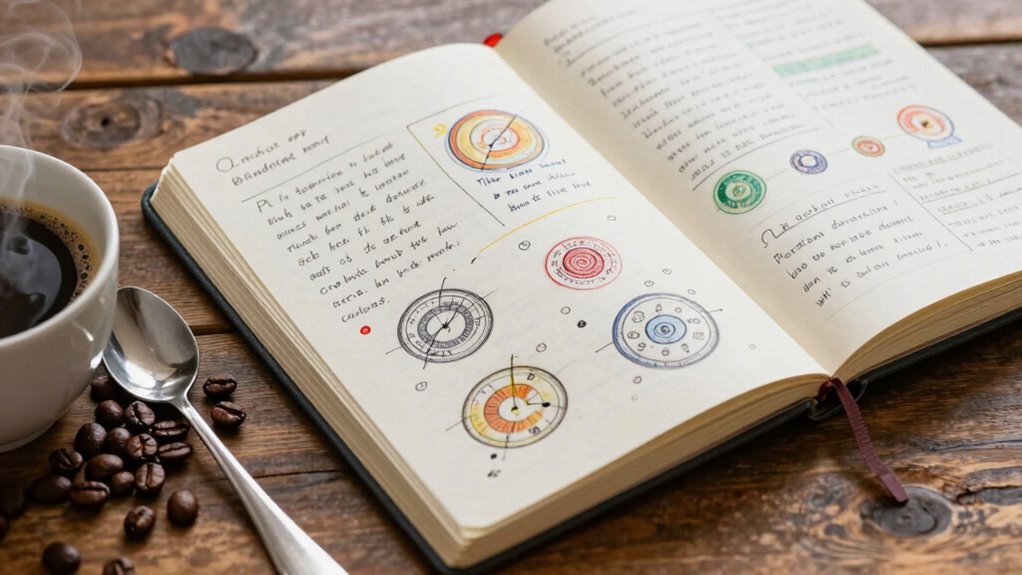
Have you ever wondered how keeping a coffee journal can enhance your daily routine? It’s more than just jotting down your favorite brews; it’s about sharpening your palate and deepening your appreciation for each cup. When you record details consistently, you start to notice subtle differences in flavor profiles and aroma documentation that might otherwise go unnoticed. Over time, this practice helps you develop a more refined taste, allowing you to distinguish between various beans, brewing methods, and roast levels with greater confidence.
Flavor profiling is at the heart of a good coffee journal. As you taste each brew, you can describe the specific flavors you detect—such as fruity, nutty, floral, or chocolatey notes. By making a habit of noting these details, you begin to recognize patterns and preferences. This process trains your palate to pick up on nuances that might have seemed trivial before. For example, you might realize that you prefer light roasts with bright acidity or darker roasts with richer, caramel undertones. Your journal becomes a personalized map, guiding you toward coffees that truly excite your senses.
Tracking flavor notes sharpens your palate and reveals your unique coffee preferences over time.
Aroma documentation complements flavor profiling by helping you capture the full sensory experience. The aroma of your coffee offers clues about its origin, roast level, and processing method. When you write down what you smell—be it hints of berries, spices, or toasted grains—you deepen your understanding of how different beans and brewing techniques influence the overall experience. Over time, this aroma documentation sharpens your olfactory senses, enabling you to identify specific scent components more accurately. This heightened awareness enhances your ability to select coffees and brewing methods that align perfectly with your taste preferences.
Keeping a coffee journal also fosters mindfulness in your daily routine. Instead of rushing through your morning cup, you become more present, savoring each sip and its accompanying aroma. This intentional approach not only improves your tasting skills but also transforms coffee drinking into a more meaningful ritual. As you continue to record your impressions, your ability to articulate and appreciate the complexities of coffee improves considerably. Ultimately, a dedicated coffee journal helps you become a more discerning drinker, enriching every cup with greater flavor understanding and sensory awareness.
Additionally, understanding the importance of biodiversity in coffee cultivation can deepen your appreciation for the unique flavors and qualities of different beans, further enhancing your tasting experience. Recognizing the diverse plant varieties involved in coffee production allows you to explore a broader spectrum of flavors and qualities, enriching your overall coffee journey. This knowledge can also help you appreciate how environmental factors influence the flavor profiles of various coffees, making your tasting notes even more insightful. Furthermore, being aware of environmental factors can guide you in choosing coffees that support sustainable and environmentally friendly practices.
coffee tasting journal flavor notes aroma tracking
As an affiliate, we earn on qualifying purchases.
As an affiliate, we earn on qualifying purchases.
Frequently Asked Questions
How Often Should I Update My Coffee Journal?
You should update your coffee journal after every new brew to improve your palate. Regular entries help you track coffee flavor profiles, brewing methods, and personal preferences. Keep your journal organized by categorizing notes on beans, roast levels, and tasting notes. This consistency sharpens your palate, making you more aware of subtle flavor differences and enhancing your overall coffee experience. Frequent updates guarantee your journal remains a useful, insightful tool.
Can a Coffee Journal Improve My Brewing Skills?
A coffee journal is like a map guiding your brewing journey, and yes, it can improve your skills. By tracking flavor profiling and aroma analysis, you start recognizing what makes each cup unique. You’ll learn how different variables influence taste and aroma, sharpening your palate. Over time, this detailed record helps you refine your technique, making every brew more consistent and satisfying—transforming you into a true coffee connoisseur.
What Are the Best Tools for Starting a Coffee Journal?
To start a coffee journal, you need a good notebook or digital app to track your brews, noting coffee aroma and brewing details. Include sections for grind size, water temperature, and brewing time to guarantee consistency. Use a pen or digital tool that’s easy to update, so you can compare how different variables affect flavor. This helps refine your skills and enhance your palate with each brew.
How Detailed Should My Coffee Tasting Notes Be?
You should keep your coffee tasting notes just detailed enough to capture your sensory vocabulary without overwhelming yourself. Focus on describing flavors, aromas, and textures clearly, while maintaining organized notes for easy reference. Use evocative language to bring your experience to life, but don’t worry about perfection. The goal is to build your palate gradually, so stay consistent, and over time, your notes will become richer and more insightful.
Is a Coffee Journal Useful for Professional Baristas?
Yes, a coffee journal is incredibly useful for professional baristas. It helps you track coffee flavor profiles, noting subtle nuances to enhance your expertise. You can also document brewing consistency, ensuring each cup meets your standards and customer expectations. By maintaining detailed notes, you refine your skills, improve quality control, and develop a deeper understanding of different beans and brewing techniques, ultimately elevating your craft and customer satisfaction.
coffee cupping notebook with tasting wheel
As an affiliate, we earn on qualifying purchases.
As an affiliate, we earn on qualifying purchases.
Conclusion
Keeping a coffee journal is like tending a garden—you nurture your palate with each sip, watching your taste buds blossom. As you track your notes and preferences, you’ll discover nuances and flavors that once went unnoticed. Over time, your palate becomes a finely tuned instrument, capable of savoring every subtle note. Embrace this journey, and watch your appreciation for coffee grow richer, deeper, and more vibrant—transforming each cup into a masterpiece you’ve crafted with your own hands.
coffee flavor wheel poster tasting guide
As an affiliate, we earn on qualifying purchases.
As an affiliate, we earn on qualifying purchases.
coffee cupping kit aroma scent training
As an affiliate, we earn on qualifying purchases.
As an affiliate, we earn on qualifying purchases.
Halloween Picks
halloween
As an affiliate, we earn on qualifying purchases.