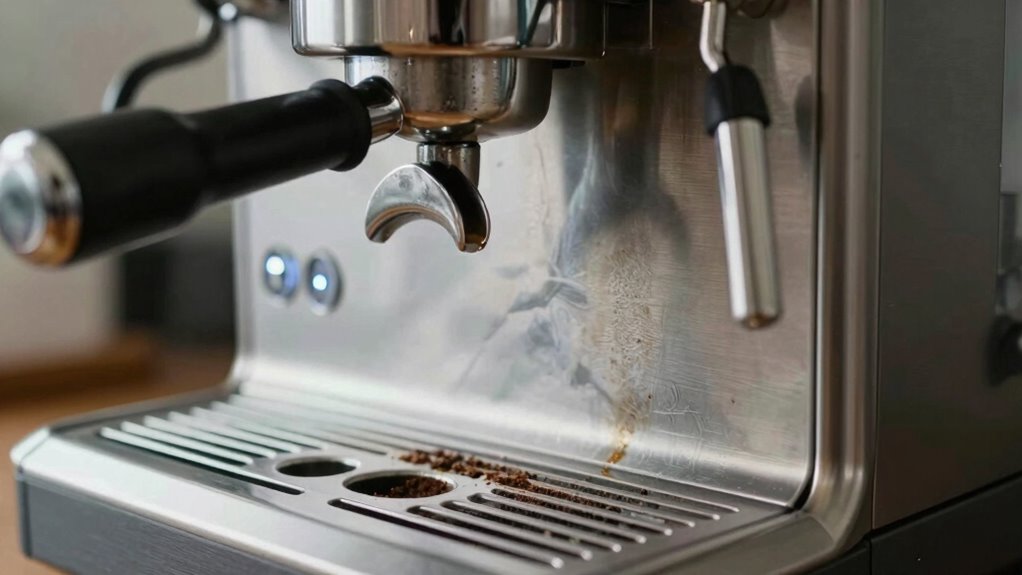
If your espresso machine suddenly sounds wrong, it could be due to mineral deposits buildup, loose parts, or worn-out components like gaskets or bearings. Sometimes, jammed mechanisms or a failing pump cause strange noises. Using sound clues, such as grinding, clicking, or banging, helps identify issues early. Regular checks and maintenance can prevent these problems. Keep going to discover how to troubleshoot and keep your machine running smoothly for longer.

Get kitchen gear delivered free with Prime
- Fast, free delivery on millions of items
- Prime Video, Amazon Music and more included
- Member-only deals all year
Key Takeaways
- Mineral deposits can cause unusual noises by affecting the machine’s internal components.
- Loose fittings or parts may create rattling or banging sounds during operation.
- Worn-out gaskets, seals, or bearings often produce screeching or grinding noises.
- Jammed mechanisms or debris can lead to clicking or grinding sounds unexpectedly.
- Pump or motor failure under load may result in banging or knocking noises.

Ever wondered why your espresso machine suddenly sounds off? It can be unsettling when your trusted appliance starts making unfamiliar noises, but understanding the root cause is key. Often, the issue comes down to simple problems that can be diagnosed with a bit of sound diagnostics. Your first step should be to contemplate machine maintenance—regular upkeep helps prevent many common issues that lead to strange sounds. If your machine’s noise levels change unexpectedly, it’s a sign that something needs attention, whether it’s a buildup of mineral deposits, loose parts, or worn-out components.
Sound diagnostics is a practical way to identify what’s wrong. Listen carefully to the type of noise your machine is producing. Is it a grinding or screeching sound? That could indicate a worn-out burr grinder or a misaligned part. Clicking noises might mean a loose screw or a jammed mechanism. A banging or knocking sound might suggest a problem with the pump, such as it struggling to generate pressure. By paying close attention to these sounds, you can pinpoint specific issues without needing to dismantle the entire machine right away. Additionally, understanding machine maintenance can help you prevent many of these issues from occurring in the first place. Regularly inspecting and tightening loose fittings can also reduce vibrations that contribute to noise.
If your machine’s sounds persist despite routine maintenance, it might be time to dig deeper. Worn-out gaskets, seals, or bearings are common culprits and often require replacement. Sometimes, the noise indicates a failing pump or motor that’s struggling under load. In these cases, consulting a professional or referring to the manufacturer’s troubleshooting guide can save you time and prevent further damage. Recognizing component wear early can help you avoid costly repairs down the line. Additionally, addressing issues early can prevent potential damage to other machine components, and regularly performing preventative maintenance can extend your espresso machine’s lifespan.
As an affiliate, we earn on qualifying purchases.
Frequently Asked Questions
Can Changing Water Quality Affect My Espresso Machine’s Sound?
Yes, changing water quality can affect your espresso machine’s sound. If you switch from tap to bottled water or vice versa, differences in water mineralization can cause buildup or strange noises. Hard water with high mineral content may lead to blockages or rattling, making your machine sound off. Using filtered or softened water helps maintain smooth operation and reduces noise caused by mineral deposits.
Do Different Espresso Beans Influence Machine Noise?
Yes, different espresso beans can dramatically influence your machine’s noise. Fresh beans create a lively grind, and if your grinder isn’t consistent, it can turn into a roaring beast or a whispering ghost. Stale beans or inconsistent grinding cause the machine to strain, making loud, unsettling noises. So, pay attention to bean freshness and keep your grinder consistent—these small changes can turn your noisy machine into a smooth operator.
How Often Should I Descale My Espresso Machine?
You should descale your espresso machine every three to four months, but it depends on your water hardness. Follow your maintenance schedule and check the descaling frequency recommended by your machine’s manufacturer. If you notice slower water flow or strange noises, it’s time to descale sooner. Regular descaling prevents mineral buildup, ensuring your machine runs smoothly and consistently produces great espresso.
Is a Louder Machine Always a Sign of a Problem?
A louder machine doesn’t always signal a serious snag, but it does signal that sound might be straining your senses. During machine maintenance, noise troubleshooting becomes essential—rattles, roars, or rumbles could reveal loose parts or mineral buildup. You should check for clogs or worn components, but if the noise persists, it’s wise to consult a professional. Keep your machine humming smoothly by addressing odd noises promptly and regularly maintaining it.
Can Ambient Temperature Impact My Espresso Machine’s Sound?
Yes, ambient temperature can impact your espresso machine’s sound. Temperature fluctuations can cause metal parts to expand or contract, leading to unusual noises. Additionally, changes in room temperature affect machine vibrations, making sounds seem louder or different. When the environment is cooler or warmer, your machine might work harder to maintain ideal pressure and temperature, which can alter the usual sound patterns you’re accustomed to.
espresso machine gasket replacement
As an affiliate, we earn on qualifying purchases.
As an affiliate, we earn on qualifying purchases.
Conclusion
If your espresso machine starts making unfamiliar sounds, it’s like a whisper of something amiss—nothing to panic over, but worth paying attention to. Sometimes, a gentle tune-up or a little care can restore its harmony. Think of it as giving your machine a quick refresh, ensuring it continues to serve you perfect espresso without missing a beat. With a little TLC, you’ll keep those mornings smooth and flavorful, soundless in all but the best way.
espresso machine pump repair parts
As an affiliate, we earn on qualifying purchases.
As an affiliate, we earn on qualifying purchases.
espresso machine noise troubleshooting
As an affiliate, we earn on qualifying purchases.
As an affiliate, we earn on qualifying purchases.
Fall Picks
fall essentials
As an affiliate, we earn on qualifying purchases.