
To fix watery espresso without grinding finer, focus on adjusting your dose and tamping pressure. Use enough coffee—around 18-20 grams—and tamp evenly with about 30 pounds of pressure to improve extraction. Guarantee your water temperature stays between 195-205°F, and aim for an extraction time of at least 25-30 seconds. Choosing darker roasts or beans with oil content can also boost flavor. Keep exploring these tips to craft a richer, bolder shot.
Key Takeaways
- Ensure your coffee dose is accurate and tamp evenly at about 30 pounds to promote proper water resistance.
- Use beans suited for espresso, such as dark roast with higher density and oil content, to boost flavor strength.
- Maintain water temperature between 195–205°F and check pressure to facilitate optimal extraction without fine grinding.
- Adjust tamping pressure and tamp level to prevent uneven water flow and improve extraction consistency.
- Consider upgrading your machine’s brewing parameters or using smart technology to optimize extraction for a richer shot.
Why Your Espresso Tastes Weak and How to Fix It

If your espresso tastes weak or watery, the problem often lies in how it’s brewed. One key factor is your grind size; if it’s too coarse, water flows through too quickly, resulting in under-extraction and a thin flavor. Adjust your grind to be slightly finer, ensuring the coffee grounds are evenly compacted. Additionally, pay attention to extraction timing. If your shot pulls too fast, it indicates under-extraction, meaning the water isn’t spending enough time dissolving the coffee’s flavors. Aim for an extraction time of about 25-30 seconds, which helps develop a richer, more balanced taste. Fine-tuning both grind size and extraction timing allows hot water to extract more flavor without simply grinding finer. Incorporating precise extraction control techniques can further improve espresso strength and consistency. This approach enhances espresso strength without sacrificing balance.
How to Adjust Dose and Tamping for a Richer Espresso

Adjusting your dose and tamping pressure can considerably improve the richness of your espresso. Start with dose calibration by measuring your coffee accurately; too little results in weak flavor, too much causes over-extraction. Find the right balance for your machine and beans. Next, refine your tamping technique by applying consistent pressure—about 30 pounds—ensuring even, level tamping. An uneven tamp allows water to flow unevenly, weakening extraction. Use a tamper with a level surface and practice applying steady pressure without tilting. Adjusting both your dose and tamping method helps create ideal resistance for water, leading to better extraction and a richer espresso. Remember, small tweaks can make a big difference in your espresso’s strength and flavor. Proper knife technique can also help ensure your equipment functions optimally, contributing to better results.
Tips to Improve Extraction and Water Temperature

To improve extraction and water temperature, focus on maintaining consistent water flow and heating. Stable water temperature ensures ideal extraction techniques, preventing under- or over-extraction. Use a reliable thermometer to monitor water temperature, aiming for around 195–205°F (90–96°C). Consistent water flow promotes even extraction; check your machine’s pressure and flow rate regularly. Ensuring temperature stability helps optimize flavor and extraction quality. Adjusting these factors helps you achieve a balanced, flavorful shot without relying solely on grind fineness.
Choosing Beans and Roasts to Boost Espresso Strength

Choosing the right beans and roasts plays a vital role in boosting espresso strength and flavor. Your bean selection impacts how much solubles and oils are extracted, directly affecting the body and intensity of your shot. Opt for beans with a higher density and oil content, like dark roasts, which tend to produce a more robust flavor. The roast level influences caffeine content and extraction; darker roasts often yield a fuller-bodied espresso with richer taste, while lighter roasts can be more delicate. Consider using beans specifically labeled for espresso, as they’re often roasted to enhance strength and crema. Balancing bean choice with your desired flavor profile allows you to craft a stronger, more satisfying espresso without simply grinding finer.
Quick Troubleshooting: Common Reasons Your Espresso Lacks Body
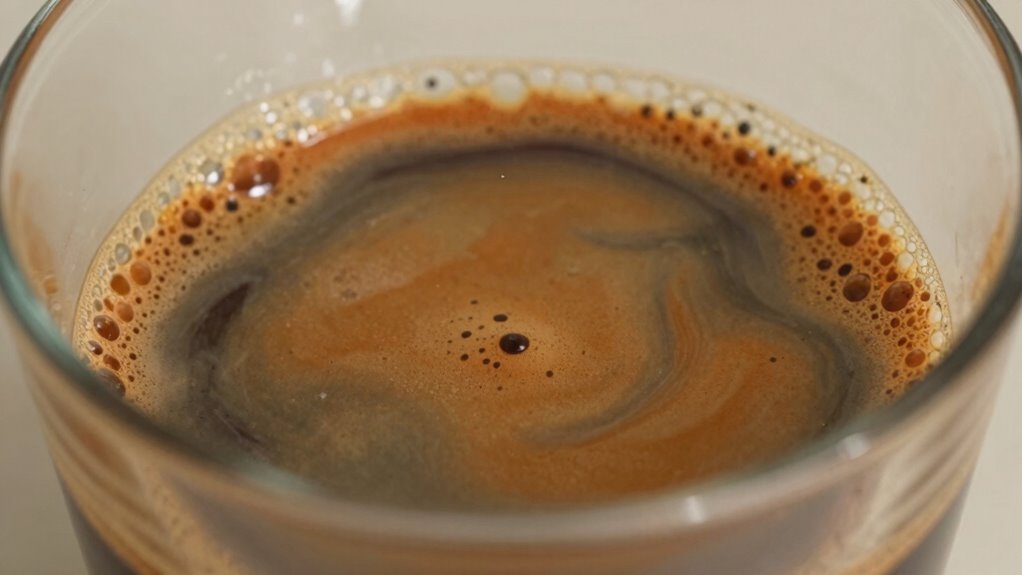
If your espresso lacks body, several common issues could be at play. First, check your grinder calibration—if your grind is too coarse, water flows too quickly, leading to thin extraction. Second, improper milk frothing can dilute espresso, reducing its richness. Third, over-extraction from a grind that’s too fine can cause a bitter taste but still lack body if the brew is overdone. Fourth, ensure your machine’s pressure settings are correct; low pressure results in weak extraction. Proper grinder calibration guarantees consistent particle size, while good milk frothing adds creaminess without thinning. Additionally, using smart brewing technology can help optimize extraction parameters for a richer espresso. Addressing these issues can help improve espresso’s body, making it richer and more satisfying with every shot.
Frequently Asked Questions
Can Water Quality Affect Espresso Strength and Flavor?
Yes, water quality markedly affects espresso strength and flavor. Water impurity and mineral content influence extraction, with hard water potentially dulling flavors and soft water risking over-extraction. You should use filtered water with balanced mineral levels to optimize taste and strength. By controlling mineral content and reducing impurities, you guarantee your espresso maintains its richness and clarity, giving you a consistently better and more flavorful shot every time.
Does Machine Pressure Influence the Espresso’s Body?
Yes, machine pressure markedly influences your espresso’s body. When you maintain pressure consistency, it guarantees brew stability, allowing water to extract flavors evenly. Stable pressure helps develop a richer, fuller body, while fluctuations can lead to a watery or thin texture. You should regularly monitor and calibrate your machine to keep pressure steady, ensuring your espresso has the desired strength and body with every shot.
How Do Grind Size and Extraction Time Interact?
You control grind size and extraction time by adjusting your tamping consistency and maintaining a steady brew temperature. A finer grind increases resistance, prolonging extraction, while a coarser grind speeds it up. Consistent tamping ensures even extraction, preventing watery or overly strong espresso. Keep your brew temperature stable to optimize flavor, and tweak grind size gradually to find the perfect balance between extraction time and espresso strength.
Are There Alternative Brewing Methods to Enhance Strength?
Ever wish for a magic brew method to boost strength? Try pressing your coffee with a French press or using a AeroPress—these methods increase brew method efficiency, enhancing flavor extraction. You’ll get a richer, more robust cup without grinding finer. Experimenting with different brew techniques can surprise you, delivering a fuller body and stronger taste. Who knew that a simple switch could transform your espresso experience so dramatically?
What’s the Impact of Freshness on Espresso Richness?
Freshness greatly impacts your espresso’s richness. When you store coffee beans properly in an airtight container away from light, heat, and moisture, you preserve their roast freshness. Using freshly roasted beans ensures vibrant flavors and a fuller body, making your espresso more robust and satisfying. Over time, beans lose their aromatic oils, leading to a dull taste. So, always prioritize good coffee bean storage and roast freshness for a richer espresso experience.
Conclusion
Now that you know these simple tweaks, your espresso can finally have the depth and strength you crave. Instead of just grinding finer, you can fine-tune your dose, tamping, and water temperature for better extraction. Isn’t it rewarding to craft a richer shot without overcomplicating things? With a little experimentation and attention to detail, you’ll be brewing espresso that’s bold, balanced, and far from watery. Ready to elevate your coffee game?