For buyers seeking the best under-sink water filter system with scale reduction, I would start with the Waterdrop G2P600 as the best overall choice for households that want reverse osmosis and a tankless design. The iSpring RO5004F stands out for buyers who want UV treatment alongside RO, while the APEC CS-2500P is a simpler option for those prioritizing scale control without a full RO setup. The main tradeoff is that RO systems can reduce dissolved minerals but need more installation space and produce wastewater, while non-RO filters are often simpler but may offer more limited scale reduction. Filter life, water pressure, faucet fit, and the specific contaminants in your water also shape the right choice. Read on for the full comparison and a practical guide to matching a system to your plumbing and water needs.

Get kitchen gear delivered free with Prime
- Fast, free delivery on millions of items
- Prime Video, Amazon Music and more included
- Member-only deals all year
Complete the kit



Key Takeaways
- The Waterdrop G2P600 earns the lead for buyers seeking a tankless RO system that combines broad dissolved-solids reduction with a compact layout; its RO setup brings more installation and upkeep demands than simpler filters.
- The iSpring RO5004F is the standout for households that specifically want UV treatment in addition to reverse osmosis, rather than a basic scale-focused filter.
- The APEC CS-2500P is the simpler scale-control-focused pick, while the Waterdrop G2P600 and G3P600 are better suited to buyers seeking the broader treatment associated with RO.
- The Waterdrop TSU 3-Stage, UA-5Y, PUREPLUS 22,000-Gallon, CuZn UC-200, and Waterdrop TSA 8-Layer give buyers non-RO alternatives, but their filtration claims should not be treated as equivalent to RO scale reduction.
- A long stated filter life can reduce replacement frequency, but it does not prove better scale control; match the system to your water hardness, contaminant report, available space, and maintenance preferences.
| APEC Water CS-2500P Under-Sink Water Filtration System |  | Best for Scale Reduction with Mineral Retention | Model: CS-2500P | Dimensions: 3.5 × 3.5 × 15 inches | Material: Polypropylene (PP) | VIEW LATEST PRICE | See Our Full Breakdown |
| Waterdrop G2P600 Tankless Under-Sink Reverse Osmosis Water Filtration System |  | Best High-Capacity Reverse Osmosis Pick | Filtration stages: 7 | Purification method: Reverse osmosis | Daily capacity: Up to 600 gallons | VIEW LATEST PRICE | See Our Full Breakdown |
| Waterdrop TSU 3-Stage Ultra Filtration Under-Sink Water Filter System | 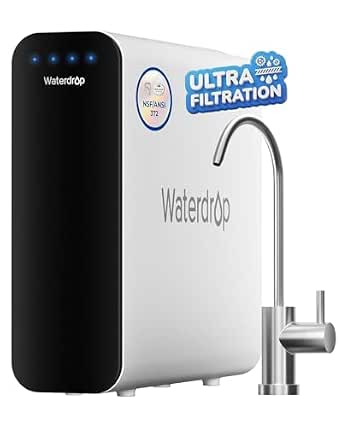 | Best Mineral-Retaining Alternative to RO | Filtration stages: 3 | Purification method: Ultrafiltration, activated carbon, and carbon block | Maximum flow rate: 1.05 GPM | VIEW LATEST PRICE | See Our Full Breakdown |
| Waterdrop UA-5Y Under Sink Water Filter System (5-Year Life) |  | Best for Low-Maintenance Mineral Retention | Model: UA-5Y | Filtration method: 0.5 μm activated carbon block | Filter life: 5 years | VIEW LATEST PRICE | See Our Full Breakdown |
| PUREPLUS Under-Sink Water Filter System, 22,000-Gallon Capacity |  | Best for High Flow and Stated Capacity | Model: WFS5300A | Filtration method: Activated carbon | Filtration accuracy: 0.5 microns | VIEW LATEST PRICE | See Our Full Breakdown |
| Waterdrop G3P600 Tankless Reverse Osmosis Water Filter System with Silver Faucet |  | Best for High-Volume RO | Filtration: 8-stage reverse osmosis | Certifications: NSF/ANSI 42, 58, and 372; FCC | Capacity: Up to 600 gallons per day | VIEW LATEST PRICE | See Our Full Breakdown |
| iSpring RO5004F Reverse Osmosis Water Filter with UV, 500 GPD, Tankless, Under Sink |  | Best for RO Plus UV Treatment | Filtration: 6 layers, including UV light | Flow capacity: 500 gallons per day | UV light duration: Up to 8,000 hours | VIEW LATEST PRICE | See Our Full Breakdown |
| CuZn UC-200 Under-Sink Water Filter, NSF/ANSI 42 & 372, 5-Year Filter Life |  | Best Long-Life Mineral-Retaining Filter | Model: UC-200 | Filtration stages: 3 | Filter media: Micro sediment membranes, KDF-55, and coconut shell carbon | VIEW LATEST PRICE | See Our Full Breakdown |
| Waterdrop TSA 8-Layer Under Sink Water Filter System, NSF/ANSI 42 Certified |  | Best Simple Mineral-Retaining Pick | Filtration: 8-stage | Certification: NSF/ANSI 42 | Flow rate: Up to 1.5 GPM | VIEW LATEST PRICE | See Our Full Breakdown |
| under sink water filter system with scale reduction | Maximum flow rate |
|---|---|
| APEC Water CS-2500P Under-Sink | — |
| Waterdrop G2P600 Tankless Unde | 25 milliliters per second |
| Waterdrop TSU 3-Stage Ultra Fi | 1.05 GPM |
| Waterdrop UA-5Y Under Sink Wat | 1.33 GPM |
| PUREPLUS Under-Sink Water Filt | 2.5 GPM at 60 PSI |
| Waterdrop G3P600 Tankless Reve | 0.42 GPM |
| iSpring RO5004F Reverse Osmosi | — |
| CuZn UC-200 Under-Sink Water F | — |
| Waterdrop TSA 8-Layer Under Si | — |
More Details on Our Top Picks
APEC Water CS-2500P Under-Sink Water Filtration System
The APEC CS-2500P is the clearest fit here for buyers seeking scale reduction without stripping minerals such as calcium, potassium, and magnesium. It also targets lead, chlorine, heavy metals, taste, and odor, making it a broader choice than a basic chlorine-focused carbon filter. Unlike the Waterdrop G2P600, it is not a reverse-osmosis system, so it avoids that model’s electrical connection and does not aim to lower TDS. Its compact 3.5-inch-square housing and quick-twist replacement design suit a straightforward under-sink setup connected to the existing faucet. The tradeoff is limited maintenance information: the supplied details do not state a filter replacement interval. Buyers who want that long-term schedule spelled out may prefer the Waterdrop UA-5Y, which lists a five-year filter life.
Pros:- Targets scaling as well as lead, chlorine, heavy metals, taste, and odor
- Retains minerals including calcium, potassium, and magnesium
- Connects to standard 3/8-inch cold-water plumbing and faucet stem
- Quick-twist design makes filter changes simpler
Cons:- Filter replacement interval is not specified in the supplied product details
- Uses the existing faucet rather than including a separate dedicated faucet
- Does not provide the stated high daily output or RO purification of the Waterdrop G2P600
Best for: Households on municipal water that want scale reduction and contaminant filtration while keeping naturally occurring minerals, without adding a dedicated faucet.
Not ideal for: Buyers who need a stated filter replacement schedule, want reverse osmosis or lower TDS, or cannot connect a filter to their existing faucet.
- Model:CS-2500P
- Dimensions:3.5 × 3.5 × 15 inches
- Material:Polypropylene (PP)
- Installation:Standard 3/8-inch hoses; connects to existing cold-water valve and faucet stem
- Filter replacement:Quick-twist design
- Mineral retention:Retains calcium, potassium, and magnesium
Our verdict“Choose the CS-2500P if scale reduction with mineral retention matters more than reverse-osmosis treatment or a clearly stated filter life.”
Waterdrop G2P600 Tankless Under-Sink Reverse Osmosis Water Filtration System
For buyers who want reverse-osmosis treatment rather than a mineral-retaining carbon or ultrafiltration setup, the Waterdrop G2P600 offers a different level of treatment and a stated capacity of up to 600 gallons per day. Its 2:1 pure-to-drain ratio makes it more water-conscious than many RO configurations, while filter-life indicators and tool-free twist-and-pull cartridges make ongoing changes easier to track. The tradeoffs are practical: this system needs a corded electrical connection and takes more under-sink space than the compact APEC CS-2500P. It also differs from the Waterdrop TSU, which retains minerals and does not reduce TDS. The supplied details do not identify scale reduction as a specific benefit, so buyers choosing mainly for scale control should verify that performance before selecting it.
Pros:- Reverse-osmosis purification with seven filtration stages
- Stated capacity of up to 600 gallons per day
- 2:1 pure-to-drain ratio limits wastewater relative to the stated output
- Tool-free filter changes and filter-life indicators
Cons:- Requires a corded electrical connection under the sink
- Larger and heavier than the APEC CS-2500P
- The supplied product details do not specify scale-reduction performance
Best for: Households prioritizing reverse-osmosis treatment and high stated daily capacity, with under-sink room and an electrical outlet available.
Not ideal for: Buyers whose main goal is documented scale reduction with mineral retention, or who cannot supply power under the sink.
- Filtration stages:7
- Purification method:Reverse osmosis
- Daily capacity:Up to 600 gallons
- Pure-to-drain ratio:2:1
- Maximum flow rate:25 milliliters per second
- Dimensions:17.3 × 5.9 × 14 inches
- Weight:25.4 pounds
- Maximum supported TDS:500 ppm
- Power and certification:Corded electric; NSF/ANSI 372
Our verdict“Pick the G2P600 for high-capacity RO treatment if you have power and space, but verify scale performance if that is your main reason for buying.”
Waterdrop TSU 3-Stage Ultra Filtration Under-Sink Water Filter System
The Waterdrop TSU suits buyers who want fine filtration while keeping naturally occurring minerals in the water. Its 0.01-micron ultrafiltration membrane works alongside activated carbon to reduce chlorine, PFAS, odors, and heavy metals, while the system produces no wastewater and needs neither power nor a drain line. Compared with the Waterdrop G2P600, it is a simpler mineral-retaining alternative, but it does not reduce TDS and is not a substitute for RO when lower dissolved-solids readings are the goal. The included brushed-nickel faucet and filter-life reminder panel add convenience, though installation requires countertop drilling. It is designed for municipal cold water only, so well-water users should skip it. The supplied details do not list scale reduction, which makes it less direct a match than the APEC CS-2500P for that specific need.
Pros:- 0.01-micron ultrafiltration membrane paired with activated carbon
- Reduces chlorine, PFAS, odors, and heavy metals while retaining minerals
- No wastewater, power connection, or drain line required
- Includes a brushed-nickel faucet and filter-life reminder panel
Cons:- Countertop drilling is required for the included faucet
- Does not reduce TDS and is not suitable for well or hot water
- Scale reduction is not specified in the supplied product details
Best for: Municipal-water households that want a dedicated faucet, mineral retention, and multi-stage filtration without RO wastewater or an electrical connection.
Not ideal for: Well-water users, renters unable to drill for the faucet, or buyers who need lower TDS or clearly specified scale reduction.
- Filtration stages:3
- Purification method:Ultrafiltration, activated carbon, and carbon block
- Maximum flow rate:1.05 GPM
- Capacity:2,200 gallons
- Filter lifespans:PP: 6 months; CT: 12 months; UF: 24 months
- Dimensions and weight:14.81 × 4.68 × 13.97 inches; 14 pounds
- Water compatibility:Municipal cold water; not suitable for well or hot water
- Certification and materials:IAPMO NSF/ANSI 372 certified; BPA-free
Our verdict“Choose the TSU for mineral-retaining municipal-water filtration without RO wastewater, not for lower TDS or a clearly documented scale-reduction claim.”
Waterdrop UA-5Y Under Sink Water Filter System (5-Year Life)
The Waterdrop UA-5Y is the maintenance-focused choice in this group: its stated five-year filter life means fewer scheduled cartridge changes than the TSU’s listed 6-, 12-, and 24-month stages. Its 0.5-micron activated carbon block reduces chlorine, PFOA/PFOS, rust, and sand while retaining minerals, and it runs mechanically without electricity. That makes it a simpler fit than the Waterdrop G2P600 for buyers who do not want an RO system, power connection, or TDS reduction. The tradeoff is that the supplied details do not name scale reduction as a specific performance claim, unlike the APEC CS-2500P. Its 16.7-inch height may also challenge crowded cabinets, and it is specified for municipal water rather than well water.
Pros:- Stated five-year filter life reduces replacement frequency
- 0.5-micron activated carbon block reduces chlorine, PFOA/PFOS, rust, and sand
- Retains minerals and operates without electricity
- Includes a five-year prorated warranty
Cons:- 16.7-inch height may not fit under crowded or low-clearance sinks
- Not intended for well water and does not reduce TDS
- The supplied product details do not specify scale-reduction performance
Best for: Municipal-water households seeking a simple, non-electric carbon filter with infrequent stated replacement and mineral retention.
Not ideal for: Well-water users, buyers with low-clearance cabinets, or shoppers who require a clearly stated scale-reduction claim or lower TDS.
- Model:UA-5Y
- Filtration method:0.5 μm activated carbon block
- Filter life:5 years
- Maximum flow rate:1.33 GPM
- Dimensions and weight:3.9 × 3.6 × 16.7 inches; 3.6 pounds
- Power source:Mechanical; no electricity
- Water compatibility:Municipal water; 35°F–100°F
- Certification and warranty:NSF/ANSI 372; five-year prorated warranty
Our verdict“Choose the UA-5Y for long filter life and simple mineral-retaining filtration if your water is municipal and your cabinet has room.”
PUREPLUS Under-Sink Water Filter System, 22,000-Gallon Capacity
The PUREPLUS WFS5300A stands out for its 2.5 GPM flow rate and stated 22,000-gallon capacity, making it the most flow-oriented carbon option in this set. Its NSF/ANSI 42 and 372 certifications, 0.5-micron filtration accuracy, and reduction of chlorine, odor, sediment, and some heavy metals give buyers useful specifications to compare. Like the Waterdrop UA-5Y, it retains beneficial minerals and does not reduce TDS; unlike that model, PUREPLUS lists both a large gallon capacity and a high maximum flow rate. The quick-connect design is intended to simplify cold-water installation. Still, neither the supplied description nor specs identify scale reduction as a specific benefit, so the APEC CS-2500P is a more direct fit for that stated need. It also requires compatible cold-water plumbing.
Pros:- Maximum flow rate of 2.5 GPM at 60 PSI
- Stated capacity of 22,000 gallons and five-year filter life
- NSF/ANSI 42 and 372 certifications
- Quick-connect design and compatibility with specified faucet-thread sizes
Cons:- Cold-water installation only
- Does not reduce TDS or alter TDS readings
- Scale reduction is not specified in the supplied product details
Best for: Households wanting a high-flow municipal cold-water carbon filter with a stated large capacity and compatible 1/2-inch or 3/8-inch faucet-thread connections.
Not ideal for: Buyers seeking a clearly documented scale-reduction claim, lower TDS, or a filter that works with hot or well water.
- Model:WFS5300A
- Filtration method:Activated carbon
- Filtration accuracy:0.5 microns
- Capacity and filter life:22,000 gallons; 5 years
- Maximum flow rate:2.5 GPM at 60 PSI
- Certifications:NSF/ANSI 42 and 372
- Dimensions and weight:13.7 × 4.5 × 4.5 inches; 1.78 kg
- Water connection:Cold water only; compatible with 1/2-inch or 3/8-inch female NPT faucet threads
- Maximum supported TDS:500 PPM
Our verdict“Choose PUREPLUS for high stated flow and capacity on cold municipal water, but select a model with a specific scale-reduction claim if that is your priority.”
Waterdrop G3P600 Tankless Reverse Osmosis Water Filter System with Silver Faucet
The G3P600 is the strongest fit here for households that want reverse osmosis and need fast, frequent access to filtered water. Its 600-gallon-per-day capacity and 0.42 GPM maximum flow rate outpace the CuZn UC-200, which is a simpler filter that retains minerals and does not reduce TDS. The smart faucet adds a useful check on TDS and filter life, while the 2:1 pure-water-to-drain ratio gives buyers a clear efficiency figure. Its tankless design frees cabinet space compared with a storage-tank setup, but the unit still needs room for its 18-inch footprint and an under-sink outlet. Unlike the Waterdrop TSA, this system reduces TDS through RO; the tradeoff is greater installation complexity and mineral removal along with contaminants.
Pros:- Tankless design frees space otherwise used by a storage tank
- Up to 600 gallons per day suits households with frequent filtered-water needs
- Smart faucet displays TDS and filter life
- Tool-free filter replacement simplifies routine maintenance
Cons:- Requires a corded electrical connection beneath the sink
- Its dimensions call for careful cabinet-fit checks before installation
- Reverse osmosis reduces TDS and minerals, unlike the CuZn UC-200 and Waterdrop TSA
Best for: Households that want TDS-reducing reverse osmosis, high daily output, and faucet-based water and filter monitoring
Not ideal for: Renters or kitchens without an accessible under-sink outlet, and buyers who want to retain minerals or avoid RO installation
- Filtration:8-stage reverse osmosis
- Certifications:NSF/ANSI 42, 58, and 372; FCC
- Capacity:Up to 600 gallons per day
- Pure-to-drain ratio:2:1
- Maximum flow rate:0.42 GPM
- Dimensions:18.12 x 5.67 x 17.72 inches
- Power:Corded electric
- Faucet features:TDS monitor and filter-life tracker
Our verdict“Choose the G3P600 if you want high-output, monitored reverse osmosis and have cabinet space and an under-sink outlet.”
iSpring RO5004F Reverse Osmosis Water Filter with UV, 500 GPD, Tankless, Under Sink
The iSpring RO5004F pairs tankless reverse osmosis with UV treatment, making it the more layered choice for buyers who specifically want both technologies in one under-sink system. Its stated 500 GPD flow capacity is close to the Waterdrop G3P600’s 600 GPD, though the G3P600 also provides a faucet display for TDS and filter life. Here, the appeal is the built-in pump, leak-stop valve, and filter-life monitoring, which support steady operation and maintenance awareness. The stated contaminant list includes PFAS, lead, arsenic, and calcium, but the product details do not provide a scale-reduction performance figure or an NSF/ANSI certification claim for those reductions. UV life is limited to 8,000 hours, and installation may be involved enough to call for professional help. Buyers who mainly want a simpler mineral-retaining filter may prefer the CuZn UC-200.
Pros:- Combines reverse osmosis with UV treatment in a tankless system
- Built-in pump supports operation where water pressure needs assistance
- Leak-stop valve and filter-life indicator add maintenance and leak awareness
- Twist-to-unlock filter design supports replacement without a complicated cartridge process
Cons:- UV light has a stated service life of up to 8,000 hours
- Installation may be complex enough to require professional help
- The supplied details do not specify a scale-reduction rate or relevant certification for that claim
Best for: Homeowners seeking tankless RO with UV treatment, a built-in pump, and monitoring features, and who are prepared for a more involved installation
Not ideal for: DIY beginners who want a straightforward install, or shoppers prioritizing documented scale-reduction performance and certification details
- Filtration:6 layers, including UV light
- Flow capacity:500 gallons per day
- UV light duration:Up to 8,000 hours
- Design:Tankless
- Water pressure support:Built-in pump
- Listed contaminants:PFAS, TDS, lead, arsenic, chlorine, fluoride, vinyl chloride, asbestos, calcium, and sodium
- Maintenance features:Filter-life indicator and leak-stop valve
- Filter replacement:Twist-to-unlock design
Our verdict“Pick the RO5004F if UV alongside tankless RO matters more to you than simpler installation or a faucet-based TDS display.”
CuZn UC-200 Under-Sink Water Filter, NSF/ANSI 42 & 372, 5-Year Filter Life
The CuZn UC-200 is a better match for buyers who want a long filter life and mineral retention than for anyone seeking reverse-osmosis-style scale control. Its three-stage media is listed to reduce chlorine, lead, and PFAS-related compounds, and its five-year stated life means fewer scheduled cartridge changes than the Waterdrop TSA, whose stated lifespan is up to 18 months. Unlike the G3P600, though, the UC-200 does not reduce TDS; it should not be chosen on the assumption that it will substantially reduce dissolved minerals or hardness-related scale. Its no-drill inline connection is appealing for a DIY installation, but it still needs a compatible under-sink faucet connection and cabinet room for a 14-inch-wide unit. This is the practical choice for routine contaminant reduction, not a dedicated scale-reduction system.
Pros:- Five-year stated filter life reduces the frequency of replacement
- Three-stage media is listed to reduce chlorine, lead, and PFAS-related compounds
- Retains beneficial minerals rather than reducing TDS
- Inline installation includes connection parts and does not require drilling
Cons:- Does not reduce TDS, so it is not the choice for substantial dissolved-mineral reduction
- Requires an under-sink faucet connection
- Its 14-inch width may be awkward in compact cabinets
Best for: Buyers who want a mineral-retaining filter for municipal tap water, a long stated filter life, and a no-drill inline installation
Not ideal for: Households seeking reduced TDS, reverse osmosis, or a filter with a stated scale-reduction performance claim
- Model:UC-200
- Filtration stages:3
- Filter media:Micro sediment membranes, KDF-55, and coconut shell carbon
- Listed reductions:PFAS, PFOA/PFOS, lead, and chlorine
- Certifications:NSF/ANSI 42 and 372
- Stated filter life:5 years
- Installation:Inline faucet connection; no drilling required
- Dimensions:5.5 x 14 x 5.5 inches
Our verdict“Choose the UC-200 for long-lasting, mineral-retaining filtration, but skip it if scale reduction through TDS removal is your priority.”
Waterdrop TSA 8-Layer Under Sink Water Filter System, NSF/ANSI 42 Certified
The Waterdrop TSA is the lineup’s straightforward choice for municipal tap water when easy installation and mineral retention matter more than TDS reduction. Its stated 1.5 GPM flow rate is higher than the G3P600’s maximum 0.42 GPM, but the systems do different jobs: the TSA is a carbon-based filter, while the G3P600 uses reverse osmosis to reduce TDS. The TSA’s 8-stage filtration and NSF/ANSI 42 certification are paired with a DIY installation described as taking under three minutes, making it less involved than the RO5004F. That simplicity comes with limits. It is intended for municipal water, does not handle hot or well water without pre-filtration, and the supplied details do not claim TDS or scale reduction. Filter life also varies from six to 18 months, so usage affects replacement timing.
Pros:- DIY installation is described as taking less than three minutes
- Up to 1.5 GPM flow rate supports everyday water access
- Eight-stage filtration is certified to NSF/ANSI 42
- Retains beneficial minerals rather than using reverse osmosis
Cons:- Does not claim TDS reduction or specific scale-reduction performance
- Not suitable for hot or well water without pre-filtration
- Filter replacement timing varies from six to 18 months with use
Best for: Municipal-water households wanting a quick DIY filter that retains minerals and supports everyday drinking-water use
Not ideal for: Well-water users, anyone needing hot-water filtration, or buyers whose main goal is TDS and scale reduction
- Filtration:8-stage
- Certification:NSF/ANSI 42
- Flow rate:Up to 1.5 GPM
- Stated lifespan:Up to 18 months
- Installation:DIY; described as taking less than 3 minutes
- Filter material:Natural coconut shell carbon and durable plastic
- Water suitability:Municipal tap water; hot or well water requires pre-filtration
Our verdict“Choose the TSA for quick, mineral-retaining filtration on municipal water, not for reverse-osmosis-level scale control.”

How We Picked
I compared the nine systems by how closely their treatment approach fits a scale-reduction goal, then weighed practical factors that affect daily ownership: stated filtration method, available performance and certification information, filter life, installation demands, space needs, and ongoing maintenance. I treated reverse osmosis as a stronger fit for dissolved minerals than ordinary carbon filtration, while avoiding the assumption that every under-sink system labeled as a water filter meaningfully reduces hardness or scale. Buyers should check product documentation and their local water report before choosing.
The ranking favors options with a clearer match for scale reduction and a useful balance of performance and usability. The Waterdrop G2P600 leads as a tankless RO pick; the iSpring RO5004F has a distinct place for its UV addition, and the APEC CS-2500P offers a less complex scale-focused route. The remaining models are included for buyers who prefer non-RO filtration, extended stated filter life, or a different configuration, but they rank lower for this specific use when their treatment does not match RO’s dissolved-mineral approach. No single system suits every water supply, so I also weigh tradeoffs rather than treating feature counts as a substitute for fit.
Factors to Consider When Choosing Best Under Sink Water Filter System With Scale Reduction
Choosing for scale reduction takes more than comparing the number of filter stages. I would start by identifying what causes the problem in your water, then check whether a system’s documented treatment matches it. These broader checks can prevent paying for features you do not need or buying a filter that improves taste but leaves hardness-related scale largely unchanged.
Confirm Whether Hardness Is the Problem
White deposits on taps and kettle surfaces can point to hard water, but they do not identify every mineral or contaminant in the supply. Check a recent utility water report or use a hardness test before buying, especially if scale is your main concern. Many under-sink carbon filters target taste, odor, and selected contaminants rather than dissolved calcium and magnesium. Reverse osmosis can reduce many dissolved substances, but product-specific performance claims matter. Do not treat a general filtration label as proof of hardness reduction. If hardness is high throughout the home, an under-sink drinking-water filter may not protect showers, heaters, or appliances.
Choose Between RO and Non-RO Treatment
Reverse osmosis is often the more relevant route when the goal is lowering dissolved minerals at a drinking-water tap. It also adds components, uses drain water, and may require a dedicated faucet or electrical connection, depending on the model. Non-RO systems can be easier to install and maintain, but their scale-control claims may be narrower or based on a different treatment mechanism. Compare the exact substances reduced and the conditions behind those claims, not just the stage count. If your priority is taste improvement and routine sediment or chlorine filtration, a non-RO option may be a better fit. If you need broad dissolved-solids reduction, RO is usually the more direct category to investigate.
Check Certification and Performance Claims
Certification numbers can help, but each standard covers particular claims rather than certifying a system for every possible contaminant or hardness level. Read the product’s performance data sheet to see which reductions are verified and under what operating conditions. A certification for material safety or chlorine reduction does not automatically establish scale reduction. Match claims to your water report and intended use, such as drinking, cooking, or reducing mineral deposits in a kettle. When documentation is unclear, contact the manufacturer before purchase rather than inferring performance from product naming. This check matters especially when comparing multi-stage carbon systems with RO units.
Measure the Cabinet and Map the Plumbing
Measure cabinet height, width, and depth, then account for the filter body, tubing bends, shutoff valves, and space needed to change cartridges. Tankless RO systems can save room compared with systems that use a storage tank, but they still need room for the unit and may need power. Check whether the kit includes a dedicated faucet and whether your sink has an available mounting hole. Older plumbing, limited access to the drain, or a crowded cabinet can turn a seemingly simple installation into a larger job. Before ordering, confirm connection sizes and whether any adapters or tools are needed. A good fit on paper should leave enough hand clearance for future maintenance.
Estimate Maintenance Beyond the Stated Filter Life
Filter-life figures are usually based on an assumed volume or water quality, so actual replacement timing can vary with household use and incoming water. A long-life cartridge may reduce service frequency, but it does not by itself show stronger scale reduction or better contaminant removal. Check the replacement set, how many cartridges need changing together, and whether the system has a clear replacement indicator. RO systems can have multiple stages with different schedules, so compare the full maintenance plan rather than one headline lifespan. Consider whether replacement filters are easy to identify and obtain. If you are unlikely to keep up with several stages, a simpler system may be easier to own.
Account for Water Waste, Flow, and Household Use
RO systems discharge some water during operation, and the amount depends on the design and operating conditions. Their output rate also affects how quickly a household can fill a glass, kettle, or cooking pot. Tankless models avoid storing treated water, but their delivery depends on system capacity and water pressure. A household that fills large containers often should check the rated production and expected flow, not just the system name. If wastewater is a concern, compare the manufacturer’s stated ratio and consider whether your plumbing can handle the drain connection. For light drinking-water use, a lower-capacity option may be sufficient; larger households should prioritize output and replacement planning.
Frequently Asked Questions
Will a carbon under-sink filter stop hard-water scale?
Not necessarily. Many carbon filters are designed mainly for taste, odor, chlorine, and selected contaminants, and those functions do not automatically reduce water hardness. Check the model’s performance data for explicit calcium, magnesium, hardness, or scale-reduction claims. If reducing dissolved minerals at the drinking-water tap is the main goal, compare RO options such as the Waterdrop G2P600 or iSpring RO5004F with non-RO systems. For scale across the whole home, an under-sink drinking-water filter is usually not a substitute for a whole-house treatment approach.
Does reverse osmosis remove the minerals that cause kettle deposits?
RO can reduce many dissolved minerals, which can help limit mineral deposits in water dispensed from the treated faucet. The exact result depends on the unit, water conditions, maintenance, and the manufacturer’s stated performance. It will only affect water drawn through that system, not water from other taps or appliances. Review performance documentation and consider testing treated water if mineral reduction is a key requirement. If you need to protect a water heater or multiple fixtures, ask a water-treatment professional about whole-house options.
Is a tankless RO system a better fit than a system with a storage tank?
Tankless RO can save cabinet space and avoid storing treated water, which may suit a compact kitchen. It still needs room for the unit, tubing, and sometimes electrical power, and its output depends on capacity and supply pressure. A tank system can provide stored water on demand, but takes up more cabinet space. Compare how much water your household uses at once, where the unit can be installed, and the product’s flow specifications. The best format depends on your kitchen and usage rather than the tankless label alone.
Can I install one of these systems without a plumber?
Some under-sink systems are designed for homeowner installation, but the difficulty depends on the faucet, drain connection, cabinet access, and existing plumbing. RO models can involve more tubing and connections than simpler filter setups, and some need a power outlet. Review the installation guide before buying and check whether your sink has a spare faucet opening. If you have old, corroded, or unusual plumbing, professional installation can reduce the risk of leaks. Leave enough accessible space to change filters after installation.
How should I choose between the APEC CS-2500P and a Waterdrop RO model?
Start with your water test and the treatment claims you need. The APEC CS-2500P is the more straightforward scale-control-focused option in this lineup, while the Waterdrop G2P600 and G3P600 use RO and are better matches for buyers seeking broader dissolved-mineral reduction. RO brings added plumbing, maintenance, and wastewater tradeoffs, so it may be more system than you need if your main concern is a specific, limited scale issue. Compare each model’s current performance documentation against your water conditions. Choose based on verified fit, cabinet space, and upkeep tolerance rather than brand or stage count.
Conclusion
For the best overall balance of scale-focused treatment and a tankless layout, I would begin with the Waterdrop G2P600, provided its installation and maintenance demands suit your kitchen. Buyers seeking a higher-feature RO setup with UV should compare the iSpring RO5004F as the premium-style choice for that specific need. For best value in a simpler scale-control approach, consider the APEC CS-2500P, while checking its claims against your water test. The Waterdrop TSU 3-Stage is a reasonable starting point for beginners who prefer a non-RO system and do not need broad dissolved-mineral reduction. For specific priorities, the Waterdrop G3P600 offers another tankless RO path, while the UA-5Y, PUREPLUS, CuZn UC-200, and TSA 8-Layer suit shoppers comparing longer stated filter lives or non-RO configurations. My final pick would depend on documented scale performance, cabinet fit, and how much ongoing maintenance you are willing to handle.