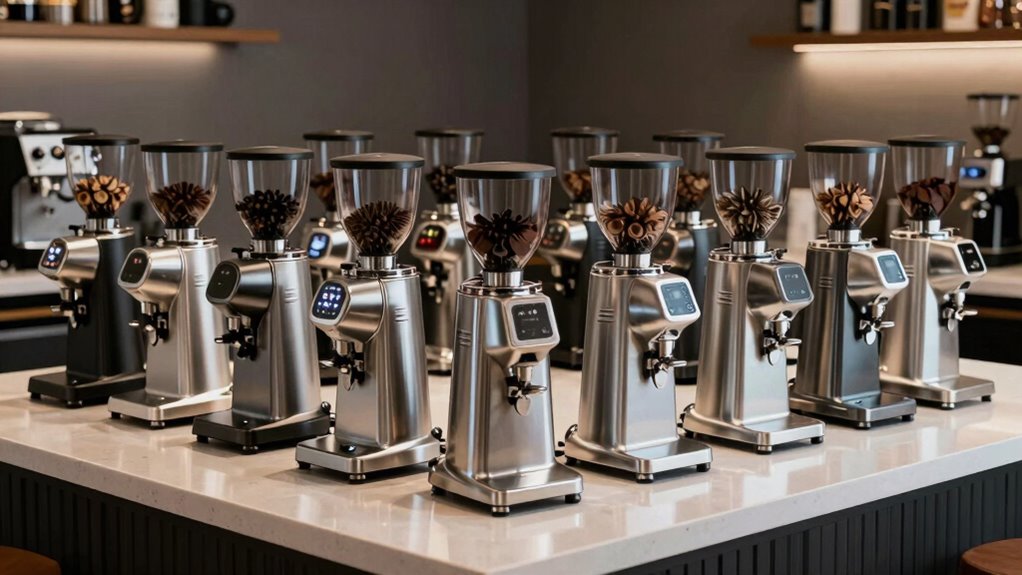
Shopping for a single dose espresso grinder under $1500 means you can have near-café grind quality at home without the café budget — but the category is crowded with lookalike machines that perform very differently on espresso-fine grinds. My top pick is the DF64 Gen 2, which pairs large 64mm flat burrs with genuinely low retention and stepless adjustment at a price that leaves room for beans and accessories. If you want bigger conical burrs and whisper-quiet 110 RPM grinding, the Wirsh Geimori GU63 is the standout premium option, while the Turin SK40 makes the most sense for buyers chasing the best value in true stepless espresso grinding. The main tradeoffs you’ll face are flat versus conical burr flavor profiles, noise levels, and whether a compact rechargeable unit can actually hold an espresso-fine grind setting. Keep reading for the full breakdown of all thirteen grinders.

Get kitchen gear delivered free — and shop member deals
- Fast, free delivery on millions of items
- Access to Prime Big Deal Days deals on October 6–7
- Prime Video, Amazon Music and more included
Complete the kit


Key Takeaways
- The DF64 Gen 2 (available in black and white) separated itself as best overall because its 64mm flat burrs produce the most consistent espresso particle distribution in this lineup, and its upgrade path (swappable burr sets) no other pick here offers.
- The Turin SK40 and Wirsh GU38 proved the sweet spot for value buyers: both deliver stepless adjustment and under-a-gram retention at roughly half the complexity of the DF64, making them ideal first single dosing grinders.
- Compact rechargeable models like the Maestri House trade grind stability for portability — the 80-level stepped adjustment is fine for filter coffee but frustrating when dialing in espresso, so I ranked them lower for this specific use case.
- The Wirsh GU63’s 63mm conical burrs and 110 RPM motor make it the quietest premium option here, but its slower grind speed means longer wait times than the DF64 or Gevi VelPro for back-to-back drinks.
- The two AMZCHEF models are essentially the same grinder in different finishes, so pick based on kitchen aesthetics — their 75 settings and sub-0.2g retention claims hold up well, but they lack the stepless fine-tuning espresso purists want.
| Gen 4 Electric Single Dose Burr Coffee Grinder for Espresso, Silver |  | Best for Speed and Quiet Mornings | Burr size: 48mm | Blades: 5 | Espresso grind time: 25-30 seconds | VIEW ON AMAZON | See Our Full Breakdown |
| HiBREW G5 Electric Burr Coffee Grinder, Aluminum Body, Single Dose, Black |  | Best Versatile Single Doser | Burr: 48mm conical CNC | Grind settings: 36 continuously adjustable | Grinding speeds: 500 rpm fast / 400 rpm slow | VIEW ON AMAZON | See Our Full Breakdown |
| Maestri House Burr Coffee Grinder, 80-Level, Rechargeable, Single-Dose |  | Best Portable Pick | Burr: 38mm conical | Grind settings: 80 levels, 0.02mm fine-tuning | Rotation speed: 120-160 RPM | VIEW ON AMAZON | See Our Full Breakdown |
| DF64 Gen 2 Single Dose Coffee Grinder (Black) |  | Best Overall for Serious Espresso | Bean hopper capacity: 20g without bellow, 50g with bellow | Material: Aluminum with powder coating | Dosing cup: 58mm food-grade transparent plastic | VIEW ON AMAZON | See Our Full Breakdown |
| Viesimple Gen 4 Coffee Grinder with Magnetic Dosing Cup, Single Dose Burr Coffee Grinder |  | Best Everyday Home Workhorse | Burr: 48mm conical | Body material: High-quality aluminum | Dosing cup: Magnetic attachment | VIEW ON AMAZON | See Our Full Breakdown |
| Turin SK40 Single Dose Grinder (Black) |  | Best Compact Metal Build | Burr Size: 40mm | Burr Material: Stainless steel conical, 8-point | Adjustment: Stepless | VIEW ON AMAZON | See Our Full Breakdown |
| Gevi VelPro 400 Single Dose Espresso Grinder, Silver |  | Best Premium Flat Burr Pick | Burr: 64mm flat, titanium-coated | Motor: 400W brushless DC | Speed Range: 500-1500 RPM | VIEW ON AMAZON | See Our Full Breakdown |
| Wirsh Geimori GU38 Single Dose Coffee Grinder, Black |  | Best for Quiet Early Mornings | Burr Size: 38mm | Burr Material: Stainless steel conical | Adjustment: Stepless, 0.01mm micro-adjustments | VIEW ON AMAZON | See Our Full Breakdown |
| SHARDOR All-Metal Single-Dose Burr Coffee Grinder, Black |  | Best for Beginners | Brand: SHARDOR | Model: UL-BZ02-BL2507US | Motor: Quiet DC motor | VIEW ON AMAZON | See Our Full Breakdown |
| DF64 Gen 2 Single Dose Coffee Grinder (White) |  | Best for Zero-Waste Dosing | Plasma Generator: Yes | Anti-Popcorn Disc: Yes | Dosing Cup: 58mm transparent plastic | VIEW ON AMAZON | See Our Full Breakdown |
| AMZCHEF Single Dose Coffee Grinder with 75 Grind Settings, 40mm Burr, <0.2g Retention |  | Best Complete Starter Kit | Grind Settings: 75 stepless | Burr: 40mm 6-star forged conical | Retention: 0.1-0.2g | VIEW ON AMAZON | See Our Full Breakdown |
| AMZCHEF Single Dose Coffee Grinder, Low Retention, 75 Settings, Rose Gold |  | Best for Quiet Mornings and Shared Spaces | Grind Settings: 75 stepless | Burr: 40mm six-star forged conical | Retention: 0.1-0.2g | VIEW ON AMAZON | See Our Full Breakdown |
| Wirsh Geimori GU63 Electric Single Dose Grinder with 63mm Conical Burrs |  | Best Premium Build in the Bunch | Burr Size: 63mm conical | Motor Speed: 110 RPM | Adjustment: Stepless micro-adjustment | VIEW ON AMAZON | See Our Full Breakdown |
| single dose espresso grinder under 1500 | Retention |
|---|---|
| Gen 4 Electric Single Dose Bur | — |
| HiBREW G5 Electric Burr Coffee | — |
| Maestri House Burr Coffee Grin | — |
| DF64 Gen 2 Single Dose Coffee | True zero retention design |
| Viesimple Gen 4 Coffee Grinder | — |
| Turin SK40 Single Dose Grinder | Low (tilted base + bellows) |
| Gevi VelPro 400 Single Dose Es | — |
| Wirsh Geimori GU38 Single Dose | <0.1g |
| SHARDOR All-Metal Single-Dose | — |
| DF64 Gen 2 Single Dose Coffee | <0.1 gram |
| AMZCHEF Single Dose Coffee Gri | 0.1-0.2g |
| AMZCHEF Single Dose Coffee Gri | 0.1-0.2g |
| Wirsh Geimori GU63 Electric Si | Below 0.1g |
More Details on Our Top Picks
Gen 4 Electric Single Dose Burr Coffee Grinder for Espresso, Silver
This model stands out for raw grinding speed — a full espresso dose in 25-30 seconds is among the fastest in this lineup, and the sub-50 dB operation makes it a sensible pick for households where early-morning shots shouldn’t wake anyone. Compared with the HiBREW G5, which offers 36 stepped settings, this grinder trades adjustability granularity for a simpler, faster workflow: beans in, espresso-fine grounds out, with under 0.2% retention thanks to the anti-static coating and anti-clogging chamber. That low retention is what single-dosing actually demands — you weigh what you grind, and what you weigh is what lands in the cup. The 2-year warranty adds a safety net the DF64 Gen 2 doesn’t explicitly advertise.
Pros:- Espresso-fine grounds in 25-30 seconds
- Quiet operation under 50 dB for early mornings
- Anti-static coating and anti-clogging design keep retention under 0.2%
- 2-year warranty on the all-metal grinding system
Cons:- Limited grind adjustment range compared with the HiBREW G5’s 36 settings
- Durability claims are manufacturer estimates rather than independently verified
Best for: Espresso drinkers who prioritize fast, quiet, low-waste shots and don’t want to fuss with dozens of settings
Not ideal for: Tinkerers who want stepless or highly granular adjustment for dialing in different roast levels
- Burr size:48mm
- Blades:5
- Espresso grind time:25-30 seconds
- Noise level:<50 dB
- Residue:<0.2%
- Color:Silver
- Warranty:2 years
Our verdict“A fast, quiet single-doser best suited to espresso-focused buyers who value simplicity over adjustability.”
HiBREW G5 Electric Burr Coffee Grinder, Aluminum Body, Single Dose, Black
Where the Gen 4 Silver keeps things simple, the HiBREW G5 earns its spot by being the most brew-method-flexible grinder in this batch. With 36 continuously adjustable settings on a 48mm CNC conical burr, it covers espresso through French press without the guesswork of a fixed-range grinder. The dual-speed motor is the clever part: 500 rpm when you’re in a hurry, 400 rpm when you want less heat and better flavor preservation — a distinction that matters for light roasts. Its 15° tilted body isn’t just aesthetics; it helps fully empty the grounds chute, directly addressing retention. The compact footprint (roughly 10.5 × 19 × 31 cm) is friendlier to tight counters than most flat-base single dosers here.
Pros:- 36 grind settings spanning espresso to cold brew
- Dual-speed motor with a slow mode that reduces heat and preserves flavor
- Aluminum alloy body with a compact, counter-friendly footprint
- Powder discharger and anti-static coating minimize retained grounds
Cons:- Slow grinding speed means longer wait times than the Gen 4’s 25-30 second espresso cycle
- 180W motor is modest for heavy daily use
- Stepped-style adjustment may feel imprecise for espresso dialing compared with stepless rivals
Best for: Multi-brew-method households who switch between espresso, pour-over, and moka pot and want one grinder for everything
Not ideal for: Espresso purists chasing the finest grind consistency — a dedicated espresso grinder like the DF64 Gen 2 will outperform it at the fine end
- Burr:48mm conical CNC
- Grind settings:36 continuously adjustable
- Grinding speeds:500 rpm fast / 400 rpm slow
- Bean capacity:50 g
- Body:Aluminum alloy
- Dimensions:W 10.5 × D 19 × H 31 cm
- Power:180 W, 110 V
Our verdict“The most adaptable pick here — ideal if one grinder needs to serve every brew method, less so for espresso-only obsessives.”
Maestri House Burr Coffee Grinder, 80-Level, Rechargeable, Single-Dose
The Maestri House plays a completely different game from everything else in this roundup: it’s USB-C rechargeable and cordless, which means it can grind at your desk, in a campsite, or anywhere your espresso habit travels. Its 80 grind levels with 0.02mm fine-tuning actually out-spec the HiBREW G5’s 36 settings on paper, giving real dialing flexibility for a battery-powered unit. The 38mm conical burr turning at just 120-160 RPM is the tradeoff — extremely gentle on flavor, but far slower than a plugged-in model like the Gen 4, which finishes a dose in under 30 seconds. For single-dose freshness, the magnetic catch cup keeps the workflow tidy. This is the grinder to buy when portability outranks speed.
Pros:- Cordless operation with USB-C charging and an 1800mAh battery
- 80 grind levels with 0.02mm fine-tuning accuracy
- Ultra-low 120-160 RPM grinding minimizes heat and protects aroma
- Compact 2.6 × 4 × 7.3 inch body with tool-free cleaning
Cons:- 38mm burr and low RPM mean noticeably slower grinding than electric countertop rivals
- Battery capacity limits how many doses you get per charge
- LED display and electronics add failure points a purely mechanical grinder avoids
Best for: Travelers, office brewers, and campers who want fresh grounds without a wall outlet
Not ideal for: Home baristas pulling multiple back-to-back shots daily — the small burr and battery-powered motor can’t match countertop models for speed or throughput
- Burr:38mm conical
- Grind settings:80 levels, 0.02mm fine-tuning
- Rotation speed:120-160 RPM
- Noise level:Under 60 dB
- Battery:1800mAh, USB-C rechargeable
- Dimensions:2.60 × 4.02 × 7.28 inches
Our verdict“The clear choice if you grind away from home; skip it if speed and shot-after-shot capacity are priorities.”
DF64 Gen 2 Single Dose Coffee Grinder (Black)
If this roundup has an enthusiast anchor, the DF64 Gen 2 is it. Its stepless grind adjustment is the key differentiator against every stepped competitor here — the HiBREW G5’s 36 settings are fine for variety, but stepless lets you chase a half-turn change when a shot runs two seconds fast. The plasma generator actively neutralizes static rather than just coating surfaces, and combined with the true zero-retention design, it delivers the cleanest bean-to-cup transfer in the batch — a genuine quality-of-life difference when you single dose every shot. The powder-coated aluminum body and 58mm dosing cup sized for standard portafilter baskets show this was built around an espresso workflow specifically. The cost of that focus is versatility and capacity: 20g without the bellow is tight.
Pros:- Stepless adjustment for precise espresso dialing
- Plasma generator actively eliminates static
- True zero-retention design minimizes waste and stale grounds
- 58mm dosing cup matches standard portafilter baskets
Cons:- Only 20g bean capacity without attaching the bellow
- Motor power and noise levels aren’t documented, making comparisons harder
- Stepless adjustment has a steeper learning curve than stepped grinders
Best for: Espresso enthusiasts who dial in carefully and want stepless precision with near-zero waste
Not ideal for: Casual multi-brew households — the stepless dial and espresso-first design are overkill compared with something like the HiBREW G5
- Bean hopper capacity:20g without bellow, 50g with bellow
- Material:Aluminum with powder coating
- Dosing cup:58mm food-grade transparent plastic
- Adjustment type:Stepless
- Static control:Plasma generator
- Retention:True zero retention design
Our verdict“The most capable espresso grinder in this lineup — worth it for dedicated dialers, overkill for everyone else.”
Viesimple Gen 4 Coffee Grinder with Magnetic Dosing Cup, Single Dose Burr Coffee Grinder
The Viesimple Gen 4 lands between the extremes of this lineup: more broadly capable than the espresso-focused DF64 Gen 2, more conventional than the cordless Maestri House. Its 48mm conical burr matches the Gen 4 Silver and HiBREW G5 in size, producing consistent grounds across brewing methods, while the magnetic dosing cup makes the daily grab-and-pour motion effortless — a small detail you notice every single morning. The sub-50 dB noise rating matches the quietest plug-in grinders here, and the dual 100-240V voltage range means it travels internationally without a transformer, unlike the 110V-only HiBREW. The aluminum build and 2-year warranty round out a no-drama package. The real cost is price positioning and finish choice.
Pros:- 48mm conical burr consistent across espresso and other brew methods
- Magnetic dosing cup for a smooth, spill-free workflow
- Quiet sub-50 dB operation suitable for shared households
- 100-240V dual voltage for international use, backed by a 2-year warranty
Cons:- Priced above basic single dosers with comparable burr sizes
- Available only in black
- 10-year motor lifespan claim is a manufacturer estimate, not verified
Best for: Daily home brewers who want one dependable, quiet, multi-method grinder that just works
Not ideal for: Buyers on a tight budget who’d get similar burr performance from cheaper models, or anyone wanting finish options beyond black
- Burr:48mm conical
- Body material:High-quality aluminum
- Dosing cup:Magnetic attachment
- Noise level:Less than 50 dB
- Voltage:100-240V
- Color:Black
- Warranty:2 years
Our verdict“A sensible, do-everything home grinder for buyers who value daily convenience over specialist precision.”
Turin SK40 Single Dose Grinder (Black)
The Turin SK40 earns its spot as the most space-conscious serious option in this lineup. With a footprint of just 6.75″ x 3.75″, it fits where flat-burr machines like the Gevi VelPro 400 simply can’t, yet its full aluminum body and 40mm stainless conical burrs put it well ahead of the SHARDOR in grind consistency for espresso. The tilted base plus bellows system is a genuinely smart retention solution — less coffee left behind means less dialing-in frustration shot to shot. Stepless adjustment gives infinite control rather than the preset clicks cheaper grinders offer. The honest tradeoff: 40mm conical burrs won’t produce the clarity and uniformity of the Gevi’s 64mm flats, so purists chasing flavor separation should look elsewhere. Also note the factory testing with coffee means it arrives with residue — cosmetic, but worth knowing.
Pros:- Full aluminum body and base for long-term durability
- Tilted base and bellows keep retention genuinely low
- Stepless adjustment allows fine espresso dialing-in
- Very small footprint fits cramped counters
Cons:- 40mm conical burrs produce less uniform grounds than larger flat burrs
- Arrives with coffee residue from factory QC testing
- 40g hopper limits batch flexibility
Best for: Espresso drinkers with tight counter space who still want metal construction and stepless control
Not ideal for: Buyers chasing maximum flavor clarity — the conical burrs can’t match 64mm flat burr grinders like the Gevi VelPro 400
- Burr Size:40mm
- Burr Material:Stainless steel conical, 8-point
- Adjustment:Stepless
- Retention:Low (tilted base + bellows)
- Body Material:Aluminum
- Dimensions:6.75″ x 3.75″ x 12.5″
- Hopper Capacity:40g
- Colors:Black or White
Our verdict“This pick makes the most sense for space-limited espresso setups that refuse to compromise on build quality.”
Gevi VelPro 400 Single Dose Espresso Grinder, Silver
If flavor clarity is the goal, the Gevi VelPro 400 is the performance ceiling of this batch. Its 64mm titanium-coated flat burrs and 500-1500 RPM variable speed put it in a different class from conical options like the Turin SK40 — flatter particle distribution means sweeter, more distinct shots. The 5μm stepless adjustment is finer than most grinders at any price, and the magnetic dosing cup with a built-in digital scale eliminates a separate weighing step entirely. The plasma generator tackles static, matching the DF64 Gen 2’s best feature. Compared with the Wirsh GU38’s 190 RPM fixed speed, variable RPM lets you manage heat and texture deliberately. The catches: single-dosing slows multi-shot sessions, and the premium engineering commands a premium price within the under-1500 field.
Pros:- 64mm titanium-coated flat burrs deliver exceptional uniformity
- 5μm stepless adjustment enables ultra-fine dialing
- Magnetic dosing cup with integrated digital scale
- Variable 500-1500 RPM brushless motor reduces heat
Cons:- Premium build sits at the upper end of the price spectrum
- Single-dose design slows high-volume grinding
- More settings and controls mean a steeper learning curve
Best for: Enthusiasts who prioritize shot clarity and want café-grade flat burrs with precision controls
Not ideal for: Households grinding for multiple people or brew methods in quick succession — single-dose workflow is slow
- Burr:64mm flat, titanium-coated
- Motor:400W brushless DC
- Speed Range:500-1500 RPM
- Adjustment:Stepless, 5μm per 5mm dial turn
- Dosing Cup:Magnetic with digital scale; fits 51/54/58mm portafilters
- Static Control:Plasma generator
- Awards:2023 IF Gold and Red Dot Design Award
Our verdict“This model is better suited to the hobbyist who treats espresso as a craft and wants the finest grind control money can buy under 1500.”
Wirsh Geimori GU38 Single Dose Coffee Grinder, Black
What sets the Wirsh Geimori GU38 apart is restraint: a slow 190 RPM motor that keeps noise and heat down, wrapped in an aluminum body with wood accents that looks at home next to a kettle rather than lab equipment. Compared with the SHARDOR’s one-touch simplicity, the GU38’s 0.01mm stepless micro-adjustments give espresso brewers far finer control, while sub-0.1g retention rivals the DF64 Gen 2. The 96W motor is modest — grinding takes patience, and that’s the point: low speed protects aroma at the cost of convenience. The magnetic auto-aligning dosing cup is a nice touch the Turin SK40 lacks. Drawbacks are real, though: 38mm burrs are the smallest here, and delicate internal parts demand gentler handling than the all-metal SHARDOR.
Pros:- Very quiet 190 RPM operation for shared living spaces
- Sub-0.1g retention keeps single dosing accurate
- Aluminum body with wood accents looks premium
- 0.01mm micro-adjustments suit precise espresso work
Cons:- 38mm burrs are the smallest in this lineup, limiting grind uniformity
- Low-powered 96W motor grinds slowly
- Delicate parts require careful handling and cleaning
Best for: Early risers in shared households who value near-silent operation and gentle low-heat grinding
Not ideal for: Anyone wanting speed — the low-RPM motor and small burrs make each dose noticeably slower than the Gevi VelPro 400
- Burr Size:38mm
- Burr Material:Stainless steel conical
- Adjustment:Stepless, 0.01mm micro-adjustments
- Retention:<0.1g
- Motor Power:96W
- RPM:190
- Build:Aluminum body with wood accents
- Dosing Cup:Magnetic, auto-aligning
- Warranty:1 year
Our verdict“This option stands out for buyers who prize a peaceful morning routine over raw grinding speed.”
SHARDOR All-Metal Single-Dose Burr Coffee Grinder, Black
The SHARDOR is the easiest entry point into single dosing in this batch. Where the Turin SK40 demands stepless dialing skills and the Gevi VelPro 400 expects you to understand RPM and micron adjustments, SHARDOR offers 80 numbered grind settings and one-touch operation — pick a number, press start, get consistent results. That structure is genuinely helpful for newcomers who find stepless adjustment intimidating. The all-metal body feels sturdier than typical budget plastic grinders, and the quiet DC motor keeps early brewing civil. The compromise is depth: 80 stepped settings can’t match the infinite precision of the Wirsh GU38’s stepless scale, so espresso dialing between two click points may frustrate advanced users eventually. And like everything single-dose here, grinding multiple servings takes time.
Pros:- 80 clearly numbered settings make results repeatable
- One-touch operation removes guesswork entirely
- Quiet DC motor suits early mornings
- Compact all-metal body with LED power display
Cons:- Stepped adjustment limits ultra-fine espresso tuning between settings
- Single-dose capacity slows multi-serving sessions
- Lacks the low-retention engineering of dedicated espresso grinders
Best for: First-time burr grinder buyers who want numbered, repeatable settings instead of trial-and-error dialing
Not ideal for: Advanced espresso brewers — stepped settings can’t fine-tune between clicks the way stepless grinders like the Wirsh GU38 can
- Brand:SHARDOR
- Model:UL-BZ02-BL2507US
- Motor:Quiet DC motor
- Grind Settings:80
- Grinder Type:Burr
- Body:All-metal
- Color:Black
Our verdict“This pick makes the most sense for someone graduating from pre-ground coffee who wants simplicity before precision.”
DF64 Gen 2 Single Dose Coffee Grinder (White)
The DF64 Gen 2 targets one specific problem better than anyone else here: waste. Its sub-0.1g retention, plasma generator, and anti-popcorn disc mean virtually every bean you put in ends up in the cup — a genuine advantage for dialing in, where leftover grounds from previous settings sabotage your next shot. The plasma generator tackles static more thoroughly than the Turin SK40’s bellows approach, and the 58mm dosing cup drops straight onto standard 58mm portafilter machines. The tradeoff is material honesty: unlike the all-metal Turin or SHARDOR, the DF64’s dosing components are plastic, which may not survive years of daily knocks. White is also a fingerprint magnet compared with the black version elsewhere in this roundup. For retention obsessives, though, few competitors match it.
Pros:- True zero retention under 0.1g for clean shot-to-shot dialing
- Plasma generator eliminates static mess
- Anti-popcorn disc improves grind consistency
- 58mm dosing cup matches standard prosumer portafilters
Cons:- Plastic components are less durable than all-metal rivals
- White finish shows fingerprints and stains
- Higher price than entry-level single-dose grinders
Best for: Dialing-in obsessives who hate losing even a tenth of a gram between shots and use 58mm portafilters
Not ideal for: Buyers wanting maximum durability — plastic dosing components are less robust than the aluminum Turin SK40 or SHARDOR
- Plasma Generator:Yes
- Anti-Popcorn Disc:Yes
- Dosing Cup:58mm transparent plastic
- Retention:<0.1 gram
- Material:Plastic dosing components
- Color:White
Our verdict“This model is better suited to retention-focused espresso brewers who accept plastic parts in exchange for near-zero waste.”
AMZCHEF Single Dose Coffee Grinder with 75 Grind Settings, 40mm Burr, <0.2g Retention
What separates this AMZCHEF single dose grinder from most entry-level picks is that it arrives as a full espresso workflow package rather than a bare machine. The 58mm and 51/54mm dosing funnels, magnetic knock tool, and 120g vacuum-sealed container mean a first-time espresso buyer does not need to piece together accessories separately — something the Turin SK40, a comparable 40mm conical option, leaves you to source on your own. The 75 stepless settings give beginners room to grow into finer adjustment habits, and retention in the 0.1–0.2g range keeps bean switching honest. The tradeoff is the burr itself: a 40mm conical set will not match the grind uniformity of larger-burr machines like the DF64 Gen 2, so shot-to-shot consistency at true espresso fineness takes patience and repeated dialing in.
Pros:- Complete accessory bundle: dual-size dosing funnels, knock tool, holder, and vacuum container
- 75 stepless settings allow very fine grind refinement across espresso and filter brews
- Very low retention of 0.1-0.2g makes frequent bean switching clean and waste-free
- Quiet 60-75dB DC motor suits early-morning routines in shared homes
Cons:- 40mm conical burr produces less uniform grounds than larger flat-burr competitors like the DF64 Gen 2
- Stepless dialing requires trial and error, which can frustrate newcomers used to preset grinds
- 120g container is too small for households storing multiple bean varieties
Best for: Espresso beginners who want a grinder plus every dosing accessory included in one box
Not ideal for: Buyers chasing café-level shot consistency — the 40mm conical burr lags behind 64mm flat burr alternatives
- Grind Settings:75 stepless
- Burr:40mm 6-star forged conical
- Retention:0.1-0.2g
- Noise Level:60-75dB DC motor
- Timer:5-60 seconds
- Container Capacity:120g vacuum-sealed
- Dosing Funnels:58mm and 51/54mm included
- Color:Black with rose gold accents
Our verdict“This pick makes the most sense for someone building their first espresso setup who wants the entire single-dosing workflow included from day one.”
AMZCHEF Single Dose Coffee Grinder, Low Retention, 75 Settings, Rose Gold
This rose gold AMZCHEF variant shares the same 40mm six-star conical burr and 75-setting adjustment range as its black sibling, but it earns a separate spot by leaning into the details that matter for apartment dwellers: a DC motor with a full metal gearbox designed for smooth, low-noise operation, plus anti-static engineering that cuts down clumping and counter spray. Compared with the Wirsh Geimori GU38, which offers similar single-dose convenience in a plainer package, this model’s timed 5–60 second grinding and magnetic knock-out chute make the daily ritual more repeatable and tidier. The honest tradeoff is capacity — the 120g vacuum cup and single-dose hopper mean back-to-back drinks for guests become a slow, dose-by-dose affair. It is also, mechanically speaking, the same grinder as the black edition, so buyers choosing between them are really choosing finish and workflow fit, not performance.
Pros:- DC motor with full metal gearbox keeps operation smooth and quiet for shared living spaces
- Anti-static outlet reduces clumping, spray, and daily counter cleanup
- Magnetic detachable chute plus knock tool clears grounds efficiently when switching beans
- 5-60 second timer makes the daily dose repeatable without weighing every shot
Cons:- Mechanically identical to the black AMZCHEF model, so it offers no performance edge over its sibling
- 120g capacity limits bulk bean storage and multi-serve sessions
- Plastic-heavy build feels less premium than all-metal rivals like the Wirsh Geimori GU63
Best for: Apartment dwellers and early risers who need a quiet, low-mess grinder with a distinctive countertop look
Not ideal for: Households making several drinks back to back — single-dose dosing with a 120g container slows things down
- Grind Settings:75 stepless
- Burr:40mm six-star forged conical
- Retention:0.1-0.2g
- Timer:5-60 seconds
- Motor:DC motor with full metal gearbox
- Container Capacity:120g vacuum cup
- Dosing Funnels:58mm and 51/54mm
- Dimensions:8.85 x 6.14 x 11.93 inches
- Color:Rose Gold
Our verdict“This model is better suited to style-conscious buyers in shared homes who value quiet, clean single dosing over raw grind performance.”
Wirsh Geimori GU63 Electric Single Dose Grinder with 63mm Conical Burrs
The Geimori GU63 plays a different game than everything else at this tier. Its 63mm conical burrs and glacial 110 RPM motor speed are the kind of specs usually found on machines costing far more — the slow rotation reduces heat and static during grinding, which translates to grounds that taste like the beans rather than like friction. Retention sits below 0.1g, tighter than either AMZCHEF model, so bean switching is nearly lossless. Next to the DF64 Gen 2, the GU63 trades flat-burr clarity for a conical flavor profile and an all-metal body that feels genuinely professional on the counter. The catches: a large, slow burr set demands more technique to dial in, the stepless collar has no reference markings to speed up repeat recipes, and single-dose workflow means each drink starts from scratch. Buyers wanting push-button simplicity should look at the timed AMZCHEF models instead.
Pros:- Large 63mm conical burrs deliver more uniform grounds than 38-40mm rivals like the Geimori GU38
- 110 RPM low-speed motor minimizes heat buildup and preserves aroma
- Retention below 0.1g makes it one of the cleanest bean-switching grinders available
- All-metal construction and magnetic dosing cup give it a professional, durable feel
Cons:- Stepless adjustment without reference marks makes repeating a recipe across beans a manual process
- Sits at the higher end of the price spectrum compared with basic single-dose grinders
- Single-dose design and modest throughput make multi-drink sessions tedious
Best for: Enthusiast home baristas who prioritize grind quality, all-metal durability, and near-zero retention over convenience
Not ideal for: Casual brewers who want presets and timers — the stepless dial and manual workflow add effort to every shot
- Burr Size:63mm conical
- Motor Speed:110 RPM
- Adjustment:Stepless micro-adjustment
- Retention:Below 0.1g
- Build Material:All-metal
- Dosing:Magnetic single dose cup
- Design:Single dose, professional-grade
Our verdict“The GU63 stands out as the choice for buyers who would rather pay more and work slightly harder for noticeably better grounds than settle for convenience-first machines.”
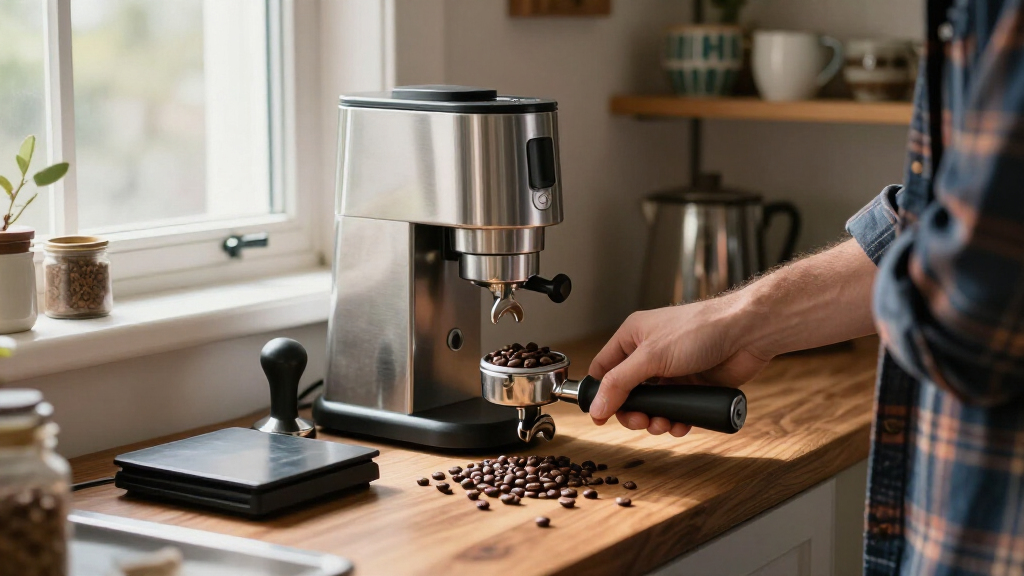
How We Picked
I judged every grinder here through one narrow lens: can it grind single doses for espresso consistently, repeatably, and cleanly? That meant prioritizing stepless or near-stepless adjustment (espresso lives in a sliver of the grind range, and stepped grinders often jump right over it), burr size and type (larger flat burrs favor clarity and even extraction; conicals favor body and forgiveness), and measured retention (anything above a gram of leftover coffee defeats the whole point of single dosing). Noise, build material, dosing convenience like magnetic cups, and ease of cleaning rounded out the scoring.
Ranking order reflects a simple hierarchy: grinders that nail espresso-fine consistency ranked highest, then value-per-dollar separated the middle of the field, and convenience-focused or hybrid models landed lower despite being pleasant machines for other brew methods. Where two products are near-identical — the two DF64 colorways and the two AMZCHEF units — I treated them as one choice and pointed out only the real differences. I deliberately favored long-term serviceability over gimmick features, because a grinder in this range should last a decade, not a warranty period.
Factors to Consider When Choosing Single Dose Espresso Grinder Under 1500
Before you commit to any single grinder, it helps to understand what actually drives espresso grind quality — and where marketing claims diverge from what matters in the cup. These are the factors I’d weigh before clicking buy.Burr Type and Size Shape Your Flavor
The single biggest decision in this category is flat versus conical burrs, because it changes the character of your espresso more than any other spec. Flat burrs — like those in the DF64 Gen 2 — cut coffee into more uniform particles, which tends to produce brighter, cleaner shots with distinct acidity. Conical burrs, as in the Turin SK40 and Wirsh GU63, create a wider particle distribution that translates to heavier body and more forgiving shots — helpful if your technique is still developing. Burrdiameter matters too: larger burrs grind cooler and faster, and heat is the enemy of flavor when you’re pulling multiple shots. A common mistake is assuming bigger is automatically better; a well-aligned 40mm burr set will outperform a poorly aligned 64mm one. Buy based on the flavor profile you enjoy drinking daily, not the spec sheet.
Retention Is the Whole Point of Single Dosing
If stale grounds sit in the chute between doses, you’re losing the freshness benefit you bought a single dose grinder for in the first place. True low-retention designs use tilted bases, bellows, and straight chutes to keep leftovers under a gram — the Turin SK40’s angled chassis and the DF64’s blow-up hopper both exist for this reason. Pay attention to what a retention claim actually means: a manufacturer citing sub-0.2g is usually describing grounds left after purging, not before. Grinders with long, horizontal chutes or awkwardly shaped spouts will quietly waste beans and muddle your dial-in, because yesterday’s coarse grounds mix into today’s espresso-fine dose. If you switch between espresso and filter coffee regularly, retention matters double — you’ll purge a dose every time you change grind size. This is one area where spending more genuinely buys a cleaner workflow.
Stepped Versus Stepless Adjustment for Espresso
Espresso dial-in happens in micro-movements — sometimes a few degrees of burr rotation is the difference between a sour shot and a bitter one. Stepless adjustment, found on the Turin SK40, Wirsh GU38, and DF64, lets you land exactly where the beans want to be. Stepped systems like the Maestri House’s 80 levels or AMZCHEF’s 75 settings sound impressive on paper, but even 75 clicks can jump past the sweet spot when the target window is a hair wide. The tradeoff is real, though: stepless grinders have no repeatable reference point, so if you grind for filter coffee then return to espresso, you’re re-dialing from memory. Beginners often find stepped adjustment reassuring at first and limiting within a month. My advice: if espresso is your primary drink, stepless wins; if you brew everything, a fine-stepped grinder is a reasonable compromise.
Noise, Speed, and Daily Workflow
Motor RPM affects two things buyers often overlook: noise and grind heat. Slow-rotating grinders like the Wirsh GU63 at 110 RPM run dramatically quieter and cooler than high-speed machines, which matters if you make coffee before the household wakes up — but a slow grind of 18 grams can take noticeably longer. Grinders with magnetic dosing cups, like the Viesimple Gen 4 and GU63, eliminate the fumble of threading a portafilter under the spout, which sounds trivial until you do it twice a day for years. Also consider whether the unit stays plugged in or, like the Maestri House, runs on a rechargeable battery — convenient for travel, but battery fade can reduce torque on espresso-fine settings over time. None of these factors show up in a shot-tasting comparison, yet they define whether you enjoy or resent your morning routine.
Build Quality and Long-Term Serviceability
A grinder at this level should be a decade-plus purchase, so metal construction isn’t about aesthetics — aluminum bodies resist the flex that knocks burrs out of alignment, and alignment is everything for espresso. The HiBREW G5’s aluminum housing and the DF64’s metal chassis will hold tolerance longer than mostly-plastic compact units, even when the plastic ones grind well out of the box. Check whether replacement burrs and parts are actually available; several budget brands in this space effectively treat grinders as disposable. Swappable burr sets, a signature advantage of the DF64 platform, let you change your flavor profile years from now without buying a new machine. Also weigh the warranty and whether the seller is the manufacturer or a third-party importer, since support quality varies widely in this crowded segment. The cheapest grinder that can’t be repaired is rarely the bargain it appears to be.
Where Your Money Actually Goes Under $1500
One odd truth about this category: nearly every strong option sits between roughly $200 and $700, so a $1500 ceiling doesn’t mean you should spend $1500. Past that mid-tier, you’re paying for marginal grind improvements that most home palates won’t detect, plus refinements like dead-quiet motors and premium finishes. The smarter move is budgeting for the full ecosystem: a good scale accurate to 0.1g, a distribution tool, and fresh beans will improve your shots more than stepping from the Turin SK40 to a flagship grinder. Where extra money does help is burr quality, motor stability under load, and retention engineering — the DF64 Gen 2 and Wirsh GU63 justify their premiums on exactly those fronts. Buyers who stretch their budget on a grinder and then buy supermarket beans have the hierarchy backwards. Decide what your realistic upgrade path looks like before you choose.
Frequently Asked Questions
Is the DF64 Gen 2 worth it over cheaper single dose grinders like the Turin SK40 or Wirsh GU38?
The DF64 earns its premium through larger 64mm flat burrs and an upgrade path that cheaper grinders can’t match — you can swap in aftermarket burr sets later and effectively get a new grinder for a fraction of the cost. Its grind distribution is more uniform than 40mm conical options, which shows up as brighter, more articulated espresso shots. That said, the Turin SK40 and GU38 produce genuinely enjoyable, forgiving espresso and cost meaningfully less, and their conical burrs actually flatter darker roasts and milk drinks. If you drink straight light-roast shots and enjoy tinkering, the DF64 justifies itself; if you mostly make lattes, the cheaper stepless grinders deliver 90% of the experience. The DF64 also demands slightly more technique — its adjustment collar and bellows workflow have a learning curve. So the answer depends less on budget and more on how you drink your coffee.
Can compact or rechargeable grinders like the Maestri House actually handle espresso?
They can grind fine enough for espresso to run, but “fine enough” and “dial-in friendly” are different standards. The Maestri House’s 80 stepped levels sound generous, yet espresso occupies such a narrow grind window that a single click can overshoot the sweet spot, and its battery-powered motor can lose torque under espresso-fine load as the charge drops. For travel, office desks, or a mix of pour-over and the occasional espresso, it’s a genuinely useful machine. For someone pulling espresso daily, the stepped adjustment becomes a recurring frustration rather than a convenience. If portability is your priority and espresso is secondary, it works; if espresso is the point, a plug-in stepless grinder is the better tool. I’d treat rechargeable models as a second grinder, not a primary one.
What’s the difference between the two AMZCHEF grinders and the two DF64 colorways on this list?
In both cases, they’re functionally the same grinder in different finishes, so you can choose purely on looks without worrying about performance. The two AMZCHEF units share identical 40mm burrs, 75 grind settings, and low-retention design — one in a standard finish, one in rose gold — so pick whichever suits your kitchen. The DF64 Gen 2 black and white versions are likewise mechanically identical, including the same burr set and stepless adjustment. This matters because retailers sometimes price color variants differently, and you shouldn’t assume the pricier color performs better. It also means my ranking applies to whichever finish you choose. The only practical consideration is that light finishes tend to show coffee oils and staining more visibly over time.
How much retention should I actually worry about for single dosing?
For single dosing, anything under about a gram of retention is workable, and under half a gram is excellent — the AMZCHEF’s sub-0.2g claim and the DF64’s bellows-purged design both sit in that excellent range. Retention matters most when you weigh your dose in and expect the same dose out; stale leftovers skew both the weight and the extraction. Tilted-base designs like the Turin SK40 and straight-chute layouts minimize dead space mechanically, while some grinders rely on you physically puffing a bellows to clear grounds. If you only drink espresso and never change grind size, moderate retention is an annoyance; if you bounce between espresso and filter, it’s a real problem because each switch purges a full dose. Grinders with magnetic dosing cups also help you verify your output weight quickly. Weigh your first few doses in and out when any new grinder arrives — that tells you more than any spec sheet.
Do I need a single dose grinder at all, or should I keep beans in a hopper-fed grinder?
A single dose setup wins for home espresso for two reasons: freshness and flexibility. Beans sitting in a hopper oxidize and stink up over days, while single dosing means every shot comes from an airtight container at peak freshness. It also lets you switch beans between shots — a decaf for evening, a light roast for the morning — which hoppers make impractical. Hopper-fed grinders make sense only if you drink the same coffee daily and pull many shots in a row, like a small office. The tradeoff is workflow: single dosing means weighing beans, loading, and purging each time, adding a minute to your routine. If you value repeatability and variety over speed, single dosing is clearly better. Given that every grinder on this list is built for it, the question is really whether your mornings can absorb the extra ritual.
Conclusion
After comparing all thirteen, the right choice comes down to how you drink espresso and how much ritual you want. For best overall, the DF64 Gen 2 stands apart — its flat burrs, low retention, and upgrade path make it the grinder that grows with your skills, and the black or white versions are mechanically identical so pick your finish. For best value, the Turin SK40 delivers true stepless espresso grinding and a smart tilted design at a price that leaves budget for beans and a good scale. The Wirsh Geimori GU63 takes best premium with its big 63mm conical burrs and library-quiet 110 RPM motor — ideal for early mornings and dark-roast lovers alike. Beginners should lean toward the Wirsh GU38 or SHARDOR all-metal, which keep the workflow simple without the re-dialing demands of a fully stepless machine. For specific needs: the Viesimple Gen 4 for tight counters and quiet apartments, the Maestri House if you need a travel-capable second grinder, the Gevi VelPro 400 for a balance of speed and convenience, the HiBREW G5 if aluminum build on a budget matters, and either AMZCHEF if fine-stepped adjustment and a rose gold finish fit your kitchen. Whatever you choose, remember that fresh beans and a 0.1g scale will do more for your shots than any upgrade — the grinder just has to get out of the way.
Fall Picks
fall essentials
As an affiliate, we earn on qualifying purchases.