For a super-automatic espresso machine under $5,000, I’d start with the Philips 5500 Series as the best overall pick: its broad drink selection and LatteGo milk system suit households that want variety without a complicated routine. The De’Longhi Rivelia stands out for flexible bean choices, while the Philips 3200 Series offers a simpler path to everyday espresso and milk drinks. The main tradeoffs are drink customization, milk-system convenience, maintenance, and how much machine complexity you actually need. A larger menu can add flexibility, but it does not automatically mean better coffee for your routine. Read on for the full breakdown of all eight options and the buyer needs each one fits best.

Get kitchen gear delivered free with Prime
- Fast, free delivery on millions of items
- Prime Video, Amazon Music and more included
- Member-only deals all year
Complete the kit


Key Takeaways
- The Philips 5500 Series is the strongest all-rounder for buyers who want a wider drink menu and a low-fuss LatteGo milk system.
- The Rivelia’s bean flexibility is its defining advantage, making it a better match for switching between coffee styles or household preferences than a simpler daily-drink machine.
- The Philips 3200 and 3300 Series sit between entry-level simplicity and a larger menu; choose by the drinks and controls you need rather than assuming the newer number alone makes the better fit.
- The Magnifica Duo and Philips 2200 prioritize straightforward routines, but buyers should weigh their simpler approach against the extra drink variety offered by the Philips 5500.
- The EUHOMY is the built-in-grinder alternative, while the two Rivelia color listings represent the same model family, not separate feature tiers.




| super automatic espresso machine under 5000 | Operation | Dimensions | Milk system | Grinder |
|---|---|---|---|---|
| De’Longhi Rivelia Automatic Es | Fully automatic | 12.01 x 19.69 x 19.09 inches | — | — |
| EUHOMY Automatic Espresso Mach | — | — | Built-in milk frother | — |
| Philips 3200 Series Fully Auto | Fully automatic | 10 x 17 x 15 inches | LatteGo | Ceramic |
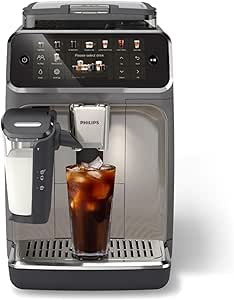
| Philips 5500 Series Fully Auto | Fully automatic | 9.69 x 14.61 x 17.05 inches | LatteGo | — |
| De’Longhi Rivelia Automatic Es | Fully automatic | 12.01 x 19.69 x 19.09 inches | — | — |
| De’Longhi Magnifica Duo Automa | Fully automatic | 19.69 × 12.2 × 16.14 inches (D × W × H) | Hot and cool milk-frothing technologies | Built-in conical burr grinder |
| PHILIPS 3300 Series Fully Auto | Fully automatic | 9.68 × 17.04 × 14.6 inches (D × W × H) | LatteGo, three parts with no internal tubes | Ceramic grinder |
| Philips 2200 Series Fully Auto | Fully automatic | 14.6 × 9.6 × 17 inches (D × W × H) | Classic milk frother | Built-in ceramic grinder |
More Details on Our Top Picks
De’Longhi Rivelia Automatic Espresso Machine, Milk Frother, White
The Rivelia White is the most versatile pick here for households that rotate between beans and drink styles. Its removable bean hoppers make switching between, for example, regular and decaf beans easier than on the Philips 5500 Series, which emphasizes preset variety rather than bean changes. The Rivelia also pairs hot and cold milk systems with cold-extraction brewing, giving iced-drink fans more than a standard espresso-and-milk menu. Four user profiles help multiple people save preferences, while the touchscreen and guided bean settings offer more customization than the simpler Philips 3200 Series. The tradeoff is a feature-rich, relatively wide machine, and its multiple drink systems may be more than a buyer needs if they mainly make basic espresso. Its white finish is a styling choice; the black Rivelia offers the same listed core features.
Pros:- Interchangeable bean hoppers simplify switching between different beans, including decaf.
- Hot and cold LatteCrema systems support both warm milk drinks and cold foam.
- Cold-extraction technology prepares cold brew in under three minutes.
- Four user profiles and a touchscreen support personalized drink settings.
Cons:- At 19.69 inches wide, it needs substantial counter space.
- Its many drink options and bean settings may add complexity for people who want a simple daily routine.
- The supplied listing gives inconsistent recipe counts, so buyers should confirm the exact menu for their version.
Best for: Households with several coffee drinkers who switch between bean types, milk drinks, and cold coffee.
Not ideal for: Buyers who want a compact machine for mostly espresso or basic cappuccino, since the Rivelia’s broad drink system and 19.69-inch width may be unnecessary.
- Operation:Fully automatic
- Grind settings:13
- User profiles:4
- Display:3.5-inch color touchscreen
- Hot and cold milk systems:LatteCrema Hot and LatteCrema Cool
- Cold brew:Cold extraction in under 3 minutes
- Dimensions:12.01 x 19.69 x 19.09 inches
- Wattage and voltage:1450 watts, 120 volts
Our verdict“Choose the white Rivelia if easy bean changes and hot-and-cold drink flexibility matter more than a smaller footprint or a simpler menu.”
EUHOMY Automatic Espresso Machine with Built-in Grinder and Milk Frother
The EUHOMY is the straightforward pick for buyers who want an all-in-one bean-to-cup setup without prioritizing brand-specific drink systems or extensive personalization. Its 15 grind levels, built-in milk frother, touch controls, and self-cleaning feature cover the main daily tasks, while a 1.5-liter water tank and 200-gram hopper reduce refills during routine use. Compared with the Philips 3200 Series, the EUHOMY lists more grinder adjustment levels, but the Philips provides a named ceramic grinder and a removable LatteGo milk system with a clearer cleaning approach. The EUHOMY’s 20-bar pump figure does not by itself establish better-tasting espresso, and the supplied details say little about drink presets or saved profiles. This is a practical feature-led choice, but buyers seeking documented recipe breadth or a particularly simple milk-cleaning routine may prefer Philips or De’Longhi.
Pros:- Built-in grinder and milk frother cover grinding and milk preparation in one appliance.
- Fifteen grind levels provide useful adjustment for different beans and tastes.
- 1.5-liter water tank and 200-gram bean hopper reduce frequent refilling.
- Touch controls and a self-cleaning feature support a convenient daily routine.
Cons:- The available product information does not specify drink presets or saved user profiles.
- Multiple settings and cleaning needs may feel less approachable to buyers seeking a very simple machine.
- Its size may be difficult to accommodate in a small kitchen.
Best for: First-time automatic-machine buyers who want an integrated grinder, automatic milk frothing, and enough capacity for several drinks a day.
Not ideal for: Buyers who want clearly documented drink menus, established milk-system details, or extensive user-profile customization.
- Water capacity:1.5 liters
- Bean hopper capacity:200 grams
- Extraction pressure:20 bar
- Grind levels:15
- Controls:Touch control
- Milk system:Built-in milk frother
- Cleaning feature:Self-cleaning
Our verdict“Pick the EUHOMY if you want the core grinder-and-frother package with adjustable settings, and skip it if a well-documented drink menu or milk-cleaning system is a priority.”
Philips 3200 Series Fully Automatic Espresso Machine with LatteGo Milk Frother
The Philips 3200 Series suits buyers who want a familiar set of espresso and milk drinks without the more elaborate bean-switching and cold-drink features of the De’Longhi Rivelia. Its LatteGo milk system detaches for cleaning, and the removable brew group gives owners direct access to a key part of the brewing path. That practical maintenance approach is its strongest distinction from the Philips 5500 Series, which offers a larger hot-and-iced preset selection. The 3200’s ceramic grinder and touch display cover the essentials, but the supplied description does not list grinder adjustment levels or a broad menu of iced recipes. The plastic exterior is less premium in feel than some buyers may expect, and its 17-inch width still calls for a planned countertop spot. I would favor it for routine cappuccinos and lattes, not menu exploration.
Pros:- LatteGo milk system detaches for simpler cleaning and storage.
- Removable brew group allows access for routine care.
- Ceramic grinder handles whole-bean grinding within the automatic workflow.
- Touch display makes the main drink choices easy to access.
Cons:- The plastic exterior may feel less substantial than the finish on higher-end options.
- The supplied product details do not specify grinder adjustment levels.
- Its 17-inch width may not suit tight counters.
Best for: Households that regularly make espresso, cappuccino, or latte macchiato and value a removable milk system and brew group for cleaning.
Not ideal for: Coffee drinkers who want extensive hot-and-cold presets, bean-swapping features, or a compact countertop machine.
- Model:EP3241/54
- Operation:Fully automatic
- Grinder:Ceramic
- Milk system:LatteGo
- Wattage:1500 watts
- Voltage:110 volts
- Dimensions:10 x 17 x 15 inches
- Weight:8 kilograms
Our verdict“Choose the Philips 3200 if easy access for milk-system and brew-group cleaning matters more than a wide drink menu or advanced customization.”
Philips 5500 Series Fully Automatic Espresso Machine with LatteGo Milk System
The Philips 5500 Series earns its place for people who want a broad menu ready from the display, including 20 hot and iced presets. That gives it a more varied built-in drink selection than the Philips 3200 Series, while its LatteGo system froths milk automatically instead of requiring manual steaming. SilentBrew and QuickStart are aimed at making frequent use less disruptive and faster to begin, though they do not replace the more distinctive bean-switching options of the De’Longhi Rivelia. The 1.8-liter water capacity supports repeated drinks between refills, but the listed 230-volt specification deserves checking against the buyer’s electrical setup. The source also gives an unusually low weight figure, so it is best not to rely on that measurement for handling or placement. Choose this Philips for menu breadth, not bean experimentation.
Pros:- Twenty hot and iced presets offer more menu variety than the Philips 3200 Series.
- LatteGo automatically froths milk for drinks such as cappuccino and latte.
- SilentBrew is designed to reduce brewing noise.
- A 1.8-liter capacity supports several drinks before refilling.
Cons:- The listed 230-volt specification may not match every household electrical setup.
- The available information notes a limit of two saved profiles in some descriptions.
- The product does not list the Rivelia’s interchangeable bean hoppers.
Best for: Households with varied drink preferences that want one-touch hot and iced options and automatic milk frothing.
Not ideal for: Buyers who need to switch between different bean types, want more than the listed two saved profiles, or cannot confirm compatibility with the 230-volt specification.
- Operation:Fully automatic
- Preset drinks:20 hot and iced options
- Milk system:LatteGo
- Output pressure:15 bar
- Water capacity:1.8 liters
- Wattage:1500 watts
- Voltage:230 volts
- Dimensions:9.69 x 14.61 x 17.05 inches
Our verdict“Choose the Philips 5500 if preset hot-and-cold variety matters most, after confirming its voltage and profile details for the specific version.”
De’Longhi Rivelia Automatic Espresso Machine, Milk Frother, Black
The Rivelia Black has the same core appeal as the white version: interchangeable bean hoppers, bean-specific settings, hot and cold milk preparation, and cold-extraction brewing. I rank this finish for buyers who want those capabilities in a darker kitchen setup, not because it adds a different brewing advantage. Compared with the Philips 5500 Series, the Rivelia puts more emphasis on changing beans and saving settings for them; the Philips instead leads with its listed set of 20 hot and iced presets. Four profiles and a touchscreen make the Rivelia well suited to shared use, but its 19.69-inch width takes real counter space. The black and white models have matching listed specifications, so the choice between them is aesthetic. Buyers who do not switch beans or make cold drinks may find the simpler Philips 3200 more proportionate to their routine.
Pros:- Interchangeable hoppers make it easier to alternate between bean types.
- Bean Adapt settings support adjustments for different beans.
- Hot and cold milk systems serve both traditional and iced drinks.
- Four profiles let multiple household members save preferences.
Cons:- Its wide footprint can be a poor fit for a crowded counter.
- The extensive features may be unnecessary for buyers who make only a few basic drinks.
- Core specifications match the white Rivelia, so the black finish offers no listed functional distinction.
Best for: Shared households that want Rivelia’s bean-switching and hot-and-cold drink features in a black finish.
Not ideal for: Buyers choosing between the two Rivelia colors for different performance, or anyone with limited counter space and a mainly espresso-based routine.
- Operation:Fully automatic
- Grind settings:13
- User profiles:4
- Display:3.5-inch color touchscreen
- Hot and cold milk systems:LatteCrema Hot and LatteCrema Cool
- Cold brew:Cold extraction in under 3 minutes
- Dimensions:12.01 x 19.69 x 19.09 inches
- Wattage and voltage:1450 watts, 120 volts
Our verdict“Select the black Rivelia for the same flexible bean and drink system as the white model, with the finish suited to your kitchen.”
De’Longhi Magnifica Duo Automatic Espresso Machine, Milk Frother, Silver
The Magnifica Duo is the strongest fit here for households that want more than standard espresso and milk drinks: its 20 presets include drip-style coffee, iced drinks, and cold brew alongside espresso. That broader menu sets it apart from the Philips 3300 Series, which lists six presets, and the simpler Philips 2200 Series, which offers two coffee varieties. A built-in conical burr grinder and touchscreen support convenient bean-to-cup preparation, while separate hot and cool milk-frothing options give more flexibility across seasons. The tradeoff is its substantial footprint at nearly 20 inches deep, so it is a less practical choice for tight counters. I’d shortlist it for variety-first buyers, but not for anyone who mainly wants a compact machine for a daily espresso.
Pros:- Twenty preset recipes cover a wider range of hot and cold drinks than the Philips 3300 Series
- Built-in conical burr grinder prepares drinks from whole beans
- Hot and cool milk-frothing options support varied milk beverages
- Touchscreen makes preset selection straightforward
Cons:- Nearly 20 inches deep, making it challenging to fit on shallow counters
- Its extensive menu may be unnecessary for buyers who stick to a few drinks
- The listed 1450-watt draw may matter to buyers monitoring appliance energy use
Best for: Households that regularly switch between espresso, milk drinks, iced beverages, and cold brew and have ample counter depth
Not ideal for: Small kitchens or buyers who mainly drink espresso and want to avoid giving up nearly 20 inches of counter depth
- Operation:Fully automatic
- Preset recipes:20
- Grinder:Built-in conical burr grinder
- Milk system:Hot and cool milk-frothing technologies
- Power:1450 watts
- Dimensions:19.69 × 12.2 × 16.14 inches (D × W × H)
- Weight:20.8 pounds
- Warranty:2 years, plus 1 additional year with registration
Our verdict“Choose the Magnifica Duo if you want the widest built-in drink menu and have room for its deep body.”
PHILIPS 3300 Series Fully Automatic Espresso Machine, LatteGo Milk System
The Philips 3300 Series makes the most sense for buyers who want automatic milk drinks without a complicated cleanup routine. Its LatteGo system uses three parts and has no internal tubes, so it can be rinsed quickly or placed in the dishwasher. That is a practical distinction from the Philips 2200 Series, whose classic frother involves manual milk preparation, and a simpler daily-care proposition than choosing a machine for a much broader menu like the Magnifica Duo. The 3300 also grinds, tamps, and brews at the touch of a button, with adjustable strength, volume, and milk level. Its six listed presets offer useful variety, though fewer choices than the Magnifica Duo’s 20; its 17-inch width also calls for counter space.
Pros:- Three-part LatteGo milk system has no internal tubes and is dishwasher safe
- One-touch brewing automates grinding, tamping, and preparation
- Strength, volume, and milk level can be adjusted
- AquaClean filter and guided descaling support simpler maintenance
Cons:- Six presets provide less menu breadth than the De’Longhi Magnifica Duo
- Its 17.04-inch width may be awkward on narrow counters
- Milk drinks still require cleaning the LatteGo parts after use
Best for: Daily cappuccino and latte drinkers who want one-touch preparation and a milk system that is quick to rinse
Not ideal for: Buyers seeking the broadest recipe selection, or kitchens without room for a machine over 17 inches wide
- Operation:Fully automatic
- Presets:Six listed drink options
- Milk system:LatteGo, three parts with no internal tubes
- Grinder:Ceramic grinder
- Water capacity:1.8 liters
- Pump pressure:15 bar
- Power:1500 watts
- Dimensions:9.68 × 17.04 × 14.6 inches (D × W × H)
- Weight:17.6 pounds
Our verdict“Pick the Philips 3300 if quick, low-fuss milk-system cleanup matters more than having the largest recipe menu.”
Philips 2200 Series Fully Automatic Espresso Machine, Classic Milk Frother, 2 Coffee Varieties, Touch Display, Ceramic Grinder, AquaClean Filter, Aroma Seal, Black (EP2220/14)
The Philips 2200 Series is the straightforward pick for buyers who want automatic espresso without paying for a large preset menu or an automatic milk system. It offers two coffee varieties, adjustable strength and volume, and a touch display, while its classic frother lets owners prepare milk for cappuccinos and similar drinks themselves. Compared with the Philips 3300 Series, it gives up LatteGo’s automated milk preparation and quick-rinse design, but keeps the core bean-to-cup workflow simpler. The ceramic grinder and removable brew group are useful everyday features, and the AquaClean filter reduces how often descaling is needed when used as directed. Its limited drink selection and plastic construction make it a poor match for buyers seeking a premium feel or lots of one-touch recipes.
Pros:- Touch display and customizable strength and volume keep everyday brewing simple
- Ceramic grinder handles whole beans for fresh-ground coffee
- Classic milk frother allows manual preparation of cappuccino-style drinks
- AquaClean filter and removable brew group support routine maintenance
Cons:- Only two coffee varieties are listed, fewer than the Philips 3300 Series
- Classic frother requires more hands-on work than the 3300’s LatteGo system
- Plastic construction may feel less substantial than buyers expect
Best for: Coffee drinkers who mainly want espresso or coffee, with occasional manually frothed milk drinks and simple controls
Not ideal for: Households that want one-touch cappuccinos, a broad preset menu, or a more premium-feeling exterior
- Operation:Fully automatic
- Coffee varieties:2
- Milk system:Classic milk frother
- Grinder:Built-in ceramic grinder
- Pump pressure:15 bar
- Filter:AquaClean
- Power:1500 watts
- Dimensions:14.6 × 9.6 × 17 inches (D × W × H)
- Voltage:120 volts
Our verdict“Choose the Philips 2200 if you want a basic automatic espresso-and-coffee setup and are comfortable frothing milk yourself.”

How We Picked
I ranked these machines around the decisions that matter in this category: how readily they make espresso and milk drinks, how much choice they give the user, how approachable the controls seem for everyday use, and how the milk and cleaning systems fit a regular home routine. I also weighed grinder integration and flexibility, since buyers choosing an all-in-one machine often want fewer separate steps and appliances.
The order favors a useful balance of drink choice, convenience, and day-to-day usability rather than the longest feature list. That puts the Philips 5500 first for its broad appeal, with the Rivelia close behind for buyers who value bean flexibility. Simpler Philips and De’Longhi options rank well for focused routines, while the EUHOMY is a distinct built-in-grinder choice whose fit depends more on a buyer’s preference for its particular all-in-one approach. The white and black Rivelia listings are treated as color variants, not as two different performance recommendations.
| super automatic espresso machine under 5000 | Milk system | Grinder |
|---|---|---|
| De’Longhi Rivelia Automatic Es | — | — |
| EUHOMY Automatic Espresso Mach | Built-in milk frother | — |
| Philips 3200 Series Fully Auto | LatteGo | Ceramic |
| Philips 5500 Series Fully Auto | LatteGo | — |
| De’Longhi Rivelia Automatic Es | — | — |
| De’Longhi Magnifica Duo Automa | Hot and cool milk-frothing technologies | Built-in conical burr grinder |
| PHILIPS 3300 Series Fully Auto | LatteGo, three parts with no internal tubes | Ceramic grinder |
| Philips 2200 Series Fully Auto | Classic milk frother | Built-in ceramic grinder |
Factors to Consider When Choosing Super Automatic Espresso Machine Under 5000
Before choosing a machine, I’d start with the routine you want it to simplify. These models differ less by a single headline feature than by how they handle drink variety, milk, coffee-bean changes, and regular care.
Match the drink menu to what you actually order
A longer drink menu is useful only if you’ll make those drinks often enough to justify the added choices. List the drinks everyone in your household reaches for, then check whether the machine supports them directly or requires extra steps. If most mornings call for espresso or a basic coffee, a simpler interface can be faster to live with than a menu packed with options. For households with different preferences, a broader selection such as the Philips 5500’s can reduce the need for workarounds. Avoid choosing by drink count alone: recipe names do not tell you how much control you have over strength, volume, or milk. Prioritize the controls you’ll use every week.
Choose a milk system around cleanup, not just foam
Milk drinks add a second routine to espresso making: storing milk, preparing it, and cleaning the parts afterward. A carafe-style system can make repeat drinks easier, while a classic frother gives the user a more hands-on process and may suit those who prefer separate control. Think about whether one person or several people will make milk drinks throughout the day, since frequent use makes quick cleanup more valuable. Also check how the milk parts detach and what cleaning the manufacturer calls for; a convenient serving method can still involve regular washing. Buyers who mostly drink espresso should not pay extra attention to milk features they will rarely use. Pick the system you are most likely to maintain consistently.
Decide whether you need to switch beans often
Bean flexibility matters most when people in the same home want different roasts or when you alternate between regular and decaf. The Rivelia is the standout in this lineup for buyers drawn to changing bean choices, but that advantage has little value if you keep one bean in the hopper. Before buying, consider how often you would change beans and whether the machine’s process fits your routine. Switching frequently can mean more planning than simply keeping a second bag nearby. If consistency matters more than variety, a conventional hopper setup may be the simpler choice. Do not treat a bean-changing feature as a substitute for choosing beans that suit your preferred drinks.
Think through maintenance before focusing on drinks
Automatic machines still need regular attention: coffee oils and grounds build up, water systems need care, and milk components require cleaning after use. Compare the cleaning steps for the brew group, drip tray, grounds container, and milk system before deciding. Filter compatibility and descaling routines can affect how much upkeep you take on over time, so check the instructions for the exact model rather than relying on a feature name. A machine that makes your favorite drink but feels tedious to clean may end up used less often. If multiple people will use it, choose a routine they can all follow. Convenience is only real when the cleanup fits your household.
Measure your counter and plan for access
Check the machine’s full footprint, including the space needed to open bean hoppers, fill the water tank, and remove trays. A machine may fit beneath a cabinet yet be awkward to refill if the tank lifts from the top. Leave enough room to clean and service the machine without moving other appliances each time. Also account for nearby outlets and the place you’ll keep beans, cups, and cleaning supplies. This is an easy step to skip when comparing product pages, but daily access matters more than a compact-looking front view. Measure the working area, not just the machine body.
Pay for flexibility only when it solves a real problem
Spending more can make sense when the added menu, controls, or bean flexibility will change how your household makes coffee. It is a weaker reason to upgrade if you mainly want a dependable espresso and rarely use specialty drinks. Compare the Philips 2200 and Magnifica Duo-style straightforward approach with a broader-menu machine by imagining a normal weekday, not an occasional brunch. New buyers may benefit more from clear controls and manageable cleaning than from many recipes. Experienced users may value more options if they regularly adjust drinks for different tastes. The best fit is the machine whose added features earn their place in your routine.
Frequently Asked Questions
Is the Philips 5500 Series worth choosing over the Philips 3200 or 3300?
I’d choose the 5500 when a wider range of drinks is likely to get regular use and you want a LatteGo milk system. The 3200 and 3300 make more sense when your routine is narrower and you prefer not to pay attention to extra menu options. Compare the specific drinks and adjustments you want rather than relying on the series number. A larger menu does not guarantee a better result for a drink you already make well. If you rarely move beyond a couple of favorites, a simpler model may suit you better.
Should I buy the white or black De’Longhi Rivelia?
The listings name different colors of the Rivelia, so the choice is mainly about which finish suits your kitchen. I would not rank one color above the other for brewing or bean flexibility based on the supplied product details. Check the exact listing for any regional or package differences before ordering, since color variations can sometimes be sold with different bundles. If bean changes are not part of your routine, compare the Rivelia with the Philips 5500 or a simpler model instead. The color decision should come after deciding that the Rivelia’s feature set fits your needs.
Is a LatteGo system a better choice than a classic milk frother?
It depends on whether you value a more automated milk routine or direct hands-on control. LatteGo models in this lineup are a natural fit for people who make milk drinks often and want a system designed around serving them with less manual frothing. The Philips 2200’s classic frother may suit someone who makes milk drinks occasionally and prefers a simpler, more manual process. In either case, milk parts need regular cleaning, so check the care routine before buying. If you mostly drink espresso without milk, this difference should carry little weight in your decision.
Does the EUHOMY make more sense than a Philips or De’Longhi machine?
The EUHOMY is worth comparing if a built-in grinder and milk frother are central to the all-in-one setup you want. The Philips and De’Longhi alternatives in this roundup offer clearer distinctions around LatteGo convenience, bean flexibility, or simpler everyday routines. I would compare the exact drink controls, cleaning instructions, and support details for the specific models before choosing, since a shared feature label does not reveal how the daily experience differs. If a particular milk system or broader menu is your priority, one of the named Philips or De’Longhi options may be a more direct match. Choose the EUHOMY when its full feature set—not just the grinder—fits your routine.
Do I need a high-end model if I only drink espresso and coffee?
Probably not: if you rarely make milk drinks or use specialty recipes, a simpler machine may cover your needs without adding controls you will ignore. The Philips 2200 and Magnifica Duo are the more focused options in this roundup, while the Philips 5500 is aimed at buyers who want a broader menu. Think about whether you want drink customization or just a consistent, convenient daily cup. A more feature-rich machine is worthwhile only when those features change what you make. Check that the simpler model supports your preferred drink sizes and adjustment needs before deciding.
Conclusion
For most households seeking a flexible daily machine, I’d choose the Philips 5500 Series as the best overall, thanks to its broader drink selection and LatteGo system. The best value in this lineup is the Philips 3200 Series for buyers who want a practical milk-drink routine without prioritizing the 5500’s wider menu. For beginners who want a more focused interface, I’d compare the Philips 2200 with the Magnifica Duo and choose based on whether a classic frother or a different everyday setup suits them better. The best premium-style choice for flexibility is the Rivelia, especially for households that expect to change beans; the white and black versions are color alternatives. For a built-in-grinder option, consider the EUHOMY after checking its specific cleaning and control details. Match the machine to the drinks you make, then let features you will rarely use drop out of the decision.
Halloween Picks
halloween
As an affiliate, we earn on qualifying purchases.