
Alkalinity and hardness are often confused but impact water quality differently. Alkalinity buffers pH and keeps water stable, preventing flavor changes, while hardness relates to minerals like calcium and magnesium that affect mineral taste and can cause scaling. Mixing these up can ruin your water’s flavor and damage equipment. Understanding the differences helps you choose or treat water properly. Keep going to learn how proper adjustments can improve your water’s taste and performance.

Get kitchen gear delivered free with Prime
- Fast, free delivery on millions of items
- Prime Video, Amazon Music and more included
- Member-only deals all year
Key Takeaways
- Alkalinity buffers pH stability, preventing flavor shifts, while hardness relates to mineral content affecting taste and clarity.
- High alkalinity maintains pH but can cause scaling; excessive hardness can produce chalky or metallic aftertastes.
- Adjusting mineral levels (calcium, magnesium) and pH improves water taste and prevents equipment issues.
- Regular testing of alkalinity and hardness helps optimize water for brewing, cooking, and drinking.
- Proper water management ensures flavor consistency and protects appliances from scaling and corrosion.
Top picks for "alkalinity hardnes water"
As an affiliate, we earn on qualifying purchases.
What Are Alkalinity and Hardness in Water?
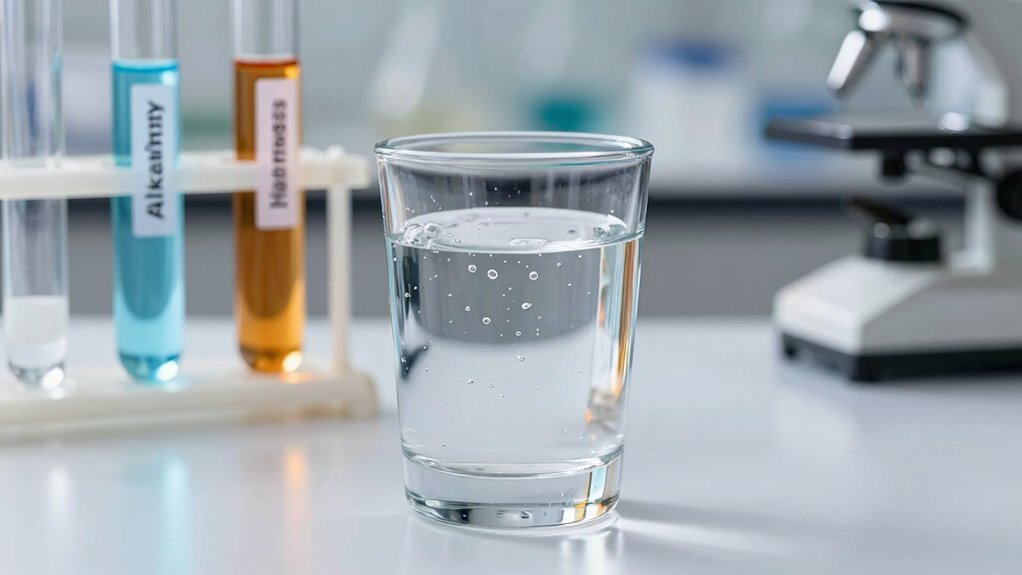
Have you ever wondered what makes water different from place to place? It mainly comes down to its alkalinity and hardness. Alkalinity helps with pH regulation, acting as a buffer to keep water’s acidity stable. This means it prevents sudden changes in pH that can affect taste and safety. Hardness, on the other hand, relates to mineral balance—specifically calcium and magnesium levels. These minerals influence how water feels, reacts with soap, and interacts with plumbing. While alkalinity guarantees your water remains balanced chemically, hardness affects its physical qualities. Understanding these factors helps you determine water quality and predict how it will behave in different settings. Both play a vital role in maintaining healthy, clean water for everyday use. Knowledge about water composition can also assist in choosing appropriate water treatment methods.
How Do Alkalinity and Hardness Affect Water’s Taste and Quality?
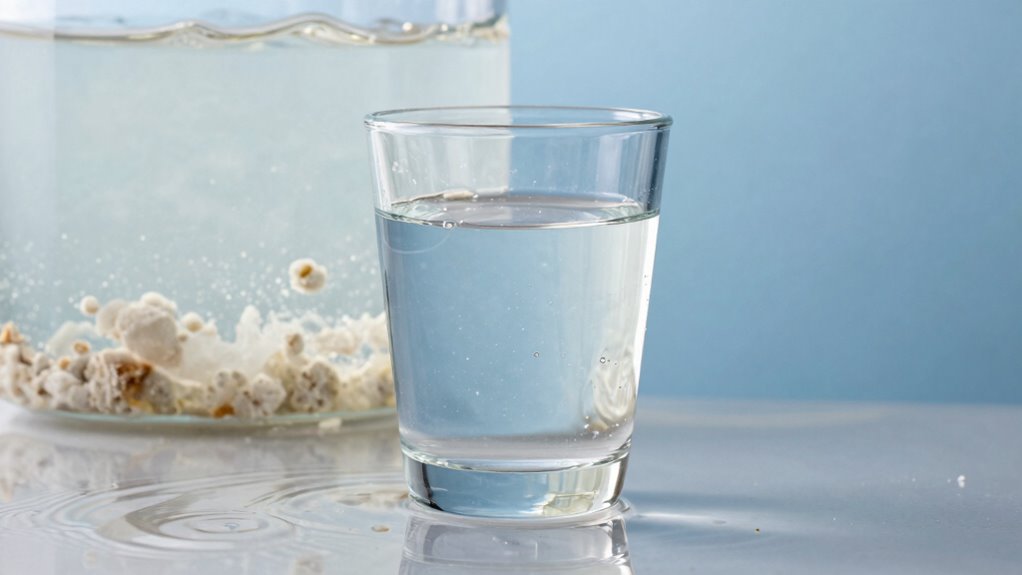
Your water’s mineral content can influence its flavor, sometimes giving it a metallic or bitter taste. Alkalinity helps maintain pH balance, which affects how fresh or flat the water feels. High hardness can interfere with taste and may leave a chalky or mineral aftertaste. Additionally, the presence of minerals such as calcium and magnesium impacts the water’s overall color accuracy, influencing how it appears and tastes.
Mineral Content Impact
Mineral content, specifically alkalinity and hardness, plays a significant role in shaping water’s taste and overall quality. These minerals influence water mineralization through mineral interactions that affect flavor and mouthfeel. High alkalinity can give water a smooth, buttery quality, while excessive hardness often introduces a metallic or bitter taste. The balance of minerals impacts how water interacts with other elements, affecting clarity and freshness. For example, calcium and magnesium contribute to hardness, which can dull flavors or cause scaling, whereas bicarbonates influence alkalinity, enhancing smoothness. Understanding how these minerals interact helps you recognize how water’s mineral content directly impacts its taste and perceived quality, making it easier to choose water suited to your preferences and avoid undesirable taste issues caused by mineral imbalances. Additionally, water testing can help identify mineral levels and guide you in selecting the best water for your taste and health needs.
pH Balance Effects
Alkalinity and hardness directly influence the pH balance of water, shaping its taste and overall quality. When alkalinity is high, it buffers pH fluctuations, preventing sudden drops or rises that can cause calcium buildup or corrosion. Hard water, rich in minerals, can push pH levels upward, resulting in a more alkaline taste. Conversely, low alkalinity allows pH swings, leading to inconsistent flavor and potential scaling issues. Here’s how they interact:
| Mineral Content | Effect on pH | Water Quality Impact |
|---|---|---|
| High alkalinity | Stabilizes pH | Reduces calcium buildup, maintains flavor |
| High hardness | Raises pH | Can cause taste changes and scaling |
| Low alkalinity | Fluctuates pH | Leads to flavor inconsistency and corrosion |
Additionally, understanding water chemistry can help you better interpret these effects and maintain optimal water quality.
Flavor Interference
The minerals dissolved in water, especially those contributing to alkalinity and hardness, directly influence its taste and overall quality. When mineral levels are unbalanced, they disrupt pH stability, leading to off-flavors or a metallic aftertaste. Hardness often introduces a bitter or chalky taste, while high alkalinity can cause water to taste flat or soapy. Maintaining a proper mineral balance is key to preventing flavor interference. If minerals are too concentrated, they overpower subtle flavors, making water seem dull or overly mineralized. Conversely, low mineral content can leave water tasting bland. By understanding how alkalinity and hardness affect pH stability and mineral balance, you can better gauge water quality and avoid flavor distortions that compromise your drinking experience. Additionally, water testing can help identify specific mineral levels to ensure optimal taste and quality.
What’s the Difference Between Alkalinity and Hardness?
Understanding the difference between alkalinity and hardness is essential for maintaining water quality, but many people confuse these two terms. Alkalinity refers to the water’s ability to neutralize acids, acting as a buffer to stabilize pH levels. Hardness, on the other hand, measures the concentration of calcium and magnesium minerals. These minerals influence water’s mineral balancing and can cause scale buildup. While alkalinity helps with pH control strategies, hardness directly affects soap efficiency and equipment longevity. Knowing the distinction allows you to tailor treatment methods appropriately. For example, adjusting alkalinity supports pH stability, whereas controlling hardness prevents scale formation. Clear understanding of these differences guarantees you implement the right water treatment, preserving water quality and avoiding flavor issues caused by mismanaged mineral levels.
How Do Water Treatments Change Alkalinity and Hardness?
Water treatments often alter mineral levels to adjust alkalinity and hardness. Techniques like pH modification directly impact these properties and change the water’s composition. Understanding these processes helps you choose the right treatment to achieve your desired water quality. Additionally, some treatments can influence other aspects of water chemistry, such as water pH balance, which further affects how minerals interact within the water.
Adjusting Mineral Levels
To modify alkalinity and hardness levels effectively, water treatment methods employ various chemical and physical processes. For instance, water softening reduces calcium levels, which directly lowers hardness. This process often involves ion exchange, where calcium and magnesium ions are replaced with sodium ions. Additionally, adding chemicals like lime or soda ash can increase alkalinity by elevating carbonate levels. These adjustments help balance mineral content and improve water quality. Proper control of mineral levels is essential to prevent issues like scaling or corrosion in appliances. Here’s a quick overview:
| Treatment Method | Affects | Typical Use |
|---|---|---|
| Water softening | Calcium, magnesium | Reduce hardness for appliances |
| Lime soda addition | Carbonates, alkalinity | Increase alkalinity for stability |
| Reverse osmosis | All minerals | Remove impurities and minerals |
These methods allow precise control over mineral levels, optimizing water for taste and appliance safety.
pH Modification Techniques
Adjusting mineral levels through chemical treatments not only influences hardness and alkalinity but also directly impacts pH, which measures how acidic or basic the water is. pH modification involves adding acids or bases to achieve a desired level, helping to stabilize mineral balance. For example, adding lime or sodium carbonate can raise pH levels, making water more alkaline, while acids like phosphoric or sulfuric acid lower pH, increasing acidity. These adjustments help optimize water for specific uses, such as brewing or aquariums, by ensuring consistent mineral balancing. Proper pH control prevents corrosion or scaling and maintains water’s overall stability. Through careful pH modification, you can fine-tune your water’s chemistry, balancing minerals effectively without disrupting the underlying alkalinity or hardness levels.
Impact on Water Composition
Treatments like adding lime, sodium carbonate, or acids directly alter the mineral content of your water, impacting its alkalinity and hardness levels. These changes influence water mineralization and pH buffering capacity, affecting how water interacts with your appliances and taste. Imagine:
- Adding lime boosts calcium levels, increasing hardness and stabilizing pH.
- Sodium carbonate softens water by removing calcium and magnesium, reducing hardness.
- Acid addition lowers pH, decreasing alkalinity and dissolving minerals.
- Adjusting mineral content modifies water’s ability to buffer pH changes, influencing flavor and how water reacts with your coffee or tea. These treatments reshape water composition, making it more or less resistant to pH fluctuations and altering the mineral balance that defines alkalinity and hardness. Additionally, altering water chemistry can impact the effectiveness of water treatment systems and the longevity of your appliances.
How Can Testing and Adjusting Water Improve Your Drinking and Cooking?
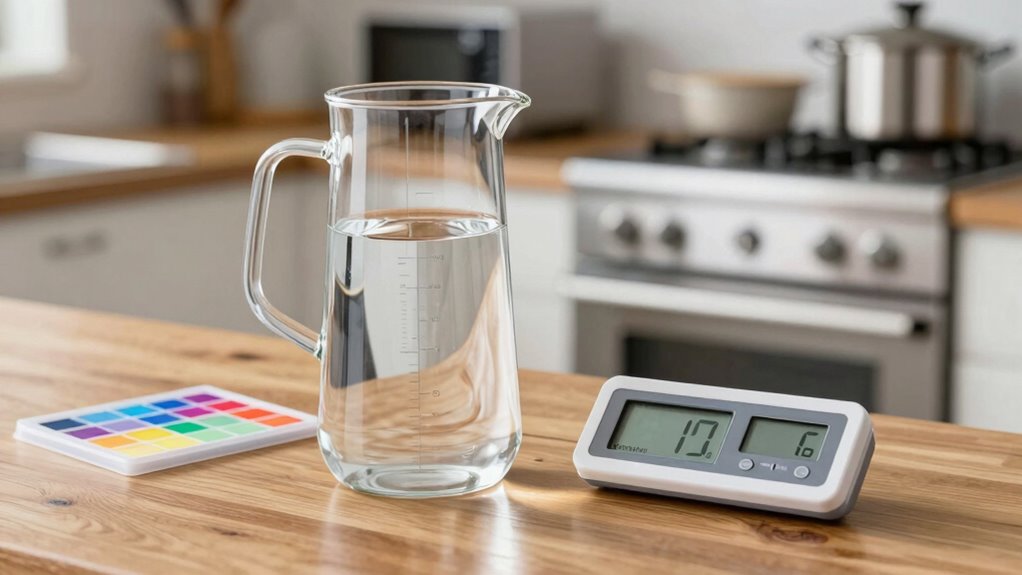
Testing and adjusting your water can considerably enhance both its taste and safety for drinking and cooking. When you measure calcium carbonate levels, you gain insight into the water’s buffer capacity, which affects how well it resists pH changes. Proper testing helps identify whether your water is too soft or too hard, allowing you to make precise adjustments. For example, increasing calcium carbonate can stabilize pH and reduce undesirable flavors, ensuring your water doesn’t taste flat or metallic. Conversely, lowering excess minerals improves clarity and prevents scale buildup in appliances. By maintaining ideal levels, you create a more enjoyable drinking experience and improve the flavor of your cooking. Regular testing and adjustments give you control over water quality, leading to better-tasting and safer beverages and dishes. Smart water management can also help optimize your home’s water systems for consistent quality and efficiency.
Common Ways to Test and Adjust Alkalinity and Hardness at Home
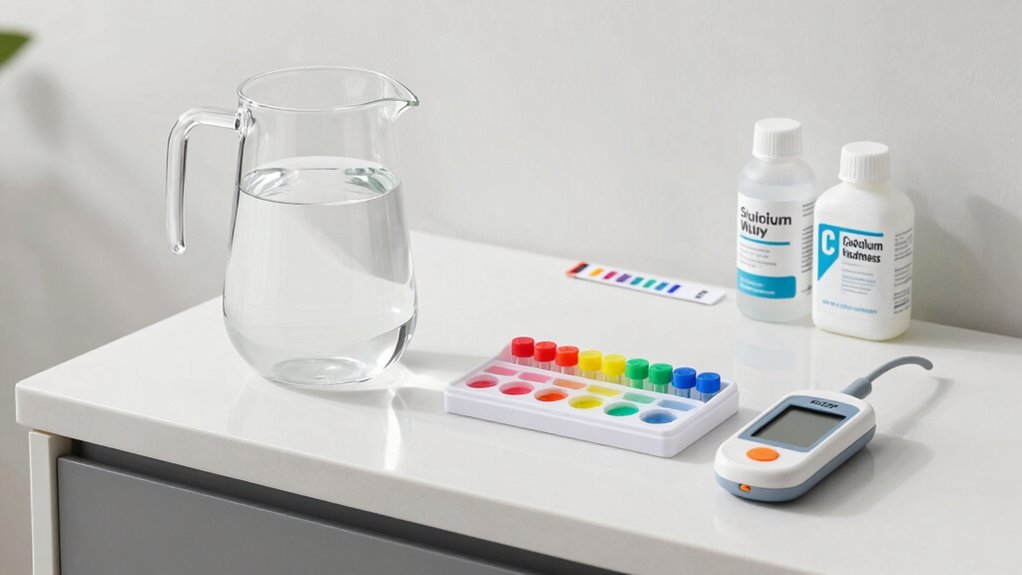
To effectively manage your water quality at home, you need simple methods to test its alkalinity and hardness levels. Testing kits are affordable and easy to use:
- Collect a water sample in a clean container.
- Add test drops or strips to measure alkalinity and hardness.
- Compare the color change to a chart for precise levels.
- Use water filtration systems with pH buffering to stabilize alkalinity and reduce hardness.
Adjustments can be made by installing water softeners or remineralizers. These methods help improve water clarity and taste, while also supporting your pH buffering capacity. Regular testing ensures your water remains balanced, preventing mineral buildup and guaranteeing ideal flavor for brewing, cooking, and drinking.
Final Tips for Choosing the Best Water for Brewing, Cooking, and Drinking
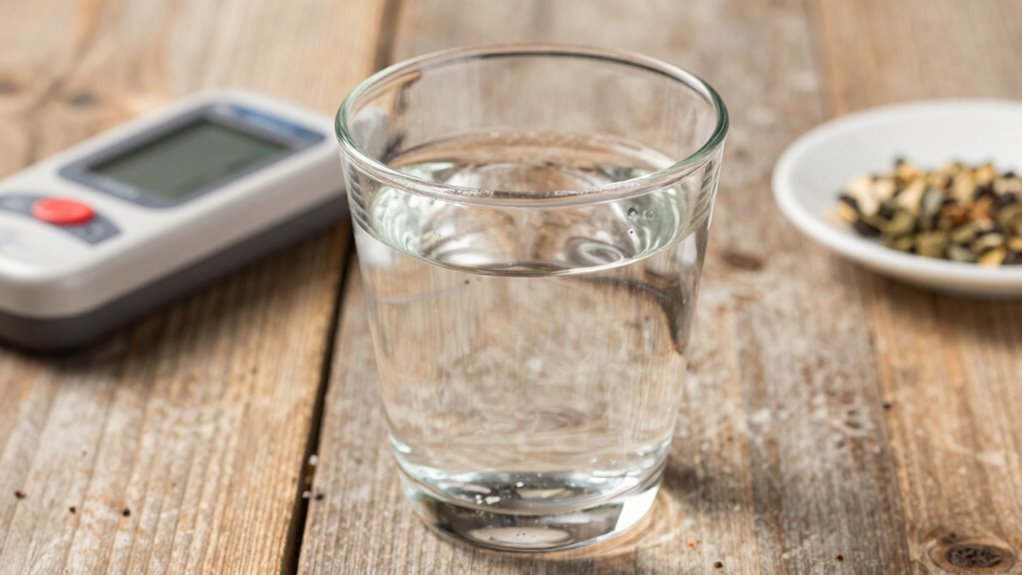
Choosing the right water for brewing, cooking, and drinking can greatly enhance flavor and quality, so it’s vital to take into account its mineralization and balance. Focus on water mineralization to guarantee it provides essential minerals without overpowering your recipes. pH balancing is equally important, as it affects extraction and taste; aim for a neutral to slightly alkaline pH for most applications. Use filtered or mineral-rich water if your tap water is too soft or too hard, adjusting mineral content as needed. Avoid water with extreme alkalinity or hardness, which can negatively impact flavor and equipment. Regular testing helps maintain ideal conditions. Monitoring the water’s mineral content can help prevent issues related to imbalance. Ultimately, selecting water with balanced mineralization and proper pH guarantees the best results in brewing, cooking, and drinking experiences.
Frequently Asked Questions
Can Alkalinity and Hardness Levels Affect Dishwasher Performance?
Yes, alkalinity and hardness levels can affect your dishwasher’s performance. High mineral deposits from hard water cause mineral buildup, which can clog spray nozzles and reduce cleaning efficiency. Meanwhile, water pH influences how well detergents work; overly alkaline water can diminish cleaning power. Maintaining these levels balanced helps prevent mineral deposits and ensures your dishwasher operates smoothly, providing better cleaning results and extending its lifespan.
How Do Alkalinity and Hardness Impact Soap and Detergent Efficiency?
Like a barrier in a fortress, high alkalinity and hardness can block soap lathering and reduce detergent effectiveness. When water’s alkalinity is too high, it neutralizes soap’s acids, making it harder to form rich lather. Hard water minerals, like calcium and magnesium, react with soap, creating soap scum that hampers cleaning. To keep your cleaning game strong, you need balanced water that allows your soap and detergent to work their best.
Are Certain Water Types Better for Specific Beverages or Recipes?
You should choose water with a specific composition for different beverages or recipes. For example, soft water with low mineral content works great for delicate teas and coffee, enhancing flavor clarity. Conversely, harder water with higher mineral levels can improve the mouthfeel of certain beers or recipes that benefit from mineral richness. Adjusting water composition during beverage preparation guarantees ideal taste and quality, tailored to each drink’s needs.
What Health Effects Are Associated With High Alkalinity or Hardness?
High alkalinity or hardness can lead to mineral imbalances in your body, potentially affecting kidney health over time. You might experience issues like kidney stones or other renal problems if these minerals accumulate excessively. Drinking water with elevated mineral content can strain your kidneys, so it’s important to monitor your water‘s alkalinity and hardness levels to maintain overall health and prevent long-term complications.
How Often Should I Test My Water’s Alkalinity and Hardness?
You should test your water’s alkalinity and hardness at least once every three to six months to maintain ideal water quality. Regular water testing frequency helps you catch changes early, ensuring your water remains balanced for taste and appliance safety. For ideal testing intervals, consider your water source’s stability—if you notice issues or changes, test more frequently to stay ahead of potential problems.
Conclusion
Think of your water like a fine symphony—balance is key. I once ruined a batch of coffee by ignoring its hardness, and it was like playing out of tune. When you test and adjust alkalinity and hardness, you’re fine-tuning that symphony, ensuring every sip and dish hits the perfect note. Mastering this simple step transforms your water from a confusing mess into a clear, delicious note in your culinary orchestra.
Evergreen bestsellers Picks
bestsellers
As an affiliate, we earn on qualifying purchases.