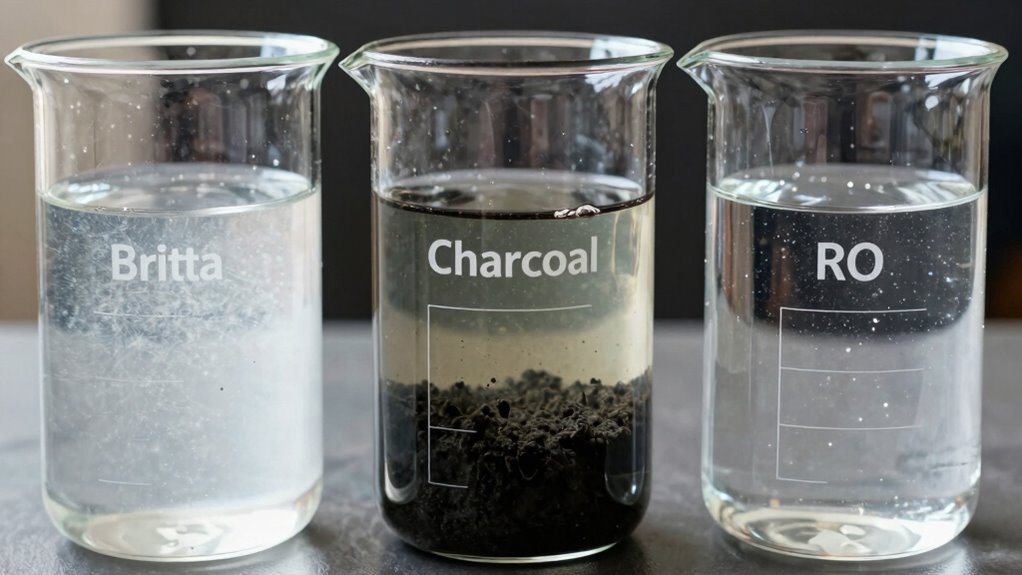

Choosing between Brita, charcoal, and reverse osmosis filtration depends on your coffee goals. Brita filters offer balanced, convenient water that preserves minerals and enhances flavor. Charcoal filters remove odors and impurities, delivering richer taste. Reverse osmosis produces pure water ideal for clarity but may lack minerals needed for ideal extraction. Understanding these differences can help you improve your brew. Keep exploring to discover how each system can elevate your coffee experience.
Key Takeaways
- Brita filters use activated carbon for balanced removal of chlorine and sediment, enhancing taste without stripping minerals.
- Charcoal filtration is similar to Brita but often emphasizes odor removal and a richer flavor profile.
- Reverse osmosis produces extremely pure water by eliminating nearly all impurities, but may require mineral supplementation for optimal coffee extraction.
- Water filtration choice impacts coffee flavor: Brita offers convenience, charcoal enriches taste, and RO provides maximum purity for precise brewing.
- Selecting the right system depends on flavor goals, brew method, and whether mineral content or purity is prioritized.

Have you ever wondered how water quality affects the taste of your coffee? It’s a common question among coffee enthusiasts, and the answer lies in the quality of the water you use. The type of water filtration you choose can profoundly influence your brew method and, ultimately, the flavor enhancement of your coffee. When selecting between Brita, charcoal, or reverse osmosis (RO) systems, understanding their differences helps you make an informed choice that elevates your coffee experience.
Brita filters are popular for their convenience and affordability. They use activated carbon to reduce chlorine, sediment, and some impurities, which can dull the natural flavors of your coffee. By improving water clarity and taste, Brita filters support a more consistent brew method. When your water is cleaner, your coffee’s flavor profile becomes more pronounced, highlighting subtle notes that might otherwise be masked by mineral or chemical tastes. However, Brita filters retain some minerals beneficial to coffee extraction, maintaining a balanced taste without stripping away essential elements.
Brita filters improve water clarity and flavor, supporting a balanced, consistent coffee brew.
Charcoal filtration, often similar to Brita’s activated carbon, dives deeper into flavor enhancement. Charcoal filters excel at removing chlorine, odors, and organic compounds that interfere with your coffee’s flavor. They’re especially useful if your tap water has a noticeable taste or smell. By eliminating these contaminants, your brew method produces a cleaner, more refined cup. The purity achieved through charcoal filtration allows the coffee’s nuanced flavors to shine through, delivering a richer sensory experience with every sip. Plus, charcoal filters are simple to use and don’t require complex maintenance, making them a practical choice for daily brewing.
Reverse osmosis (RO) filtration takes water purity to the next level. It forces water through a semi-permeable membrane, removing nearly all impurities, minerals, and contaminants. This results in extremely pure water, which can be ideal for certain brew methods that emphasize clarity and purity. However, because RO filters strip away minerals that are essential for proper extraction, they can sometimes produce a flat or bland flavor profile unless minerals are added back into the water. For coffee lovers seeking a very clean cup, RO water provides a blank canvas, allowing the true essence of the coffee bean to come through clearly. But keep in mind, the absence of minerals can require adjustments to your brewing technique to achieve excellent flavor.
In the end, your choice depends on your preferred brew method and flavor goals. Brita filters are great for everyday use, offering a good balance of convenience and flavor enhancement. Charcoal filters improve water taste and remove unwanted odors, making them suitable for many households. RO systems deliver the purest water, ideal for precise extraction, but may need mineral supplementation to bring out the best in your coffee. Understanding these differences helps you select the right filtration system, ensuring your coffee tastes its best every time.

INTASTING Electric Kettle, Gooseneck Electric Kettle, ±1℉ Precise Temperature Control, Stainless Steel Interior, Quick Heating for Pour Over Coffee, Tea & Boiling Water, 0.9L (Black)
±1℉ Precise Temperature Control - The intelligent base of this gooseneck electric kettle auto-adjusts heating power for pinpoint...
As an affiliate, we earn on qualifying purchases.
Frequently Asked Questions
How Often Should I Replace My Water Filter for Optimal Coffee Flavor?
You should replace your water filter every 2 to 3 months for peak coffee flavor. This filter lifespan ensures your water remains fresh and free of impurities that can affect taste. Follow your filter’s replacement schedule based on usage and water quality, and don’t wait too long—clogged filters can reduce effectiveness. Regular changes keep your coffee tasting its best and help maintain your brewing equipment’s longevity.
Does Filtered Water Impact the Brewing Time of My Coffee?
Filtered water can slightly impact your brew time because it often improves water quality, which allows for more consistent extraction. Better water temperature control, thanks to cleaner water, can help achieve ideal brewing times. If your water is too soft or too hard, it might alter the brew time or temperature needed. Overall, using filtered water can lead to more predictable brew times and better coffee flavor, enhancing your brewing experience.
Can Charcoal Filters Remove All Minerals Necessary for Good Coffee Extraction?
Charcoal filters can remove many minerals involved in water mineralization, but they typically don’t eliminate all minerals necessary for good coffee extraction. If mineral removal is too extensive, it may lead to flat or dull flavors. To maintain ideal mineral content, consider mineralizing your water afterward or using a filter designed to balance mineral removal while preserving essential minerals. This helps guarantee optimal extraction and a richer coffee taste.
Is Reverse Osmosis Water Suitable for All Types of Coffee Beans?
Imagine your favorite coffee bean as a delicate artist needing the perfect palette. Reverse osmosis water washes away impurities but also strips crucial minerals, risking the coffee bean’s flavor and preservation. For some beans, this mineral imbalance can dull flavors or cause over-extraction. While RO water ensures purity, it’s not suitable for all coffee types without reintroducing minerals, which are essential for preserving the beans’ unique character.
How Does Mineral Content in Filtered Water Influence Coffee Taste?
The mineral content in filtered water directly impacts your coffee’s flavor. A proper mineral balance enhances your coffee’s flavor profile, bringing out subtle notes and body. Too few minerals can result in flat, dull taste, while too many can mask delicate flavors. By choosing water with the right mineral content, you optimize flavor enhancement, ensuring your coffee is rich, balanced, and enjoyable with every brew.

INTASTING Gooseneck Electric Kettle with ±1℉ Temperature Control for Pour Over Coffee & Tea, Quick Heating, BPA-Free Stainless Steel, Built-in Brew Timer, 1500W/0.9L (Ebony Black)
±1℉ Precise Temperature Control – Smart power adjustment keeps water within ±1℉ of your target, so every brew...
As an affiliate, we earn on qualifying purchases.
Conclusion
So, whether you choose Brita, charcoal, or reverse osmosis, remember that even the best filtration sometimes surprises you. Coincidentally, the water’s purity can subtly influence your brew’s flavor, making each cup a little different than expected. Sometimes, it’s not just about the filter but how it interacts with your coffee ritual. Trust your taste buds and enjoy the journey—after all, the perfect cup often comes from unexpected, simple choices.

COSORI Electric Gooseneck Kettle with 5 Temperature Control Presets, Pour Over Kettle for Coffee & Tea, Hot Water Boiler, 100% Stainless Steel Inner Lid & Bottom, 1200W/0.8L
5 𝑶𝑵𝑬-𝑻𝑶𝑼𝑪𝑯 𝑷𝑹𝑬𝑺𝑬𝑻𝑺: Your Gooseneck Electric Kettle features 5 precise temperature presets. These accurate presets make brewing coffee...
As an affiliate, we earn on qualifying purchases.
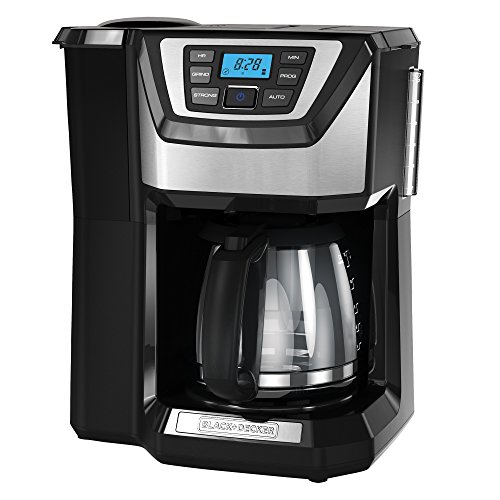
Black and Decker BLACK+DECKER 12-Cup Mill and Brew Coffeemaker, Black, CM5000B
Note: 1)Too coarse a grind, too little coffee, or insufficiently tamping the grounds before brewing can all lead...
As an affiliate, we earn on qualifying purchases.