
Your kettle’s scale builds up faster than you expect because hard water contains minerals like calcium and magnesium that don’t evaporate when boiling. These minerals settle inside the kettle, forming a crusty layer that spreads quickly, especially in areas with naturally hard water. Over time, this build-up can make your kettle less efficient and harder to clean. If you want to find out how to prevent and manage this buildup, keep exploring the details.

Get kitchen gear delivered free with Prime
- Fast, free delivery on millions of items
- Prime Video, Amazon Music and more included
- Member-only deals all year
Key Takeaways
- Hard water with high mineral content accelerates scale formation inside the kettle.
- Minerals like calcium and magnesium do not evaporate, settling and building up over time.
- Neglecting regular cleaning allows scale to embed deeper, speeding up the buildup process.
- Frequent boiling in areas with hard water increases mineral deposits more rapidly.
- Lack of awareness about water mineral levels leads to unnoticed, faster scale accumulation.

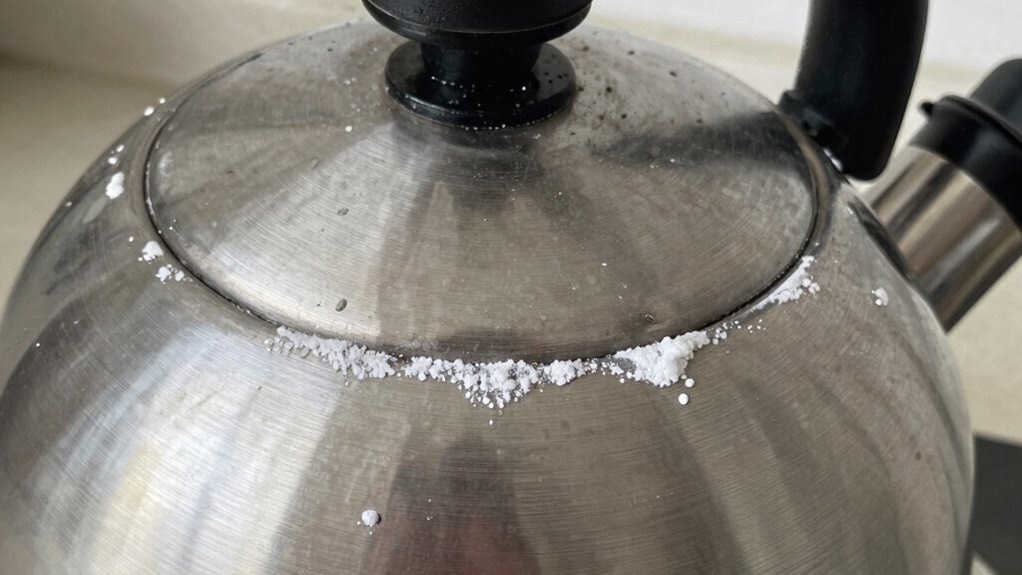
If you’ve noticed your kettle accumulating a stubborn layer of white residue, you’re not alone. That layer, known as scale, forms quickly and can be frustrating to deal with. The main reason it builds up so fast is tied to your water’s mineral content. Hard water, which contains high levels of minerals like calcium and magnesium, is the primary culprit. These minerals don’t evaporate when you boil water; instead, they settle and cling to the kettle’s interior, creating that crusty deposit. The more minerals present in your water, the faster this buildup occurs. So, if you live in an area with hard water, you’ll notice scale forming in your kettle sooner than later. Additionally, mineral buildup can impact the efficiency of your kettle, making it work harder and consume more energy. Regularly monitoring and adjusting your water quality can help minimize scale formation, especially in regions with naturally hard water. Your cleaning frequency plays a significant role in how quickly scale becomes a problem. If you ignore regular maintenance, the mineral deposits can accumulate rapidly, making it harder to remove over time. A quick rinse after each use can help, but deep cleaning should be scheduled at least once a month, especially if your water is hard. Using vinegar or descaling solutions helps dissolve the mineral deposits effectively, preventing them from hardening and becoming more difficult to remove. Neglecting these routines allows scale to embed deeper into the kettle’s surface, increasing the effort needed to clean it later.
As an affiliate, we earn on qualifying purchases.
Frequently Asked Questions
Does Water Temperature Affect Scale Formation Speed?
Yes, water temperature affects scale formation speed. When you heat water to higher temperatures, the minerals in the water, like calcium and magnesium, precipitate faster, leading to quicker scale buildup. This means you’ll need more frequent scale removal and shorter heating durations to prevent heavy deposits. Keeping the water at lower temperatures slows mineral accumulation, making it easier to maintain your kettle and extend the time between cleaning sessions.
Can Mineral Content Vary by Water Source?
Yes, mineral content can vary considerably by water source due to differences in mineral diversity and water composition. For example, well water often contains higher levels of calcium and magnesium, which promote scale buildup, while city tap water might have added treatments altering mineral levels. Understanding your water source helps you anticipate how quickly scale can form, as mineral diversity directly influences the rate of mineral deposit accumulation in your kettle.
How Does Kettle Material Influence Scale Buildup?
The kettle material considerably influences scale buildup because it affects heat transfer efficiency. Metal kettles like stainless steel or aluminum conduct heat better, leading to quicker boiling and more rapid mineral deposition. In contrast, glass or plastic kettles transfer heat less efficiently, slowing scale formation. So, choosing a kettle with poor heat transfer properties can help reduce scale buildup, making maintenance easier and prolonging the kettle’s lifespan.
Is Scale More Common in Certain Kettle Models?
You’ll find that some kettle models are more prone to scale buildup, especially those with certain designs that make cleaning tricky. Kettle design plays a big role, as narrow spouts or complex shapes can hide deposits, while simple designs are easier to maintain. As with most things, user maintenance matters—regular descaling keeps buildup at bay. Don’t wait for trouble to brew—stay on top of cleaning, and your kettle will serve you well longer.
Do Water Softeners Reduce Scale Formation?
Yes, water softeners can reduce scale formation by removing minerals like calcium and magnesium that cause scale buildup. They are an effective scale prevention tool, especially in areas with hard water. Softening techniques, such as ion exchange, help keep your kettle cleaner longer and improve appliance efficiency. Installing a water softener is a smart step toward minimizing scale, saving you time on cleaning and extending the lifespan of your kettle.
As an affiliate, we earn on qualifying purchases.
Conclusion
You might not notice it, but kettle scale sneaks up faster than you think—just like that random coffee spill that suddenly turns into a stubborn stain. One day, you’ll be surprised at how quickly it’s built up, catching you off guard. So, next time you find yourself descaling, remember it’s often coincidence that reveals the true extent of the buildup. Keep an eye on it; your kettle will thank you for the early warning.
As an affiliate, we earn on qualifying purchases.
As an affiliate, we earn on qualifying purchases.
Fall Picks
fall essentials
As an affiliate, we earn on qualifying purchases.