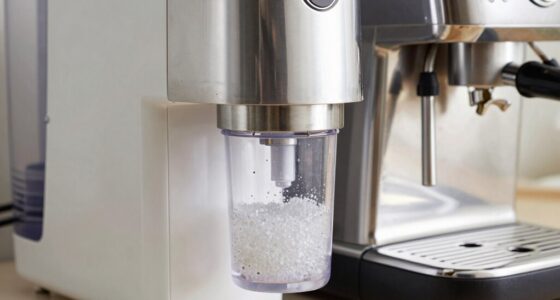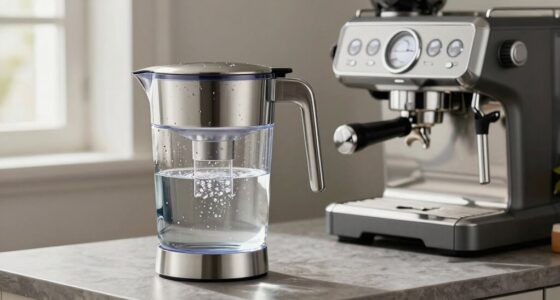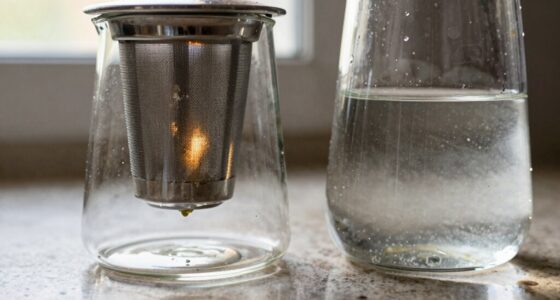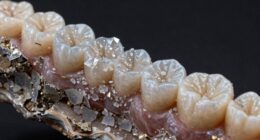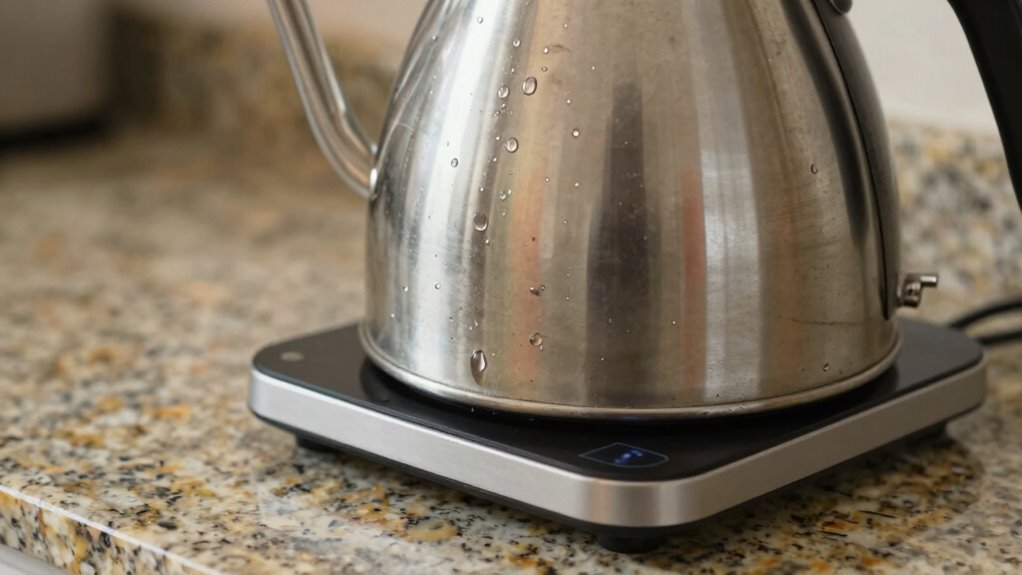

Even if you don’t make espresso, kettle scale still matters because mineral buildup from hard water affects your appliance’s efficiency, safety, and lifespan. Scale insulates the heating element, making it work harder and increasing energy costs, while also causing uneven heating that impacts taste and temperature. Over time, it can lead to damage or failure of the kettle. Staying aware of how scale forms and how to prevent it helps keep your kettle running smoothly—discover more by continuing on.

Get kitchen gear delivered free with Prime
- Fast, free delivery on millions of items
- Prime Video, Amazon Music and more included
- Member-only deals all year
Key Takeaways
- Scale buildup insulates the heating element, reducing efficiency even in simple boiling tasks.
- Mineral deposits can cause uneven heating, affecting water temperature and taste.
- Excess scale increases energy consumption and may lead to premature kettle failure.
- Scale can pose safety risks by damaging the kettle or causing malfunctions.
- Regular descaling maintains optimal performance and prolongs the appliance’s lifespan.
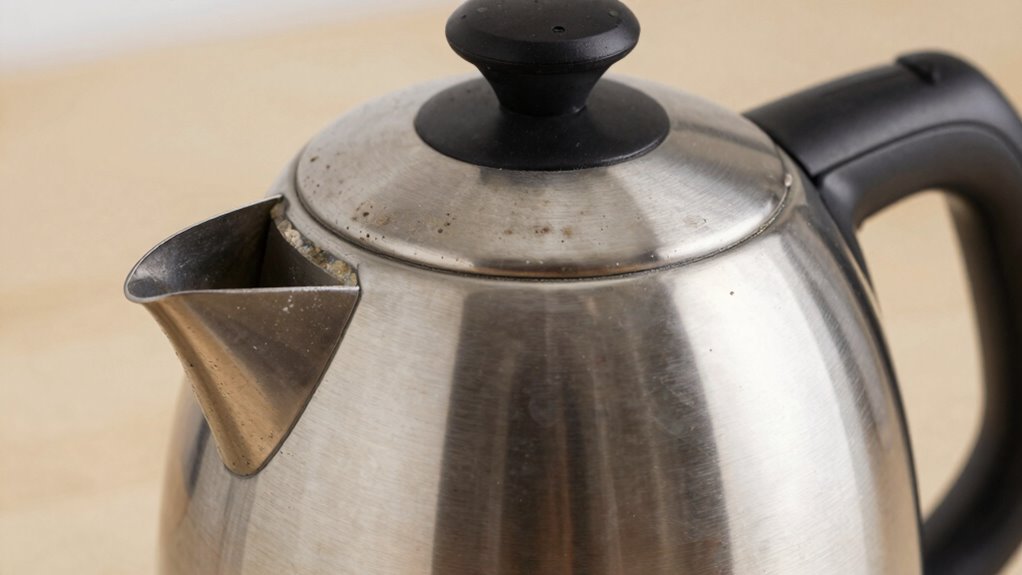
Kettle scale might seem like a minor inconvenience, but understanding its significance is vital for maintaining your appliances and guaranteeing safety. When you regularly use your kettle, minerals from your water, especially calcium and magnesium, leave behind deposits known as scale. These deposits aren’t just a cosmetic issue; they’re directly related to water hardness, which varies depending on your geographic location. Hard water contains higher mineral content, increasing the rate at which scale builds up inside your kettle. Recognizing this connection helps you implement proper maintenance tips to prevent damage and keep your appliance functioning efficiently.
Kettle scale results from minerals in hard water, affecting appliance efficiency and safety.
As scale accumulates, it insulates the heating element, forcing it to work harder to reach the desired temperature. This extra effort consumes more energy, leading to increased utility bills. Over time, the added strain can cause the heating element to fail prematurely, requiring costly repairs or replacements. Besides, a heavily scaled kettle heats water unevenly, which can affect the taste and temperature consistency. This is why understanding water hardness and adjusting your maintenance routine accordingly is vital—even if you don’t brew espresso or other specialty drinks.
To combat the effects of scale, you should incorporate simple maintenance tips into your routine. Regular descaling is key—using vinegar, lemon juice, or commercial descaling agents helps dissolve mineral deposits. Typically, you should descale your kettle every one to three months, depending on your water hardness level. If you live in an area with very hard water, more frequent cleaning might be necessary. It’s also a good idea to fill your kettle with filtered or softened water when possible, as this reduces the mineral content and slows scale formation.
Another essential maintenance tip is to monitor the internal condition of your kettle. If you notice a white, chalky buildup or if the kettle takes longer to boil, it’s a sign that scale is accumulating. Regularly inspecting and cleaning your kettle prevents mineral deposits from reaching the point where they interfere with performance or safety. Additionally, keeping your kettle dry and empty when not in use helps prevent mold or bacteria growth, which can thrive in moist, mineral-rich environments. Understanding water hardness and how it influences mineral buildup can further help you tailor your descaling routine effectively.
Understanding water hardness and following these maintenance tips guarantees your kettle remains efficient and safe for everyday use. Even if you’re not particularly concerned with brewing espresso, ignoring scale can lead to increased energy costs, shortened appliance lifespan, and the potential for safety hazards. Staying proactive with regular cleaning and paying attention to your water quality are the best ways to keep your kettle in top shape, providing hot water reliably and safely for years to come.
Products Worth Considering

Instant Pot RIO Wide 7.5-Quart 7-in-1 Electric Pressure Cooker

Ninja Fireside360 Propane Fire Pit and Outdoor Heater, 80,000 BTU, 3 Modes, Cyberspace

Le Creuset Signature Deep Round Enameled Cast Iron Dutch Oven, 6.5 qt, Oyster
As an affiliate, we earn on qualifying purchases.
Frequently Asked Questions
Can Scale Buildup Affect Water Taste?
Yes, scale buildup can affect water taste. When minerals accumulate inside your kettle, they alter water mineralization, leading to a metallic or off-flavor. This taste alteration occurs because the scale traps impurities and affects the water’s purity. Regular descaling helps maintain the original taste, ensuring your water stays fresh and clean. So, keeping your kettle scale-free is essential for ideal flavor, even if you’re not making espresso.
How Often Should I Descale My Kettle?
Ever wondered how often you should descale your kettle? Typically, it’s best to clean your kettle every 4 to 6 weeks, but this depends on your water hardness. Regular descaling methods, like using vinegar or commercial descalers, keep it in top shape. If you notice slower boiling or strange tastes, it’s time to clean. Consistent cleaning frequency prevents buildup, ensuring better water taste and longer appliance life.
Does Scale Impact Energy Efficiency?
Yes, scale impacts energy efficiency because mineral deposits from scaling prevention insulate the heating element, making it work harder. When your kettle accumulates mineral deposits, it takes longer to boil water, using more energy. Regular descaling helps prevent this buildup, ensuring your kettle runs efficiently. By staying on top of scaling prevention, you save energy and prolong your kettle’s lifespan.
Are There Health Risks From Scale Particles?
You might wonder if scale particles pose health risks. While ingestion of small amounts generally isn’t harmful, excessive mineral build-up can affect mineral health, leading to issues like kidney stones or mineral imbalance. About 85% of the world’s population has some level of mineral intake from water, but large scale deposits could increase exposure. To stay safe, regularly descale your kettle and avoid consuming water with heavy mineral buildup.
Can Scale Cause My Kettle to Break?
Yes, scale can cause your kettle to break. Over time, mineral deposits and scale corrosion build up inside the heating element and walls, leading to reduced efficiency and potential damage. As scale thickens, it can cause uneven heating or even crack the kettle. Regular descaling prevents this buildup, ensuring your kettle stays functional and prolongs its lifespan by avoiding costly repairs or replacements.
Conclusion
So, next time you turn on your kettle, remember—scale buildup isn’t just about taste or efficiency. It’s about what’s lurking beneath the surface, quietly building up and threatening more than just your appliance. Are you prepared to face the hidden consequences? Don’t wait until it’s too late. Take action now, or risk the unexpected—because sometimes, the smallest neglect can lead to the biggest surprises. Will you catch it before it’s gone too far?