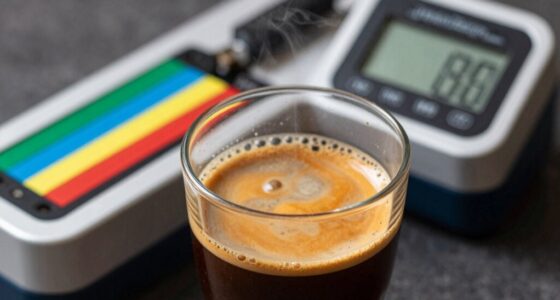

Many brewers believe that maintaining perfect temperature stability is essential, but this overcomplicates the process. Small fluctuations are normal and usually don’t ruin your brew, as biological processes like fermentation tolerate some variability. Instead of stressing over constant control, focus on creating a stable environment and trusting natural fluctuations. By letting go of the myth, you’ll find brewing becomes more relaxed and enjoyable. If you’re curious about how to simplify your technique, there’s plenty more to learn.

Get kitchen gear delivered free with Prime
- Fast, free delivery on millions of items
- Prime Video, Amazon Music and more included
- Member-only deals all year
Key Takeaways
- Small temperature fluctuations are normal and usually have minimal impact on the final brew.
- Perfect temperature stability is a myth; biological processes tolerate natural variability.
- Overemphasizing precise temperature control can cause unnecessary stress and overcomplication.
- Simple techniques like maintaining a consistent environment and pre-heating equipment are often sufficient.
- Focusing on technique, patience, and quality ingredients is more important than chasing perfect temperature stability.
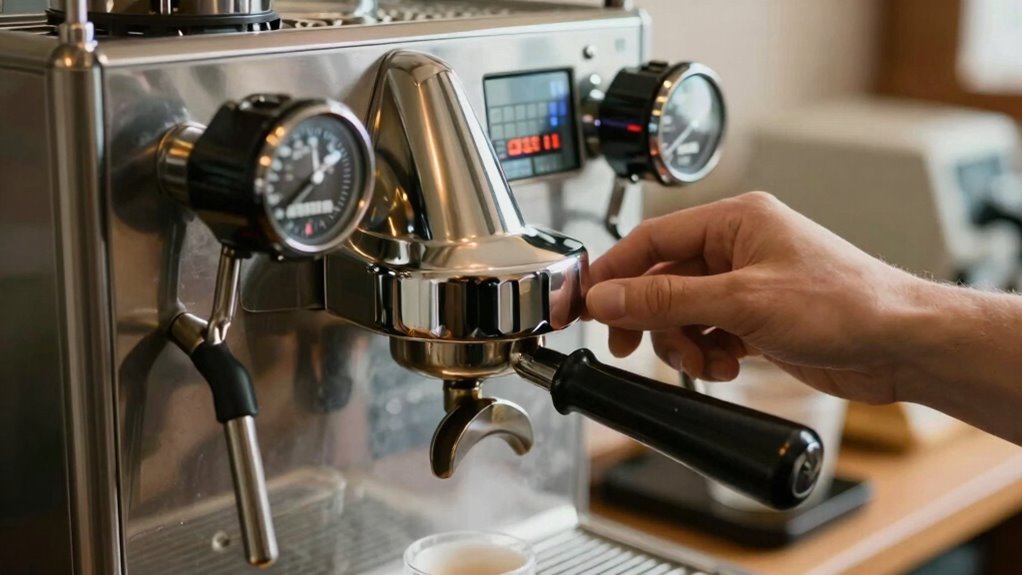
Have you ever believed that certain materials or products are completely unaffected by temperature changes? Many people do, especially when it comes to brewing. There’s a common misconception that once you’ve set the perfect temperature, it stays constant without any effort. This idea fuels the myth that brewing needs overly complex temperature control techniques to succeed, but that’s simply not true. In reality, many brewing misconceptions stem from overcomplicating what should be straightforward. You don’t need fancy equipment or constant adjustments to craft good beer or coffee. Instead, understanding that some fluctuation is natural can help you achieve better results with less stress.
This myth about absolute temperature stability often leads to unnecessary stress and overthinking. You might spend too much money on temperature-controlled kettles, cooling jackets, or expensive thermometers, convinced that anything less will ruin your brew. But in truth, small temperature variations are normal and manageable. Your process doesn’t have to be perfect every second; what matters most is understanding how temperature influences your brew and working with that knowledge rather than against it. Many brewing misconceptions come from a fear of small changes, but those tiny shifts often have minimal impact if you know how to adapt. Additionally, temperature fluctuations** are a natural part of many biological processes involved in fermentation, making it even more important to be flexible rather than fixated on exact numbers. Recognizing that biological processes are inherently variable can help relieve the pressure to achieve absolute control**.
Using simple temperature control techniques can significantly improve your brewing experience. For example, maintaining a consistent environment or pre-heating your equipment helps minimize fluctuations. If you’re brewing at home, keeping your fermentation area in a stable spot—away from direct sunlight or drafts—can make a big difference. It’s also helpful to remember that most brewing processes tolerate a range of temperatures. You don’t need to obsess over hitting a single degree; instead, aim for a comfortable window that suits your style. This approach reduces stress and makes brewing more enjoyable. Understanding the importance of temperature stability in brewing can help you focus on what truly matters—technique and patience—rather than chasing after an elusive perfection. Being aware of temperature management techniques can help you develop a more relaxed and effective brewing routine.
Moreover, temperature control tools like simple thermometers and insulation techniques can be enough to manage fluctuations without overcomplicating your setup. The goal isn’t to eliminate all temperature variation but to understand and manage it. By recognizing that the myth of perfect stability is just that—a myth—you can focus on what really matters: good technique, quality ingredients, and patience. You don’t need to chase perfection through complicated temperature control techniques. Instead, keep it simple, stay adaptable, and trust your instincts. When you do, you’ll find that brewing becomes less about battling fluctuations and more about enjoying the process and the results. Let go of the myth, and you’ll brew with confidence, knowing that small variations won’t ruin your craft.
Products Worth Considering

KitchenAid Artisan 5-Quart Tilt-Head Stand Mixer, Blue Velvet

Traeger Trailhead Portable Wood Pellet Grill and Smoker with Cover and Inverter

Vitamix VX1 Professional-Grade Blender, 64 oz, Black
As an affiliate, we earn on qualifying purchases.
Frequently Asked Questions
How Does Ambient Temperature Affect Brewing Consistency?
Ambient temperature directly influences fermentation dynamics and yeast activity, so fluctuations can cause inconsistent brewing results. When the environment gets warmer, yeast becomes more active, potentially leading to over-fermentation or off-flavors. Cooler temperatures slow down yeast activity, risking incomplete fermentation. To maintain consistent results, you need to monitor and control ambient temperature, ensuring yeast activity stays ideal for predictable fermentation and high-quality brews.
Can Temperature Fluctuations Improve Certain Beer Styles?
Temperature fluctuations can actually enhance certain beer styles by influencing fermentation speed and flavor development. For example, a slight increase in temperature might quicken fermentation, creating more complex flavors in sour or wild beers. You can intentionally vary temperatures during fermentation to develop unique profiles, but you should do so carefully. Controlled fluctuations can bring out desirable characteristics, but excessive changes might lead to off-flavors or inconsistent results.
What Equipment Can Help Maintain Stable Brewing Temperatures?
To tame temperature turmoil, try temperature calibration tools like digital thermometers and controllers for precise readings. Insulation techniques, such as insulating jackets, foam wraps, or fermenter sleeves, help retain heat and keep your brew stable. Consistently checking calibration guarantees accurate temperatures, while insulation techniques lock in warmth, preventing fluctuations. With these tools, you’ll maintain a consistent temperature, making your brewing process smoother and your beer tastier.
Is Precise Temperature Control Necessary for All Brewing Methods?
No, precise temperature control isn’t necessary for all brewing methods. For fermentation, however, maintaining proper temperature can influence fermentation timing and yeast strain behavior. Some brewers get great results without strict control, especially with robust yeast strains. Still, if you want consistent results or are working with delicate yeast, investing in temperature control helps. Ultimately, it depends on your recipe and the flavor profile you’re aiming for.
How Do Home Brewers Manage Temperature Without Advanced Tools?
You can effectively manage fermentation temperature without advanced tools by using simple methods like placing your fermenter in a cool, dark spot or wrapping it with a wet towel for natural cooling. This helps maintain yeast viability and guarantees steady fermentation speed. Monitoring ambient temperature and adjusting your environment as needed keeps your brew consistent, preventing off-flavors caused by temperature fluctuations and making your brewing process more straightforward.
Conclusion
Remember, the myth of perfect temperature stability can sometimes lead you down a path of unnecessary complication. Embrace the subtle variations and trust your senses; it’s in those gentle shifts that you might find the true character of your brew. Sometimes, simplicity allows the natural beauty of the process to shine through, revealing flavors and nuances that rigid control might obscure. Let your instincts guide you, and enjoy the journey—perfection often lies in the delicate imperfections.