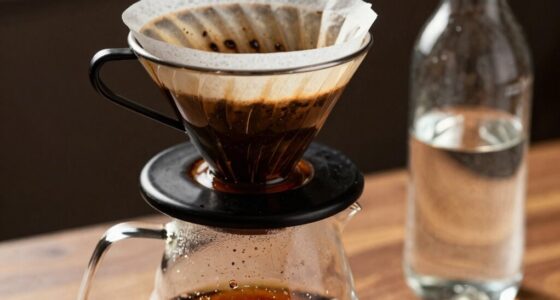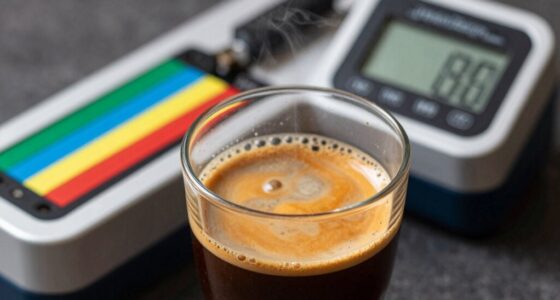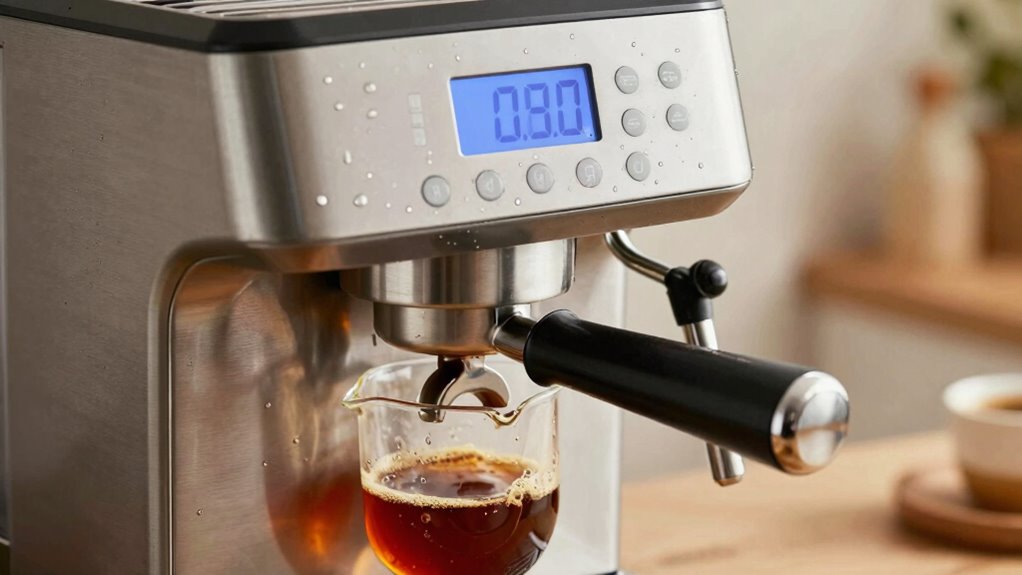

Small fluctuations in brew temperature can cause big changes in flavor and extraction quality because temperature influences how aromatic compounds, caffeine, and other flavors develop. A slight drop can dull taste, while a sudden rise might make your brew bitter or over-extracted. Each coffee or tea variety responds differently, so maintaining a steady temperature is key to preserving its unique flavor profile. To learn how to control temperature better, keep exploring these essential tips.

Get kitchen gear delivered free with Prime
- Fast, free delivery on millions of items
- Prime Video, Amazon Music and more included
- Member-only deals all year
Key Takeaways
- Small temperature swings alter extraction rates, affecting flavor balance and leading to dullness or bitterness in brewed beverages.
- Temperature fluctuations impact aromatic compound release, causing inconsistent aroma and taste profiles.
- Variations in brew temperature influence caffeine extraction, affecting beverage strength and perceived energy boost.
- Inconsistent temperatures can cause uneven chemical reactions, resulting in off-flavors or undesirable compounds.
- Maintaining stable brew temperature ensures uniform extraction, preserving the intended flavor complexity and overall quality.
How Do Small Temperature Swings Affect Your Coffee and Tea Flavors?
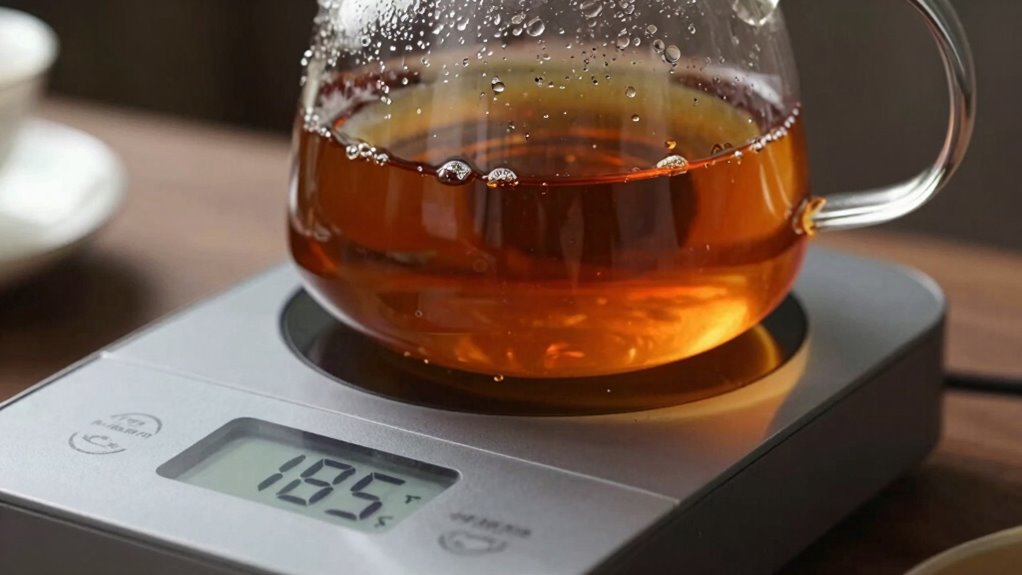
Even small temperature swings can substantially impact the flavor of your coffee and tea. This happens because thermal conductivity influences how heat moves through your brewing vessel and ingredients. When temperature fluctuates, heat transfer becomes inconsistent, affecting extraction rates and flavor development. For example, a slight drop in temperature can slow down the extraction of aromatic compounds, resulting in a duller taste. Conversely, a sudden increase can cause over-extraction, leading to bitterness. These small changes in heat transfer alter how flavors are released and perceived. Understanding how thermal conductivity impacts heat transfer helps you maintain stable brewing temperatures. By doing so, you ensure your coffee and tea extract evenly, preserving their intended flavors and aroma profiles. Additionally, thermal insulation plays a crucial role in minimizing temperature fluctuations during brewing.
What Is the Science Behind Brew Temperature and Flavor Extraction?
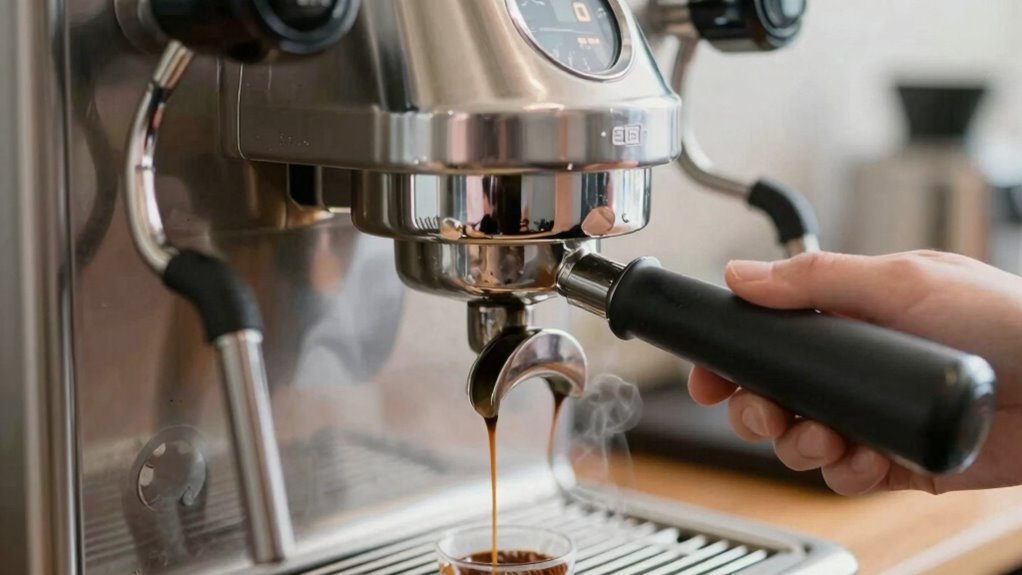
Your brew temperature influences how solubility and flavor extraction work together to create the taste you enjoy. When the temperature hits certain enzyme activation thresholds, it can enhance or hinder specific compounds in your coffee or tea. Understanding this balance helps you optimize flavor extraction and achieve the perfect cup. Additionally, being aware of cryptid mysteries and their origins can add an element of intrigue to your brewing rituals, connecting the mysterious with everyday experiences.
Temperature and Solubility Balance
Brew temperature plays a essential role in extracting flavors from coffee grounds because it directly affects solubility—the ability of compounds to dissolve into water. Understanding temperature dynamics helps you see how even small changes influence solubility principles, shaping flavor extraction. Higher temperatures increase solubility, allowing more compounds to dissolve quickly, which intensifies flavors and aromas. Conversely, lower temperatures slow solubility, resulting in a milder taste and less extraction of certain compounds. Achieving a balance between temperature and solubility is critical for optimizing flavor without over-extracting bitter or undesirable elements. By controlling brew temperature precisely, you can fine-tune the solubility process, ensuring that your coffee delivers the ideal combination of strength and complexity. Small temperature swings can markedly alter the solubility dynamics, affecting your final cup. Precise temperature control is essential for maintaining consistency and achieving the desired flavor profile in your brew.
Enzyme Activation Thresholds
As temperature influences solubility, it also impacts enzyme activity during coffee brewing. Enzyme activation thresholds are specific temperatures at which enzymes become active, initiating essential chemical reactions. These thresholds depend on reaction kinetics, which dictate the speed of enzyme reactions. If your brew temperature is too low, enzymes won’t reach their activation point, limiting their contribution to flavor development. Conversely, if the temperature is too high, enzymes may denature or react too quickly, producing undesirable flavors or over-extracting compounds. Understanding these enzyme thresholds helps you control the timing and extent of enzymatic activity, ensuring ideal reaction kinetics. This balance influences the chemical transformations that shape your coffee’s flavor profile, making temperature stability indispensable for consistent, high-quality brews.
Flavor Compound Extraction
Temperature plays a vital role in extracting flavor compounds from coffee grounds because it directly influences the solubility and diffusion of these molecules. As you control brew temperature, you affect how effectively flavor chemistry unfolds. Higher temperatures increase solubility, releasing more aromatic compounds, while lower temperatures may leave some flavors underdeveloped. Precise temperature control guarantees optimal extraction, balancing bitterness and brightness.
| Temperature Range | Effect on Flavor Extraction |
|---|---|
| 195°F – 205°F | Ideal for most brews |
| Below 195°F | Under-extraction, muted flavors |
| Above 205°F | Over-extraction, bitterness |
| Rapid changes | Disrupts flavor consistency |
Staying consistent in temperature helps you open the full spectrum of coffee’s flavor potential, emphasizing the importance of stable brew conditions.
What Causes Temperature Fluctuations During Brewing?
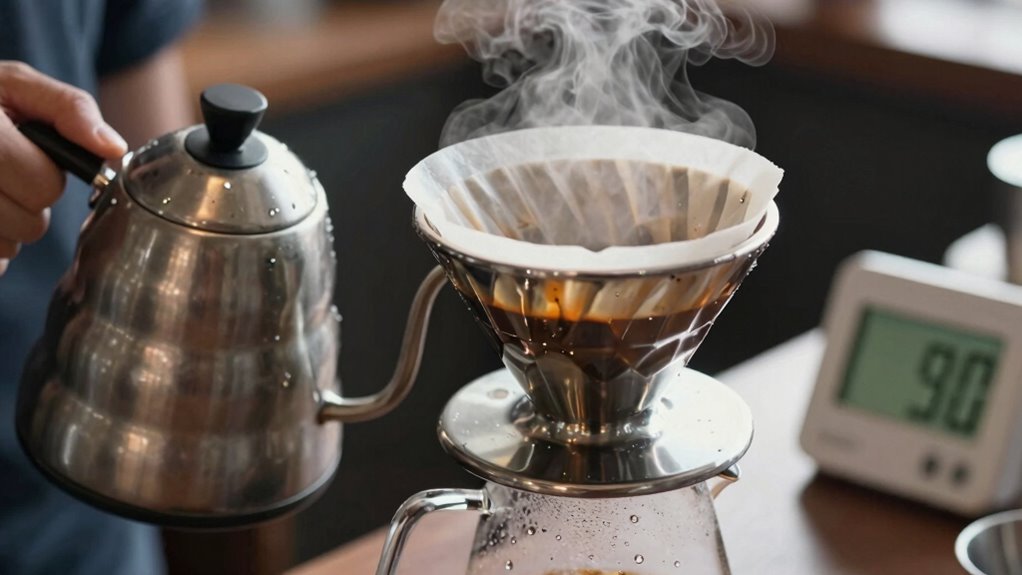
Fluctuations during brewing often stem from equipment limitations and environmental factors that disrupt a steady temperature. Inconsistent performance of temperature sensors can cause inaccurate readings, leading your heating elements to over- or under-heat. Poor calibration or faulty sensors make it difficult to maintain precise temperatures, resulting in unwanted swings. Additionally, the heating elements themselves may cycle on and off too frequently, especially if they’re undersized or poorly regulated, causing temperature spikes or drops. External factors like drafts, ambient temperature changes, or drafts near your brewing setup can further impact stability. Understanding these causes helps you identify where your equipment might be lacking and take steps to minimize fluctuations, ensuring a more consistent brew temperature. Moreover, credit card security measures are vital for safeguarding sensitive data, much like how maintaining equipment integrity is essential for consistent brewing results.
How Can You Measure and Monitor Brew Temperature Accurately?
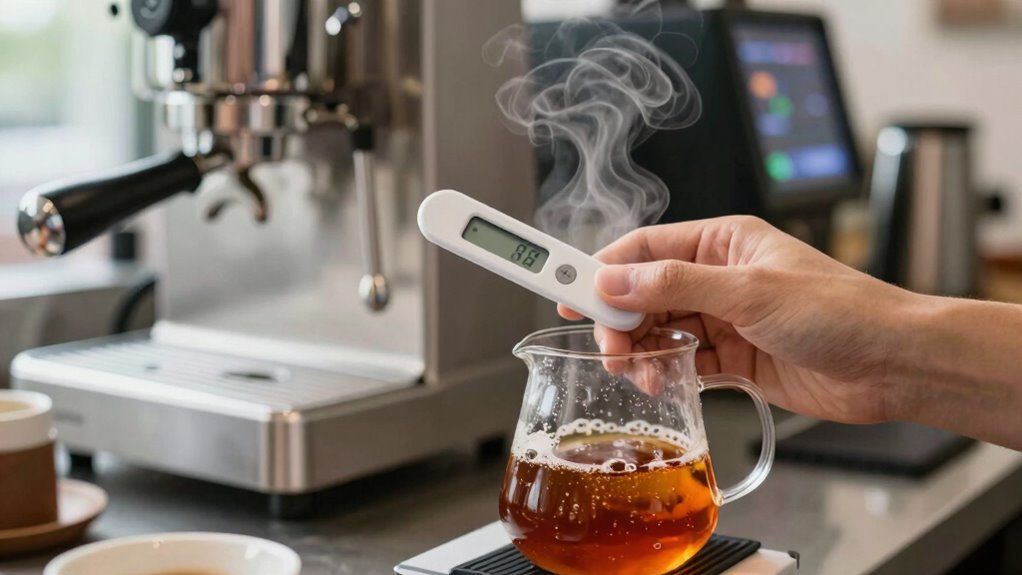
To guarantee your brew stays at a consistent temperature, accurate measurement and real-time monitoring are key. Use a high-quality thermometer and regularly calibrate it to ensure precision, especially when measuring hot liquids. Keep in mind that ambient temperature can influence readings, so account for it when monitoring. Consider placing sensors in different spots to verify consistency. Use the table below to compare options:
| Measurement Tool | Calibration Need |
|---|---|
| Digital Thermometer | Regular calibration for accuracy |
| Infrared Thermometer | Check calibration before each use |
| Thermocouple | Periodic calibration based on specs |
Monitoring tools help you catch temperature swings early, maintaining steady brew conditions. Additionally, understanding temperature stability can help prevent flavor fluctuations and improve your overall brewing results.
How Do You Keep Your Brew at the Right Temperature Throughout?
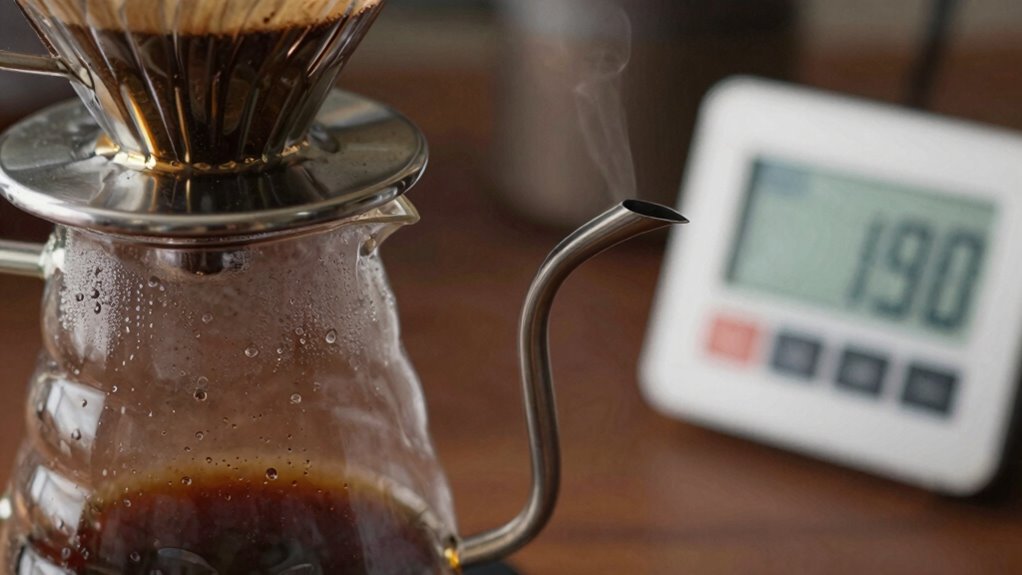
Maintaining a consistent brew temperature requires proactive strategies and proper equipment. To keep your brew at the right temperature throughout, focus on thermal insulation and ambient control. Insulate your brewing vessel with materials like foam or specialized sleeves to minimize heat loss. Controlling ambient conditions helps prevent temperature swings caused by drafts or room temperature fluctuations. Additionally, utilizing easy document management solutions can help you stay organized and reduce stress, ensuring you can focus on your brewing routine without unnecessary distractions.
How Do Temperature Changes Impact Different Coffee and Tea Types?
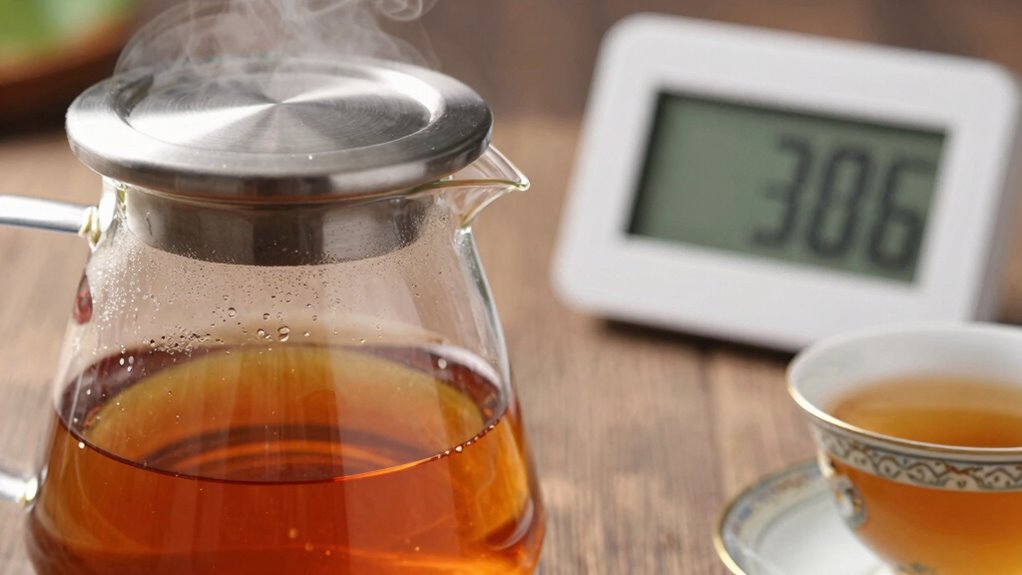
When the brew temperature shifts, it can alter extraction efficiency, changing how flavors develop in your coffee or tea. You might notice a flavor profile that’s either muted or overly sharp, depending on the temperature fluctuation. Additionally, caffeine extraction rates can vary, affecting the strength and energy boost you get from your beverage. Proper temperature control ensures optimal flavor and consistency in every cup.
Extraction Efficiency Variances
Temperature changes can considerably influence how efficiently different coffee and tea types extract their flavors. Variations in temperature gradients affect how heat penetrates the brew, impacting extraction rates. Beverages with high thermal inertia, like dark roasts or dense teas, resist quick temperature shifts, leading to inconsistent extraction. Conversely, lighter roasts or teas with lower thermal inertia respond more rapidly, risking over- or under-extraction. Small temperature swings can cause uneven flavor profiles, especially when brewing delicate teas or specialty coffees. Pay attention to how your brew’s temperature profile interacts with the specific type you’re preparing. Proper temperature control can help mitigate extraction inconsistencies and ensure optimal flavor development.
- Temperature gradients determine how evenly heat transfers through the brew.
- Thermal inertia influences how quickly a beverage reaches ideal extraction temperature.
- Variations can cause inconsistent flavor extraction, affecting taste quality.
Flavor Profile Shifts
Different coffee and tea varieties respond uniquely to temperature changes, which can considerably alter their flavor profiles. Small temperature fluctuations can enhance some flavors while masking others, leading to noticeable shifts in taste. For example, delicate green teas may become bitter with higher temperatures, while darker roasts might develop richer, more complex notes. Similarly, certain coffee beans reveal different nuances depending on brewing temperature. Achieving flavor consistency requires understanding how these temperature swings impact each type’s profile. If your brew isn’t held at a stable temperature, you risk uneven flavor development and inconsistent taste from cup to cup. Maintaining precise temperature control helps preserve the intended flavor profile, ensuring each sip delivers the intended balance and complexity without unwanted flavor shifts. Additionally, understanding heat distribution within your brewing device can help you achieve more uniform extraction and flavor stability.
Caffeine Extraction Rates
Caffeine extraction rates vary considerably depending on brewing temperature, affecting how much caffeine ends up in your cup. Temperature fluctuations can influence the speed at which caffeine dissolves, impacting different coffee and tea types uniquely. Higher temperatures generally increase extraction, leading to a stronger caffeine presence, but may also compromise flavor stability. Conversely, lower temperatures slow extraction, resulting in less caffeine and subtler flavors. Understanding the net worth of individuals involved can help you make more informed choices about your brewing process.
- Hotter brews extract caffeine more quickly, but may cause over-extraction if not carefully managed
- Cooler brews preserve delicate flavors and reduce caffeine content
- Different beans and leaves react uniquely to temperature changes, influencing overall taste and caffeine levels
Understanding these factors helps you control caffeine content and maintain consistent flavor profiles despite minor temperature swings.
How Can You Troubleshoot Temperature Instability in Your Setup?
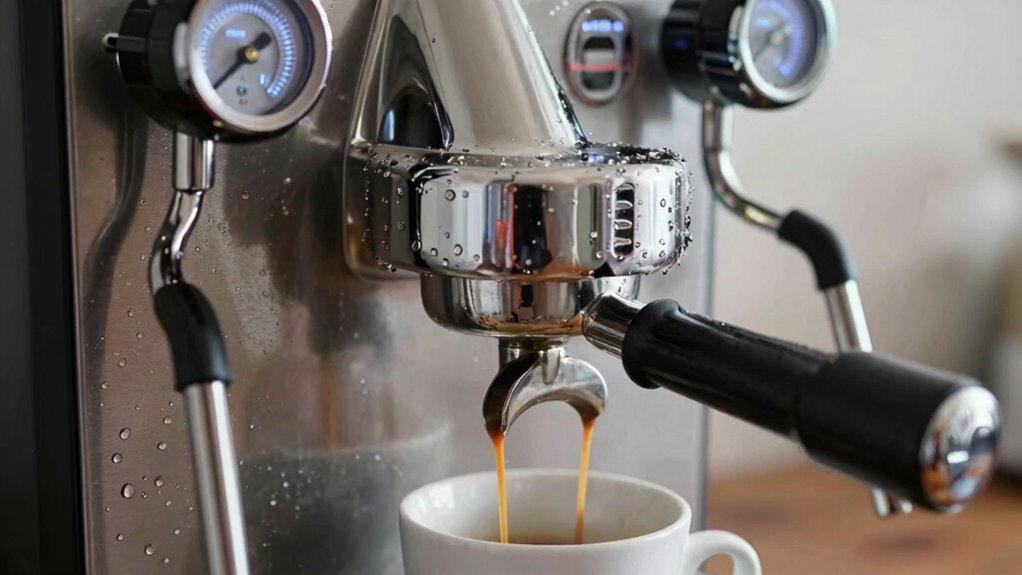
When you notice your brew temperature fluctuating unexpectedly, the first step is to identify potential causes. Check your temperature sensors to verify they’re accurate and functioning properly, as faulty sensors can give misleading readings. Next, review your brewing protocols to confirm you’re following consistent procedures, including water temperature, grind size, and timing. Variations in water temperature or inconsistent pouring techniques can cause instability. Also, inspect your equipment for any leaks, blockages, or thermal insulation issues that might affect temperature retention. Keep an eye on your heater or boiler calibration, as miscalibration can lead to unexpected swings. Ensuring your equipment is properly temperature calibrated helps prevent these fluctuations. Troubleshooting these areas helps you pinpoint issues and maintain steady brew temperatures, ensuring your coffee’s taste remains consistent and ideal.
What Equipment and Techniques Help Maintain Consistent Brew Temperatures?
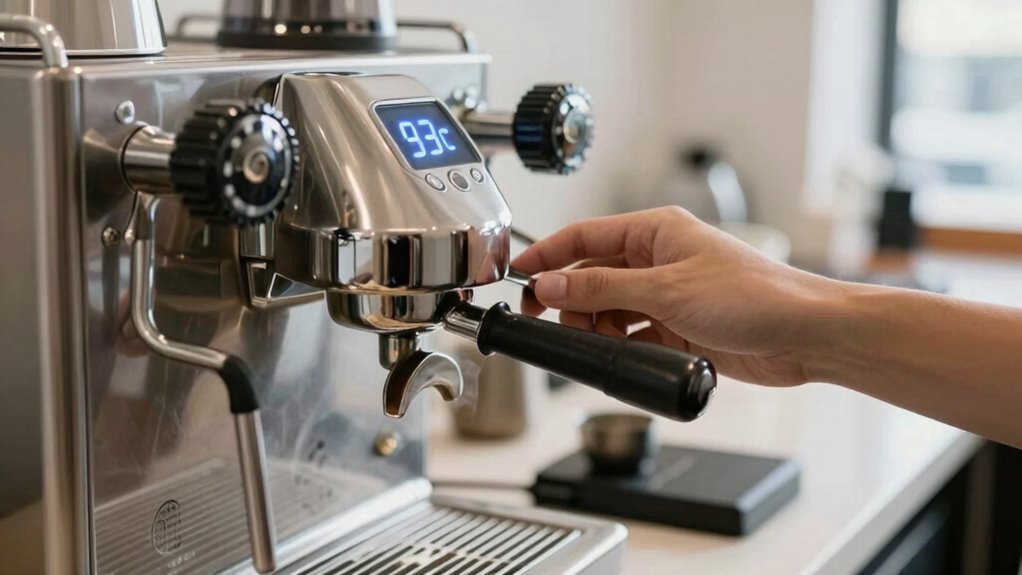
Using high-quality, insulated equipment is essential for maintaining consistent brew temperatures. Insulated kettles help retain heat, reducing fluctuations during brewing. Incorporating accurate temperature sensors allows you to monitor your brew’s temperature precisely, ensuring it stays within ideal ranges. Techniques such as pre-warming your equipment and using a heat source with stable output can also improve consistency. Additionally, maintaining a steady environment around your setup minimizes external temperature influences. Regularly calibrate your temperature sensors for accuracy, and choose insulated kettles designed for even heat distribution. By combining these methods, you’ll maintain stable temperatures, resulting in a more consistent extraction and better-tasting coffee or tea. Proper equipment and techniques are crucial for reliable, repeatable brewing results. Consistent temperature control is fundamental to achieving optimal flavor in your brews.
Why Does Consistent Brew Temperature Lead to Better Tastes?

Maintaining a consistent brew temperature guarantees that your coffee or tea extracts flavors evenly and reliably. When temperature control is precise, it prevents over-extraction or under-extraction, ensuring you get the full spectrum of flavors without bitterness or sourness. Consistent temperatures help develop a balanced profile, allowing sweet, acidic, and bitter notes to shine through harmoniously. If the temperature fluctuates, certain compounds may extract too quickly or too slowly, disrupting flavor consistency. This stability enhances your brewing process, giving you more control over the final taste. By keeping the temperature steady, you optimize extraction and preserve delicate aromatics. Temperature stability is crucial for achieving optimal flavor extraction in home brewing. Ultimately, good temperature control is key to achieving better, more consistent tastes in every cup.
Frequently Asked Questions
How Does Altitude Affect Optimal Brew Temperature?
Altitude effects your brewing temperature because higher elevations have lower air pressure, which can cause water to boil at lower temperatures. So, at high altitudes, you might need to adjust your brewing temperature slightly higher to extract ideal flavors. Understanding how altitude influences brewing temperature helps you fine-tune your process for a better cup, ensuring you compensate for the environmental changes that impact extraction and taste.
Can Starting Temperature Influence Final Flavor?
Think of your starting temperature as the opening chapter of a story—set it right, and the narrative flows smoothly. Your initial temperature influences flavor extraction, much like how the first brushstrokes shape a painting. If it’s too cold, your brew’s potential remains hidden; too hot, and you risk over-extraction. By controlling this starting point, you craft a balanced, flavorful cup that tells a richer, more nuanced tale.
Are Certain Brewing Methods More Sensitive to Temperature Swings?
Yes, certain brewing methods are more sensitive to temperature fluctuations, affecting flavor consistency. For example, pour-over and espresso brewing rely heavily on precise temperatures, so even small swings can alter extraction and taste. On the other hand, methods like cold brew are more forgiving. You should monitor and control temperature carefully with sensitive techniques to maintain consistent flavor and prevent undesirable taste variations caused by temperature fluctuations.
How Do Ambient Room Temperatures Impact Brewing Stability?
Imagine your brewing process as a delicate dance, where room temperature acts as the steady rhythm. When ambient room temperatures fluctuate, thermal fluctuations shake that rhythm, causing your brew’s temperature to wobble. This instability can lead to inconsistent extraction and flavor, like a dancer stumbling. Keep your room temperature steady, avoiding sudden thermal fluctuations, so your brewing dance remains smooth, ensuring each cup tastes just as intended.
What Role Does Water Mineral Content Play in Temperature Control?
Water mineral content, especially water hardness and mineral balance, plays a vital role in temperature control during brewing. Harder water with high mineral levels retains heat longer, helping you maintain a stable temperature. Conversely, imbalanced minerals can cause inconsistent heat transfer, making temperature regulation tricky. By adjusting mineral content, you can improve heat retention and stability, ensuring your brew consistently reaches and maintains the best temperature for the best flavor extraction.
Conclusion
Just like a master chef keeps their ingredients perfectly balanced, maintaining steady brew temperatures guarantees your coffee and tea taste their best. Small swings may seem insignificant, but they can turn a delightful cup into a forgettable one—like chasing shadows in the fog. By monitoring and controlling your brewing environment, you can access richer flavors and aroma, transforming your daily ritual into an art form. Remember, consistency is the secret behind every great cup—your taste buds will thank you.
Fall Picks
fall essentials
As an affiliate, we earn on qualifying purchases.