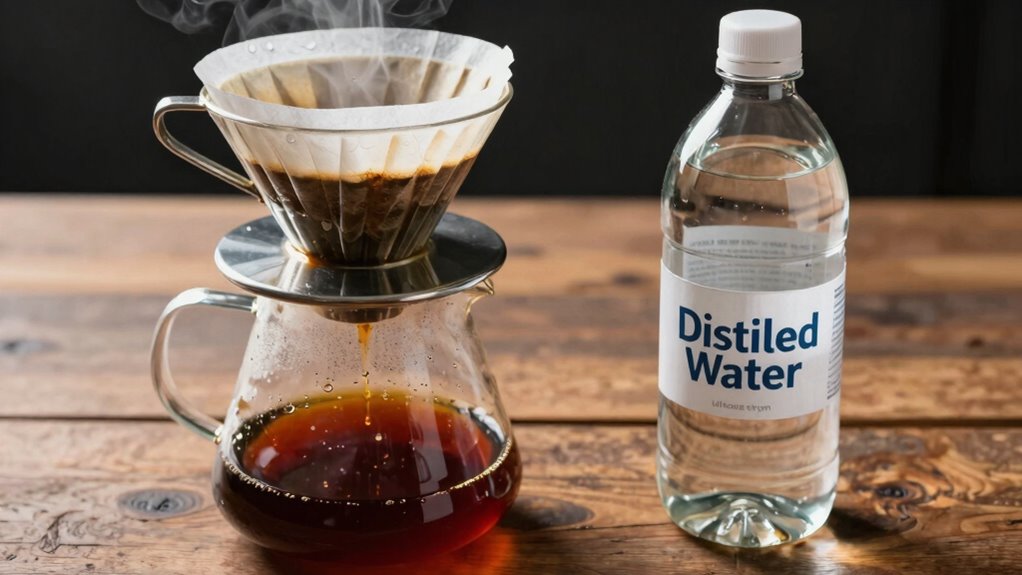
Using distilled water for coffee might seem convenient, but it strips away essential minerals like calcium and magnesium needed for proper flavor extraction. Without these minerals, your coffee can taste flat, dull, or overly bitter. It also increases the risk of equipment damage, as minerals help prevent scale and corrosion. If you want richer flavor and longer-lasting brewing gear, you’ll want to think about water with a balanced mineral content. Keep going to discover how mineral levels truly impact your brew.

Get kitchen gear delivered free — and shop member deals
- Fast, free delivery on millions of items
- Access to Prime Big Deal Days deals on October 6–7
- Prime Video, Amazon Music and more included
Key Takeaways
- Distilled water lacks essential minerals needed for proper flavor extraction, resulting in flat or dull coffee.
- Removing minerals can cause inconsistent extraction and compromised brewing stability.
- Lack of minerals increases the risk of equipment corrosion and mineral deposits.
- Pure distilled water produces weak or overly bitter flavors due to poor solubilization of aromatic compounds.
- Using distilled water undermines the balance needed for rich, complex coffee profiles.
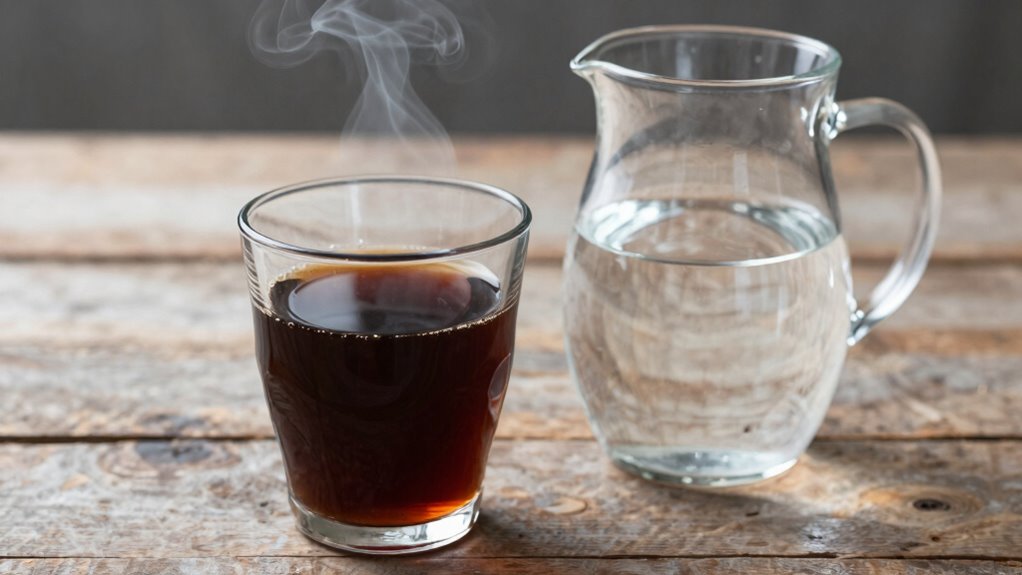
Many coffee enthusiasts believe that using distilled water is a quick way to improve their brew, but in reality, it can do more harm than good. While the idea of pure water sounds appealing, it overlooks the importance of mineral content and how it impacts water purity in coffee extraction. Water purity isn’t just about removing impurities; it’s also about maintaining the right balance of minerals that help extract flavors effectively. When you use distilled water, you strip away these essential minerals, leaving water that’s almost entirely devoid of any beneficial compounds. This lack of mineral content can lead to a flat, dull coffee experience because the water won’t interact with coffee grounds as it should. mineral content is a crucial factor in brewing quality. Additionally, the absence of minerals can lead to inconsistent extraction, making it harder to achieve a uniform flavor profile.
Using distilled water can dull your coffee by removing essential minerals needed for full flavor extraction.
In coffee brewing, minerals like calcium, magnesium, and bicarbonates play a vital role in extracting the complex flavors from your beans. These minerals help dissolve the soluble compounds responsible for aroma, body, and taste. Without them, your coffee will lack depth, often tasting weak or overly bitter. Water purity, in this case, isn’t only about removing impurities but also about preserving the mineral balance that allows your coffee to shine. When you use distilled water, you’re essentially removing this balance, making it harder to achieve a well-rounded, flavorful brew. Instead of enhancing the coffee, it can make the final product feel insipid or overly sharp because the water isn’t doing its job properly. Proper mineral levels also contribute to the stability of the brewing process, ensuring consistent results.
Furthermore, the absence of minerals can also cause brewing issues. Coffee machines and grinders rely on the mineral content of water to prevent scaling and buildup. Using distilled water increases the risk of corrosion and damage to your equipment over time, which can lead to costly repairs and maintenance. It’s a false economy—what seems like a shortcut to better coffee actually compromises your equipment’s longevity and performance. A balanced mineral composition can also help in reducing scaling and mineral deposits that affect brewing efficiency. Maintaining proper mineral levels not only improves flavor but also supports the long-term health of your equipment.
If you’re seeking to improve your coffee, focus on water that strikes a balance. Use filtered water with the right mineral levels, or consider mineral-enhancement blends designed for brewing. This approach ensures your water isn’t just pure but also rich enough in minerals to extract full flavor and protect your equipment. Remember, water’s mineral content directly influences the brewing process and the taste of your coffee. Simply removing impurities isn’t enough—getting the mineral balance right makes all the difference.
Frequently Asked Questions
Can Distilled Water Improve the Taste of Coffee?
Distilled water generally doesn’t improve the taste of your coffee because it lacks minerals that enhance flavor. While it’s pure, it can lead to flat, dull coffee due to mineral absence. Instead, using filtered water with balanced mineral content can boost flavor enhancement and provide a richer, more satisfying cup. Relying solely on distilled water can cause purity concerns, but it doesn’t necessarily make your coffee taste better.
Is Distilled Water Safe for Daily Coffee Brewing?
Yes, distilled water is safe for daily coffee brewing, but you should consider water purity and health concerns. It’s free of minerals, which can affect taste, but prolonged use might lead to mineral deficiencies if your diet lacks nutrients. Also, some people worry about the lack of minerals in distilled water impacting health. If you choose to use it daily, supplement minerals through your diet or consider mineralized water options.
How Does Mineral Content Affect Coffee Flavor?
Imagine pouring water into your coffee, and suddenly, you taste a subtle sweetness or a hint of fruitiness—this is mineral content at work. Minerals like calcium and magnesium influence mineral balance, which affects flavor extraction. When minerals are just right, your coffee’s richness and complexity shine through. Too few minerals, and flavors become flat; too many, and they can taste harsh. Proper mineral levels elevate your coffee experience.
What Are Better Alternatives to Distilled Water for Brewing?
To improve your coffee, opt for water with balanced mineralization, like filtered or spring water, which enhances brewing complexity. These options retain essential minerals that bring out rich flavors without overwhelming the taste. Avoid distilled water because it lacks minerals, leading to flat, dull coffee. By choosing water with proper mineral content, you guarantee a more nuanced and satisfying brew, elevating your coffee experience.
Does Using Distilled Water Affect Coffee Machine Longevity?
Using distilled water can negatively impact your coffee machine’s longevity because it has low mineral content, leading to mineral depletion in the machine’s components. This lack of water alkalinity causes parts like gaskets and seals to dry out and crack over time. Without minerals, the machine’s heating elements may also corrode faster. To protect your machine, consider using water with balanced mineral levels instead of pure distilled water.
Conclusion
Rushing to use distilled water as a shortcut might seem like an easy fix, but it’s a path that leads nowhere good. You’re better off investing a little time to understand your water’s mineral content, because in coffee, every little detail counts. Don’t put all your eggs in one basket—trust that the right water makes the brew, not just the quick fix. In the end, quality over convenience always pays off.
Fall Picks
fall essentials
As an affiliate, we earn on qualifying purchases.