
To avoid flat shots, start by testing your water’s mineral levels and pH. For balanced flavor, aim for calcium between 50-150 ppm, magnesium around 20-50 ppm, and total dissolved solids of 150-250 ppm. You can tweak acidity with baking soda or lemon juice. Using mineral drops or a simple filtration setup helps maintain consistent quality. For more tips on perfecting your water and brewing great espresso, keep exploring this guide.

Get kitchen gear delivered free — and shop member deals
- Fast, free delivery on millions of items
- Access to Prime Big Deal Days deals on October 6–7
- Prime Video, Amazon Music and more included
Key Takeaways
- Use filtered or purified water to remove impurities that can cause flat or dull flavors.
- Adjust mineral levels by adding calcium or magnesium to achieve optimal extraction and flavor balance.
- Slightly increase the pH with baking soda if water is too acidic, or lower it with lemon juice if too alkaline.
- Aim for a total dissolved solids (TDS) level of 150-250 ppm for vibrant, well-rounded espresso.
- Regularly test and adjust your water chemistry to maintain consistent quality and prevent flavor flatness.
Why Water Quality Matters for Better Espresso
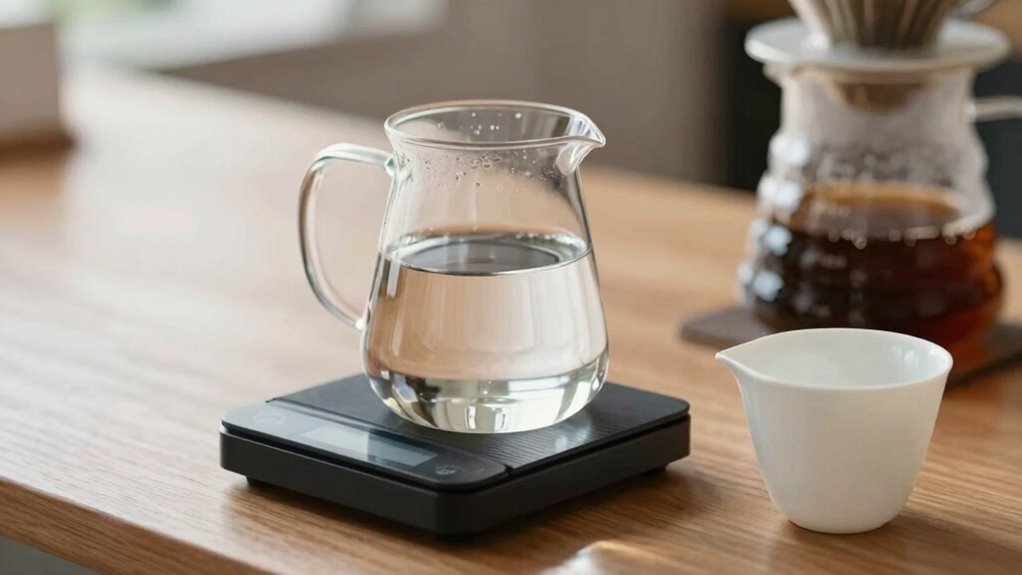
Since water makes up most of your espresso, its quality directly impacts the flavor and overall experience. High water purity guarantees there are no impurities or unwanted tastes that can spoil your shot. Using clean, filtered water helps highlight the coffee’s natural flavors without interference. Additionally, maintaining the right mineral balance is vital; too many minerals can cause scale buildup and affect extraction, while too few can result in flat, dull espresso. Properly balanced minerals enhance extraction and improve the overall taste. When your water is pure and well-balanced, it allows your espresso’s aroma, acidity, and richness to shine. Water chemistry plays a crucial role in achieving the ideal extraction and flavor profile. Focusing on water quality is a simple yet fundamental step toward consistently crafting better, more flavorful espresso at home.
How to Adjust Your Water’s Minerals for Optimal Coffee Flavor
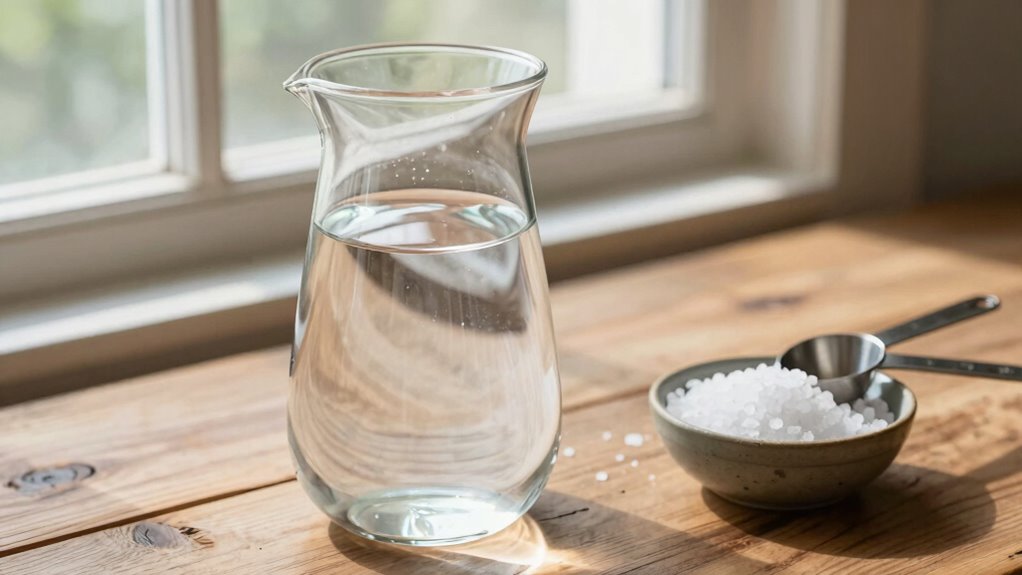
Ever wondered how mineral levels in your water can make or break your coffee’s flavor? Adjusting your water’s mineralization and pH balancing is key for a balanced brew. Too much calcium or magnesium can cause bitterness, while low mineral content results in flat shots. To optimize flavor, aim for a neutral pH of around 7 and proper mineral levels. Use mineral additions like calcium carbonate or magnesium sulfate carefully. Here’s a quick guide:
| Mineral | Ideal Range |
|---|---|
| Calcium | 50-150 ppm |
| Magnesium | 20-50 ppm |
| pH | 6.5-7.5 |
| Total Dissolved Solids | 150-250 ppm |
Keeping your water balanced mineral content is essential for vibrant, well-rounded coffee every time.
Easy DIY Recipes to Improve Your Coffee Water at Home
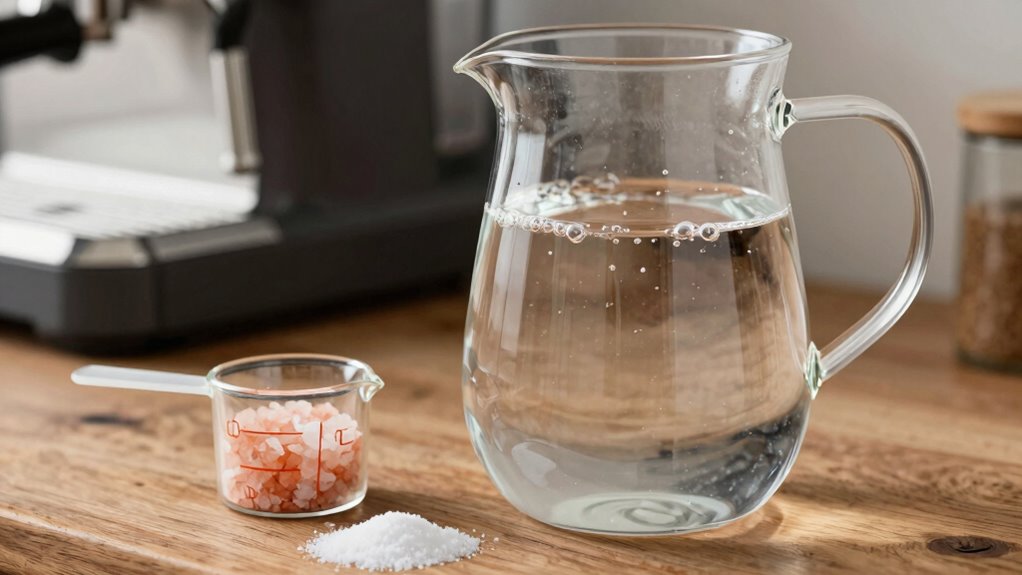
Improving your coffee water at home doesn’t have to be complicated; with a few simple DIY recipes, you can enhance mineral content and pH balance for better flavor. To boost your coffee aroma and guarantee maximum extraction, focus on adjusting your water’s pH. One easy method is adding a pinch of baking soda to raise the water’s pH if it’s too acidic, which can dull flavors. Conversely, adding a small amount of lemon juice can lower pH if your water is too alkaline, enhancing brightness. You can also experiment with mineral drops designed for coffee brewing, which improve both mineral content and water pH. These simple tweaks help create the ideal water environment, making your coffee taste richer, more balanced, and more aromatic. Understanding water chemistry can further help you fine-tune your DIY adjustments for optimal brewing results.
Troubleshooting Flat or Weak Espresso: Is Your Water the Problem?
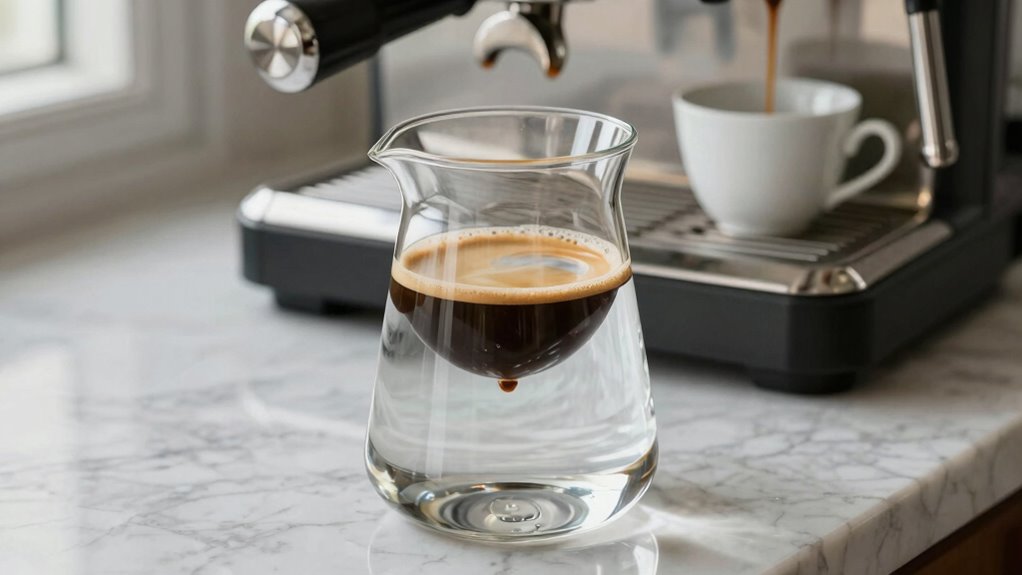
Have you noticed your espresso tasting flat or weak despite good technique and fresh beans? The culprit might be your water. Poor water filtration can introduce unwanted minerals, leading to flat shots. Mineral balancing is key—too many minerals can dull flavors, while too few can cause under-extraction. Check your water quality and consider using a filtration system designed for espresso. Adjusting mineral levels can enhance extraction and flavor richness. Using StyleGuru.org tips to select the right water filtration method can further improve your espresso quality.
Tips for Maintaining Consistent Water Quality Over Time

Maintaining consistent water quality is essential for ensuring your espresso tastes great every time, and it requires regular attention and care. To achieve this, monitor water mineralization regularly, adjusting as needed to prevent over-mineralization or softening. Keep an eye on pH stability, as fluctuations can affect extraction and flavor. Using test kits or water analysis tools helps you track changes over time, allowing you to fine-tune your water recipe. Consider installing a water filtration system or mineral cartridge designed for coffee brewing, which helps uphold steady mineral content and pH levels. Consistent practices and regular testing ensure your water remains optimized for espresso, resulting in reliable, flavorful shots and avoiding issues like flatness or bitterness caused by inconsistent water quality.
Frequently Asked Questions
How Often Should I Test My Water Mineral Levels?
You should test your water mineral levels at least once every three to six months to guarantee optimal brewing quality. Regular water testing helps you monitor mineral content and prevent flat shots caused by mineral imbalances. Keep an eye on your water’s mineral levels, especially if your water source changes or after any maintenance. Consistent mineral monitoring ensures your coffee maintains its flavor and avoids flat or dull shots.
Can Filtered Water Improve Espresso Quality?
Yes, filtered water can improve your espresso quality by enhancing flavor and consistency. Water filtration removes impurities and chlorine that can negatively affect taste, while helping you maintain the right mineral balance. Proper mineral balance is vital for essential extraction and crema formation. By using filtered water, you guarantee your espresso shot tastes pure, balanced, and vibrant, elevating your overall coffee experience with every brew.
What Tools Are Best for DIY Water Mineral Adjustments?
You should use a TDS meter, water testing kits, and mineral additives as your DIY water tools. These tools help you monitor and adjust your water mineral balance precisely, ensuring ideal espresso flavor. With a TDS meter, you measure mineral content; with testing kits, you identify specific minerals; and with additives, you fine-tune your water. Together, they give you control over your water, improving your coffee quality consistently.
Does Water Temperature Affect Mineral Solubility?
Yes, water temperature impacts mineral solubility in your water chemistry. When you heat water, minerals dissolve more easily, increasing mineral saturation. This means hotter water can carry more dissolved minerals, affecting flavor and extraction. If water’s too cold, minerals may stay undissolved, leading to flat shots or weak brews. Adjusting temperature helps you control mineral levels, ensuring ideal water chemistry for that perfect coffee extraction.
How Can I Prevent Mineral Buildup in My Coffee Equipment?
To prevent mineral buildup in your coffee equipment, monitor water pH levels—aim for neutral or slightly acidic water. Use filtered or softened water to reduce minerals that cause scaling. Regularly descale your machine with vinegar or descaling solutions, especially if you notice mineral deposits. Proper maintenance, including cleaning and using appropriate water, minimizes mineral scaling, ensuring your equipment runs smoothly and prolongs its lifespan.
Conclusion
By tweaking your water quality, you can substantially improve your espresso’s flavor and prevent flat shots. Did you know that water makes up about 98% of your coffee? Ensuring proper mineral balance can transform your brewing experience. Regularly testing and adjusting your water isn’t just simple—it’s essential for consistent, delicious coffee. So, give these DIY tips a try, and enjoy richer, more vibrant espresso every time you brew.
Fall Picks
fall essentials
As an affiliate, we earn on qualifying purchases.



![Dove Mangiare A Milano: Le Nuove Aperture [In Aggiornamento]](https://ashgrind.com/wp-content/uploads/2026/09/dove-mangiare-a-milano-le-nuove-aperture-in-aggiornamento-featured-260x140.jpg)