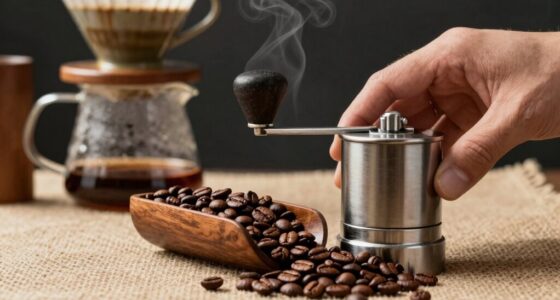
Start by adjusting your grind size first, as it has the biggest impact on extraction and flavor. A proper grind guarantees your shot pulls at the right rate, giving you a good base to fine-tune other variables like dose, tamp pressure, and timing. Once your grind is dialed in, focus on consistent dosing and distributing your coffee evenly. If you want to master each step for perfect espresso fast, you’ll find plenty of tips to guide you along the way.

Get kitchen gear delivered free with Prime
- Fast, free delivery on millions of items
- Prime Video, Amazon Music and more included
- Member-only deals all year
Key Takeaways
- Start by ensuring grind size and dose are consistent to establish a reliable baseline.
- Verify machine calibration and cleanliness to prevent flow issues affecting shot quality.
- Focus on distribution and tamping techniques for uniform extraction before adjusting timing.
- Adjust grind size and shot timing based on taste and shot volume after foundational steps.
- Regularly review and maintain equipment to support faster dialing-in and consistent results.
espresso grinder for consistent grind size
As an affiliate, we earn on qualifying purchases.
As an affiliate, we earn on qualifying purchases.
Why Starting With Grind Size Is Key to Espresso Dial-In
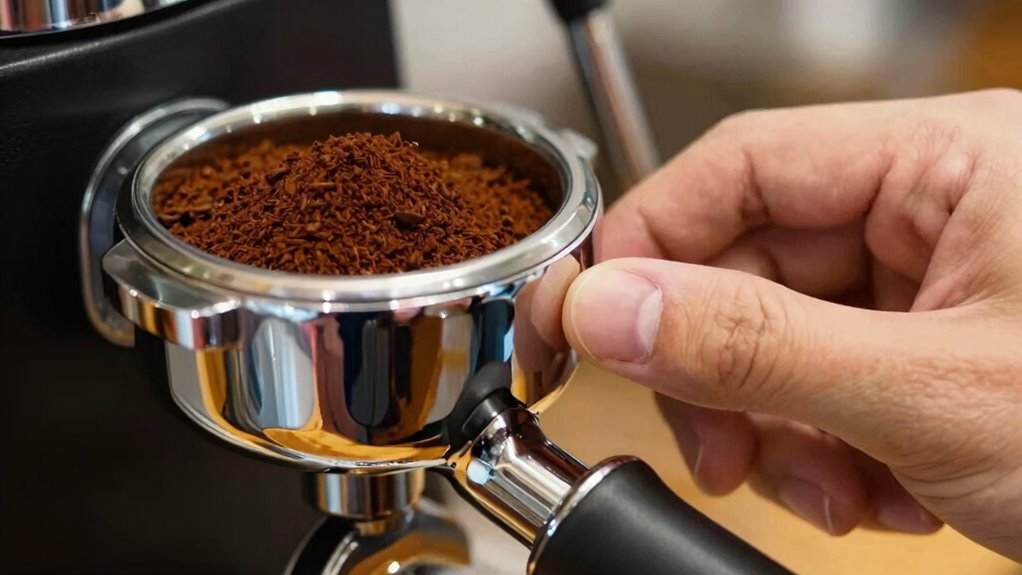
Starting with the right grind size is essential because it directly influences the extraction process and the final flavor of your espresso. When you make grind adjustments, you control how quickly water passes through the coffee, affecting flavor balance. A too-fine grind may cause over-extraction, resulting in bitter notes, while a too-coarse grind can lead to under-extraction, making your espresso weak or sour. Getting the grind size right sets a solid foundation for dialing in your shot efficiently. It guarantees that subsequent adjustments to dose or yield will be more predictable and effective. Proper filtration also plays a role in maintaining consistent espresso quality by preventing impurities that can affect extraction. By starting here, you save time and avoid unnecessary guesswork, making your overall dial-in process smoother and more consistent. Additionally, understanding coffee grind consistency helps ensure uniform extraction and optimal flavor development. Using a consistent grind size ensures that your espresso shots develop balanced and rich flavors, making your efforts more rewarding. Proper grind size is the key to revealing your espresso’s full potential.
espresso tamper and distribution tools
As an affiliate, we earn on qualifying purchases.
As an affiliate, we earn on qualifying purchases.
How Adjusting Dose and Yield Shapes Your Espresso Flavor
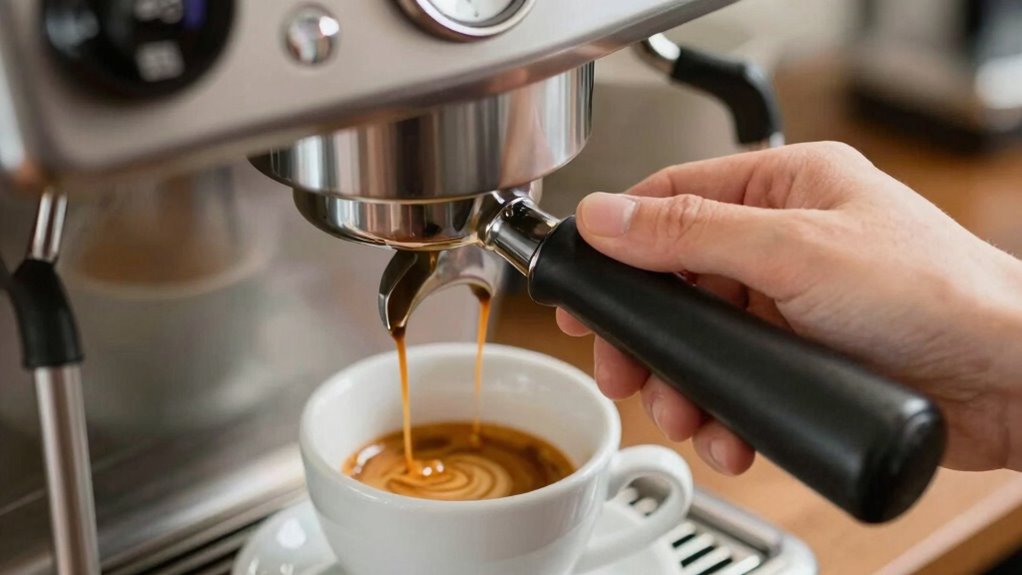
Adjusting your dose and yield directly impacts the strength and balance of your espresso’s flavor. Increasing your dose makes the shot more intense and full-bodied, while decreasing it results in a lighter taste. Similarly, adjusting your yield influences how concentrated the final espresso is—lower yields produce a richer, more intense shot, and higher yields create a milder flavor. These changes also affect how brew temperature and water mineralization interact with extraction. A higher brew temperature can enhance extraction, highlighting acidity and sweetness, while water mineralization influences solubility and flavor clarity. When tweaking dose and yield, consider how these factors work together to achieve your desired profile. Understanding extraction is essential for making precise adjustments that lead to optimal flavor. Small adjustments can lead to significant flavor improvements, so experiment carefully to find the flavor balance you prefer. Precise adjustments are essential for optimizing your espresso flavor and extraction process. Additionally, understanding the relationship between dose and yield can help you fine-tune your method for better consistency.
As an affiliate, we earn on qualifying purchases.
Tamp and Distribute for Better Extraction
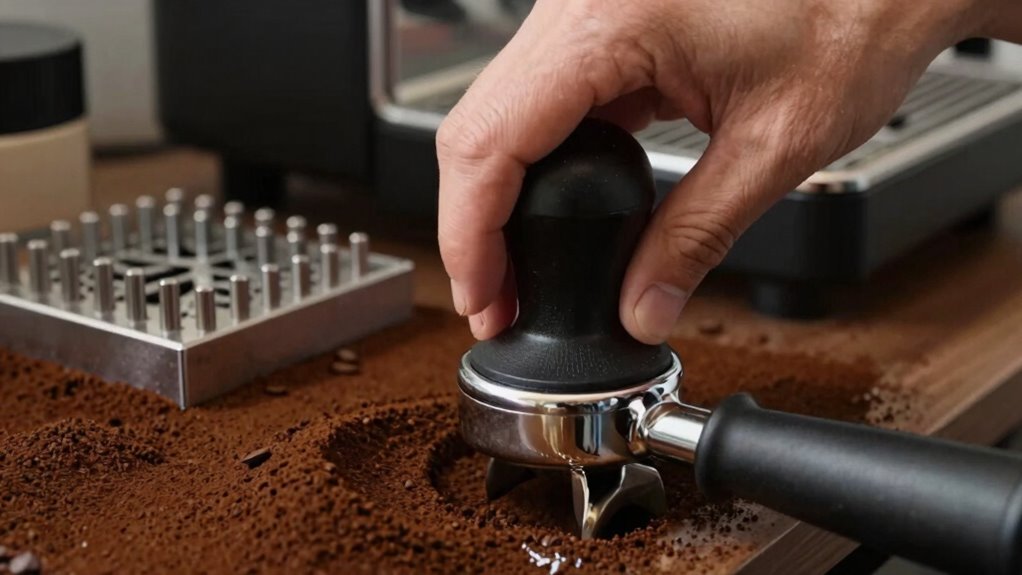
To get the best extraction, focus on distributing the coffee evenly before tamping. Apply consistent pressure to create a uniform coffee bed, ensuring even contact with water. When your distribution and tamp are precise, your espresso will taste richer and more balanced.
Consistent Distribution Technique
Achieving a consistent extraction begins with mastering your distribution technique. To do this, focus on ensuring grind consistency so your coffee bed has uniform size and density. An uneven grind leads to uneven extraction, no matter how well you tamp. When distributing the coffee, use a deliberate, even motion to level the surface before tamping. This step helps prevent channeling and promotes uniform water flow. Your tamp technique should be gentle yet firm, applying consistent pressure without disturbing the distribution. By integrating a reliable distribution method, you create a flat, even coffee puck, which allows hot water to extract flavors evenly. Incorporating distribution tools can further enhance the consistency of your technique. Regular practice helps develop muscle memory, resulting in more predictable, high-quality shots every time. Additionally, paying attention to technique consistency ensures that each step builds on the last, leading to more reliable results. Developing a reliable routine can also help maintain consistency across multiple shots, improving your overall espresso quality. Consistent use of measurement tools can help monitor and refine your process for optimal results.
Proper Tamp Pressure
Applying the right amount of tamp pressure is essential for extracting the best flavors from your coffee. Too light, and water flows too quickly, risking under-extraction; too hard, and it may cause over-extraction. Adjust your grind for ideal flow, considering coffee freshness, which impacts grind consistency. A finer grind may be necessary for older beans, while fresher coffee often needs a coarser grind. When tamping, apply even pressure to ensure uniform density, avoiding channeling. Remember, consistent tamping leads to more predictable results. Small adjustments in tamp pressure can profoundly affect extraction quality. Additionally, understanding brew ratio helps optimize the balance between coffee and water for ideal extraction. For optimal results, regularly calibrate your tamping technique to maintain consistent pressure and achieve the desired extraction. Consistent tamping technique also reduces the likelihood of uneven extraction and improves overall coffee quality.
Even Coffee Bed Level
Ensuring an even coffee bed before tamping is essential for consistent extraction. When you distribute the coffee grounds evenly, you achieve proper bed leveling, which prevents channeling and uneven flow during brewing. Start by gently spreading the coffee with a distribution tool or your finger to create a flat, uniform surface. This step helps eliminate any high or low spots in the coffee bed. After distributing, apply steady, even pressure when tamping to maintain the bed level. An imbalanced coffee bed causes inconsistent extraction, affecting flavor and strength. Take your time to check the bed’s surface and guarantee it’s level before brewing. Proper bed leveling results in better contact between water and coffee, delivering a more balanced and flavorful espresso shot.
As an affiliate, we earn on qualifying purchases.
Timing and Shot Volume: Achieving Consistency
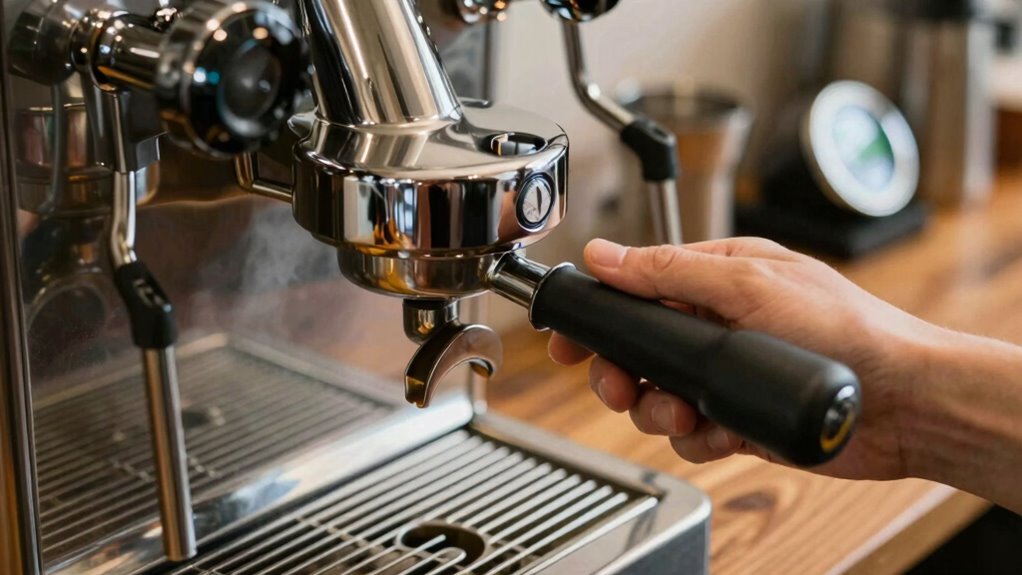
Consistent doses guarantee your shot stays reliable, so measure carefully every time. Precise timing helps extract the right flavors without over- or under-extraction. When both are on point, you’ll notice a more balanced, repeatable espresso shot. To further improve results, consider adjusting grind size to optimize extraction and enhance overall consistency. Additionally, understanding the timing and shot volume can help you troubleshoot and fine-tune your process for even better results. Incorporating vetted product reviews can assist in selecting the best equipment and accessories to support your brewing precision. Exploring equipment maintenance ensures your machine functions optimally for consistent shots.
Dose Consistency Matters
Achieving shot-to-shot consistency begins with paying close attention to both timing and volume. When your dose remains consistent, your coffee flavor becomes more predictable, and brewing efficiency improves. Small fluctuations in dose can lead to uneven extraction, affecting taste and strength. To lock in dose consistency:
- Use a scale for precise measurements
- Keep grind size uniform for each shot
- Tamp with consistent pressure
- Check basket weight regularly
- Maintain a clean, calibrated grinder
- Regularly monitor calibration techniques to ensure your grinder and machine operate at optimal accuracy
These steps help ensure each shot uses the same amount of coffee, making your results more reliable. Consistent dosing minimizes variables, allowing your espresso machine to perform at its best. This focus on dose stability is key to developing a balanced, flavorful shot every time, streamlining your brewing process and elevating your espresso experience.
Timing Precision Essential
Timing precision is critical because even slight deviations can substantially impact your espresso’s flavor and strength. Accurate timing ensures consistent shot volume and extraction, which are key to a balanced brew. Water chemistry plays a role here—proper mineral content and pH levels influence flow rate and shot consistency. Regular machine maintenance keeps components clean and functioning at peak performance, preventing flow restrictions that disrupt timing. When your machine is well-maintained, it’s easier to achieve precise shots, as variables like pressure and temperature stay stable. By focusing on timing and shot volume, you minimize variability and produce more predictable results. Consistency comes down to understanding how water chemistry interacts with your equipment and maintaining it diligently, so every shot hits the mark.
Troubleshooting Common Espresso Dial-In Problems
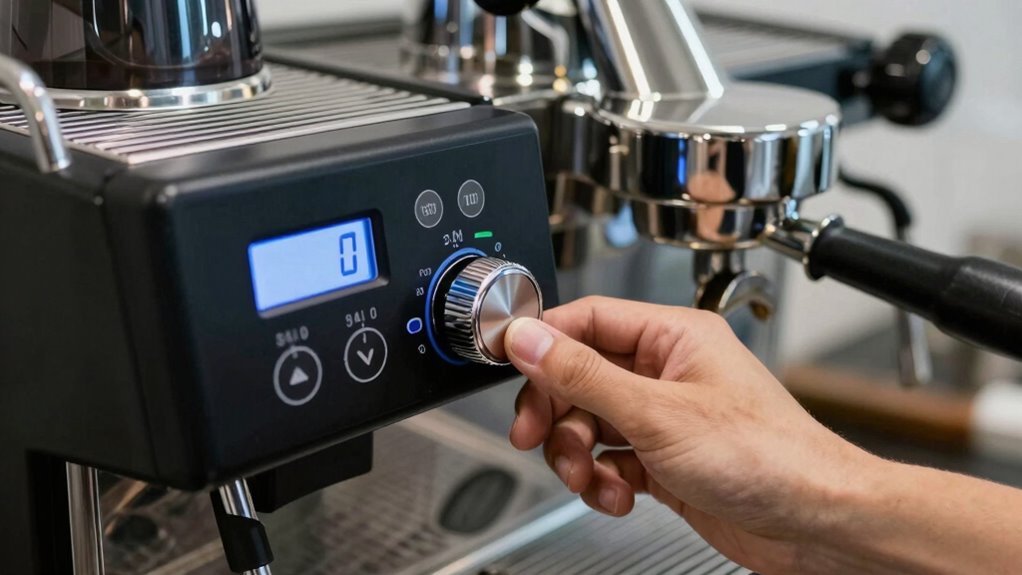
When dialing in your espresso, issues often arise from simple adjustments or overlooked details. Common problems include sour or bitter shots, uneven extraction, or inconsistent flow. These often stem from factors like stale coffee bean freshness, incorrect grind size, or improper machine calibration. Troubleshooting involves checking your coffee freshness—expired beans can throw off flavor and extraction. Ensure your grinder is set correctly for your machine and your tamping pressure is consistent. Also, verify that your machine’s calibration is accurate, especially the temperature and pressure. If shots are too quick or slow, adjust the grind or dose accordingly. Regularly cleaning your equipment prevents clogs and guarantees peak performance. Additionally, inspecting your machine’s pressure and temperature settings can help you achieve more consistent results. Addressing these basics helps you resolve many dial-in issues efficiently.
- Coffee bean freshness impacts extraction quality
- Proper machine calibration guarantees consistent results
- Grind size adjustments influence shot timing
- Tamping pressure affects flow rate
- Regular cleaning prevents blockages
Final Tips to Perfect Your Espresso Shot

To perfect your espresso shot, focus on the small details that make a big difference. First, ensure grind consistency; uneven grinds lead to over- or under-extraction, ruining flavor. Use a consistent grind setting and measure precise doses for each shot. Next, master milk steaming; properly textured milk creates a smooth, glossy microfoam that complements your espresso. Steaming at the right temperature and technique prevents scalding or flat milk. Always purge your steam wand before steaming and listen for a hissing sound indicating correct pressure. Keep your equipment clean to avoid off-flavors. These small adjustments—maintaining grind consistency and perfecting milk steaming—bring noticeable improvements to your espresso, making each cup more refined and enjoyable.
Frequently Asked Questions
How Long Should Each Espresso Shot Take During Dialing-In?
You should aim for each espresso shot to take about 25 to 30 seconds. To achieve this, check your brew temperature and make sure it’s consistent, as fluctuations can affect extraction time. Also, focus on maintaining grind consistency; a uniform grind helps control flow rate. Adjust your grind size if shots are too quick or slow, and keep your machine’s temperature steady. This way, you’ll dial in faster and get the perfect shot.
What Are Signs of an Over-Extracted Espresso?
When it comes to over-extracted espresso, your senses should alert you early—think bitter, harsh flavors, and a dry, puck-like taste. These signs mean your grind size might be too fine, pulling out too many bitter compounds. To fix this, adjust your grind size to be slightly coarser. Tasting notes will shift from overly bitter to more balanced, revealing the true flavor profile of your coffee.
How Does Ambient Temperature Affect Espresso Dialing?
Ambient temperature affects your espresso dialing by influencing water temperature and extraction. When it’s warmer, water heats up faster, so you might need to dial in for a slightly lower temperature to prevent over-extraction. Conversely, in cooler environments, water cools quickly, requiring a higher temperature setting. Adjust your grinder and water temperature accordingly to maintain consistent extraction, ensuring your espresso’s flavor stays balanced regardless of ambient conditions.
Can Different Coffee Roasts Require Different Dial-In Adjustments?
Yes, different coffee roasts often need unique dial-in adjustments. You should tweak the brew ratio and grind size accordingly. Lighter roasts usually require a finer grind and a slightly different brew ratio to extract ideal flavors, while darker roasts may need a coarser grind and a different ratio to avoid over-extraction. Experimenting with these variables helps you fine-tune your espresso for the perfect shot every time.
What Tools Can Help Speed up the Dialing-In Process?
You can streamline dialing in your espresso by using tools like a grind size grinder with precise settings and a tamp pressure gauge. These tools make it easy to maintain consistency, turning what feels like an impossible task into a breeze. Adjusting grind size and tamp pressure accurately speeds up the process, minimizing trial and error, so you get perfect shots faster and more consistently every time.
Conclusion
Remember, dialing in your espresso is like sculpting a masterpiece—you start with the right foundation, then refine every detail. Focusing on grind size first sets the stage for success, but don’t forget to fine-tune dose, tamp, and timing. Each adjustment is a brushstroke shaping your perfect shot. Embrace the process, knowing that patience and precision turn an ordinary brew into a symphony of flavor—your journey from good to great is worth every effort.
Halloween Picks
halloween
As an affiliate, we earn on qualifying purchases.