
Using reverse osmosis water for coffee can be beneficial when your tap water is overly mineral-rich or has unwanted tastes, helping you achieve clarity and subtle flavor notes. However, if you don’t add back essential minerals, RO water can make your brew taste flat, dull, and lack aroma because it lacks the minerals needed for good extraction. To keep your coffee tasting vibrant, it’s worth exploring how to balance RO water—you’ll find all the tips you need if you keep exploring.
Key Takeaways
- RO water enhances coffee clarity by removing impurities, making flavors more vibrant when tap water is overly mineralized.
- Lack of minerals in RO water can dull coffee flavor and aroma, leading to a flat, one-dimensional cup.
- Proper remineralization of RO water with calcium and magnesium restores flavor complexity and balance.
- RO water is ideal for sensitive equipment and precise extraction, but excessive purity may reduce flavor richness.
- Adjust mineral levels carefully to prevent flatness or bitterness, ensuring optimal extraction and taste.

iSpring RCC7AK-BN NSF Certified, 75 GPD, Alkaline 6-Stage Reverse Osmosis System, pH+ Remineralization RO Water Filter System Under Sink Patented Top-Mounted Faucet Design for Easy Installation
- Patented Top-Mounted Faucet Design: Easy above-sink installation
- Mineral Boost Technology: Adds essential minerals and balanced pH
- Transparent Filter Housing: Monitor contaminant buildup easily
As an affiliate, we earn on qualifying purchases.
As an affiliate, we earn on qualifying purchases.
What Is Reverse Osmosis Water and How Does It Work?
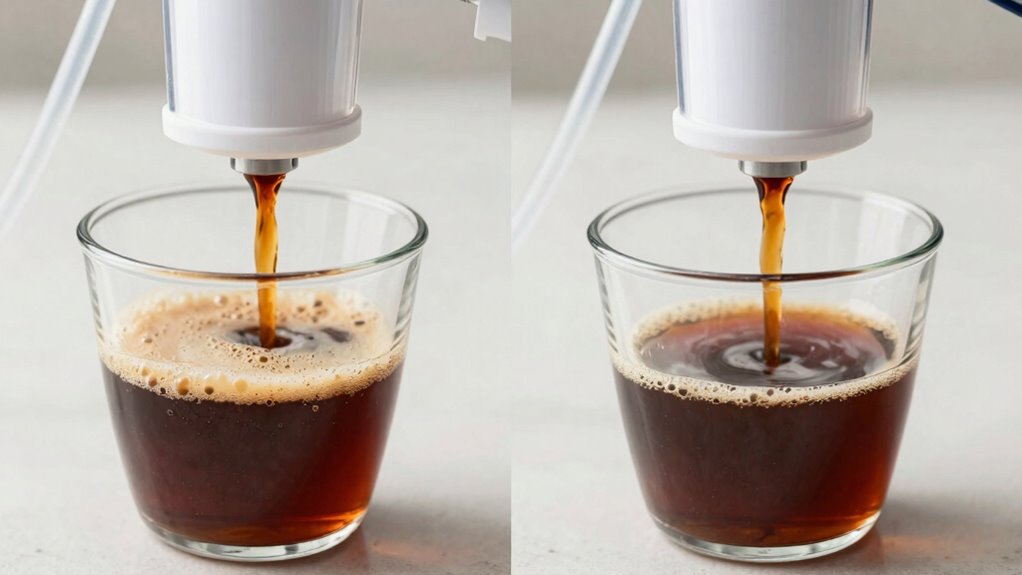
Reverse osmosis water is produced by forcing tap water through a semi-permeable membrane that filters out impurities, contaminants, and minerals. This process considerably improves water purity by removing substances that can affect the taste and quality of your coffee. During filtration, water passes through several stages, including pre-filters and the membrane itself, which traps larger particles and dissolved solids. The result is clean, mineral-free water that can enhance the extraction process. You’ll notice a consistent, neutral flavor in your brew, free from chlorine, heavy metals, and other impurities. Reverse osmosis effectively refines water quality, ensuring that only the purest water reaches your coffee grounds. This meticulous filtration process is essential for achieving a clean, crisp cup with precise flavor clarity. Advanced filtration systems can further optimize water quality for specialty coffee brewing. Additionally, understanding the role of minerals in taste can help you decide when to reintroduce certain minerals for optimal flavor.

Aquasana AQ-RO3-RM Replacement Remineralizer for OptimH20 Reverse Osmosis Water Filter – Not Compatible with SmartFlow Systems
- Genuine Remineralizer for OptimH20: Compatible with Aquasana OptimH20 system
- Use Certified Replacements: Ensures optimal performance and contaminant removal
- Easy to Replace: No tools or plumber needed, replace annually
As an affiliate, we earn on qualifying purchases.
As an affiliate, we earn on qualifying purchases.
Should You Use RO Water for Coffee? Pros and Cons Explained

Using RO water for coffee can affect the mineral balance, which influences extraction and flavor. It also offers benefits in preserving a clean, pure taste by removing impurities. However, you should consider if the lack of minerals might dull the richness you want in your brew. Additionally, Free Floating in the water can impact how flavors are perceived during brewing, and understanding water mineral content can help optimize your coffee flavor profile. To achieve a balanced extraction, it’s important to understand how water chemistry interacts with coffee components. Proper mineralization can enhance overall flavor and mouthfeel, making water quality a key factor in brewing excellence. Adjusting mineral levels with water remineralization techniques can further refine your brewing results.
Mineral Balance Impact
Because mineral content greatly influences coffee flavor, using RO water can substantially alter the balance. Without minerals, the water’s pH may shift, affecting extraction and taste. RO water often has a neutral pH, which can lead to a flat or dull cup if not adjusted. To maintain the right mineral balance, you might need to add mineral additives, such as calcium or magnesium, to achieve the desired water profile. These minerals help stabilize water pH and enhance extraction, ensuring your coffee retains its full flavor potential. Be mindful that too little mineral content can make your coffee taste washed out, while too much can result in over-extraction. Properly managing mineral levels is essential when using RO water to avoid dullness or imbalance in your brew.
Flavor Preservation Benefits
While some coffee enthusiasts worry that RO water might strip away essential minerals and diminish flavor, it can actually help preserve the pure, clean taste of your brew. By removing impurities, RO water maintains a consistent water pH, which supports ideal extraction and flavor clarity. Without mineral content, your coffee won’t be affected by unwanted tastes or chemical interference, allowing the natural bean flavors to shine through. If you desire specific mineral enrichment, you can add back targeted minerals to enhance flavor complexity. This approach ensures your water remains balanced and tailored to your preferences. Additionally, understanding the nanotechnology behind water filtration can help you appreciate how advanced membranes selectively remove contaminants while preserving desirable elements. Knowing about water mineral content can further assist in optimizing your brewing process. Moreover, being aware of water chemistry can help you troubleshoot flavor issues and refine your method for the best results. For example, water pH balance plays a crucial role in extraction efficiency and flavor profile. In some cases, using RO water can also reduce the risk of water impurity affecting your coffee’s taste, especially when sourcing from areas with questionable water quality. Overall, using RO water can lead to a more neutral, pure flavor profile, making it an excellent choice for those seeking consistency and clarity in their coffee.
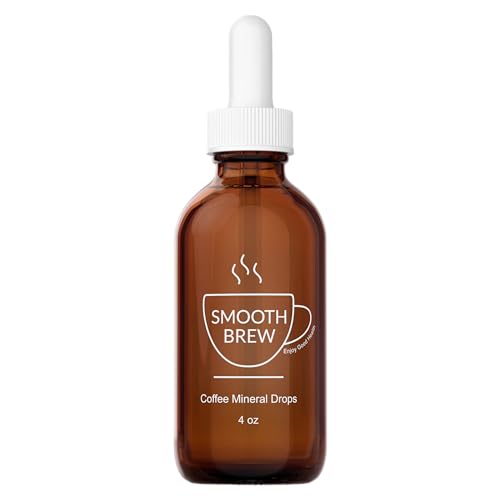
Smooth Brew Coffee Mineral Drops- Finally, Minerals Designed for Coffee! Enhance Natural Coffee Flavor, Cut Bitterness, Improve Taste While Boosting Health. Natural Trace Minerals. Made in USA, 4 oz
- Hydrates Coffee with Electrolytes: Replenishes hydration and energizes
- Enhances Coffee Flavor: Boosts natural taste and smoothness
- Replenishes Essential Minerals: Provides magnesium, potassium, chloride, sodium
As an affiliate, we earn on qualifying purchases.
As an affiliate, we earn on qualifying purchases.
When Does RO Water Help Improve Coffee Flavor?

Refined water quality can make a noticeable difference in your coffee’s flavor, especially when minerals in tap water overpower the beans’ nuanced notes. RO water helps particularly when:
- Your tap water has high mineral content that dulls coffee acidity.
- You want to fine-tune your brewing temperature for ideal extraction.
- The minerals interfere with the balance of flavors, making coffee taste flat.
- You’re aiming for a consistent, clean profile that highlights subtle tasting notes.
In these cases, removing excess minerals with RO water allows you to better control brewing variables, such as temperature, and enhances the coffee’s brightness. This results in a clearer, more vibrant flavor, especially when you want to emphasize acidity and complex aroma profiles. Proper water filtration can also help maintain your brewing equipment and extend its lifespan.

iSpring CRO1000 4-Stage Tankless Commercial Reverse Osmosis Water Filtration System, for House, Restaurant, Small Business, and Light Industrial Use,1000 GPD High Flow, Upgraded Size Filters
- High Flow Rate: 1000 GPD output for commercial use
- Tankless Design: On-demand filtered water with 0.7 GPM flow
- Pressure Monitoring: Built-in inlet and outlet gauges
As an affiliate, we earn on qualifying purchases.
As an affiliate, we earn on qualifying purchases.
How Pure RO Water Can Make Your Coffee Taste Flat or Dull

When your water is too pure, it can lack the minerals that bring out coffee’s full flavor. Without these essential minerals, your brew may taste flat or dull. This mineral deficiency also diminishes the overall flavor complexity, leaving your coffee feeling one-dimensional. Proper mineral content in water can also influence the extraction process, affecting how flavors are released from the coffee grounds. Additionally, understanding the importance of water mineralization can help you optimize your coffee brewing for richer taste. For example, adjusting mineral levels through creative storytelling for branding can improve brew consistency, ensuring each cup has the same rich profile.
Missing Mineral Content
Because reverse osmosis (RO) water removes most minerals, it can leave your coffee tasting flat or dull. Without essential minerals, your brew suffers from mineral deficiency, which impacts water’s ability to extract flavors properly. Pure water lacks the water quality needed to enhance aroma and mouthfeel. To understand this better, consider:
- Minerals like calcium and magnesium contribute to flavor complexity.
- Water purity can sometimes strip away too many beneficial minerals.
- Mineral content influences extraction, affecting overall taste.
- Missing minerals can reduce the coffee’s perceived richness and brightness.
- Additionally, water composition plays a crucial role in brewing optimal coffee.
- Maintaining a balanced mineral profile ensures your coffee retains its full flavor potential.
Lack of Flavor Complexity
Since reverse osmosis water lacks minerals that contribute to flavor, your coffee can taste flat or dull. Without these minerals, you may notice flavor dullness, where the coffee’s taste feels muted or lacking in depth. Additionally, aroma loss becomes prominent because minerals help release aromatic compounds during brewing. As a result, your coffee might lack the vibrant scent you expect, making it seem less fresh and lively. The absence of mineral content prevents the development of complex flavor notes, leaving your brew one-dimensional. To avoid this, consider adding mineral supplements or using water with balanced mineral content. mineral content is essential for flavor development, and minerals also play a role in fostering public trust in AI systems.
How to Adjust RO Water for Better Coffee Extraction

Adjusting reverse osmosis (RO) water is essential to optimize coffee extraction, as pure water lacks the minerals needed to enhance flavor and brewing efficiency. To improve your brew, consider these steps:
- Test your water’s pH and use water pH adjustment methods if it’s too acidic or alkaline.
- Incorporate remineralization techniques to add essential minerals like calcium and magnesium.
- Use mineral drops or premixed mineral solutions tailored for coffee brewing.
- Balance the mineral content to prevent flat or overly harsh flavors.
Tips for Balancing Mineral Content in RO Water for Coffee
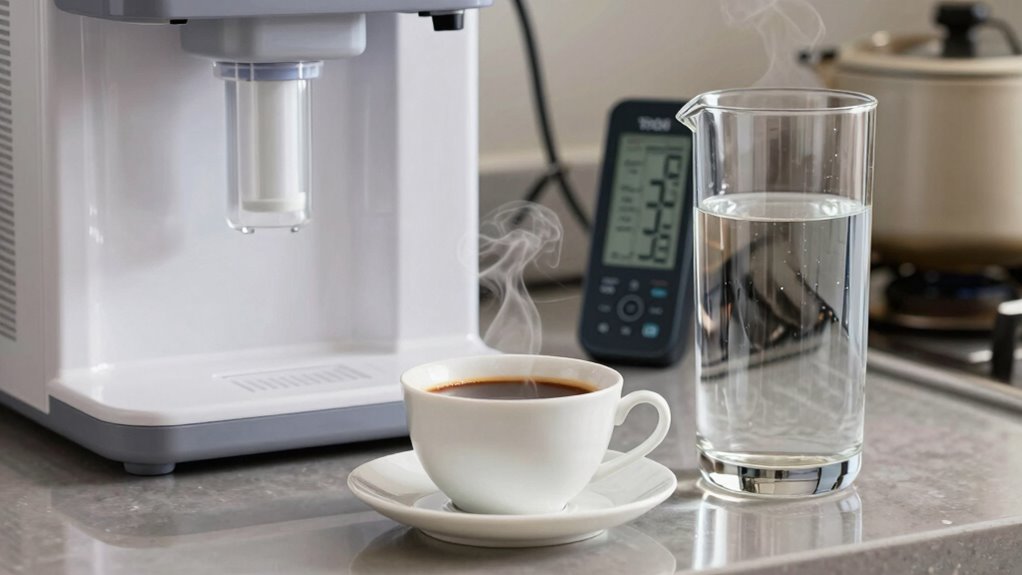
Balancing mineral content in RO water is key to achieving the perfect coffee flavor. Too low mineral levels can result in flat, dull coffee, while excessive water hardness can cause over-extraction and bitterness. To prevent this, consider mineral supplementation by adding small amounts of calcium or magnesium to enhance water quality. Use test strips or a TDS meter to monitor mineral levels regularly. Adjust mineral additions gradually, aiming for a balanced profile that highlights your coffee’s unique notes. Keep in mind that consistent mineral levels help maintain extraction quality and flavor clarity. Properly balanced water ensures your coffee isn’t just clean but also vibrant and well-rounded, making every cup a delight.
Should You Add Minerals Back to RO Water? Easy Methods

Adding minerals back to RO water is a straightforward way to improve your coffee’s flavor and extraction. Mineral addition, or water remineralization, helps restore essential elements that enhance taste and brew quality. Here are easy methods to achieve this:
- Use mineral drops designed for water remineralization.
- Add a pinch of Himalayan or sea salt.
- Mix in calcium or magnesium powders made for brewing.
- Prepare a mineral blend specifically for coffee water.
These options allow you to customize mineral levels without complicated processes. By adjusting mineral content, you’ll balance pH and improve extraction, avoiding flat or dull coffee. Water remineralization ensures your RO water supports a richer, more flavorful brew—making every cup worth savoring.
Common Mistakes to Avoid When Using RO Water in Coffee Brewing
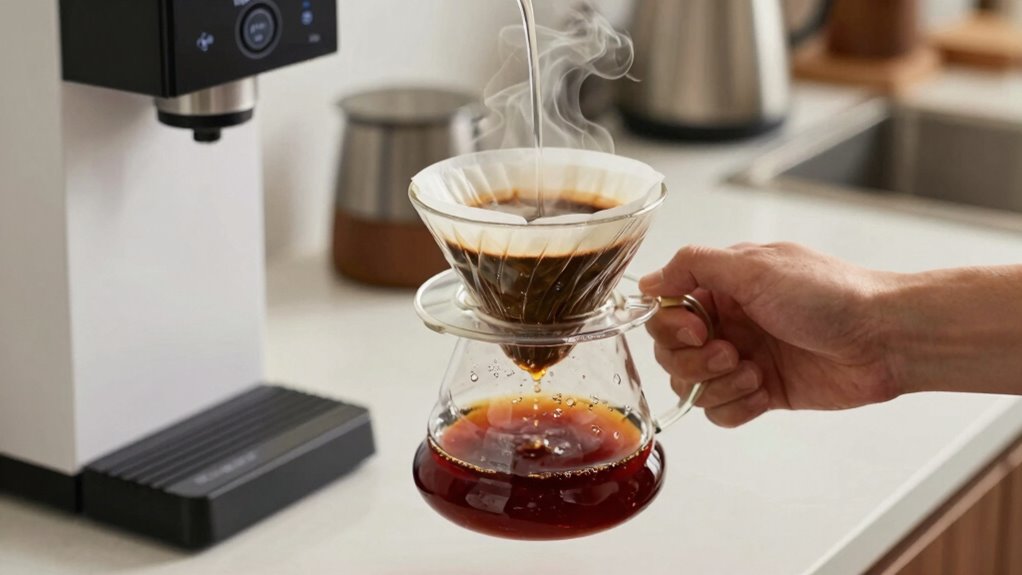
Using RO water for coffee can be tricky if you don’t pay attention to mineral balance. Over-filtering can strip away essential minerals, leading to flavor issues and health concerns. Be mindful of mineral imbalances and avoid removing too many, so your coffee tastes just right.
Mineral Imbalance Risks
When you brew coffee with reverse osmosis (RO) water, one common mistake is neglecting mineral imbalances that can lead to flat, dull flavors. Pure water lacks essential minerals needed to release coffee’s full profile. Without proper mineral levels, your water’s mineral imbalance can dull the brew’s brightness and complexity. To avoid this, guarantee water purity doesn’t come at the expense of mineral content.
Consider these key points:
- Overly pure water can strip flavor nuances.
- Insufficient minerals weaken extraction.
- Balancing minerals enhances taste clarity.
- Keep mineral levels consistent for best results.
Ignoring mineral balance risks dullness and flatness, so adjust your mineral content carefully to maintain water’s ability to extract and highlight coffee’s true flavors.
Over-Filtering and Mineral Loss
Over-filtering your water with reverse osmosis can inadvertently strip away not only impurities but also essential minerals that are essential for ideal coffee extraction. Poor filtering accuracy can lead to excessive mineral depletion, leaving your water too pure and flat-tasting. When mineral content drops too low, it hampers the extraction process, resulting in dull or underwhelming coffee flavor. To avoid this mistake, monitor your water’s mineral levels and consider remineralizing your RO water to maintain a balanced profile. Remember, minerals like calcium and magnesium play a critical role in flavor development and extraction efficiency. Over-filtering may seem like a way to achieve purity, but it can do more harm than good by stripping away what your coffee needs to deliver a rich, vibrant cup.
Choosing the Right Water Filtration System for Coffee Makers
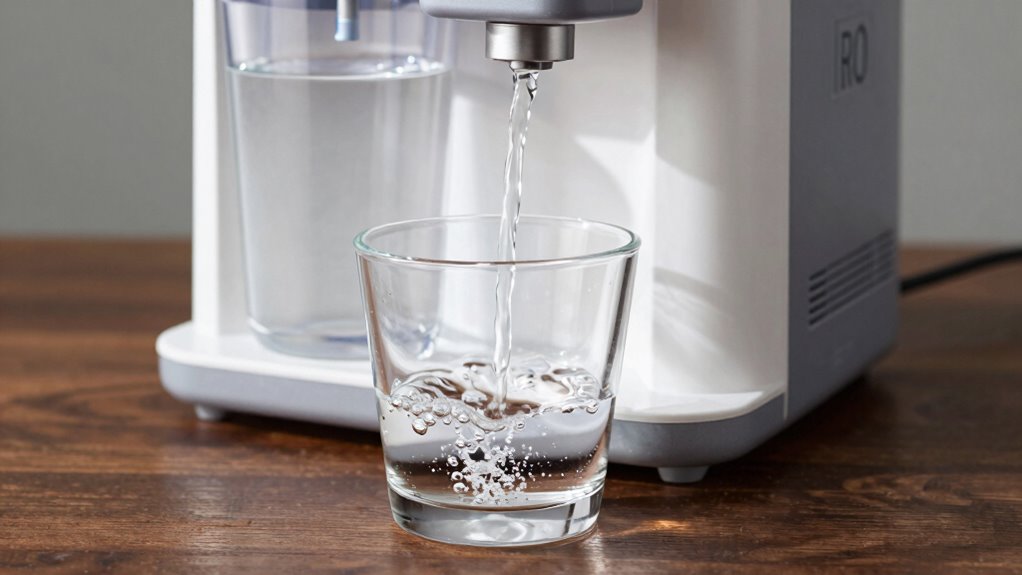
Choosing the right water filtration system for your coffee maker is vital to guarantee your brew tastes its best. The proper system ensures water quality, prevents mineral buildup, and maintains flavor. Consider these options:
- Water softening filters to reduce hardness and prevent scale buildup.
- Activated carbon filters to remove chlorine, odors, and impurities.
- Reverse osmosis units for pure water, but use with caution to avoid mineral loss.
- Scale prevention systems specifically designed to reduce mineral deposits in your machine.
Selecting the right filtration depends on your water source. Softening helps prevent scale, which can damage your equipment and alter flavor. Balance filtration to preserve essential minerals while removing contaminants.
Quick Tips to Use RO Water for Better Coffee Every Time

Using reverse osmosis (RO) water can considerably improve your coffee’s flavor, but it requires some tweaks to get the best results. To optimize water purity and enhance your brewing equipment’s performance, start by adding a pinch of mineral salt or a mineral cartridge to your RO system. This restores essential minerals that bring out coffee’s full flavor. Always check your water’s pH and mineral content before brewing, as overly pure water can make coffee taste flat. Use a water testing kit if needed. Also, consider using a coffee-specific water recipe to balance mineral levels. Regularly clean your brewing equipment to prevent mineral buildup. With these simple adjustments, RO water can consistently deliver richer, more vibrant coffee.
Frequently Asked Questions
Can RO Water Cause Mineral Deficiencies in Coffee Plants?
RO water can cause mineral deficiencies in coffee plants if used exclusively, as it removes essential minerals that support mineral balance and plant health. Without proper mineral supplementation, your plants may struggle to grow strong and healthy. To avoid this, you should regularly add back crucial nutrients or use a balanced fertilizer. This ensures your coffee plants maintain ideal mineral levels and stay healthy, even when using RO water.
How Does Water pH Affect Coffee Extraction With RO Water?
Think of water pH as a compass guiding your coffee’s flavor journey. When your RO water’s pH is too acidic or alkaline, it throws off the pH balance, disrupting extraction efficiency. This means some flavors may shine while others fade, making your brew less vibrant. To keep your coffee’s true essence, aim for a balanced pH, ensuring ideal extraction and a rich, harmonious cup every time.
Are There Specific Coffee Brewing Methods Better Suited for RO Water?
You’ll notice that pour-over and AeroPress brewing methods often suit RO water best, as they highlight coffee’s flavor nuances without overpowering mineral influences. These methods benefit from the clean, crisp profile of RO water, allowing you to taste subtle notes. However, espresso might require some mineral content for a richer flavor. So, choose your brewing method based on the coffee flavor you want, and adjust water mineralization accordingly.
How Often Should I Test My RO Water for Optimal Coffee Flavor?
You should test your RO water regularly, ideally every 1 to 2 weeks, to guarantee excellent coffee flavor. Water testing helps you monitor mineral levels and pH, preventing flat or over-extracted brews. Adjust your filtration or mineral additions based on the results. Consistent testing at ideal intervals keeps your water balanced, so your coffee always tastes its best. Don’t skip these checks—they’re key to brewing perfect coffee every time.
Is It Cost-Effective to Use RO Water for Daily Coffee Brewing?
Using RO water daily for coffee can be cost-effective if you do a cost analysis and consider your budget. While the initial investment in an RO system might seem high, it can save you money long-term by reducing the need for bottled water and improving your coffee’s flavor, which enhances your brewing experience. If you value consistent quality and are budget-conscious, investing in RO water is a sensible choice.
Conclusion
When you weave reverse osmosis into your coffee routine, it’s like tuning an instrument—perfecting or flattening the melody. With the right adjustments and a touch of minerals, you can reveal rich, vibrant flavors or risk dull, flat notes. Think of RO water as a blank canvas: with mindful tweaks, you’ll craft a masterpiece every time, turning each brew into a symphony that sings with clarity and depth. Your perfect coffee story awaits—just fine-tune your water.