
When testing your water hardness at home, choosing between strips, drops, or digital meters depends on your needs and budget. Strips are affordable and simple but less precise, while drops offer better accuracy. Digital meters provide the most reliable and detailed results but come at a higher cost. If you want trustworthy, consistent info, consider the options carefully—staying informed will help you select the best method for your water.

Get kitchen gear delivered free with Prime
- Fast, free delivery on millions of items
- Prime Video, Amazon Music and more included
- Member-only deals all year
Key Takeaways
- Water testing strips are cost-effective and easy but less accurate than drops or digital meters.
- Drops provide a good balance of accuracy and affordability for more detailed mineral analysis.
- Digital meters deliver the highest precision, ideal for critical or frequent water testing.
- Choose testing methods based on your budget, testing frequency, and desired accuracy levels.
- Properly following instructions ensures reliable results regardless of the testing method used.
Products Worth Considering

Vitamix Touch & Go Advance 32-Ounce Bar Blender, White

Ninja Fireside360 Propane Fire Pit and Outdoor Heater, 80,000 BTU, 3 Modes, Cyberspace

Le Creuset Signature Deep Round Enameled Cast Iron Dutch Oven, 6.5 qt, Oyster
As an affiliate, we earn on qualifying purchases.
What Is Water Hardness and Why Does It Matter at Home?
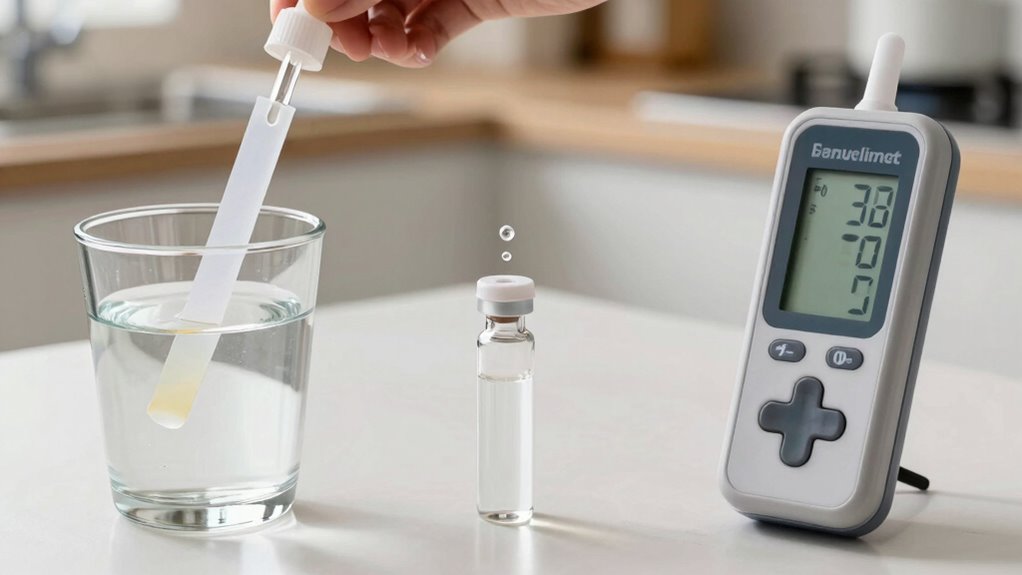
Water hardness refers to the amount of dissolved minerals, primarily calcium and magnesium, in your water supply. These minerals influence not only the mineral content but also your water’s pH balance, which affects its acidity or alkalinity. Hard water can cause scale buildup in pipes, appliances, and fixtures, leading to inefficiency and damage over time. It may also impact how well soap lathers, reducing cleaning effectiveness. Understanding water hardness helps you identify potential issues before they become costly repairs. Testing your water ensures you’re aware of mineral levels and pH balance, guiding you to choose appropriate treatment options. Testing methods can vary in accuracy, so choosing the right one is essential for reliable results. Accurate testing can also help you determine the best water treatment options for your specific needs. Whether for drinking, bathing, or household chores, knowing your water’s hardness helps maintain your plumbing and appliances while ensuring safe, high-quality water at home.
Water Testing Methods: Strips, Drops, and Digital Meters – Which One Should You Use?
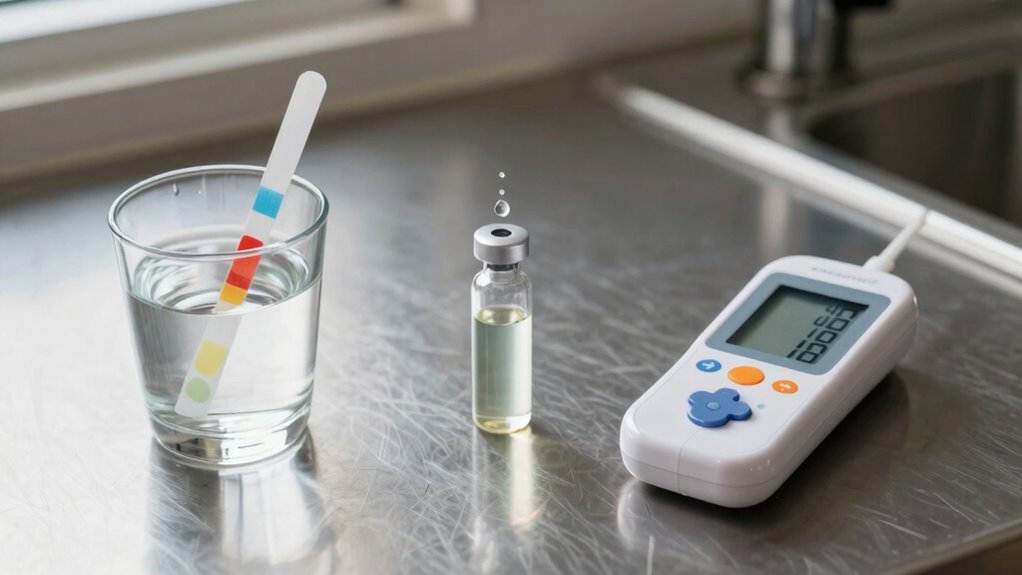
Water Testing Methods: Strips, Drops, and Digital Meters – Which One Should You Use?
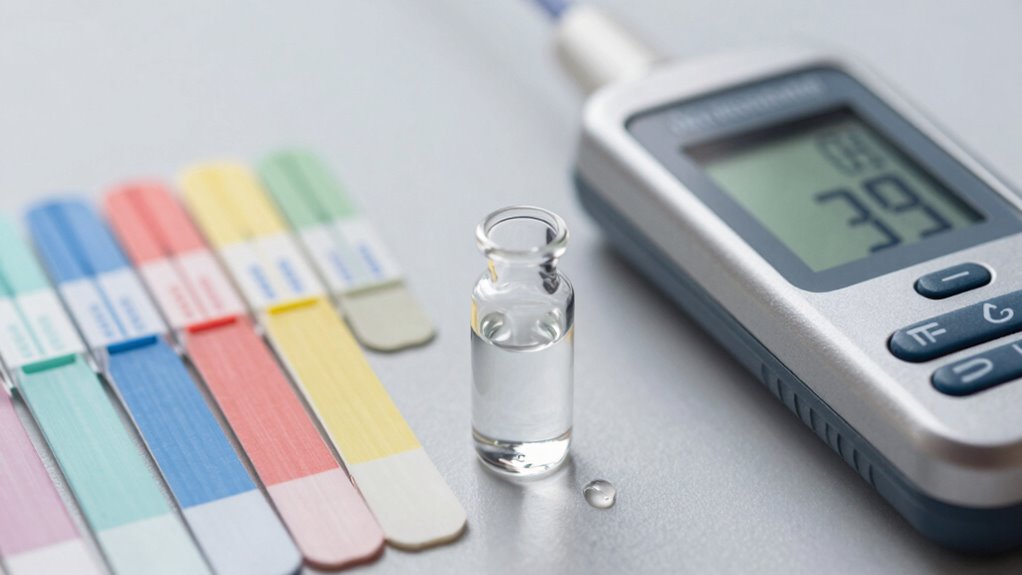
Choosing the right method to test your water hardness depends on your needs, budget, and desired accuracy. Water testing strips are affordable and easy to use, providing quick results, but may lack precision for pH balance or detailed mineral content. Drops offer more accuracy and can measure various mineral levels, making them suitable for those wanting reliable data. Digital meters provide the highest precision, often including pH balance and detailed mineral content analysis, ideal for serious hobbyists or households relying on specific water quality. Consider your goals: if you want a general idea, strips work well; for detailed info, drops or meters are better. All methods can help you understand your water’s mineral content and pH balance, guiding effective water treatment solutions. Recognizing water hardness levels can help determine the most suitable testing method for your needs, especially since different levels may require different approaches. Additionally, understanding the limitations of each testing method can help you choose the most appropriate approach for your situation. Being aware of the accuracy differences among testing options can ensure you select the best method for your specific requirements. Moreover, understanding these testing methods can also contribute to sustainable backyard practices, especially when managing water quality for natural pools or eco-friendly installations.
How Accurate Are Water Hardness Test Strips Compared to Drops and Digital Meters?
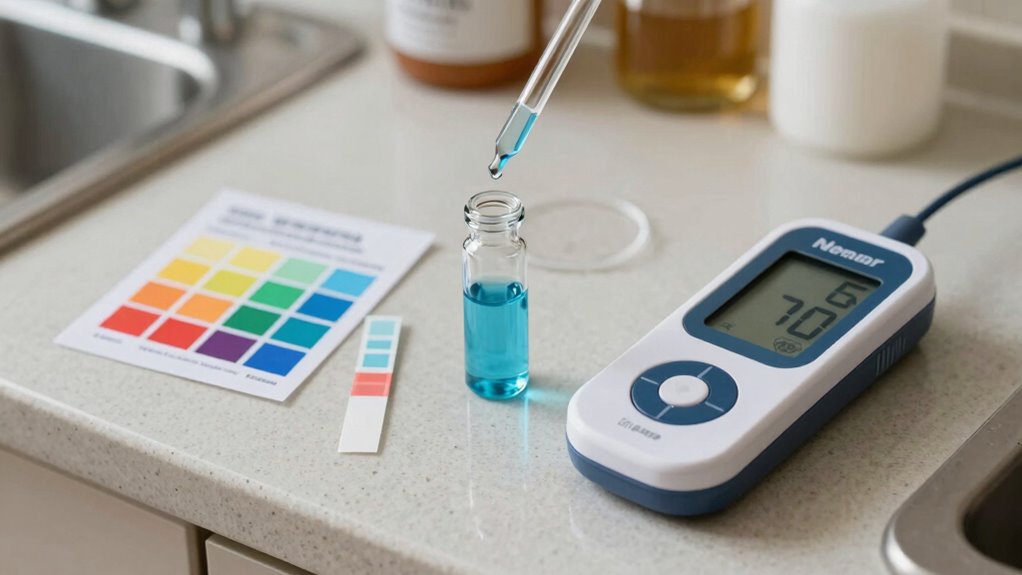
While water hardness test strips are popular for their convenience, they generally lack the calibration accuracy of drops and digital meters. Strips can be affected by user variability, such as inconsistent dipping or reading times, which impacts reliability. They often provide approximate results rather than precise measurements. Drops and digital meters, on the other hand, usually offer higher accuracy because they are calibrated more precisely and minimize user error. Digital meters provide digital readouts, reducing misinterpretation, while drops often include standardized reagents for consistent results. Overall, if you want precise, consistent water hardness readings, drops and digital meters are more dependable. Strips are suitable for quick checks but may not be ideal when accuracy is critical.
Which Water Hardness Test Is Best for Your Budget and Needs?
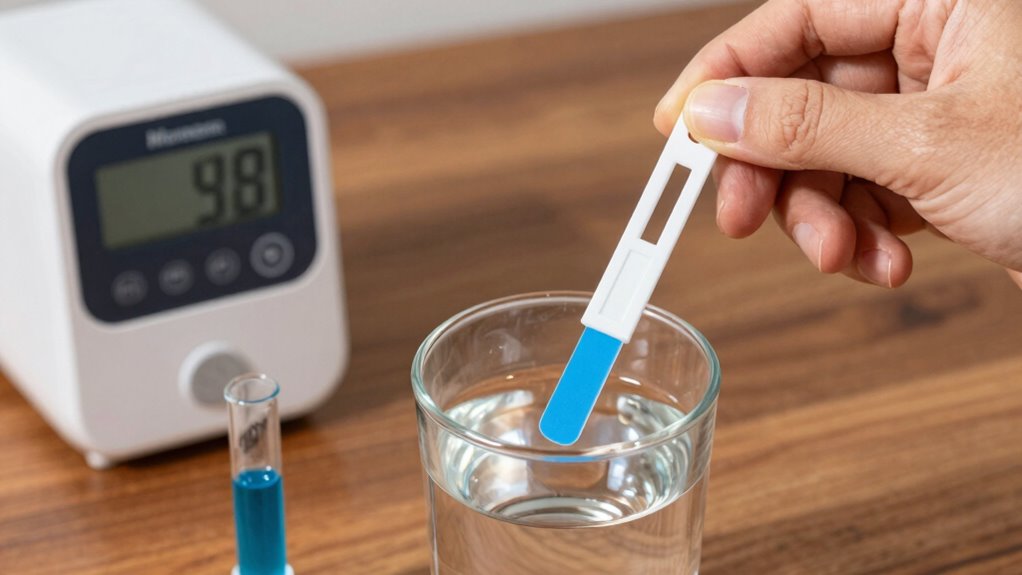
Selecting the right water hardness test depends on your budget and how you plan to use it. If you’re on a tight budget, test strips offer a simple, affordable option, though they may be less precise. Drop kits provide more accurate results at a reasonable cost, making them suitable for regular testing. Digital meters are the most precise but come with higher upfront costs, ideal if you need detailed readings or test frequently. Consider your needs carefully: casual testing might only require strips, while troubleshooting hard water issues benefits from drops or digital meters. Maintenance tips include cleaning reusable parts regularly and storing tests in a cool, dry place to ensure longevity. Balancing cost, accuracy, and ease of use helps you choose the best water hardness test for your needs.
How to Test Water Hardness at Home and Ensure Reliable Results
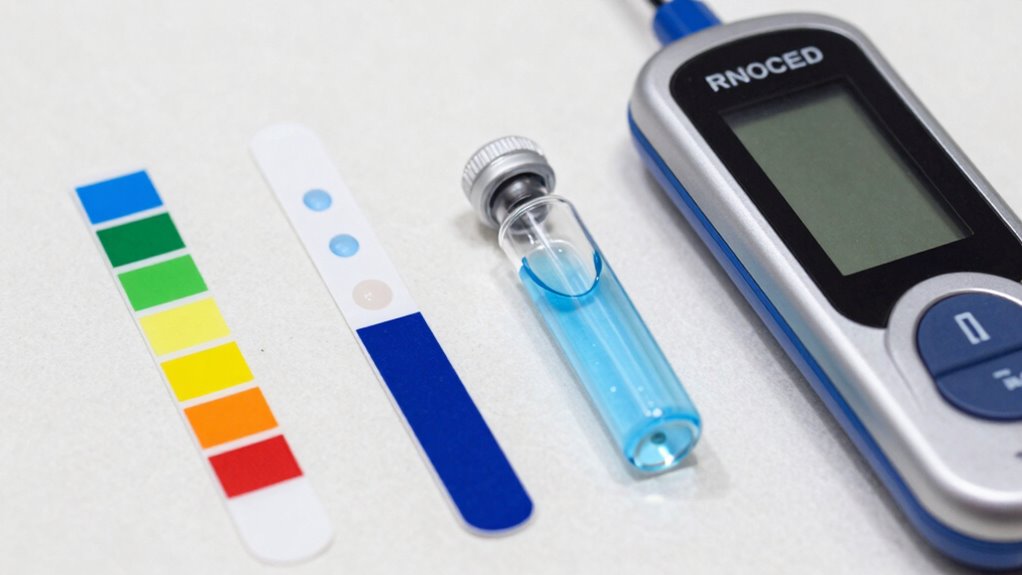
Testing water hardness at home is straightforward and can provide reliable results when done correctly. To guarantee accuracy, follow clear instructions for your chosen method—strips, drops, or digital meters. Proper testing helps you understand how water affects your lifestyle and the environment, influencing decisions like water softening or filtration. Accurate results can improve daily routines, from laundry to drinking water, and reduce environmental impact by avoiding unnecessary treatments. Remember, consistency is key. Use the same test under similar conditions and record your results. Here’s a reminder of what’s at stake: accurate readings. Utilizing vetted testing methods ensures you obtain trustworthy data and make informed choices about your water quality.
Frequently Asked Questions
How Often Should I Test My Water Hardness at Home?
You should test your water hardness at home at least once every three to six months to maintain ideal water quality. Incorporate testing into your maintenance schedule, especially if you notice changes in soap lathering or scale buildup. Regular testing helps you catch hardness fluctuations early, ensuring your water treatment system functions efficiently and prolongs the lifespan of appliances. Adjust testing frequency based on your water source and household needs.
Can Water Hardness Levels Change Over Time?
Yes, water hardness levels can change over time due to seasonal fluctuations and mineral variability. During different seasons, mineral content in your water may increase or decrease, affecting hardness. Factors like rainfall, water source changes, or plumbing updates can also impact mineral levels. To guarantee accurate readings, it’s best to test periodically, especially if you notice changes in water taste, soap lathering, or appliance performance.
Are There Any Health Risks From Hard Water?
You might worry about health risks from hard water, but generally, it’s safe to drink. The mineral content, mainly calcium and magnesium, actually benefits your mineral intake. However, extremely hard water can cause skin dryness or interfere with appliances over time. While rare, some people with kidney issues should monitor mineral levels. Overall, normal hard water isn’t a health concern, but staying informed helps you make better choices.
How Do Water Softeners Impact Test Results?
Water softener effects can alter your test result accuracy because they remove calcium and magnesium, the minerals responsible for water hardness. When you test after softening, readings may show lower hardness levels, giving a false impression of water quality. To get accurate test results, it’s best to measure water hardness before softening or account for the softener’s influence. This way, you make certain your test results truly reflect your water’s actual hardness.
Can Environmental Factors Affect Water Hardness Readings?
Environmental factors can definitely affect your water hardness readings. For example, pH interference from acidic or alkaline water can skew test results, making them seem softer or harder than they actually are. Temperature effects also play a role; warmer water can cause test reagents to react differently, leading to inaccurate readings. To get the most accurate results, test your water at consistent temperatures and consider pH levels before testing.
Conclusion
Think of your home’s water testing tools as keys to a hidden treasure chest. Whether strips, drops, or digital meters, each opens the secrets of your water’s hardness. Choose wisely to protect your household, much like safeguarding a precious gem. When you trust your chosen method, you guarantee the health of your home’s water supply—your most valuable resource. Remember, the right test is the key to unlocking clarity and peace of mind.