

If you crave a hands-on driving experience, enjoy feeling every shift, and like maintaining full control, manual transmission might suit you best. However, if safety, convenience, and reducing stress matter more, assisted features like lane-keeping and adaptive cruise control could be your preference. Consider your skill level and comfort with technology as well. To discover which option aligns with your driving style and safety priorities, keep exploring the details ahead.

Get kitchen gear delivered free with Prime
- Fast, free delivery on millions of items
- Prime Video, Amazon Music and more included
- Member-only deals all year
Key Takeaways
- Choose manual control if you seek an engaging, hands-on driving experience and enjoy feeling every vehicle response.
- Opt for assisted features if you prioritize safety, convenience, and reducing driver workload in everyday traffic.
- Manual driving requires higher skill and attention, suitable for confident drivers willing to handle challenging conditions.
- Assisted systems leverage technology to enhance safety and comfort, ideal for those valuing ease and accident prevention.
- Your decision depends on your driving style, comfort with technology, and safety priorities—balance engagement versus assistance.
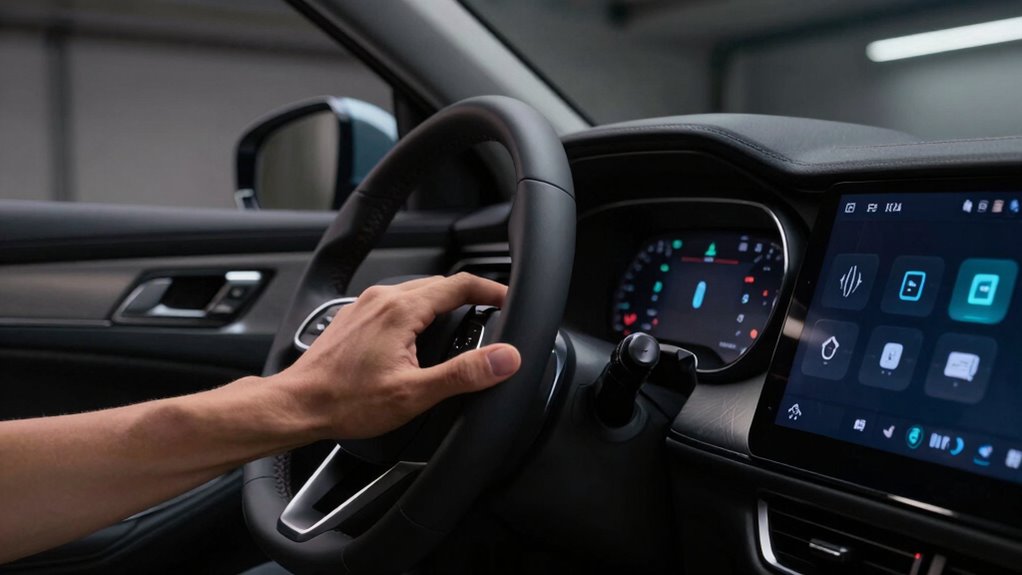
When choosing between manual control and assisted features, understanding how each approach affects your driving experience is essential. Your driving style, comfort level, and safety priorities all come into play here. Manual control puts you in direct command of your vehicle, giving you a hands-on experience that many driving enthusiasts prefer. You get to feel every shift, every acceleration, and every turn, which can make driving more engaging and rewarding. However, this method demands more attention and skill, especially in challenging conditions like heavy traffic or bad weather. If you enjoy the feeling of being fully connected to your car and want complete control, manual driving can be very satisfying. But keep in mind that the safety considerations are different; it requires more focus to avoid mistakes, and fatigue can become an issue over long drives.
On the other hand, assisted features are designed to enhance your driving experience by reducing workload and increasing safety. Technologies like adaptive cruise control, lane-keeping assist, and automatic emergency braking help you navigate roads more smoothly and reduce the risk of accidents. If you prefer a more relaxed ride, these features can make daily commutes less stressful and more comfortable. They’re especially beneficial in stop-and-go traffic, where constant manual adjustments can become tiring. Additionally, understanding automated safety features can help you better appreciate how these systems work together to protect you and your passengers. Moreover, many of these systems are built to integrate seamlessly with manual controls, providing a balanced driving experience that adapts to your preferences. It’s also worth noting that as these systems become more sophisticated, they often include machine learning capabilities that improve their performance over time. Furthermore, staying informed about advanced driver-assistance systems can help you make better decisions while using these technologies. Nevertheless, relying heavily on assisted features might make you less accustomed to manual driving skills over time. Some drivers worry about overdependence on technology, which could become problematic if those systems fail or malfunction. It’s vital to understand that while these features improve safety considerations, they are not foolproof, and you still need to stay alert. Additionally, understanding manual control and assisted features can help you make a more informed choice aligned with your driving habits and safety preferences.
Ultimately, the decision hinges on your personal preferences and priorities. If you seek a dynamic, engaging driving experience and enjoy fine-tuning every aspect of your vehicle, manual control may suit you better. But if you value convenience, ease of use, and safety aids that help prevent accidents, assisted features are likely more appealing. Consider how much attention you want to dedicate to driving and your comfort level with new technology. Both options come with their own safety considerations; manual driving demands more vigilance, while assisted features require trust in technology. Your choice should reflect what makes you feel most confident and secure behind the wheel, whether that’s feeling in complete control or leveraging the latest safety innovations.
Products Worth Considering

Cuisinart Compact Automatic Bread Maker, 2 lb, CBK-110NAS

Le Creuset Signature 6.5-Quart Deep Round Dutch Oven with Light Gold Knob, Bleu Riviera

KitchenAid Artisan 5-Quart Tilt-Head Stand Mixer, Ink Blue (KSM150PS)
As an affiliate, we earn on qualifying purchases.
Frequently Asked Questions
How Do Manual Controls Impact Driving Safety?
Manual controls can boost your driving safety by enhancing control precision and keeping your driver attention focused. When you actively handle functions like steering and braking, you stay more engaged with the road. This direct involvement helps prevent accidents caused by distraction or over-reliance on automation. However, it’s essential to stay alert, as manual controls demand constant attention to maintain safety and respond quickly to unexpected situations.
Are Assisted Features Reliable in All Weather Conditions?
Assisted features aren’t foolproof in all weather conditions—they can be as unreliable as a weather forecast in a hurricane. Sensor accuracy drops considerably during heavy rain, snow, or fog, making these features less dependable. Weather adaptability varies widely among systems, so you shouldn’t rely solely on assisted tech in extreme conditions. Always stay alert and prepared to take manual control, especially when weather turns nasty.
What Is the Learning Curve for Manual Vs Assisted Controls?
Manual controls often have a steeper learning curve because they require you to develop your skills and understand ergonomics comfort, which takes time and practice. Assisted features, on the other hand, are designed to be intuitive, helping you get comfortable quicker. If you value skill development and enjoy mastering controls, manual might suit you better. For ease and convenience, assisted controls offer a gentler learning experience.
Do Assisted Features Significantly Increase Vehicle Maintenance Costs?
Assisted features can increase vehicle maintenance costs due to complex sensors and electronic systems, impacting overall cost implications. While these features often enhance safety and convenience, their durability may vary, leading to potential repairs or replacements over time. You might find that advanced systems require more frequent servicing, which adds to maintenance expenses. However, proper care can help mitigate some costs, so consider how durable these features are before making your decision.
Can Manual Controls Be Upgraded to Assisted Features Later?
Imagine upgrading your driving experience like customizing a car’s interior—manual controls can often be upgraded to assisted features later. Many vehicles offer customization options that provide user preference flexibility, allowing you to add advanced tech through software updates or aftermarket systems. While some upgrades may require professional installation, most modern cars are designed with modularity, making it feasible to enhance manual controls into assisted features later, fitting your evolving driving needs.
Conclusion
Ultimately, choosing between manual control and assisted features boils down to your personal comfort and driving style. If you prefer to have your hands on the wheel and be in full command, manual control is your best bet. But if you want a little extra help along the way, assisted features can make your journey smoother. Remember, it’s about finding what feels right for you—after all, it’s your ride, so steer it your way and don’t be afraid to take the wheel.