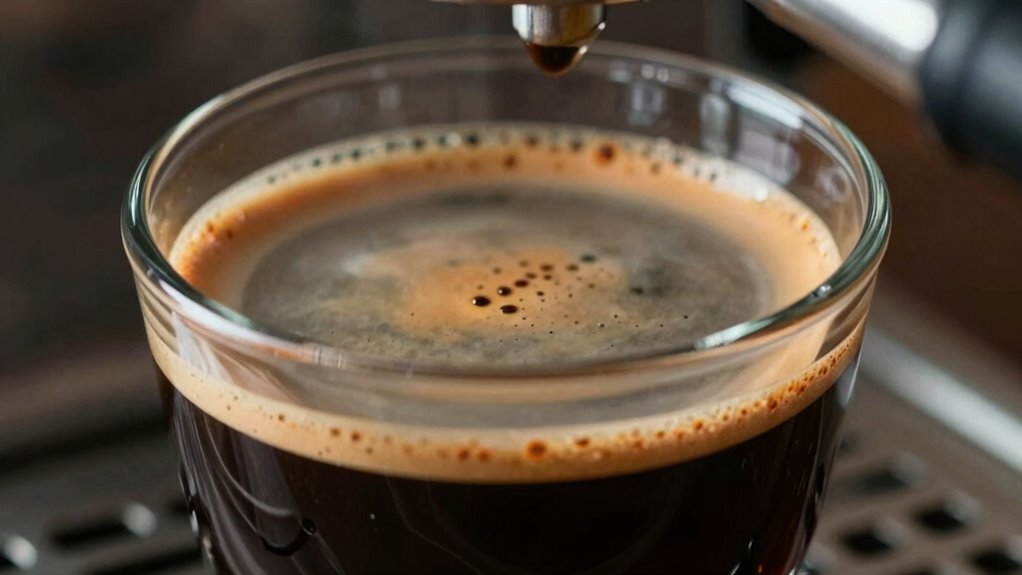

The main mistake that makes espresso taste flat and harsh is over-roasting the beans, which destroys their natural complexity. When you extend the roast too dark, it masks delicate flavors and causes oxidation, leading to bitter, one-dimensional flavors. This eliminates the coffee’s bright, nuanced qualities, leaving you with a dull, harsh brew. To avoid this, understanding the right roast level and proper storage is key. Keep going to discover how to preserve those vibrant, aromatic notes.
Key Takeaways
- Over-roasting darkens beans excessively, masking delicate flavors and resulting in flat, one-dimensional espresso.
- Extended oxidation from dark roasting leads to flavor loss and a bitter, harsh taste profile.
- Brewing adjustments are often overlooked when using overly dark roasted beans, causing imbalance and harshness.
- Improper storage accelerates oxidation, further dulling nuanced flavors and increasing harshness.
- Pushing roast level too dark diminishes natural aromatic qualities, producing a flat and bitter espresso.
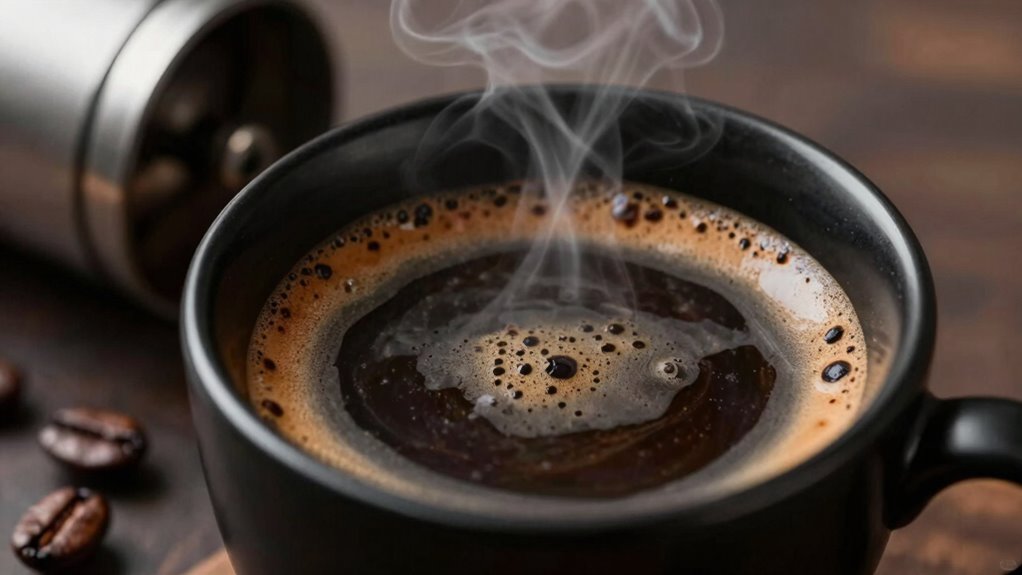
Many coffee enthusiasts make the mistake of assuming that darker roasts are always the best choice for a bold flavor, but this can actually diminish the coffee’s nuanced qualities. When you choose a very dark roast, you risk overextending the roast level variation, which can mask the coffee’s original character and complexity. The key to a balanced, flavorful espresso isn’t just about going as dark as possible; it’s about understanding how roast level influences the coffee’s internal chemistry, especially coffee bean oxidation.
Dark roasts can mask delicate flavors; balancing roast level enhances complexity and preserves coffee’s natural character.
Coffee bean oxidation is a vital process that continues even after roasting. As beans are exposed to oxygen, chemical reactions alter the compounds responsible for aroma and flavor. The longer the beans are exposed, or the darker the roast, the more oxidation occurs, often leading to a loss of delicate fruity or floral notes. Instead, you get a more uniform, bitter profile that can make your espresso taste flat and harsh. When you roast beans too dark, you’re fundamentally pushing oxidation to an extreme, which diminishes the coffee’s inherent complexity and results in one-dimensional flavors. Proper storage techniques can help slow this process and preserve the beans’ nuanced qualities over time.
Additionally, understanding roast level variation helps in selecting the right roast for your brewing method and flavor preferences. Moreover, roast level variation plays a significant role in shaping the final taste. Lighter roasts preserve the bean’s original characteristics, allowing subtleties like acidity, brightness, and aromatic nuances to shine through. As you move toward darker roasts, these qualities are overshadowed by the smoky, charred notes that come from extended roasting. This shift in roast level can create an imbalance, especially if your brewing process isn’t adjusted accordingly. The harshness you experience in your espresso is often a direct consequence of this imbalance, where the roast has overwhelmed the beans’ natural profile. Understanding how roast level affects flavor is essential for dialling in your ideal espresso profile. Recognizing the importance of proper storage can further help in maintaining the freshness and flavor integrity of your beans, preventing unnecessary oxidation that worsens the harshness. Proper storage not only preserves freshness but also minimizes oxidation, ensuring that the beans retain their complexity for a longer period.
As an affiliate, we earn on qualifying purchases.
Frequently Asked Questions
How Does Dark Roasting Affect Coffee Acidity?
Dark roasting decreases your coffee’s acidity level, which results in a smoother, less bright flavor profile. As the roast gets darker, the natural acids break down, making the coffee taste bolder and more robust, but also less lively and tangy. If you prefer a mellow, full-bodied cup with minimal acidity, dark roasting is ideal. However, if you seek bright, vibrant flavors, lighter roasts will better preserve those lively notes.
Can Dark Roast Beans Be Used for Cold Brew?
Yes, you can use dark roast beans for cold brew. Their bold flavor profile adds a rich, intense taste to your brew, often with chocolate and smoky notes. Keep in mind, bean origin influences the final flavor—Latin American beans tend to be bright, while African beans offer fruity accents. Using dark roasts enhances the depth, but be mindful of their tendency to be more bitter if over-extracted.
What’s the Ideal Grind Size for Dark Roast Espresso?
Think of your espresso grind as the key to opening a treasure chest of flavor. For dark roast espresso, aim for a fine grind, like powder, to match your brewing techniques. This creates the perfect extraction, highlighting rich, bold flavors without bitterness. A consistent, fine grind guarantees your espresso’s flavor profile shines through, giving you that smooth, intense shot every time, just like a master craftsman.
Does Dark Roasting Influence the Coffee’s Caffeine Content?
Dark roasting doesn’t profoundly change caffeine content compared to lighter roasts. The roast level mainly influences coffee flavor, making it bolder and sometimes more bitter, but caffeine remains fairly consistent. So, if you’re choosing a dark roast, know that it won’t necessarily give you a caffeine boost, but it will deliver a richer, more robust flavor. Your preference for roast level mainly affects taste, not caffeine strength.
How Long Should I Let Dark Roasted Beans Rest Before Brewing?
Think of your dark roasted beans as a symphony, needing time to settle before the first note. Let them rest for about 24 to 48 hours after roasting to preserve roast freshness and reveal their full flavor profile. This resting period allows complex flavors to harmonize, preventing harsh, flat notes. By giving your beans this brief pause, you guarantee a richer, more vibrant espresso that sings with depth and character.

Veken Coffee Canister,39OZ, 2.2lbs,Large Airtight Stainless Steel Container
- Ideal Gift for Coffee Lovers: Elegant design for special occasions
- Large Capacity for 2.2lbs Coffee: Holds 2.2lbs of beans or grounds
- Freshness Tracking & Scoop: Includes date tracker and stainless steel scoop
As an affiliate, we earn on qualifying purchases.
As an affiliate, we earn on qualifying purchases.
Conclusion
But the real secret lies in what you haven’t yet discovered. That one mistake you make with dark roasts could be hiding a flavor revolution, waiting to transform your espresso into something extraordinary. Are you willing to dig deeper, to challenge your assumptions and unleash the true potential of your brew? The journey to perfect espresso isn’t just about avoiding mistakes—it’s about embracing the unknown. And trust me, what you find might just change everything.
As an affiliate, we earn on qualifying purchases.

SHARDOR Electric Coffee Grinder, 70g Large Capacity Spice Grinder with Visual Timing Knob for Precise Grind, Quiet Coffee Bean Grinder for Espresso, French Press, Herbs and Grains, Black
- Precise Grinding Control: Visual timing knob for accurate grind
- Large Capacity & Versatile Use: 70g capacity for coffee and spices
- Quiet Operation: Operates at only 63 dB
As an affiliate, we earn on qualifying purchases.
As an affiliate, we earn on qualifying purchases.