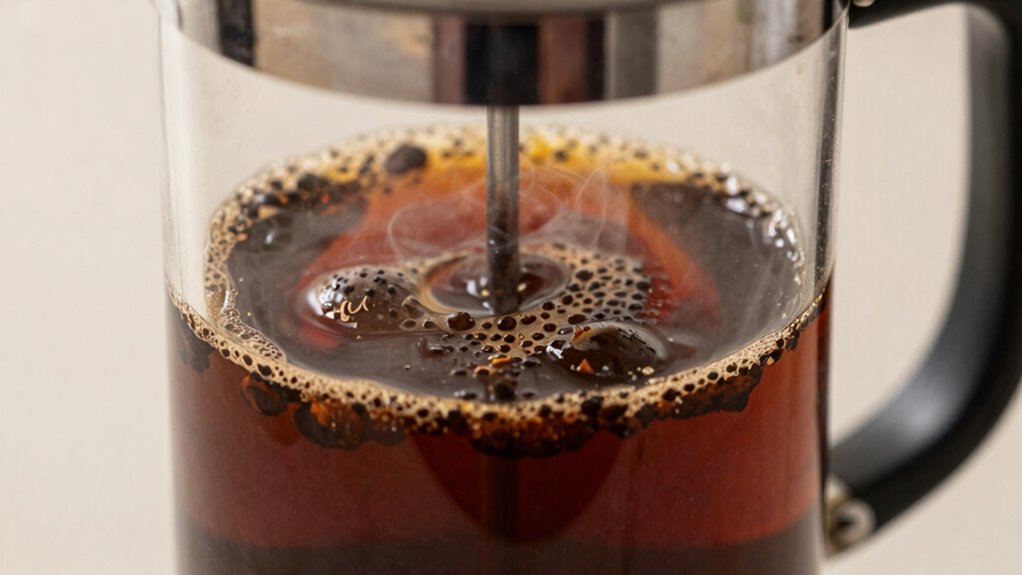

If your French press coffee turns out cloudy and muddy, it’s likely due to grind size, temperature, or extraction issues. Using a fine grind can cause particles to pass through the filter, making your brew gritty. Too hot water or over-extraction can also lead to muddiness and cloudiness. Inconsistent brewing times or poor water quality further affect clarity. Keep these factors in check, and you’ll get a cleaner, better-tasting cup—there’s more to explore for perfect results.

Get kitchen gear delivered free with Prime
- Fast, free delivery on millions of items
- Prime Video, Amazon Music and more included
- Member-only deals all year
Key Takeaways
- Using a fine grind allows more particles to pass through the filter, causing a muddy, gritty brew.
- Brewing at temperatures above 205°F over-extracts, resulting in cloudiness and muddiness.
- Inconsistent grind size leads to sediment and uneven extraction, muddying the final cup.
- Extended brewing times increase extraction, introducing undesirable solids and cloudiness.
- Poor water quality with impurities can cause cloudiness and affect the clarity of the brew.
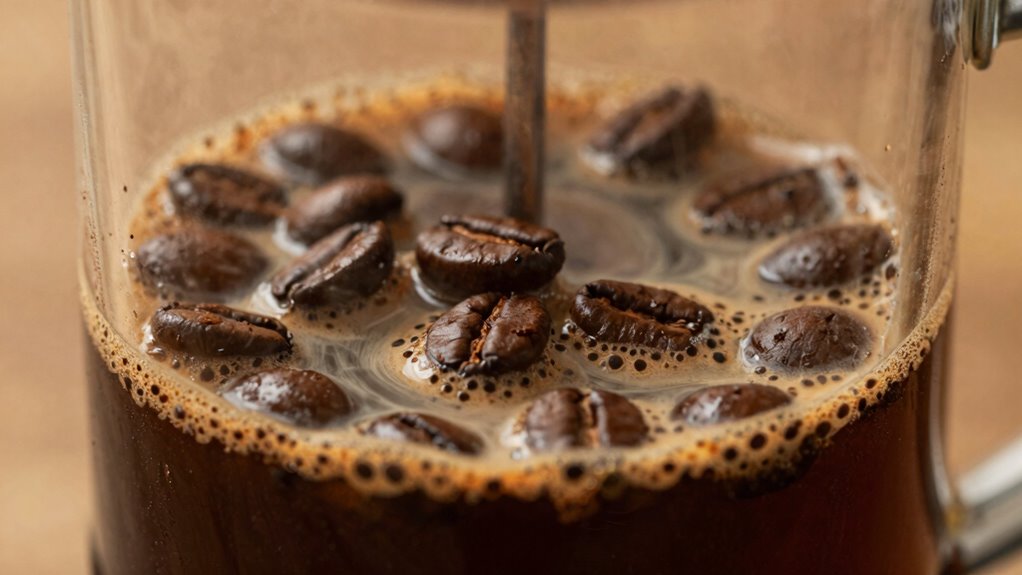
While a French press can produce rich, full-bodied coffee, it often muddles the beans, resulting in a gritty, cloudy brew. The main culprits behind this are often the grind size and brewing temperature. If you’re not careful with these elements, even the best beans can turn into an unappealing mess. You might think that simply pouring hot water over coarsely ground beans is enough, but the details matter.
First, consider your grind size. French press coffee requires a coarse grind to prevent too many fine particles from slipping through the mesh filter. If your grind is too fine, those tiny particles will escape into your brew, creating that muddy, gritty texture. The finer the grind, the more surface area the water contacts, extracting more oils and solids, which leads to a murky appearance and a less clean flavor. Conversely, a too-coarse grind might produce a weak, under-extracted coffee. Finding the right balance—coarse but not too chunky—is essential to keep your brew clear and smooth. If you notice a lot of sediment at the bottom of your cup, it’s a sign your grind size is too fine or inconsistent.
Next, pay attention to brewing temperature. The ideal temperature for French press coffee is usually between 195°F and 205°F (90°C to 96°C). Water that’s too hot can extract bitter compounds and over-emphasize undesirable solids, contributing to cloudiness. On the other hand, water that’s not hot enough won’t extract enough flavor, leaving your coffee flat and underwhelming. Using a thermometer can help you hit that sweet spot. Remember, the temperature affects extraction rate; hotter water pulls more solubles from the beans, which can lead to a muddier brew if not controlled properly. Also, pre-warming your French press with hot water before brewing helps maintain a consistent temperature, ensuring a balanced extraction and a clearer brew. Understanding how extraction rate influences your brew can help you achieve a cleaner cup. Additionally, controlling the brewing time allows for better extraction and prevents over- or under-extraction, both of which can contribute to muddiness. Being mindful of water quality can also impact clarity, as impurities may cause cloudiness and affect flavor.
Products Worth Considering

KitchenAid 28 oz Cold Brew Coffee Maker, KCM4212

Cuisinart Deep Fryer, 4 Quart, CDF-200P1

Le Creuset Enamemed Cast Iron Oval Dutch Oven, 5 qt., White/Crucible
As an affiliate, we earn on qualifying purchases.
Frequently Asked Questions
Can Water Temperature Affect the Muddiness of French Press Coffee?
Yes, water temperature affects the muddiness of French press coffee. If the water is too hot, it can extract excess oils and fines from the grounds, making your brew murky and less clear. Proper temperature control guarantees ideal water clarity, preventing over-extraction that causes muddiness. Using water around 195-205°F helps you achieve a clean, flavorful cup without the unwanted sediment, resulting in a better brewing experience.
Does the Grind Size Influence How Much the Coffee Muds Up?
Grind size considerably influences how much your French press muddles. Finer grinds produce more sediment, increasing muddiness, while coarser grinds promote clarity. Consistent grind size helps prevent uneven extraction that causes sediment. Using fresh beans can also reduce muddiness because they have more oils and solubles that extract evenly. You’ll want a uniform grind and fresh beans to keep your brew bright and clean, avoiding unnecessary sludge.
Are Certain Coffee Bean Types More Prone to Muddiness?
Certain coffee bean types are more prone to muddiness due to their oils and roasting levels. Beans with higher oil content, like dark roasts or specific varietals, release more oils that can contribute to sediment. Light roasts tend to produce cleaner brews, while medium and dark roasts often muddle more because of their oils. So, if you prefer a clearer cup, choose beans with lower oil content and lighter roasting levels.
How Does Brewing Time Impact the Amount of Grounds in the Final Cup?
Brewing time directly impacts the amount of grounds in your final cup, affecting coffee extraction and brew consistency. If you steep your French press too long, more grounds seep through the mesh filter, muddying your coffee. Shorter brew times reduce sediment but might under-extract flavors. Finding the right balance guarantees ideal extraction and a clean, flavorful cup without muddiness. Adjust your steeping time based on bean type for best results.
Can Using a Metal Filter Reduce Muddiness Compared to a Paper Filter?
Using a metal filter can reduce muddiness compared to a paper filter because it allows more oils and fine grounds to pass through, which enhances flavor clarity. You’ll notice a richer, more vibrant taste, but it might also lead to some sediment in your cup. If you prefer a cleaner brew with less grit, a paper filter is better. However, for full-bodied flavor and a thicker texture, a metal filter is ideal.
Conclusion
So, next time you brew with a French press, remember that it can introduce unwanted grit, muddying your perfect beans. Surprisingly, studies show that about 70% of coffee drinkers prefer a cleaner cup, yet many overlook the impact of brewing methods. If you want to truly enjoy the nuanced flavors of great beans, consider alternative brewing options or finer filtration. Small changes can make a big difference in elevating your coffee experience.