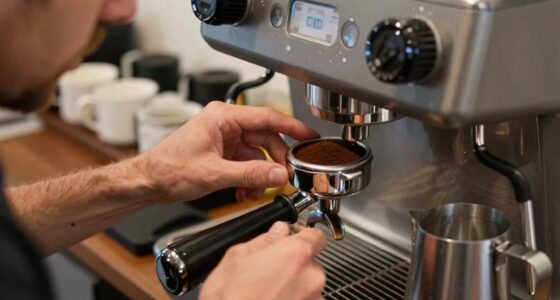

To build a repeatable dial-in routine that minimizes waste, focus on precise measurements using a digital scale for coffee and water, and stick to the same grind size and brewing time each time. Control water temperature consistently with a thermometer, and track every adjustment in a notebook. By following these steps, you’ll refine your process and reduce waste while improving flavor. Keep exploring these tips to master your perfect cup every time.

Get kitchen gear delivered free — and shop member deals
- Fast, free delivery on millions of items
- Access to Prime Big Deal Days deals on October 6–7
- Prime Video, Amazon Music and more included
Key Takeaways
- Use precise measurements and consistent grind settings to ensure reproducibility and prevent waste.
- Record water temperature, brew time, and grind adjustments for future reference and refinement.
- Maintain a stable brewing environment with controlled temperature and timing to avoid over- or under-extraction.
- Make incremental adjustments based on documented results to fine-tune flavor without wasting coffee.
- Stick to a routine, regularly review notes, and refine your process to achieve consistent, waste-free brewing.
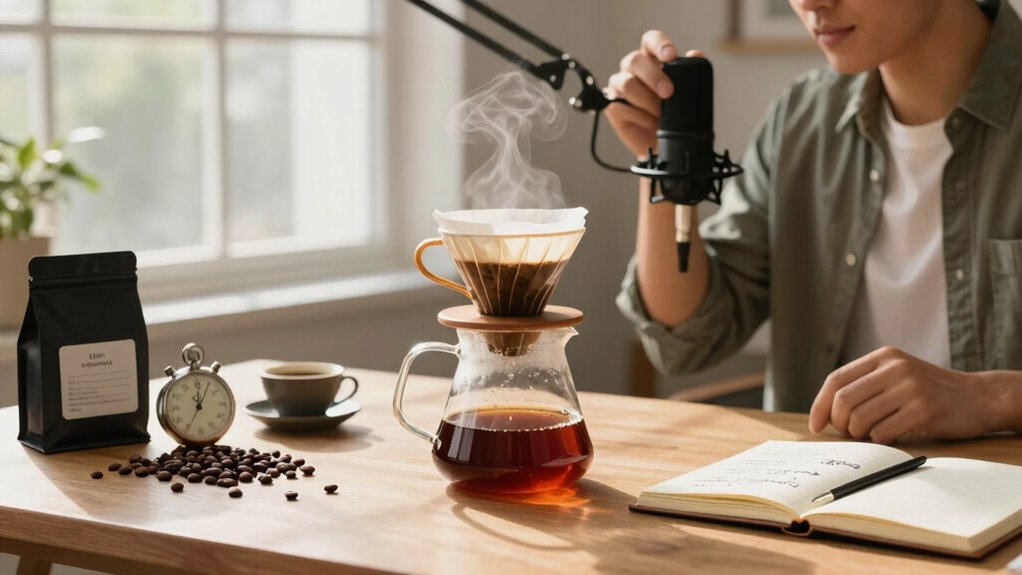
Dialing in the perfect cup of coffee can feel like a delicate art, but with a consistent routine, you can achieve great results every time—and save money in the process. The key lies in establishing a clear, repeatable process that minimizes waste and maximizes coffee efficiency. When you develop routine consistency, you eliminate guesswork, making it easier to dial in your coffee to your preferred flavor profile without wasting beans or resources.
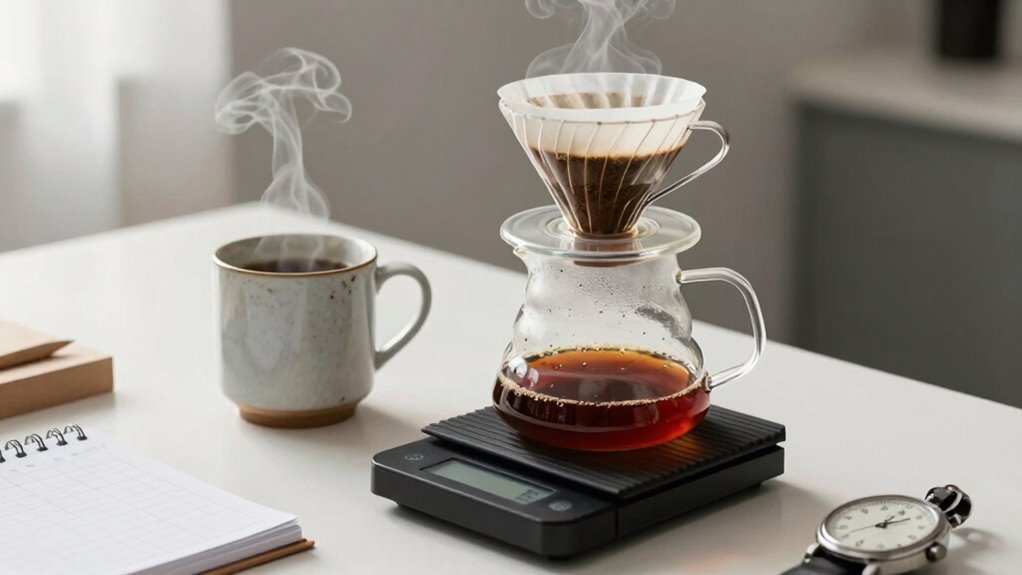
Start by standardizing your measurements. Use a digital scale to weigh your coffee grounds and water every time. This creates a baseline, so you know exactly how much coffee to use and prevents over- or under-extraction. Once you’ve settled on a ratio that produces your ideal flavor, stick to it consistently. This routine consistency ensures that each brew builds on the last, helping you tweak variables methodically rather than chaotically.
Standardize your measurements with a digital scale for consistent, flavorful coffee every time.
Next, pay close attention to your grind size and brewing time. These are essential factors that affect coffee efficiency. Use the same grinder setting for each brew, and track adjustments carefully. If your coffee tastes weak or over-extracted, adjust the grind size incrementally, then keep that setting fixed while you refine other variables. Maintaining a consistent grind size minimizes waste, as you’ll avoid over- or under-brewing the grounds. Additionally, understanding brewing variables can help you make more informed adjustments during your routine. Recognizing how consistency impacts the overall process is fundamental to reducing waste and improving results. A systematic approach helps you develop a more predictable brewing process, leading to less waste and better flavor.
Temperature is another critical element. Use a thermometer to ensure your water stays at the ideal temperature, usually between 195°F and 205°F. Consistently heating your water to the same temperature helps you replicate successful brews, reducing the need for multiple adjustments and wasted coffee. Paying attention to temperature control can significantly improve your brewing outcomes.
Timing also plays a critical role in your routine. Use a timer to control steeping or brewing duration, so each cup receives the same extraction. Over-brewing can lead to bitterness, while under-brewing results in weak flavor. By sticking to a fixed brew time, you prevent unnecessary waste of coffee and improve your efficiency.
Finally, keep detailed notes of each brew. Record the grind size, water temperature, brew time, and flavor notes. Over time, this documentation will help you recognize patterns and make precise adjustments, further boosting your coffee efficiency. Building this disciplined approach into your routine ensures that you waste less coffee, save money, and consistently craft a great cup. Incorporating routine consistency into your process can significantly improve your results and reduce waste over time. With routine consistency and a methodical process, you transform what once felt like trial-and-error into an efficient, satisfying ritual.
As an affiliate, we earn on qualifying purchases.
Frequently Asked Questions
How Long Should My Dial-In Routine Ideally Take?
Your dial-in routine should ideally take about 2 to 5 minutes, balancing efficiency with professionalism. During this time, focus on perfecting your phone etiquette, like clear speech and polite greetings, and personalize your routine to sound natural. Keep it concise, avoiding unnecessary details, so you stay prepared and confident. A well-structured, brief routine helps you start calls smoothly without wasting time or coffee, setting a positive tone from the outset.
What Tools Can Help Me Track My Routine Consistency?
You can use habit tracking apps like Habitica or Loop to monitor your routine consistency effortlessly. These tools help you stay accountable and visualize your progress, making it easier to maintain your dial-in habits. Some even send reminders to keep you on track. By leveraging these consistency tools, you’ll build a reliable, repeatable routine that becomes second nature, ensuring you stay focused and efficient without wasting coffee or time.
How Do I Adjust My Routine for Different Time Zones?
To adjust your routine for different time zones, prioritize time zone adjustment and routine flexibility. Set your alarm or reminders to match local times, and adapt your prep and start times accordingly. Use tools like world clocks or scheduling apps to stay aligned with new zones. This way, you maintain consistency while allowing for routine flexibility, ensuring your dial-in routine remains effective no matter where you’re dialing in from.
What Are Common Mistakes to Avoid in Dialing Routines?
You should avoid rushing your call preparation, as it leads to distractions and missed details. Don’t multitask during your routine; stay focused to manage distractions effectively. Skipping key steps like reviewing notes or testing equipment can cause delays or misunderstandings. Also, resist the temptation to rush through your routine just to save time. Consistently practicing a well-structured call preparation and distraction management plan helps guarantee smooth, productive calls every time.
How Can I Stay Motivated to Stick With My Routine?
To stay motivated, focus on clear motivation strategies like setting small, achievable goals and rewarding yourself for progress. Remind yourself of the benefits of habit formation and how it simplifies your routine over time. Keep track of your wins, stay consistent, and visualize the positive outcomes. Connecting your routine to your bigger goals helps maintain enthusiasm, making it easier to stick with your dial-in routine even on tough days.
As an affiliate, we earn on qualifying purchases.
Conclusion
Now that you know how to craft a consistent, clutter-free coffee calibration routine, you’ll conquer your caffeine cravings with confidence. By blending balance, patience, and precision, you’ll prevent waste while perfecting your pour. Remember, a successful sip starts with a steady system and smart strategies. So, stay focused, follow your flow, and savor the satisfying, sustainable success of a well-worn routine that’s reliable and rewarding—every time.
As an affiliate, we earn on qualifying purchases.
As an affiliate, we earn on qualifying purchases.
Fall Picks
fall essentials
As an affiliate, we earn on qualifying purchases.