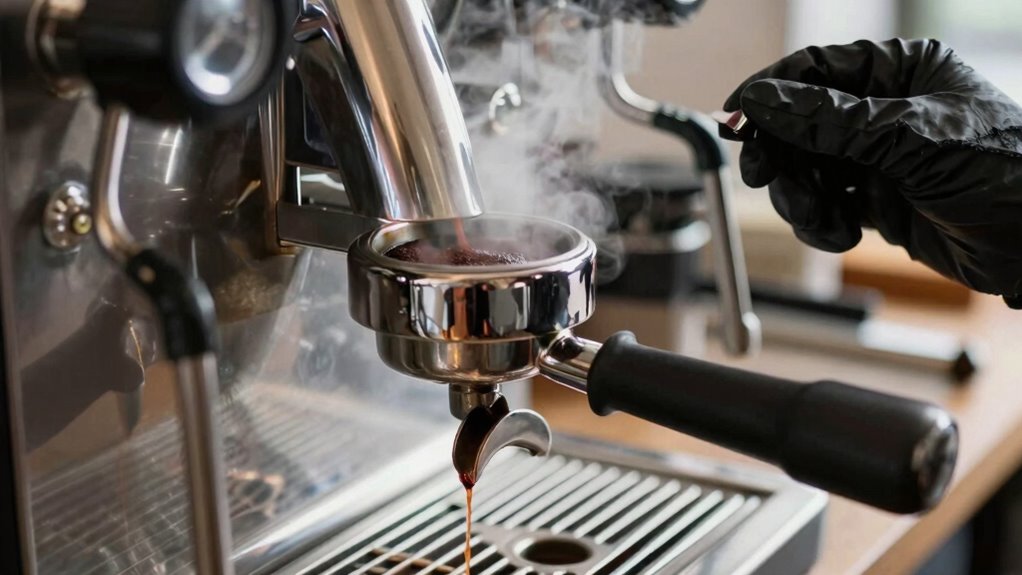

Bitter espresso often comes down to workflow issues rather than the beans itself. If your grind isn’t consistent, water flow becomes uneven, causing over-extraction and bitterness. Incorrect machine calibration or tamping techniques can also lead to uneven extraction. Timing and brew ratio are essential too; if not monitored, they can cause over-extraction. By improving your workflow—like adjusting grind, tamping, and timing—you can make smoother, balanced shots. Discover more ways to perfect your espresso process below.

Get kitchen gear delivered free with Prime
- Fast, free delivery on millions of items
- Prime Video, Amazon Music and more included
- Member-only deals all year
Key Takeaways
- Uneven grind size causes over-extraction, leading to bitterness, which stems from workflow issues like inconsistent grinding.
- Improper machine calibration can result in incorrect water temperature and pressure, causing bitter espresso.
- Overly long extraction times due to poor timing or brew ratio can produce bitterness regardless of bean quality.
- Inconsistent tamping pressure creates uneven extraction, often leading to bitter flavors.
- Poor workflow management, including neglecting routine maintenance and adjustments, is a common cause of bitter espresso.

When your espresso turns out bitter, it’s easy to blame the beans, but often the real issue lies in your workflow. The bitterness isn’t necessarily from poor-quality beans; it’s frequently caused by how you’re preparing and extracting your espresso. One key factor is grind consistency. If your grind is uneven, some grounds will be over-extracted, while others are under-extracted, leading to a bitter taste. Achieving a uniform grind ensures water flows evenly through the coffee, extracting the flavors properly without bitterness. It’s worth investing in a good grinder and regularly adjusting it to maintain that consistency. Small tweaks can make a big difference in the final flavor.
Uneven grind size causes over- and under-extraction, making your espresso bitter—ensure consistent grinding for better flavor.
Another critical aspect is machine calibration. Your espresso machine needs to be set precisely to deliver the right temperature and pressure. If your machine’s calibration is off, it can cause over-extraction, which brings out bitter notes. Regularly checking and calibrating your machine ensures that water is at the optimal temperature and pressure for extraction. This step alone can significantly improve your espresso’s taste. Keep an eye on your machine’s settings and perform routine maintenance to prevent buildup or malfunctions that could skew your results. Paying attention to machine calibration can prevent many common issues and improve consistency.
Your workflow also involves timing. Over-extracting your espresso — letting it run too long — can lead to bitterness. Use a timer to keep your extraction consistent, aiming for the recommended brew time for your specific beans and grind size. Don’t rush the process, but also avoid overdoing it. Proper timing, combined with consistent grind size and well-calibrated equipment, creates a balanced shot. Additionally, understanding brew ratio and how it influences extraction can help you fine-tune your process for better flavor.
Pay attention to your tamping technique. Applying even pressure ensures uniform coffee bed density, which in turn promotes even extraction. If your tamping is inconsistent, some grounds will over-extract, adding bitterness, while others won’t extract enough flavor. Develop a steady tamping rhythm and pressure to improve uniformity. Consistent tamping is essential for maintaining workflow control and achieving reliable results. Fine-tuning your tamping pressure can also help in reducing variability between shots.
In the end, fixing bitterness isn’t about changing your beans every time. It’s about refining your workflow—focusing on grind consistency, machine calibration, timing, and tamping. When these elements are dialed in, your espresso will taste smoother, richer, and more balanced. Proper workflow keeps the process controlled, predictable, and repeatable, leading to better shots every time. Remember, it’s often the steps you control that determine your results, not the beans alone.
coffee grinder with consistent grind size
As an affiliate, we earn on qualifying purchases.
As an affiliate, we earn on qualifying purchases.
Frequently Asked Questions
How Can I Identify if My Espresso Is Bitter Due to Workflow Issues?
If your espresso tastes bitter, it’s likely due to workflow issues like over-extraction or inconsistent grind size, rather than bean freshness. To identify this, check your flavor balance—bitterness often overshadows other notes. Make sure your grind is consistent, your shot timing is correct, and your tamping pressure is even. If these are fine, experiment with adjusting brew time or temperature, as workflow adjustments can considerably improve flavor balance.
What Specific Workflow Steps Most Commonly Cause Bitterness?
You’ll often find bitterness caused by issues in your workflow, especially during extraction timing. If you over-extract by brewing too long, it disrupts the flavor balance, making your espresso bitter. Adjust your grind size and extraction time to hit the sweet spot, ensuring a balanced flavor. Properly controlling extraction timing helps prevent bitterness, so focus on consistent shot timing and grind adjustments to improve your espresso’s overall taste.
Are There Simple Adjustments for Beginners to Fix Bitter Espresso?
To improve bitter espresso, start with fresh beans and adjust your grind size gently, aiming for a balanced extraction. Think of flavor profiles as a dance—if it’s too sharp or off-beat, tweak your timing or tamping pressure. Beginners often find that small changes in brew time or temperature make a big difference. Remember, patience and attention to detail help you discover the sweet spot, transforming your espresso from bitter to beautifully nuanced.
How Does Grind Size Influence Espresso Bitterness?
Grind size directly influences espresso bitterness by affecting extraction timing. If your grind is too fine, water struggles to flow, prolonging extraction and increasing bitterness. Conversely, a coarser grind speeds up extraction, reducing bitterness. Adjust your grind size, and guarantee water temperature is ideal—around 195-205°F—to control extraction timing. Properly managing these factors prevents over-extraction, resulting in a smoother, less bitter espresso.
Can Equipment Maintenance Affect the Bitterness of Espresso?
Yes, equipment maintenance can affect espresso bitterness. Regular equipment cleaning prevents old coffee oils and residues from contaminating your brew, which can cause bitterness. Additionally, grinder calibration ensures consistent grind size, preventing over-extraction that leads to bitter flavors. By keeping your equipment clean and properly calibrated, you maintain ideal extraction conditions, resulting in smoother, balanced espresso and reducing unwanted bitterness.
espresso machine calibration tool
As an affiliate, we earn on qualifying purchases.
As an affiliate, we earn on qualifying purchases.
Conclusion
Remember, if your espresso tastes bitter, it’s usually a workflow issue, not the beans. By adjusting your grind size, extraction time, or water temperature, you can often turn things around. Did you know that over 60% of espresso bitterness complaints stem from brewing mistakes rather than bean quality? So, focus on refining your process—small tweaks can lead to big flavor improvements and a more enjoyable espresso experience.
As an affiliate, we earn on qualifying purchases.
tamp pressure gauge for espresso
As an affiliate, we earn on qualifying purchases.
As an affiliate, we earn on qualifying purchases.
Halloween Picks
halloween
As an affiliate, we earn on qualifying purchases.