

Applying straight-espresso recipe logic to milk drinks often results in unbalanced flavors, as it focuses on extracting maximum complexity that the milk can’t support. Milk’s creaminess and sweetness mask subtle notes, so adjusting factors like grind size, temperature, and extraction time for espresso alone can create bitterness or acidity in the final drink. To achieve harmony, you need to adapt your approach—something you’ll discover as you explore further insights.

Get kitchen gear delivered free with Prime
- Fast, free delivery on millions of items
- Prime Video, Amazon Music and more included
- Member-only deals all year
Key Takeaways
- Applying the same extraction parameters from straight espresso to milk drinks can result in bitterness and imbalance.
- Milk’s creaminess and sweetness mask subtle espresso flavors, requiring different brewing strategies for harmony.
- Straight-espresso logic emphasizes maximum flavor complexity, which may overwhelm milk-based beverages.
- Consistent, temperature-stable extraction tailored for espresso may not suit the softer profile needed in milk drinks.
- Overly aggressive extraction settings can produce sharp or sour notes that are undesirable in milk-based beverages.
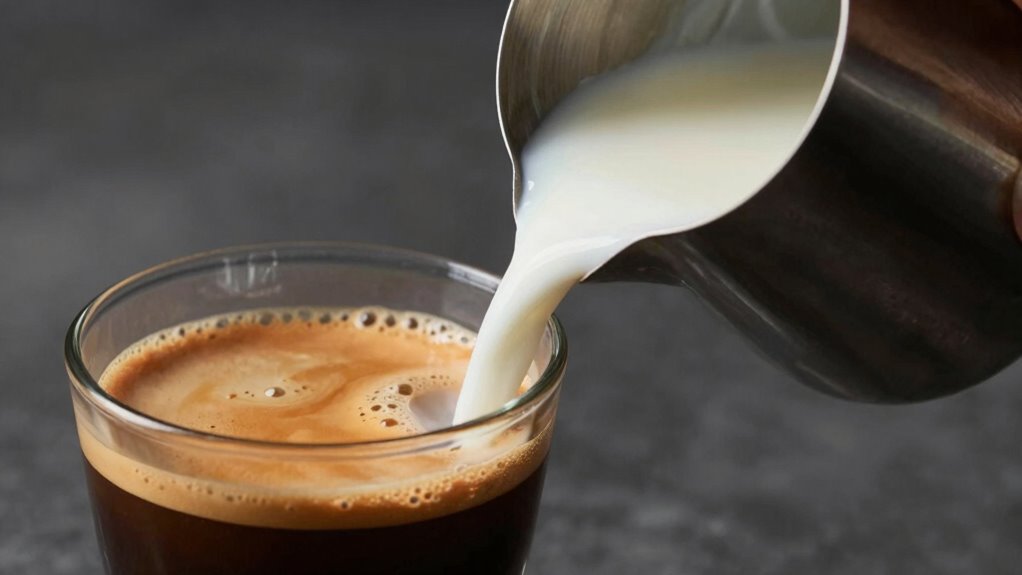
Have you ever wondered what makes a perfect straight-espresso? It’s not just about pulling a shot and calling it a day. The truth is, the quality of your espresso depends heavily on your approach to flavor pairing and brewing techniques. When you’re aiming for a clean, robust shot, these elements are what set apart a good espresso from a great one. But here’s the thing: many people assume that the same recipe logic applies when making milk drinks, and that’s where things often go wrong.
Mastering espresso and milk drinks requires different techniques and flavor strategies for optimal taste.
The core of the straight-espresso recipe logic is about extracting the most flavor in a balanced way. You focus on the coffee’s sweetness, acidity, and body—things that can be precisely controlled through proper brewing techniques. For example, the grind size, tamp pressure, water temperature, and extraction time all play a role in achieving that ideal shot. When you master these techniques, you get a shot with a complex flavor profile, featuring bright acidity and rich body. This shot, in turn, pairs well with a variety of flavor combinations, emphasizing the coffee’s natural notes. Understanding how to control extraction parameters is essential for adjusting the flavor profile to suit different drinks. Additionally, recognizing the importance of temperature stability during extraction can help maintain consistency in your shots. Achieving consistency in your espresso shot is key to building a reliable flavor foundation for any milk-based drink.
However, applying this same logic to milk drinks doesn’t work as seamlessly. Milk changes the flavor profile entirely—its creaminess and sweetness mask some of the subtleties you’d normally savor in a straight shot. So, the focus shifts. Instead of maximizing extraction for flavor complexity, you aim for a shot that’s smooth and balanced enough to complement the milk without overpowering it. Milk also requires a different approach to flavor pairing—adding sweetness and creaminess that can mellow out overly sharp or acidic notes that might shine in a straight espresso.
Understanding the flavor profile of your coffee is crucial when adapting your brewing approach for milk drinks. Thinking of the same recipe logic for milk drinks can lead you astray. It’s tempting to use the same extraction parameters, but that often results in an overly bitter or bitter-sweet combo that doesn’t sit well with milk. Instead, you need to understand the purpose of the shot within the drink. It’s less about capturing the coffee’s full complexity and more about creating a harmonious blend, where the brewing techniques are calibrated to produce a shot that’s ideal for pairing. When you recognize this distinction and adapt your flavor pairing strategies accordingly, your milk-based drinks will taste more balanced and enjoyable, avoiding the pitfalls of applying straight-espresso logic where it doesn’t belong.
As an affiliate, we earn on qualifying purchases.
Frequently Asked Questions
Why Do Milk Drinks Require Different Espresso Ratios?
You need different espresso ratios for milk drinks because milk foam and flavor balancing are essential. Milk softens the espresso’s intensity, so a milder shot guarantees a smooth, harmonious taste. Too strong, and the espresso overpowers the milk; too weak, and the drink lacks richness. Adjusting ratios helps you achieve the perfect balance, highlighting the espresso’s aroma while complementing the milk foam for a well-rounded, delicious beverage.
How Does Milk Affect Espresso Extraction Timing?
Think of milk as a gentle conductor guiding espresso’s orchestra, causing a subtle milk dilution that delays extraction. This extraction delay means espresso takes longer to reach its peak flavor when combined with milk. The milk’s presence tempers the brew’s intensity, requiring adjustments in timing to achieve perfect balance. So, you need to tweak your extraction process, understanding that milk’s influence extends the journey to that ideal espresso shot.
Can Straight Espresso Logic Be Applied to Flavored Drinks?
You can’t directly apply straight espresso logic to flavored drinks because flavor infusion and ingredient balancing differ considerably. With flavored drinks, you need to take into account how added syrups, spices, or extracts interact with the espresso, affecting extraction time and taste harmony. Relying solely on straight espresso rules can lead to overpowering or imbalanced flavors. Instead, adjust extraction and ingredient proportions carefully to guarantee a well-rounded, flavorful beverage.
What Are Common Mistakes in Milk-Based Coffee Recipes?
You often make the mistake of neglecting proper milk frothing techniques, which can lead to inconsistent textures. Another common error is over-diluting the coffee, resulting in a weak flavor that gets lost in the milk. Remember, milk frothing isn’t just about foam; it influences the drink’s texture and temperature. When you focus on these details, you’ll avoid these mistakes and create richer, more balanced milk-based coffee drinks.
How Does Milk Temperature Impact Espresso Blending?
Milk temperature greatly impacts espresso blending by influencing milk foam quality and flavor integration. When you control temperature properly, you guarantee the milk’s sweetness and texture enhance the espresso, creating a harmonious blend. Too hot, and the milk scalds, ruining foam and taste; too cold, and it won’t blend smoothly. Temperature control helps you achieve ideal milk froth, guaranteeing your espresso drinks have the right consistency and richness.
milk frothing pitcher for espresso drinks
As an affiliate, we earn on qualifying purchases.
As an affiliate, we earn on qualifying purchases.
Conclusion
So, next time you’re crafting a milk drink, remember that the straight-espresso logic is a bit like trying to fit a square peg in a round hole—it’s just not meant for this. Don’t be a nebbish about it; embrace the art of balancing flavors and textures instead. Think of it as a secret recipe from the days of old, where mastery comes from understanding the nuances. Trust me, your taste buds will thank you.
coffee grinder for espresso and milk drinks
As an affiliate, we earn on qualifying purchases.
As an affiliate, we earn on qualifying purchases.
temperature control espresso machine
As an affiliate, we earn on qualifying purchases.
As an affiliate, we earn on qualifying purchases.
Halloween Picks
halloween
As an affiliate, we earn on qualifying purchases.