
Spouted portafilters are still really useful because they help you pour espresso cleanly and consistently, making everyday brewing easier and less messy. They guide the flow into your cups, giving you better control and reducing splashes or uneven extraction. This makes them ideal for beginners and busy cafés alike. If you want to learn how to get the most out of your espresso shots and handle common issues easily, keep exploring how they work and maintain them properly.
Key Takeaways
- Spouted portafilters ensure consistent coffee flow, improving shot quality and reducing mess during brewing.
- They are ideal for beginners, providing control and ease of use for mastering espresso techniques.
- Easy maintenance and cleaning help maintain optimal performance and extend the lifespan of your espresso equipment.
- They support high-volume and quick service environments by simplifying pouring and minimizing waste.
- Spouted portafilters help achieve repeatable results, essential for consistent flavor and presentation in real-life settings.
What Are Spouted Portafilters and How Do They Work?

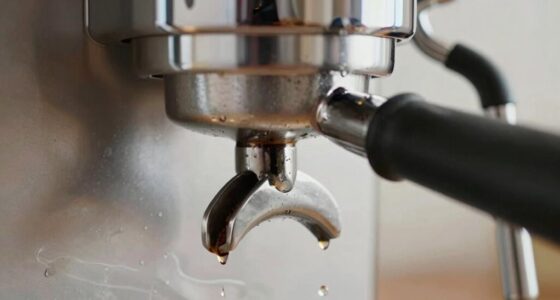
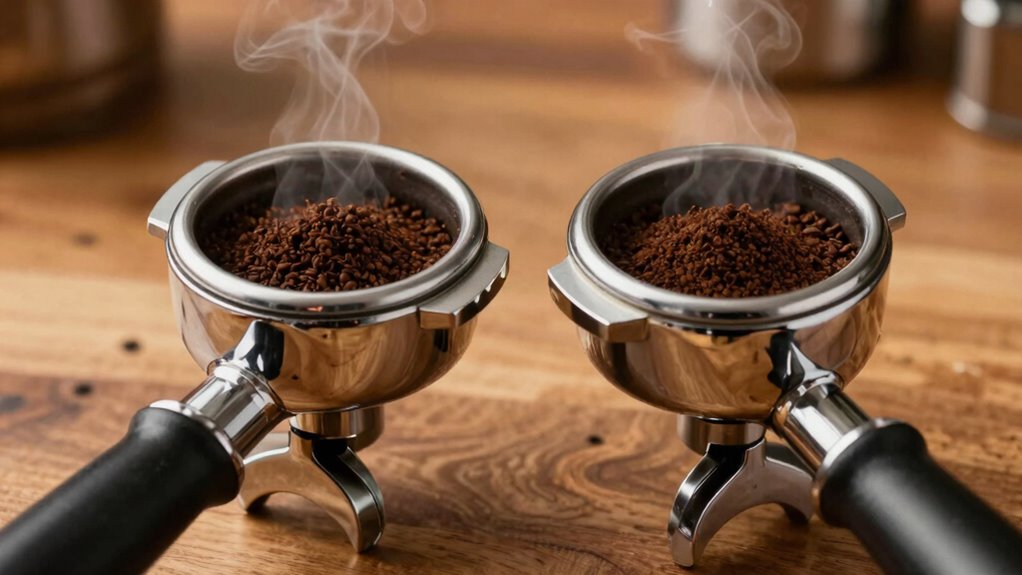
Spouted portafilters are a type of espresso filter basket that features built-in spouts for guiding the brewed coffee into your cup. They simplify the pouring process, helping you achieve cleaner, more controlled espresso extraction. As you practice barista techniques, you’ll notice that spouted portafilters encourage consistent pouring, reducing splashes and uneven flow. This design allows you to focus on the quality of your espresso shot, ensuring even extraction across the puck. When brewing, the spouts direct the flow of espresso smoothly into the cup, minimizing mess and promoting precision. Using a spouted portafilter can elevate your skills, making it easier to produce professional-looking espresso with balanced flavor and aroma. It’s a simple tool that supports better control during extraction. Additionally, precision pouring is essential for achieving optimal extraction and flavor consistency in your espresso.
Why Use a Spouted Portafilter? Benefits for Consistent Espresso

Using a spouted portafilter can substantially enhance the consistency of your espresso shots by guiding the flow of coffee directly into your cup. This controlled flow helps ensure even espresso extraction, reducing variability caused by uneven pouring or channeling. With better brewing consistency, your shots maintain the right balance of flavors and aroma. Imagine a setup where the espresso flows smoothly through the spout, like water through a narrow pipe, ensuring each shot is uniform. Additionally, the design of a spouted portafilter can facilitate cleaning and maintenance, which are crucial for preventing buildup and ensuring optimal performance in your espresso routine. Proper maintenance of the portafilter also contributes to maintaining consistent extraction, further improving your overall coffee experience. Moreover, the use of a spouted portafilter can simplify the process of pouring accuracy, helping both beginners and experienced baristas achieve professional results. Its ability to promote brewing consistency makes it a valuable tool in both home and professional settings.
Should You Use a Spouted Portafilter? When and Why?

Deciding whether to use a spouted portafilter depends on your brewing setup and goals. If you prioritize consistent espresso extraction and want to simplify your process, a spouted portafilter can help. It guides the flow of coffee evenly into the cup, making it easier to master barista techniques and achieve uniform shots. Use a spouted portafilter when you’re aiming for repeatable results, especially if you’re still honing your skills or serving multiple drinks quickly. Additionally, a spouted portafilter can be beneficial when integrating your espresso machine with smart home automation systems to streamline your brewing routine. Youngster Choice highlights the importance of consistency and efficiency in various fields, which can also apply to your brewing practices. For example, employing a spouted portafilter can help reduce waste and mess during busy mornings or large orders. Furthermore, because it provides better control over the pour, it can assist in achieving desired pour patterns and improve overall presentation. Using a spouted portafilter can also be advantageous for beginners learning espresso technique, as it helps guide the shot and build confidence. However, if you prefer more control over pour patterns or are experimenting with latte art, a naked or non-spouted portafilter might suit you better. Ultimately, choose a spouted portafilter when your goal is consistency and efficiency in your espresso brewing routine.
Common Spouted Portafilter Problems and How to Fix Them

If your spouted portafilter isn’t working properly, you might notice leaks, clogs, or loose fittings. These problems can affect your espresso quality and are often easy to fix. Regular inspection and maintenance can help identify issues early and prevent more serious damage. In addition, understanding the thermal behavior of your equipment can assist in troubleshooting temperature-related issues that impact your espresso extraction. Proper cleaning and maintenance can help prevent many of these problems and ensure your espresso machine operates smoothly. Being familiar with common repair terminology can also assist you in communicating effectively with technicians if professional help is needed. Moreover, understanding the filtration process can improve your ability to diagnose and address issues related to water flow and quality.
Leaking Spouts Fixes
A leaking spout on your portafilter can be frustrating and disrupt your brewing process. To fix this, start by inspecting the seal where the spout attaches. Often, leaks occur if the filter basket isn’t seated properly or if the gasket is worn. Tighten the spout connection gently, ensuring it’s snug but not over-tightened. If the leak persists, check the gasket for cracks or debris and replace if necessary. Also, ensure the portafilter handle is tight, as a loose handle can cause misalignment. Here’s a quick guide:
| Issue | Cause | Fix |
|---|---|---|
| Spout leaking | Loose connection or gasket | Tighten spout and replace gasket if needed |
| Filter basket misaligned | Not seated correctly | Re-seat the filter basket properly |
| Handle loose | Worn or loose handle | Tighten or replace the portafilter handle |
Clogged Portafilter Issues
Clogged portafilters are a common issue that can disrupt your coffee brewing and diminish the quality of your espresso. When debris like coffee oils, old grounds, or mineral buildup blocks the spouts, water can’t flow properly, leading to uneven extraction or overflows. Regular equipment maintenance helps prevent clogs—clean your portafilter and spouts after each use, and descale your machine periodically. If you notice slow or uneven flow, remove the portafilter and inspect the spouts for blockages. Use a needle or small brush to clear any buildup gently. Avoid using harsh chemicals that could damage the parts. Keeping your spouted portafilter clean guarantees smooth water flow, consistent shots, and better coffee brewing overall. Incorporating connected equipment like a water quality monitor can help detect mineral buildup early and maintain optimal brewing conditions. Additionally, understanding Gold IRA Markets can provide insights into how to protect your investments from unexpected issues, much like maintaining your espresso equipment. Regularly checking for clogged filters and performing preventive cleaning can extend the lifespan of your portafilter and ensure a consistently great brew. Ensuring proper water quality and flow is essential for preventing clogged spouts, which can be caused by mineral deposits or debris buildup over time. Proper maintenance and awareness of water quality can help avoid blockages before they become severe.
Loose Fitting Solutions
Loose fitting spouts are a common problem that can lead to leaks, drips, or uneven espresso distribution. To fix this, consider exploring fitting alternatives like rubber gaskets or silicone sleeves that improve the seal. These options help create secure attachments between the spout and the portafilter, reducing movement and preventing leaks. You can also tighten the spout connection by gently twisting or adjusting the fitting, ensuring it sits snugly without forcing it. If the existing fitting is worn or damaged, replacing it with a new, compatible part is often the best solution. Consistently checking for loose fittings and maintaining a tight, secure attachment ensures your spouted portafilter functions correctly, minimizing messes and improving your espresso experience.
How to Properly Use and Maintain Your Spouted Portafilter

To guarantee your spouted portafilter consistently delivers the best espresso, it’s vital to understand how to use and maintain it properly. Start by ensuring your basket is clean and free of coffee oils, much like you would clean a french press or prepare for pour over brewing. When brewing, dose your coffee evenly and tamp it firmly to prevent splashing. After use, promptly remove the basket and rinse all parts with warm water to prevent buildup. Regularly inspect the spout for clogs and clear them with a brush or pin. Avoid using abrasive cleaners that could damage the finish. Proper care ensures smooth pouring, consistent extraction, and a longer lifespan for your spouted portafilter.
Spouted vs. Bottomless Portafilters: Which Is Best for You?

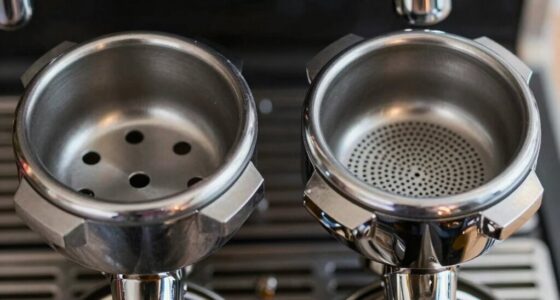
Choosing between spouted and bottomless portafilters depends on your brewing goals and skill level. Spouted portafilters are great for consistent, mess-free coffee brewing, especially if you’re new to espresso extraction. They help control pour flow and keep your workspace tidy. Additionally, visual feedback provided by bottomless portafilters can be invaluable for improving your barista skills. For those looking to refine their technique, bottomless portafilters offer detailed insight into extraction quality, making them especially useful for troubleshooting. Consider the following table:
| Feature | Spouted Portafilter | Bottomless Portafilter |
|---|---|---|
| Best for | Beginners & consistency | Advanced users & troubleshooting |
| Coffee brewing | Controlled pour | Visual feedback on extraction |
| Skill level | Novice to intermediate | Intermediate to expert |
Are Spouted Portafilters Worth Investing in for Home and Cafe?

Are spouted portafilters a smart investment for both home baristas and busy cafes? Absolutely, if you value consistent espresso extraction and rich coffee flavor. They help control shot flow, reducing channeling and uneven extraction. Plus, they’re quick to use and clean, making them practical for high-volume environments. Consider these benefits:
- Improved consistency in every shot
- Better control over espresso extraction
- Easier to learn for new baristas
- Reduced mess during brewing
Whether you’re crafting a perfect morning espresso at home or serving multiple drinks in a busy cafe, spouted portafilters can enhance your workflow. They’re a reliable tool that helps you achieve a balanced, flavorful coffee shot with less hassle. Investing in one could elevate your espresso game considerably.
Frequently Asked Questions
Can Spouted Portafilters Improve Espresso Shot Consistency for Beginners?
Yes, spouted portafilters can help you improve espresso shot consistency as a beginner. They guide your grind consistency and tamp pressure by directing the coffee evenly into the basket, reducing the chance of uneven extraction. This makes it easier to achieve a balanced shot, especially when you’re still mastering your technique. Over time, using a spouted portafilter can build your confidence and help you develop better espresso-making habits.
Are Spouted Portafilters Compatible With All Espresso Machines?
Most spouted portafilters aren’t compatible with all espresso machines because they rely on specific portafilter standards. About 70% of machines follow standardized sizes, but many models have unique fittings. To guarantee compatibility, check your machine’s portafilter standards before purchasing. If you match the standards, a spouted portafilter can fit perfectly. Otherwise, you might need an adapter or a different type to suit your machine’s design.
How Do Spouted Portafilters Affect Cleaning and Maintenance Routines?
Spouted portafilters can increase cleaning complexity because their design traps more coffee grounds and oils, requiring thorough rinsing after each use. You might need to perform maintenance more frequently to prevent clogs and guarantee ideal espresso quality. Regularly disassemble and clean the spouts, and check for buildup. Although they demand extra effort, maintaining them helps prolong their lifespan and keeps your espresso tasting great.
Do Spouted Portafilters Influence the Flavor Profile of Espresso?
Think of a spouted portafilter as a conductor guiding your espresso’s symphony. It influences flavor extraction by directing water evenly through the grounds, which can enhance crema quality and bring out nuanced flavors. While it doesn’t drastically change the taste, it helps you achieve a more consistent, balanced shot. In short, it’s like giving your coffee a gentle hand, ensuring every sip hits just the right note.
What Are the Cost Differences Between Spouted and Bottomless Portafilters?
You’ll find that spouted portafilters generally cost less than bottomless ones, mainly due to material differences and simpler design. The price comparison shows spouted models are more affordable because they often use standard metals like brass or stainless steel, while bottomless portafilters may feature higher-quality materials and craftsmanship, increasing their price. If budget’s a concern, spouted portafilters offer a cost-effective option without sacrificing durability.
Conclusion
A spouted portafilter is like a steady hand guiding your espresso journey, offering consistency amidst chaos. It’s a symbol of reliability in your daily ritual, helping you craft quality coffee no matter the environment. Embrace its presence as a reminder that mastery comes from steady practice and support. In using it, you’re nurturing your barista spirit—trusting the tools that turn simple beans into moments of artistry and comfort.