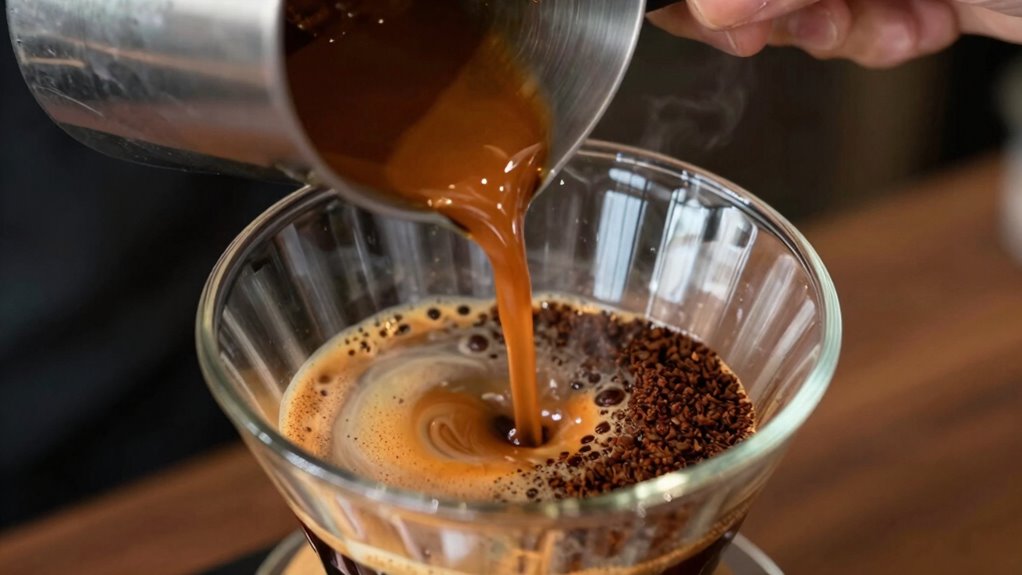
To select the right grind, know that immersion brewing works best with medium grounds, offering balanced extraction and smooth flavors. For percolation, adjust to medium-fine or slightly finer grounds to guarantee proper water flow and vibrant results. Using the correct grind helps prevent over- or under-extraction, so your brew tastes just right. Keep exploring to discover how adjusting grind size can optimize each method and elevate your coffee game.

Get kitchen gear delivered free with Prime
- Fast, free delivery on millions of items
- Prime Video, Amazon Music and more included
- Member-only deals all year
Key Takeaways
- Use medium grind for immersion to ensure even extraction and prevent over-extraction.
- Opt for medium to medium-fine grind in percolation for optimal flow and flavor clarity.
- Avoid very fine grounds in percolation to reduce over-extraction and bitterness risks.
- Coarser grinds in immersion promote balanced, smooth brews with controlled steeping.
- Match grind size to your brewing method for better control, flavor, and consistency.
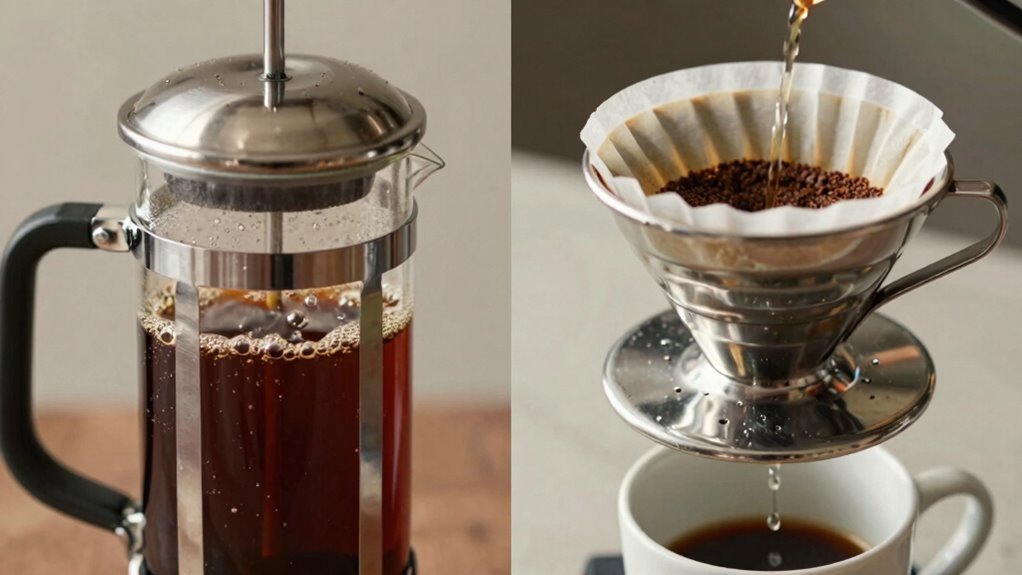
When comparing immersion and percolation, understanding their distinct roles in processes like extraction and filtration is essential. If you’re aiming for precise brewing and ideal flavor extraction, knowing how each method interacts with your coffee grounds or tea leaves can make all the difference. With immersion brewing, you submerge your grounds completely in hot water, allowing the extraction to happen evenly over a set period. This method offers brewing precision because it’s straightforward—timing and temperature are your main controls. You get a consistent brew where the grounds stay in contact with water, giving the flavors time to develop fully before you strain or pour. It’s ideal when you want a balanced, smooth cup, emphasizing clarity and richness without over-extracting bitter compounds.
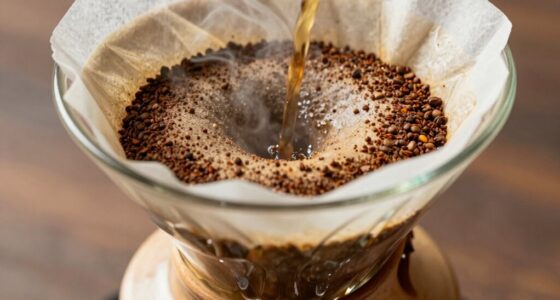
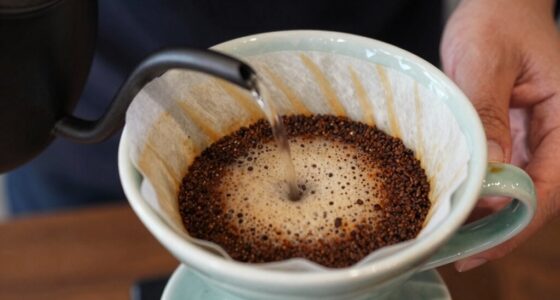
Percolation works differently. It involves forcing water through a bed of grounds, usually with gravity or pressure, as seen in drip coffee makers or espresso machines. Here, flavor extraction depends heavily on grind size and flow rate. A coarser grind slows down the percolation, allowing for more thorough extraction, while a finer grind speeds up the process but risks over-extraction and bitterness. Because water passes through the grounds quickly, you have less control over brewing precision compared to immersion. Instead, you rely on the equipment’s design and your adjustments to get the right balance. Percolation tends to produce a brighter, more dynamic flavor profile because it captures more volatile compounds during the quick passage of water.
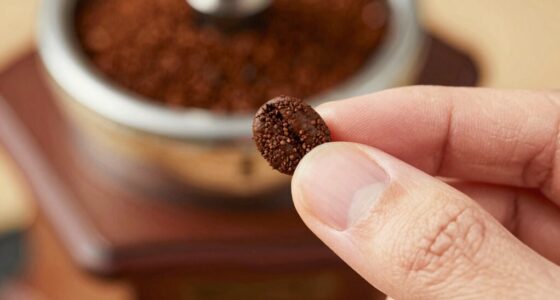
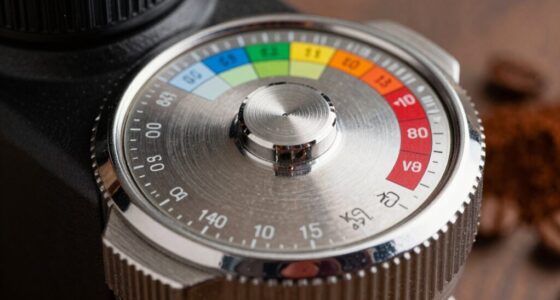
Choosing the right grind for each method impacts not just brewing precision but also flavor extraction. For immersion, a medium grind works well, providing enough surface area for water to extract flavors evenly without steeping too long. For percolation, the grind should match the flow rate—medium to medium-fine for drip, very fine for espresso—so the extraction is thorough but not overdone. The grind size directly influences how the water interacts with the grounds, affecting the strength, clarity, and complexity of your brew. When you understand these differences, you can tailor your grind to fit your preferred method, ensuring your coffee’s flavor profile is refined. Whether you favor the controlled, steady extraction of immersion brewing or the quick, vibrant results of percolation, selecting the right grind size is key to achieving the perfect cup every time.
Additionally, using technology such as high-quality grinders can help you achieve consistent grind sizes, which is crucial for optimizing both immersion and percolation brewing methods.
As an affiliate, we earn on qualifying purchases.
Frequently Asked Questions
Which Brewing Method Preserves More Coffee Oils and Flavors?
If you want to preserve more coffee oils and flavors, opt for immersion brewing methods like French press or AeroPress. These methods maximize coffee oil retention and guarantee richer flavor preservation because the coffee grounds stay submerged longer, extracting more oils and aromatics. Percolation methods, like drip machines, tend to lose more oils and subtle flavors due to contact time and filter filtration, resulting in a lighter taste.
How Does Grind Size Affect Brewing Time in Each Method?
When considering how grind size affects brewing time, you’re playing with fire if your grind isn’t uniform. A finer grind speeds up brewing by increasing surface area, making extraction quicker, especially in immersion methods. Conversely, a coarser grind extends brewing time, ideal for percolation, where sediment filtration is easier. Adjust grind size to match your method, ensuring proper extraction without overdoing it, and you’ll brew a perfect cup every time.
Can You Switch Between Immersion and Percolation Without Changing Grind?
Yes, you can switch between immersion and percolation without changing your grind, thanks to grind consistency. This flexibility offers brewing versatility, letting you experiment with different methods using the same grind size. Keep in mind, though, that small adjustments in grind consistency can optimize each method’s flavor extraction. So, while switching is possible, fine-tuning your grind can enhance your brewing experience and final cup quality.
Which Method Is More Suitable for Espresso-Style Coffee?
For espresso-style coffee, percolation is more suitable because it delivers the coffee strength and brewing consistency you need for a rich, concentrated shot. The fine grind used in percolation guarantees proper extraction, giving you that bold flavor. Immersion methods, like French press, won’t produce the same intensity or consistency needed for espresso. Stick with percolation to achieve the perfect espresso shot every time.
How Does Water Temperature Influence Extraction in Both Methods?
Imagine water as a swift river rushing through your coffee grounds—water temperature is the current shaping the journey. Higher temperatures boost extraction efficiency by dissolving more flavors, but too hot risks over-extraction, turning your brew bitter. Cooler water slows the process, giving you a subtler taste. For both methods, maintaining the right water temperature guarantees consistent extraction, balancing boldness and clarity in every sip.
espresso coffee maker with adjustable grind
As an affiliate, we earn on qualifying purchases.
As an affiliate, we earn on qualifying purchases.
Conclusion
So, whether you find yourself unexpectedly drawn to immersion or percolation, it’s funny how life often guides your choice. Maybe that accidental spill or a sudden craving nudges you toward one method over the other. Sometimes, the universe just knows what you need, turning a simple coffee grind into a delightful ritual. Trust those little coincidences—they might just lead you to your perfect brew, making every cup feel a little more special.
drip coffee maker with grind size control
As an affiliate, we earn on qualifying purchases.
As an affiliate, we earn on qualifying purchases.
manual coffee grinder medium to fine
As an affiliate, we earn on qualifying purchases.
As an affiliate, we earn on qualifying purchases.
Halloween Picks
halloween
As an affiliate, we earn on qualifying purchases.