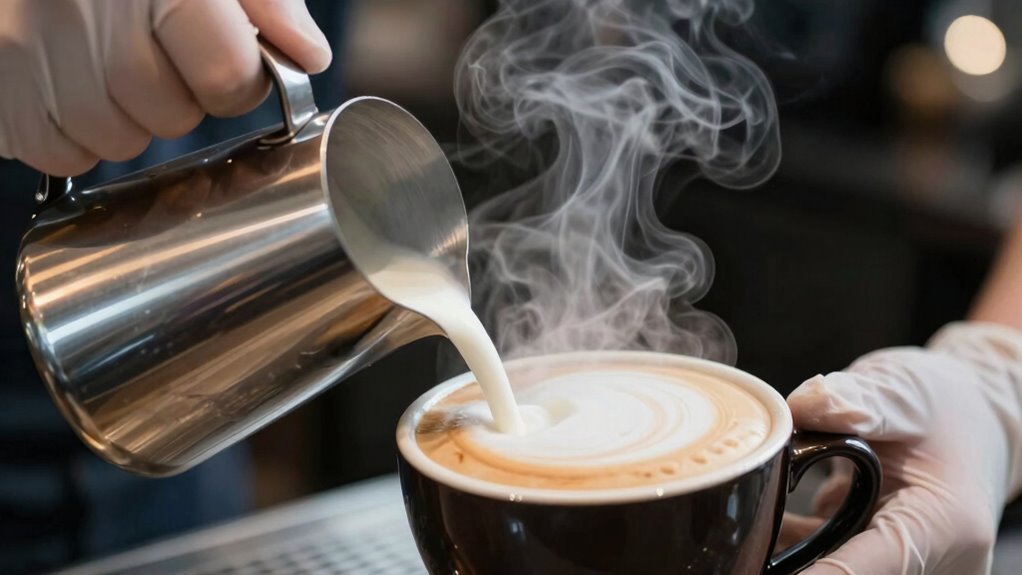

Steaming too much milk wastes ingredients and increases costs, but it also harms your drinks by damaging the milk’s texture and flavor. Oversteamed milk creates larger bubbles, resulting in froth that looks poor and feels off in mouth. It can also develop a scalded flavor, reducing the drink’s quality. Proper technique is key for consistency and efficiency. Keep going to discover how mastering your steaming can improve both your drinks and your budget.

Get kitchen gear delivered free with Prime
- Fast, free delivery on millions of items
- Prime Video, Amazon Music and more included
- Member-only deals all year
Key Takeaways
- Oversteaming destroys milk’s delicate proteins, harming flavor and texture, which reduces drink quality.
- Excess milk waste increases operational costs and environmental impact.
- Improper steaming creates poor microfoam, compromising the visual appeal of coffee drinks.
- Wasting milk leads to higher expenses and inefficiency in daily routines.
- Maintaining proper steaming techniques minimizes waste and ensures consistent, high-quality beverages.
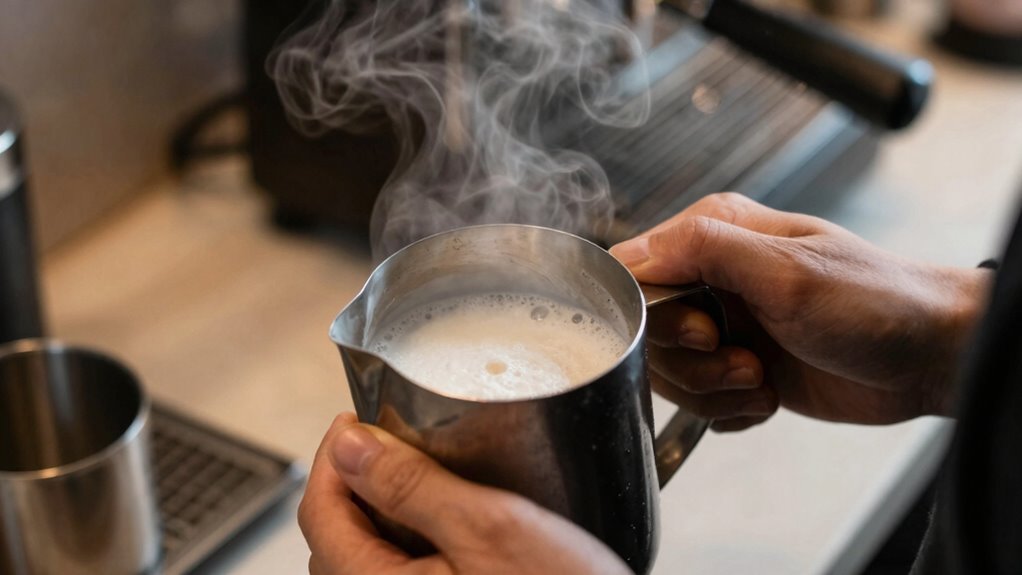
While steaming milk might seem like a simple step in crafting your favorite coffee drinks, doing it excessively can cause more than just a dent in your budget. Oversteaming or steaming too much milk can negatively affect the milk texture, which is crucial for achieving that smooth, velvety consistency that makes a latte or cappuccino so appealing. When you steam milk properly, you create microfoam—tiny bubbles that give the milk a creamy, glossy appearance. But if you go overboard, you risk breaking down the milk proteins or creating larger bubbles, resulting in a froth that’s too airy or uneven. This poor milk texture not only ruins the aesthetic of your drinks but also diminishes their flavor and mouthfeel, leaving you with a less satisfying beverage.
Oversteaming milk ruins texture, flavor, and appearance—master proper technique for perfect, velvety microfoam every time.
Mastering steaming techniques is key to avoiding these pitfalls. The goal isn’t just to heat the milk but to do so in a way that produces a consistent, smooth texture. You want to position the steam wand just below the surface of the milk, allowing air to be incorporated gently and evenly. As you steam, keep the pitcher at a slight angle and listen for a gentle hissing sound—a sign that you’re creating the right amount of microfoam. If you overdo it by inserting the wand too deep or steaming for too long, you’ll overheat the milk and destroy its delicate proteins, leading to a scalded taste and poor texture. Proper steaming techniques involve controlling steam pressure, temperature, and time, ensuring the milk reaches about 150°F (65°C) without overheating. Additionally, milk stability is essential for maintaining the quality of your steamed milk over time, and understanding the importance of proper temperature control can help prevent common mistakes. When milk is steamed incorrectly or inconsistently, it can also lead to waste, which can be costly over time.
Wasting excess milk not only impacts your budget but can also contribute to environmental waste**, emphasizing the importance of steaming only what you need. When you steam more milk than you need, you risk cooling or reheating it later, which can compromise its quality. Additionally, excess steamed milk often goes unused or gets discarded, adding to your expenses. Beyond money, wasting milk is environmentally unfriendly and can lead to unnecessary cleanup, making your barista efforts less efficient. Properly measuring and steaming only what’s necessary helps preserve the integrity of your drinks** and reduces waste.
In the end, the real cost of steaming too much milk isn’t just monetary. It’s the loss of that perfect milk texture that elevates your coffee from ordinary to extraordinary. By honing your steaming techniques and sticking to the right amount, you preserve the quality of your drinks and avoid unnecessary waste. Remember, a small, well-steamed pitcher often yields better results than a large one handled improperly. So, focus on technique and moderation, and you’ll enjoy better drinks, less waste, and a happier coffee routine.
Products Worth Considering

Jura E6 Automatic Espresso Machine, Piano Black (15622)

De'Longhi Dinamica Plus Fully Automatic Espresso Machine

Le Creuset Enamemed Cast Iron Oval Dutch Oven, 5 qt., White/Crucible
As an affiliate, we earn on qualifying purchases.
Frequently Asked Questions
Does Steaming Too Much Milk Affect the Flavor of My Coffee?
Steaming too much milk can definitely affect your coffee’s flavor. Over-steaming creates a frothy, bubbly milk texture that can dilute the rich coffee taste. Additionally, excessive steaming might lead to flavor alteration, making the milk taste burnt or sour. You want to find the right balance so that the milk’s texture enhances your coffee without overpowering or dulling its natural flavors.
Can Over-Steaming Damage My Espresso Machine?
Over-steaming can be like pushing your espresso machine too hard, risking damage. If you rush the steaming speed, it strains the machine’s components and can harm the boiler or wand. Continuous over-steaming damages the milk texture, but it also wears out your machine faster. To keep it safe, avoid excessive steaming time, and give your machine a break between uses. Proper technique prolongs its life and keeps your coffee tasting great.
How Can I Tell if I’Ve Steamed Too Much Milk?
You can tell if you’ve steamed too much milk by checking the milk texture and steaming temperature. If the milk’s become overly frothy or has large bubbles, it’s a sign you’ve over-foamed. Also, if the milk feels too hot to touch comfortably or reaches a temperature above 150°F, you’ve steamed too much. Properly steamed milk should be velvety, smooth, and around 130-140°F for ideal consistency.
Is There a Health Risk Associated With Over-Steaming Milk?
Yes, over-steaming milk can pose health risks, especially if you’re lactose intolerant or have milk allergies. Heating milk excessively may intensify allergic reactions or cause discomfort for those sensitive to lactose. Additionally, overheated milk can develop a burnt taste and harmful bacteria, which could lead to stomach issues. Always steam milk to the right temperature and be mindful of your allergies to avoid health problems.
What Are the Best Techniques to Steam Milk Efficiently?
Think of your milk as a delicate dance partner—timed just right, it waltzes into perfect creaminess. To do this, use gentle frothing techniques, keeping the milk temperature between 140-150°F, avoiding scorching or underheating. Keep the steam wand just below the surface to introduce fine microfoam, then swirl and tap to remove bubbles. With practice, you’ll master the art of efficient steaming, creating silky textures that elevate every coffee.
Conclusion
So, next time you get carried away with steaming milk, remember—you’re not just burning your wallet, but possibly your reputation as a barista. Who knew that frothy cup of perfection could come at such a steep price? Maybe it’s time to cut back before your budget and your pride both foam over. After all, isn’t saving money just as satisfying as that extra shot of steamed milk? Or am I just frothing at the mouth?