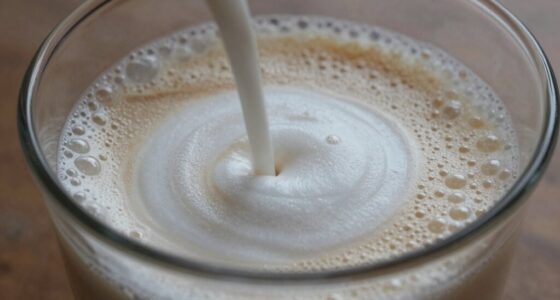
To keep your milk fresh and guarantee consistent foam, set your mini fridge temperature between 35°F and 40°F, ideally around 38°F. Use a reliable thermometer to monitor it regularly, avoiding fluctuations that can spoil the milk or ruin your froth. Proper storage prevents bacteria growth and maintains the fats and proteins needed for rich, stable foam. Keep everything sealed, and you’ll learn more tips to perfect your frothing process.

Get kitchen gear delivered free — and shop member deals
- Fast, free delivery on millions of items
- Access to Prime Big Deal Days deals on October 6–7
- Prime Video, Amazon Music and more included
Key Takeaways
- Keep the mini fridge temperature between 35°F and 40°F (1.7°C – 4.4°C) for optimal milk freshness and foam stability.
- Use a thermometer to regularly monitor and adjust the fridge to maintain a consistent temperature around 38°F (3°C).
- Avoid frequent door openings and place the fridge in a stable, well-insulated location to prevent temperature fluctuations.
- Store milk in sealed containers and let it reach the ideal frothing temperature before use to ensure creamy, stable foam.
- Proper temperature control prevents spoilage, preserves milk’s natural properties, and results in high-quality, consistent foam.
mini fridge with adjustable temperature
As an affiliate, we earn on qualifying purchases.
As an affiliate, we earn on qualifying purchases.
Why Milk Temperature Matters for Perfect Froth
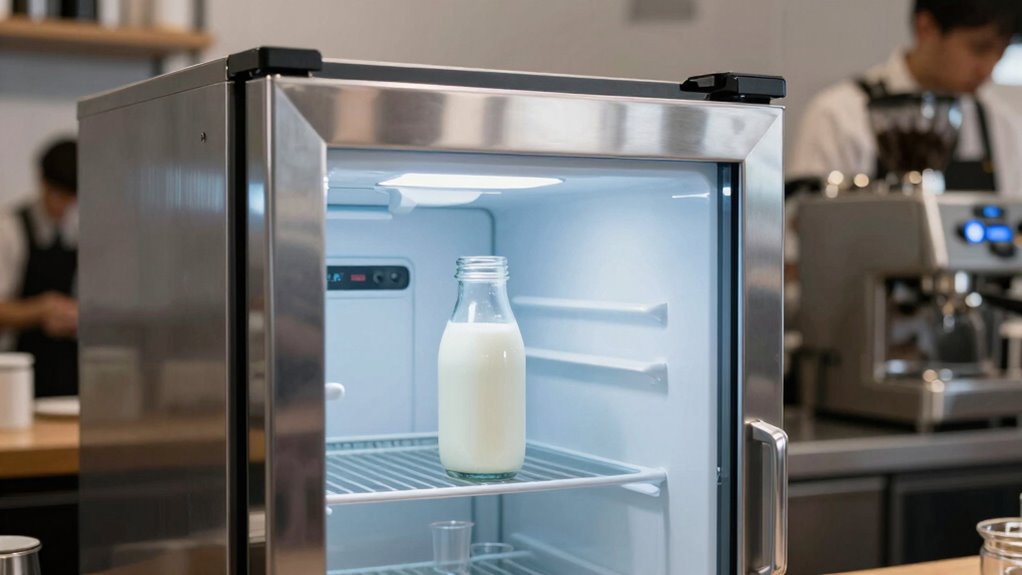
Since temperature directly affects how milk froths, maintaining the right milk temperature is crucial for achieving perfect foam. When milk is too warm, dairy freshness diminishes quickly, increasing the risk of milk spoilage and uneven froth. Cold milk, kept at ideal temperatures, ensures that the fats and proteins stay intact, creating stable, creamy foam. If milk is past its prime, even proper frothing techniques won’t produce the desired texture, as spoiled milk can develop off-flavors and thin, unstable foam. By controlling the milk temperature, you preserve its freshness longer, prevent spoilage, and achieve consistent, velvety froth every time. Proper temperature management is key to making the most of your mini fridge and enjoying high-quality coffee drinks. Temperature regulation is an essential part of maintaining milk’s quality and ensuring the best frothing results. Additionally, understanding the ideal temperature range helps optimize the frothing process for different types of milk.
As an affiliate, we earn on qualifying purchases.
What’s the Best Temperature Range for Storing Milk in a Mini Fridge
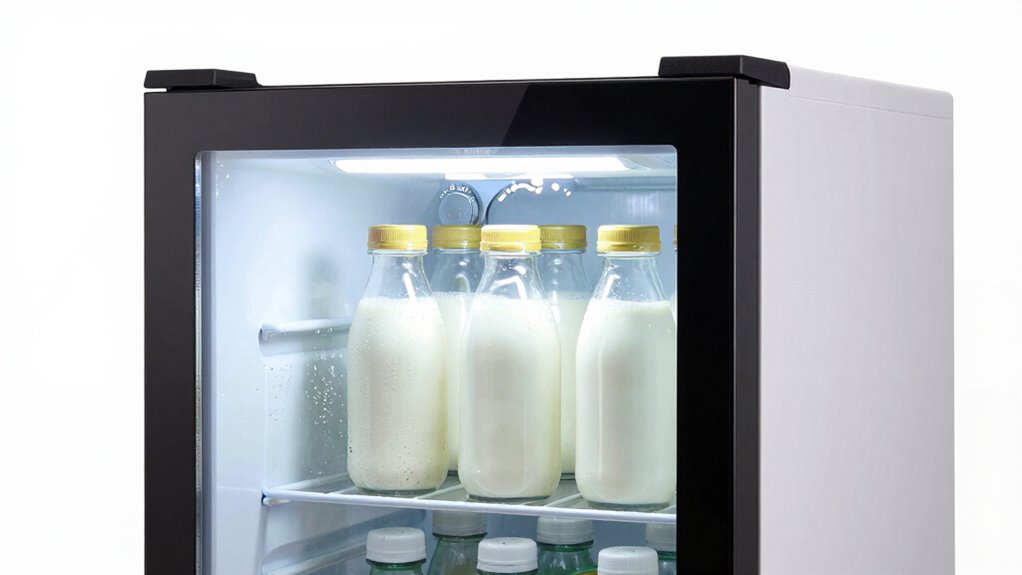
To keep your milk fresh and maintain good foam quality, you should store it within a specific temperature range. Typically, aim for 35°F to 40°F (1.7°C to 4.4°C) to prevent spoilage and ensure the best froth. Staying within this range helps preserve the milk’s taste, texture, and overall quality. Additionally, monitoring your mini fridge’s temperature with a reliable thermometer ensures consistent storage conditions. Using energy-efficient European cloud servers as a model for optimized performance can inspire better appliance control systems that maintain ideal temperatures.
Ideal Temperature Range
Maintaining the right temperature is essential for keeping milk fresh and safe in your mini fridge. The ideal temperature range is between 35°F and 40°F (1.7°C to 4.4°C). Staying within this range helps prevent milk spoilage by slowing bacterial growth. Proper fridge maintenance, like checking the thermostat regularly, ensures your mini fridge maintains this temperature. Temperatures above 40°F increase the risk of spoilage and souring, while lower temperatures may freeze the milk, affecting its texture. Keep the fridge door closed as much as possible to maintain a stable environment. Understanding temperature regulation is key to maintaining consistent conditions inside your fridge. Regularly monitoring your mini fridge’s temperature is a simple step toward ideal milk storage that preserves quality and extends shelf life. Proper temperature control not only preserves milk quality but also extends its shelf life, saving you money and avoiding waste. Additionally, consistent temperature management contributes to the overall efficiency and longevity of your appliance.
Effects on Foam Quality
Storing milk at the proper temperature is essential for achieving the best foam quality. When milk is kept within the ideal temperature range, it promotes better foam formation, resulting in creamier, more stable foam. If the temperature is too warm, proteins break down, leading to poor foam stability and inconsistent texture. Conversely, storing milk too cold can slow down the natural processes needed for ideal foam creation. Maintaining the right temperature ensures that milk’s proteins and fats stay balanced, supporting consistent foam quality. Proper milk storage in your mini fridge helps preserve freshness and ensures your foam remains smooth and lasting. Keep your milk at around 35-40°F (2-4°C) to maximize foam formation and enjoy the best brews every time. Temperature control is crucial in maintaining the quality of both milk and foam. Additionally, understanding the impact of temperature on milk proteins can help optimize storage conditions for superior foam results. Properly managing storage conditions can also prevent spoilage and bacterial growth that may compromise foam quality. Being aware of temperature fluctuations can further aid in maintaining consistent foam performance over time.
As an affiliate, we earn on qualifying purchases.
How Temperature Affects Milk Froth and Foam Stability
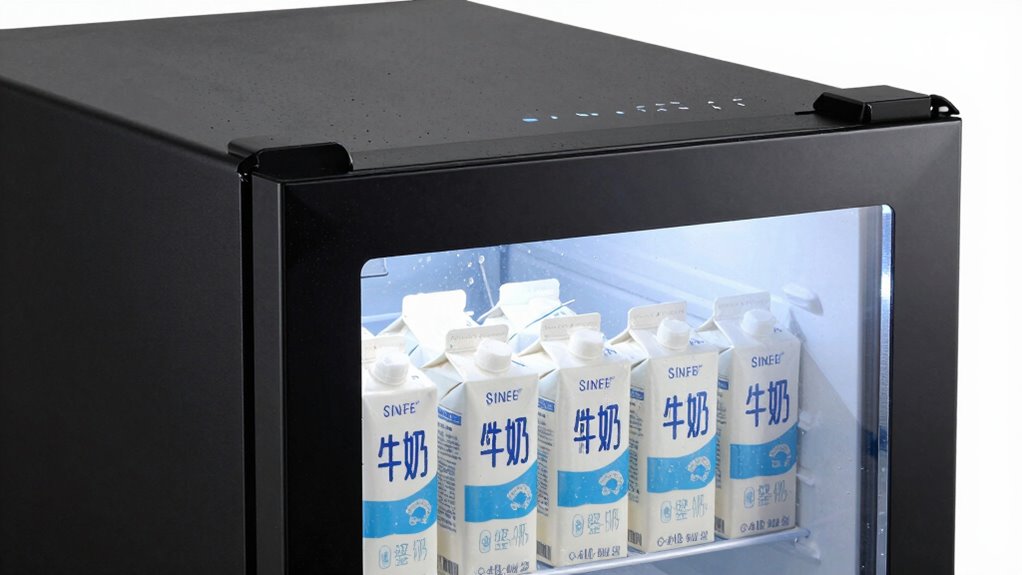
Your milk’s temperature plays a key role in how well it froths and maintains foam. When milk is too cold or too warm, foam stability can suffer, affecting your espresso or latte. Finding the right storage temperature helps guarantee your milk stays fresh and foams perfectly every time. Proper temperature regulation is essential for achieving optimal foam stability and ensuring a consistent frothing experience. Additionally, the skillful handling of AI software engineers can lead to more precise control over the manufacturing processes involved in dairy product production. Maintaining consistent temperatures is also crucial for temperature control in commercial and home settings, ensuring the quality of your milk and foam. Proper storage temperature can also prevent spoilage and preserve the milk’s natural fats and proteins, which are vital for stable foam. Moreover, understanding dairy chemistry helps optimize storage and frothing techniques for better foam consistency.
Milk Temperature Impact
Milk temperature plays a crucial role in determining how well it froths and how stable that foam remains. If it’s too warm, it’s prone to milk spoilage, which affects flavor and foam quality. Proper fridge placement helps keep milk at an ideal temperature, preventing spoilage and ensuring consistent froth. When milk is just right, around 37°F (3°C), it produces richer foam that holds better. To optimize foam stability and freshness, consider these factors:
- Maintain consistent fridge temperature to prevent spoilage.
- Use a mini fridge with precise temperature control.
- Keep milk away from warm spots or frequent door openings.
- Understanding temperature regulation is essential for maintaining optimal milk quality and ensuring consistent frothing results. Proper storage also supports hygienic practices, which are vital for preventing bacterial growth and maintaining freshness. Additionally, knowing the recommended storage time helps prevent spoilage and ensures maximum freshness. Regularly checking your fridge’s temperature settings can help maintain these conditions effectively. Ensuring proper storage conditions aligns with media literacy principles, helping you make informed choices about your milk and froth quality. Following these steps ensures your milk stays fresh and froths perfectly every time.
Foam Stability Factors
Maintaining the right temperature is key to achieving stable and lasting foam. When milk is too warm, foam tends to collapse quickly because heat destabilizes the bubbles. Conversely, if the milk is too cold, the foam may be too dense or slow to form properly. Proper fridge placement helps keep milk at an ideal temperature, reducing the risk of milk spoilage that can compromise foam quality. Avoid placing your mini fridge in areas with temperature fluctuations or direct sunlight, as this can cause inconsistent milk temperatures. Consistent, cool storage ensures the proteins responsible for foam stability stay intact, giving you a better, longer-lasting froth. Proper temperature management directly impacts both milk freshness and foam consistency. Additionally, maintaining a consistent temperature helps preserve the indoor air quality around your appliances, creating a healthier environment. According to tanning trends, keeping your skincare routine consistent can also help maintain skin health despite changes in environmental conditions. Ensuring your mini fridge maintains a steady temperature also aligns with best practices for food safety, protecting both your milk and overall household health.
Optimal Storage Conditions
Temperature plays a crucial role in determining how well milk froths and how stable that foam remains. Keep milk at the right temperature to prevent spoilage and guarantee consistent foam quality. If the fridge isn’t well-insulated, temperature fluctuations can accelerate milk spoilage, impacting foam longevity. To optimize storage conditions, consider these factors:
- Maintain a steady temperature around 38°F (3°C) to slow bacterial growth.
- Avoid frequent door openings, which can cause temperature swings.
- Use a mini fridge with good insulation to keep milk cool and minimize temperature fluctuations.
milk frothing temperature thermometer
As an affiliate, we earn on qualifying purchases.
As an affiliate, we earn on qualifying purchases.
How to Set Your Mini Fridge for Fresh Milk and Good Froth

To keep your milk fresh and froth-ready, you need to set your mini fridge to the right temperature. Aim for around 39°F (4°C) to guarantee proper milk storage without risking spoilage. This temperature keeps the milk cold enough to preserve its quality and makes it easier to froth. When preparing to froth, cold milk yields better foam and texture, so avoid letting it warm up too much. Adjust your mini fridge’s thermostat accordingly, ensuring it’s neither too cold nor too warm. Consistent temperature control helps maintain the milk’s freshness and supports your frothing techniques, resulting in a rich, creamy foam every time. Proper temperature settings are your best ally for quality milk storage and perfect froth.
Monitoring Milk Temperature With a Thermometer
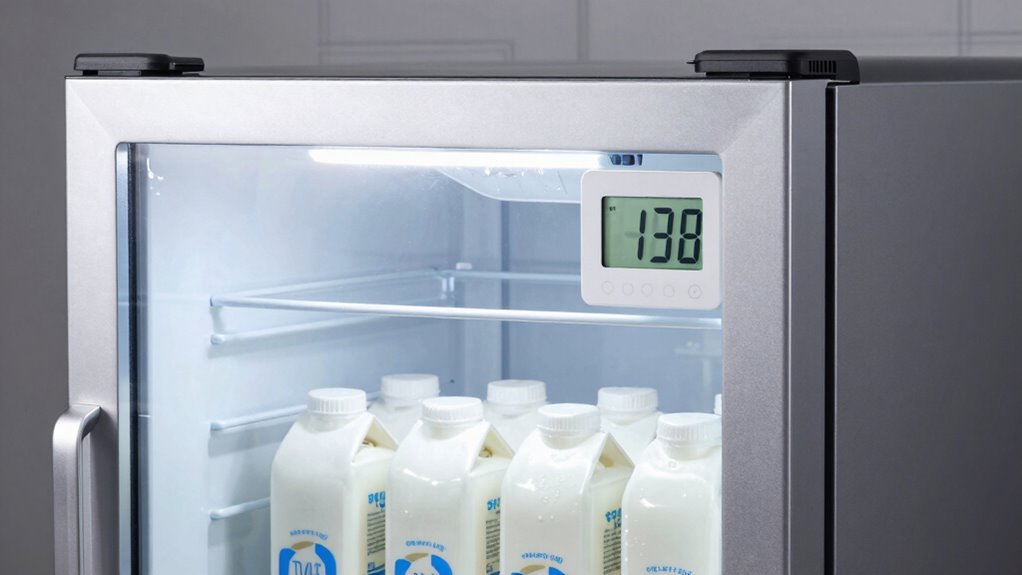
Monitoring your milk temperature with a thermometer guarantees you’re maintaining the ideal environment for freshness and frothability. Proper milk storage relies on precise temperature control to keep foam consistency consistent. To do this effectively, consider these key points:
- Check the temperature regularly to ensure it stays between 1°C and 4°C (34°F to 39°F).
- Place the thermometer deep into the milk, avoiding the container’s sides for an accurate reading.
- Adjust the mini fridge settings if the temperature drifts outside the recommended range to preserve both freshness and froth quality.
Keeping a close eye on temperature helps prevent spoilage and ensures your milk froth stays smooth and stable, making every cup perfect.
Common Mistakes That Mess Up Your Milk Froth: and How to Fix Them
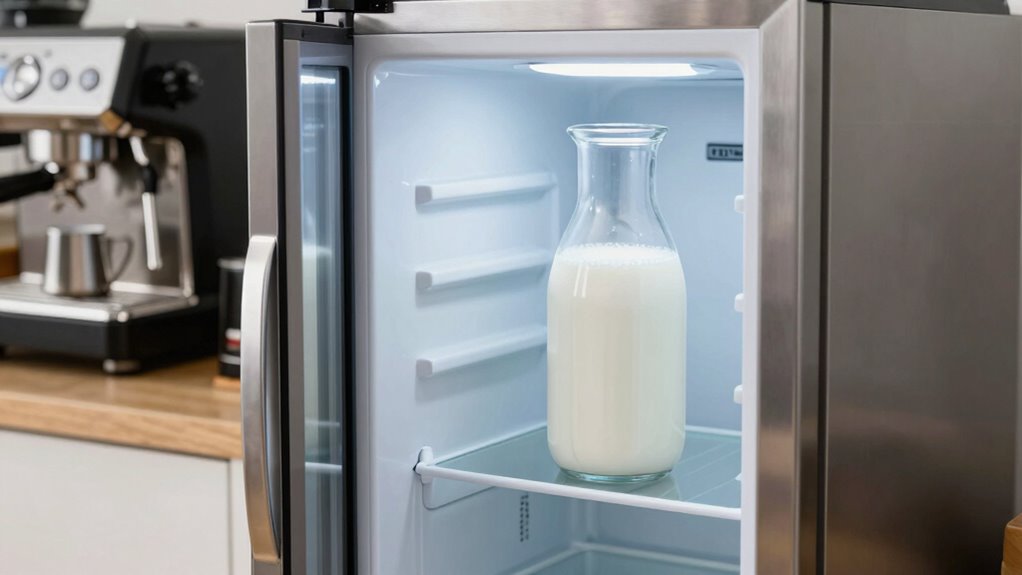
Even if you keep your milk at the right temperature, small mistakes can still ruin your froth. Poor milk storage, like leaving milk out too long or not sealing the container properly, can cause bacteria growth and affect froth consistency. Using milk that’s too warm or has been stored improperly makes it harder to get a smooth, airy foam. Additionally, pouring cold milk directly from the fridge into your frother can lead to uneven froth. To fix this, always store your milk in a sealed container at the correct temperature and let it sit to reach ideal frothing temperature before starting. Avoid rushing the process or using milk that’s been sitting out too long, as these mistakes hinder the creation of perfect foam.
Preparing Milk for Frothing: Tips for Consistent Results
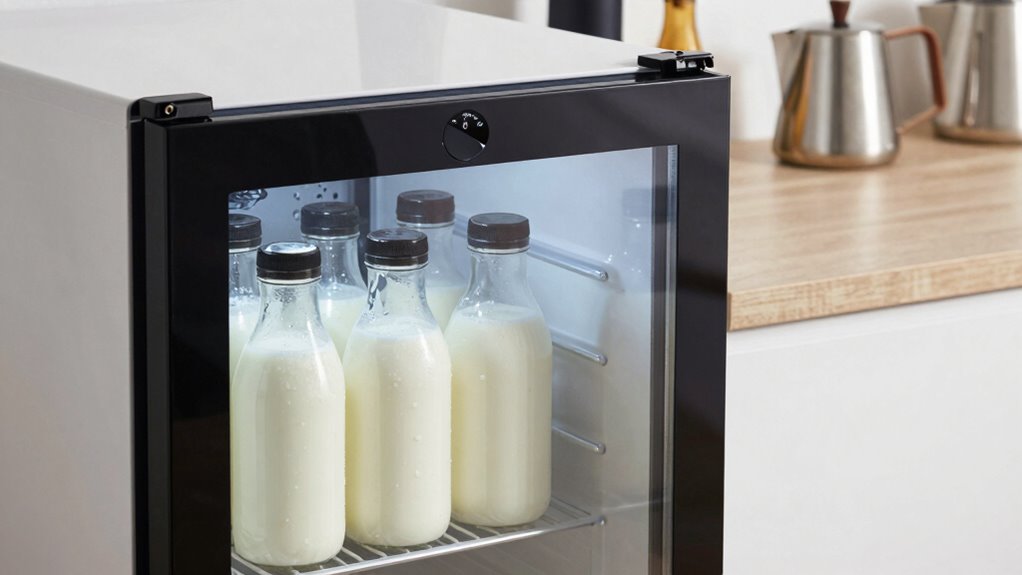
Achieving consistent froth quality starts with preparing your milk properly. To guarantee ideal foam consistency, follow these tips:
- Use cold milk straight from your mini fridge, as lower temperatures preserve milk quality and improve frothing results.
- Always freshen your milk before frothing to maintain its natural sweetness and prevent spoilage that can affect foam stability.
- Store milk in a sealed container to prevent absorption of odors and preserve its freshness, which directly impacts foam consistency.
Troubleshooting Temperature Problems That Hurt Your Milk Foam
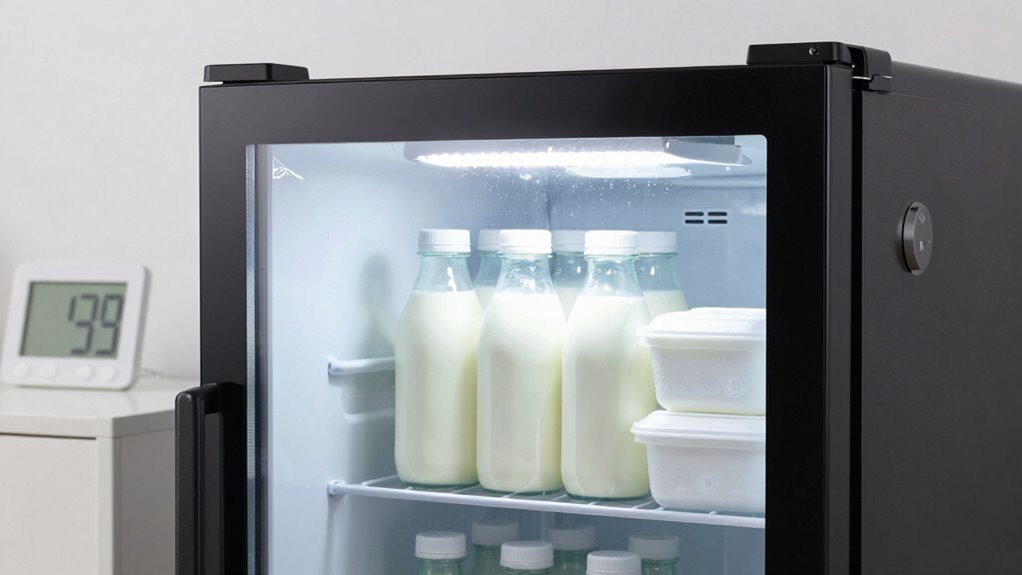
Temperature issues can considerably undermine your milk foam if not addressed promptly. When the fridge is too warm, milk can spoil quickly, leading to sourness and poor foam quality. Conversely, if it’s too cold, the milk may become too thick or difficult to froth properly. Regular fridge maintenance is essential to keep temperatures consistent and prevent these problems. Check that your mini fridge maintains the ideal temperature for milk, usually around 37°F (3°C). Avoid leaving milk out for too long or exposing it to fluctuating temperatures. When you notice signs of milk spoilage, discard it immediately to prevent contamination and poor foam results. Keeping your fridge properly maintained ensures your milk stays fresh, allowing you to achieve smooth, creamy foam every time.
Essential Tools and Tips to Keep Your Milk Cold and Frothing Perfectly
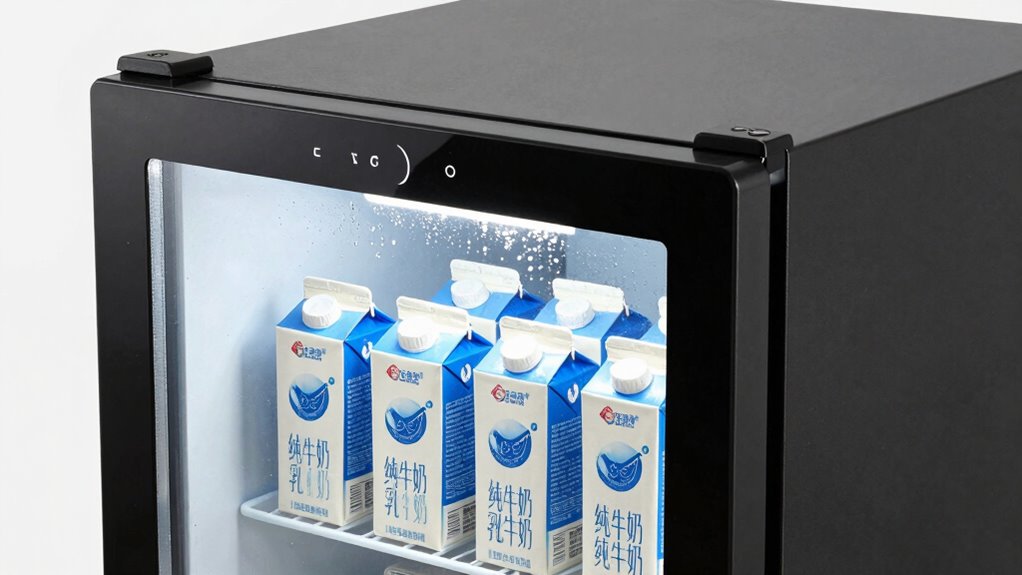
To keep your milk cold and make certain perfect frothing, having the right tools on hand is essential. Proper milk storage ensures consistent temperature, directly affecting froth texture. Here are three must-have tools:
- Mini fridge or milk cooler: Keeps milk at an ideal cold temperature, preventing warming that ruins foam quality.
- Milk thermometer: Monitors temperature precisely, so your milk stays within the optimal range for frothing.
- Frothing pitcher: Designed to maximize foam, helping you achieve a smooth, velvety froth every time.
Using these tools, you maintain ideal milk storage conditions and control the froth texture, making it easier to craft the perfect coffee beverages. Proper preparation guarantees a consistent, high-quality froth every time.
Frequently Asked Questions
Can Different Types of Milk Require Different Storage Temperatures?
Yes, different types of milk do require different storage temperatures to maintain milk freshness and ideal storage duration. For example, skim milk may need slightly colder temperatures than whole milk to stay fresh longer. You should keep your mini fridge at the recommended temperature, usually around 1-4°C (34-39°F), to prevent spoilage and guarantee your milk stays fresh and safe for as long as possible. Adjust the temperature based on the milk type for best results.
How Often Should I Check My Mini Fridge’s Temperature?
You should check your mini fridge’s temperature at least once a week to guarantee temperature stability. Regular checks help you maintain the ideal storage duration for milk, preventing spoilage or foam inconsistencies. Use a reliable thermometer, and adjust the thermostat if needed. Consistent monitoring guarantees your milk stays fresh, maintaining quality and foam consistency. Don’t forget, proper temperature control is key to perfect storage and beverage preparation.
Does Ambient Temperature Affect Milk Storage in a Mini Fridge?
Your ambient temperature can totally sabotage your milk storage, making it spoil faster or lose its foam magic. When the surrounding air gets too hot or cold, it messes with your mini fridge’s ability to maintain ideal temperature, ruining storage efficiency. Keep your fridge in a cool, stable environment to guarantee milk stays fresh and your foam stays perfect. Don’t let outside temps turn your milk into a science experiment!
What Are Signs That Milk Has Been Stored at the Wrong Temperature?
If milk’s been stored at the wrong temperature, you’ll notice a sour smell and a change in taste. It may also have a slimy texture or look lumpy. These signs mean the shelf life has shortened and bacteria have grown, making it unsafe to drink. Always check for these indicators before using milk, and remember that proper refrigeration maintains freshness and prevents spoilage.
Is It Necessary to Pre-Chill My Mini Fridge Before Storing Milk?
Yes, you should pre-chill your mini fridge before storing milk. Pre-chilling helps maintain milk freshness and guarantees fridge efficiency. It allows the appliance to reach the best temperature quickly, avoiding warm spots that could spoil your milk. By pre-chilling, you promote consistent cooling, which keeps your milk fresh longer and prevents bacteria growth. Always set your mini fridge to the ideal temperature before filling it with milk to maximize its lifespan and freshness.
Conclusion
Keeping your milk at the right temperature isn’t just a detail, it’s the secret ingredient to perfect foam. Think of your mini fridge as the silent partner in your craft—when it’s set right, your milk sings with frothy consistency. So, don’t overlook this simple step; with a little attention, you’ll turn ordinary milk into a barista-quality masterpiece. After all, in the world of froth, temperature is the silent conductor guiding every perfect pour.
Fall Picks
fall essentials
As an affiliate, we earn on qualifying purchases.