
The non-dairy latte problem that begins before you even start steaming stems from choosing the wrong plant-based milk. Many alternatives lack the right protein, fat, and stabilizers needed for good froth, causing thin, bubbly, or short-lived foam. Selecting a milk specifically formulated for barista use or that’s high in proteins can make a big difference. If you want to master perfect latte foam, understanding these properties is key—keep exploring to learn more.
Listen free for 30 days with Audible
Thousands of audiobooks and originals — cancel anytime.
As an affiliate, we earn on qualifying purchases.
Key Takeaways
- Selecting the wrong plant-based milk with poor foaming properties can prevent achieving a creamy latte foam.
- Low-protein, low-fat plant milks are less capable of forming stable, velvety foam before steaming.
- Using non-fortified or generic milk alternatives may lack stabilizers needed for good frothing.
- Inadequate knowledge of milk composition leads to improper choice, affecting foam quality from the start.
- Poor pre-steaming preparation, such as skipping proper milk selection, hampers foam development before pitcher steaming.
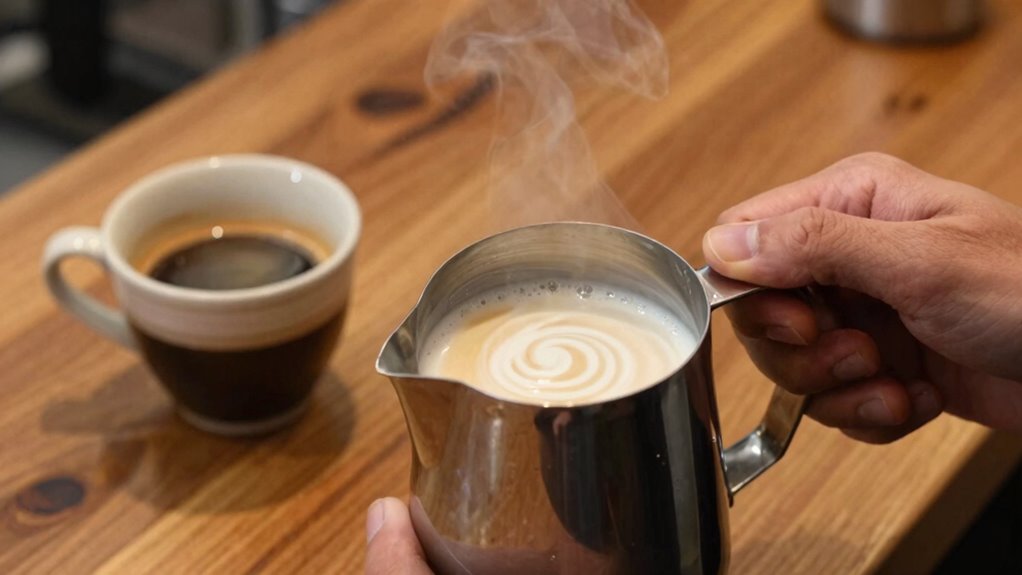
Many coffee lovers are turning to non-dairy milk options for their lattes, but this shift has introduced a new set of challenges. One of the most noticeable issues begins long before you even reach for the pitcher. As you start preparing your favorite milk alternatives, you might notice they don’t behave the same way as traditional dairy milk. Unlike cow’s milk, which easily heats and foams to a silky latte foam, plant-based options often resist those same qualities. This initial stage—getting the milk to the right temperature and consistency—sets the tone for how well your latte foam will turn out.
Choosing the right plant-based milk and mastering its steaming needs are key to perfect latte foam.
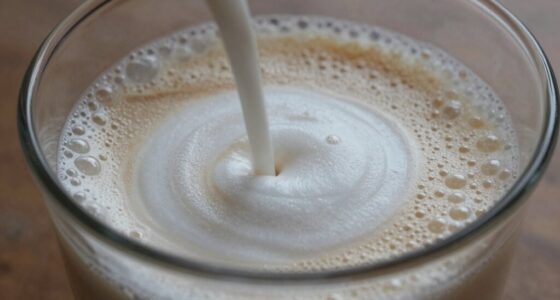
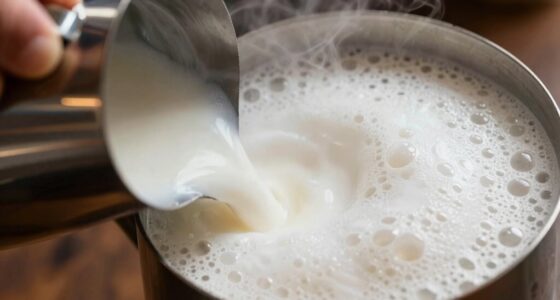
When you pour milk alternatives into your steaming pitcher, you often find they don’t create the same smooth, stable foam. Some options, like almond or cashew milk, tend to produce a thin, bubbly foam that quickly dissipates. Others, like soy or specially formulated barista blends, foam better but still don’t quite match the creaminess and longevity of dairy foam. The problem starts with the milk’s composition. Plant-based milks vary in fat content, protein levels, and emulsifiers, all of which influence their ability to foam. Milk alternatives with lower protein levels usually don’t develop that rich, velvety latte foam you’re aiming for, and understanding milk composition can help you select the best options for frothing success.
Temperature also plays a critical role. Dairy milk responds predictably to steaming—around 140-150°F, it creates the perfect microfoam. Many plant-based milks, however, require different steaming techniques. Overheating can cause them to curdle or develop a skin, ruining the texture. Underheating, on the other hand, won’t produce enough steam to create that luscious foam. You need to find the sweet spot for each milk alternative, which often involves trial and error and some experimentation. Understanding milk composition can help you select the best options for frothing success. Additionally, being aware of plant-based milk properties can guide you in choosing the right product from the start. Recognizing the importance of milk quality can also influence how well your milk foams and how consistent the results are over time.
Another factor is the initial quality of the milk alternative. Not all brands foam equally, and some are specifically designed for barista use. These are usually fortified with added proteins and stabilizers to help achieve that signature latte foam. Without these enhancements, your milk alternative might just refuse to produce the desirable froth. The key is understanding that the problem starts long before you get to the steaming stage. Choosing the right milk alternative and mastering its unique steaming requirements are essential steps. If you skip this, no matter how skilled you are with your pitcher, your latte foam won’t reach that perfect, creamy consistency you’re after.
barista plant-based milk for frothing
As an affiliate, we earn on qualifying purchases.
As an affiliate, we earn on qualifying purchases.
Frequently Asked Questions
What Are the Best Non-Dairy Milk Alternatives for Lattes?
You should try almond, oat, or soy milk for your lattes, as they’re popular non-dairy options. These plant-based nutrition choices offer dairy-free benefits like lower fat and calories, and a creamy texture that complements coffee. Almond milk adds a nutty flavor, oat milk provides natural sweetness, and soy milk boosts protein content. Experiment to find the one that best enhances your latte experience while supporting your dairy-free lifestyle.
How Does Non-Dairy Milk Froth Compared to Dairy?
Non-dairy milk froths differently from dairy, often producing a creamier texture with proper frothing techniques. You might find that plant-based options like oat or soy milk create a stable, velvety foam, while almond or coconut milk can be trickier but still achievable. To get the best froth, use a steam wand or frother, and adjust your technique based on the milk’s unique properties to achieve that perfect, creamy texture.
Can Non-Dairy Milk Cause More Latte Art Errors?
Yes, non-dairy milk can cause more latte art errors because it’s affected by plant-based allergies and milk temperature. If you’re allergic to certain ingredients, you might struggle with frothing properly. Additionally, non-dairy milk often requires precise temperature control; too hot or cold, and it won’t foam well, leading to less stable microfoam. Mastering these factors helps improve your latte art, even with plant-based options.
What Are Common Non-Dairy Latte Flavor Combinations?
You’ll find that popular non-dairy latte flavor combinations often include classic flavor pairing such as vanilla and caramel, which add smooth sweetness. Seasonal blends like pumpkin spice or peppermint are also favorites, perfect for festive times. Experimenting with nutty flavors like hazelnut or almond complements the creaminess of non-dairy milks. These combinations bring out the best in your latte, making each sip delightful and tailored to any season.
How to Troubleshoot Non-Dairy Milk Texture Issues?
To troubleshoot non-dairy milk texture issues, start by checking your milk heating process—avoid overheating, which can cause separation. Use proper frothing techniques by incorporating a steam wand or frother, ensuring you introduce enough air for a smooth, velvety texture. If the milk still isn’t creamy, try adjusting the temperature or switching brands, as different non-dairy milks respond differently to heating and frothing.
As an affiliate, we earn on qualifying purchases.
Conclusion
Next time you find yourself facing the non-dairy latte dilemma, remember it’s just a gentle nudge toward better techniques. With a little patience and a touch of practice, the issues will softly fade away, leaving you with a smoother, creamier sip. Embrace the learning curve as a quiet journey, one that whispers promises of perfect froth and warm comfort. Before long, you’ll be savoring your latte with a quiet confidence, savoring every delightful drop.
plant-based milk frothing pitcher
As an affiliate, we earn on qualifying purchases.
As an affiliate, we earn on qualifying purchases.
As an affiliate, we earn on qualifying purchases.
Flea & tick season Picks
flea and tick prevention
As an affiliate, we earn on qualifying purchases.