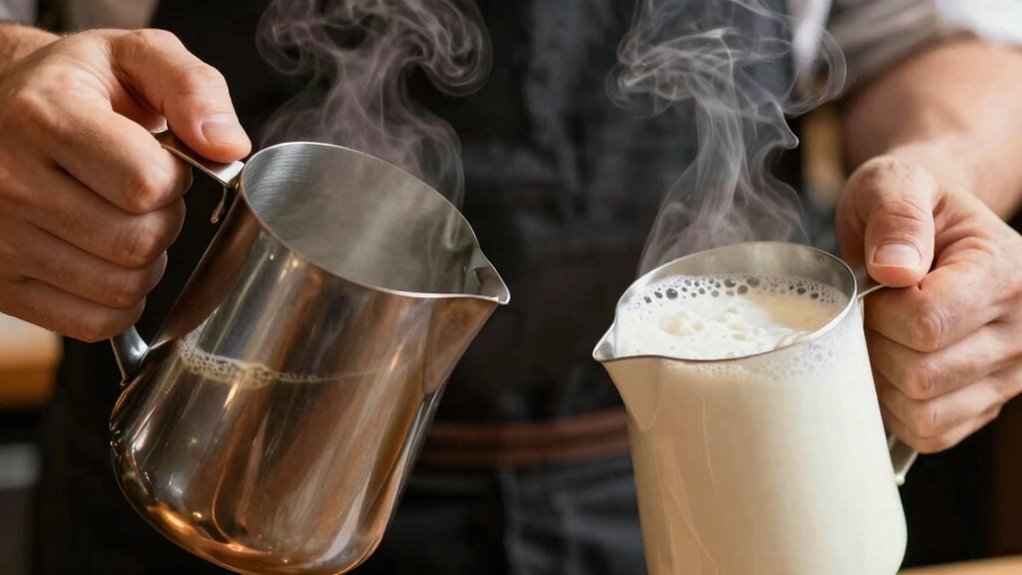

You need to adjust your steaming approach because soy and almond milk have different compositions. Soy milk, being creamier and higher in protein, can handle higher temperatures and vigorous frothing, resulting in a dense, velvety foam. Almond milk, lighter and lower in protein, requires gentler steaming at lower temperatures to prevent separation and maintain delicate flavor. Understanding these differences helps you achieve better foam and taste—if you keep exploring, you’ll discover even more tips.
Listen free for 30 days with Audible
Thousands of audiobooks and originals — cancel anytime.
As an affiliate, we earn on qualifying purchases.
Key Takeaways
- Soy milk’s higher protein content allows for more vigorous steaming and stable, dense foam.
- Almond milk’s lower protein makes it prone to separation and requires gentler steaming.
- Overheating soy milk causes burnt flavors, while almond milk can curdle or become watery with high heat.
- Proper steaming preserves the flavor and nutritional benefits unique to each plant-based milk.
- Tailoring steam techniques ensures optimal foam quality and texture for each type of milk.

When steaming soy and almond milk, understanding their different textures and compositions is key to achieving the perfect cup. Both are popular dairy alternatives and are celebrated for their plant-based nutrition, but their unique qualities mean they require different steaming techniques. Soy milk, made from ground soybeans, tends to be creamier and thicker due to its higher protein content. Almond milk, on the other hand, is typically lighter and more water-based, with a thinner consistency. Recognizing these differences helps you tailor your steaming approach to get the best flavor, texture, and mouthfeel.
Understanding soy and almond milk textures is key to perfect plant-based froth and flavor.
Soy milk’s higher protein and fat content means it can handle more vigorous steaming without curdling. When steaming soy milk, you can use a slightly higher temperature to create a rich, velvety foam. Its composition allows it to develop a stable, dense froth, making it ideal for beverages like lattes where a smooth, creamy texture is desired. Be cautious, though—overly aggressive steaming or excessive heat can lead to a scorched flavor or a burnt smell, which diminishes the plant-based nutrition benefits of soy. The goal is to heat it enough to produce a silky foam without compromising its nutritional integrity or taste. Proper temperature control is crucial for maintaining the nutritional benefits and flavor profile of soy milk.
Almond milk’s lighter, more water-based profile means it’s more prone to curdling or separating if steamed improperly. To prevent this, you should steam almond milk at a lower temperature, just enough to warm it without creating too much foam. Gentle steaming helps preserve the delicate flavor and keeps the milk from losing its nutritional value. Because almond milk contains less protein, it doesn’t develop as stable a foam as soy milk does. Instead, it produces a lighter, fluffier froth that enhances coffee drinks without overpowering their flavor. If you try to steam almond milk too aggressively, it can become thin or watery, losing both texture and nutritional benefits. Understanding the composition differences helps you better control the steaming process and avoid common issues like curdling or separation. Additionally, using proper steaming techniques tailored to each milk type ensures you get the best results without compromising quality or nutrition.
Getting the perfect steamed milk for your plant-based nutrition and dairy alternatives involves adjusting your technique based on the milk’s composition. Soy milk’s thicker, protein-rich structure responds well to slightly higher heat and vigorous frothing, resulting in a creamy texture. Almond milk’s more delicate makeup requires a gentler touch, with lower temperatures and softer steaming to keep it smooth and preserve nutrients. Additionally, understanding the composition differences between these milks helps prevent common issues like curdling or separation. By understanding these differences, you’ll enhance your coffee experience and ensure each cup maintains the nutritional integrity of your plant-based milk options.
As an affiliate, we earn on qualifying purchases.
Frequently Asked Questions
How Does Temperature Affect the Texture of Soy Versus Almond Milk?
Temperature affects soy and almond milk differently because of their distinct composition. Soy milk is more temperature-sensitive, so higher steam temperatures can cause curdling or graininess, impacting texture modification negatively. Almond milk, being more delicate, requires gentler steaming to avoid separation or thinness. By controlling temperature carefully, you guarantee the desired texture, making soy smooth and creamy, while almond milk stays light and frothy.
Can I Use the Same Steaming Technique for Flavored Plant Milks?
In this day and age, you can’t simply use the same steaming technique for flavored plant milks. For proper flavor infusion and consistent steaming, adjust your approach based on the milk’s base—soy or almond. Flavored versions may require gentler steaming to prevent loss of flavor or curdling. Keep an eye on steaming consistency, and tweak the temperature or time to guarantee your drink stays smooth and tasty.
What Is the Ideal Steaming Time for Soy and Almond Milk?
You should steam soy milk for about 20-30 seconds at a temperature of 150-155°F to achieve a smooth, velvety milk consistency. Almond milk requires a slightly shorter steaming time, around 15-20 seconds, at a similar temperature. Be careful not to overheat, as high temperatures can cause curdling or separation. Adjust your steaming time based on the milk’s texture, ensuring a creamy and well-integrated result.
Do Different Brands of Soy and Almond Milk Require Unique Steaming Methods?
Yes, different brands of soy and almond milk can require unique steaming methods. You need to take into account brand consistency and flavor preservation, as some brands have thicker or more delicate textures. Adjust your steaming time and temperature accordingly to avoid burning or thinning out the milk. Experimenting with small batches helps you find the most suitable approach, ensuring each cup maintains the intended flavor and texture without compromising quality.
How Does Steaming Impact the Nutritional Content of Soy and Almond Milk?
Steaming affects soy and almond milk differently by influencing their nutritional preservation and heat sensitivity. You’ll find that soy milk’s proteins and nutrients can withstand gentle steaming, but excessive heat risks denaturing them. Almond milk’s delicate fats and vitamins are more heat-sensitive, so careful steaming helps conserve its nutritional content. In both cases, controlling temperature and duration ensures you maintain maximum nutrition while enhancing flavor and texture.
As an affiliate, we earn on qualifying purchases.
Conclusion
Understanding the unique steaming needs of soy and almond milk helps you avoid common pitfalls and craft the perfect cup every time. By tailoring your approach, you guarantee each beverage is smooth, flavorful, and just right. Remember, when it comes to steaming, one size definitely doesn’t fit all—it’s about playing it by ear and adjusting as you go. Master these techniques, and you’ll keep your customers coming back for more, proving that knowledge truly is power in the kitchen.
As an affiliate, we earn on qualifying purchases.
milk steaming thermometer for soy and almond milk
As an affiliate, we earn on qualifying purchases.
As an affiliate, we earn on qualifying purchases.
NFL season / tailgating Picks
team gear
As an affiliate, we earn on qualifying purchases.