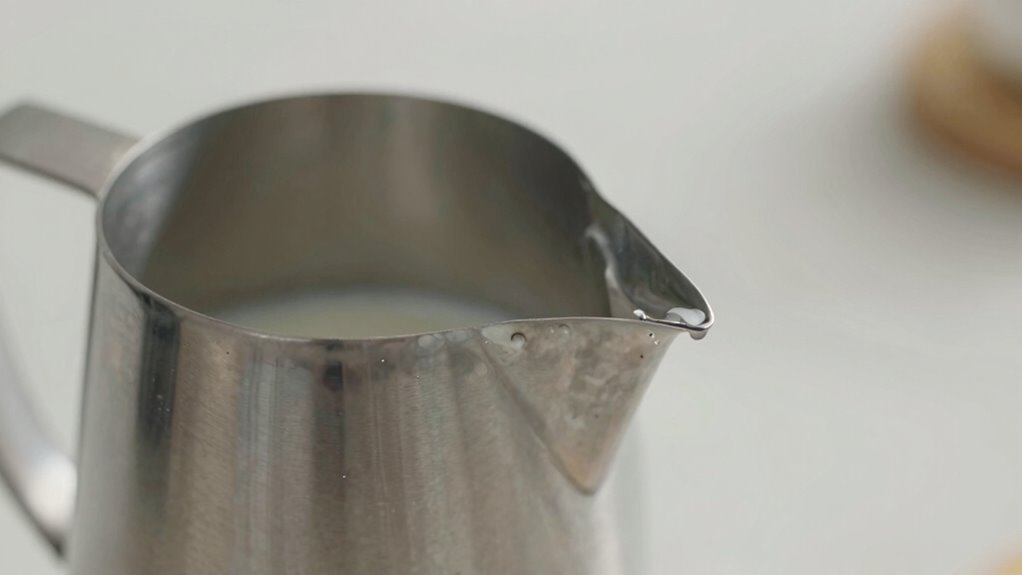

Pointy spouts help you pour with greater accuracy and control, making it easier to craft intricate latte art. Their focused streams reduce splashing and dripping, giving you cleaner, more professional results. The precise flow also allows for better microfoam manipulation and pattern creation. Choosing a pitcher with a pointy spout can transform your pour technique—if you want to master latte art, understanding spout shapes is key. Keep exploring to discover how these tools can elevate your barista skills.
Key Takeaways
- Pointy spouts provide a focused, precise milk stream, improving control for intricate latte art designs.
- They reduce splashing and dripping, resulting in cleaner pours and more professional-looking latte art.
- The focused flow from pointy spouts allows for better manipulation of milk during detailed pouring.
- Proper positioning and angle of a pointy spout enhance pour accuracy and consistency.
- They enable baristas to execute complex patterns with greater confidence and finesse.

HOFASON Stainless Steel Milk Frothing Pitcher Cappuccino Pitcher Pouring Jug Espresso Cup Creamer Cup for Latte Art, 12 Ounce (350 ML)
TOP QUALITY – The frother pitcher is made of #304 stainless steel with non-stick teflon coating, ust-proof, stain-proof…
As an affiliate, we earn on qualifying purchases.
As an affiliate, we earn on qualifying purchases.
What Are Milk Pitcher Shapes and Why Do They Matter?
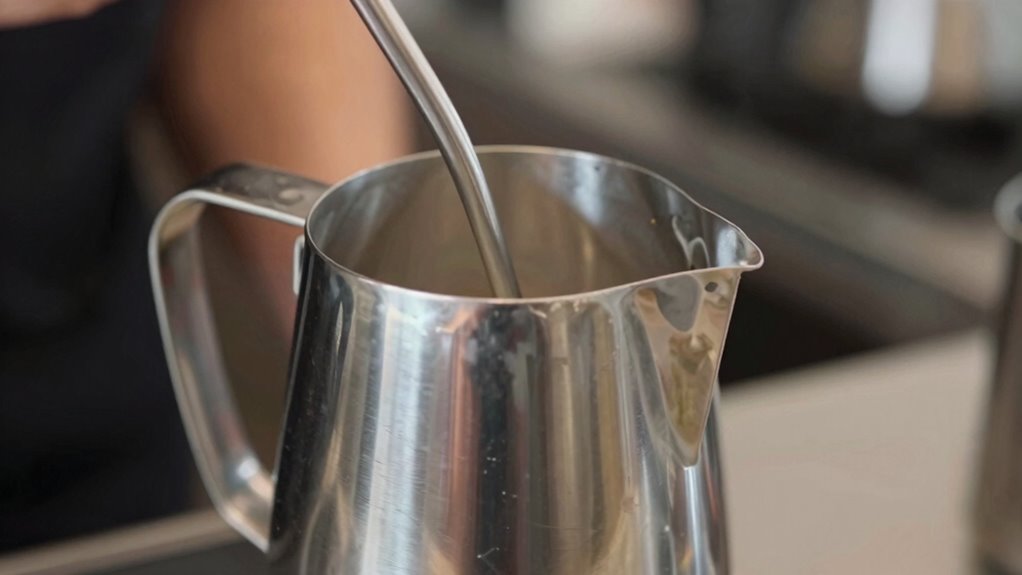
Understanding the shapes of milk pitchers is essential because they directly influence how you pour and control the milk. Different shapes affect your ability to perform milk frothing effectively and guarantee consistent coffee brewing. A well-designed pitcher helps you create smooth, glossy microfoam by guiding the steam and milk flow. The size and spout shape also impact your pouring precision, making it easier to add latte art or control the milk’s placement in your cup. For beginners, choosing a pitcher with the right shape can build confidence and improve technique. Experienced baristas appreciate specialized shapes that enhance their control during latte art. Additionally, material quality can influence the durability and heat retention of your pitcher. When selecting a pitcher, considering the design features that facilitate better milk control can significantly improve your brewing results. Overall, the right milk pitcher shape isn’t just about aesthetics — it’s a critical tool that elevates your coffee brewing and milk frothing skills.

Milk Frothing Pitcher, 8.5oz/12oz/20oz/32oz/50oz/66oz Milk Frother Cup Stainless Steel, Espresso Accessories, Milk Steaming Pitchers Coffee Cappuccino Latte Art Barista Milk Jug Cup with Art Pen,12oz
Perfect Combination Of Milk Frothing Pitcher And Latte Art Pen: The milk frother jug can be used in…
As an affiliate, we earn on qualifying purchases.
As an affiliate, we earn on qualifying purchases.
How Do Pointy Spouts Improve Milk Pouring Precision?
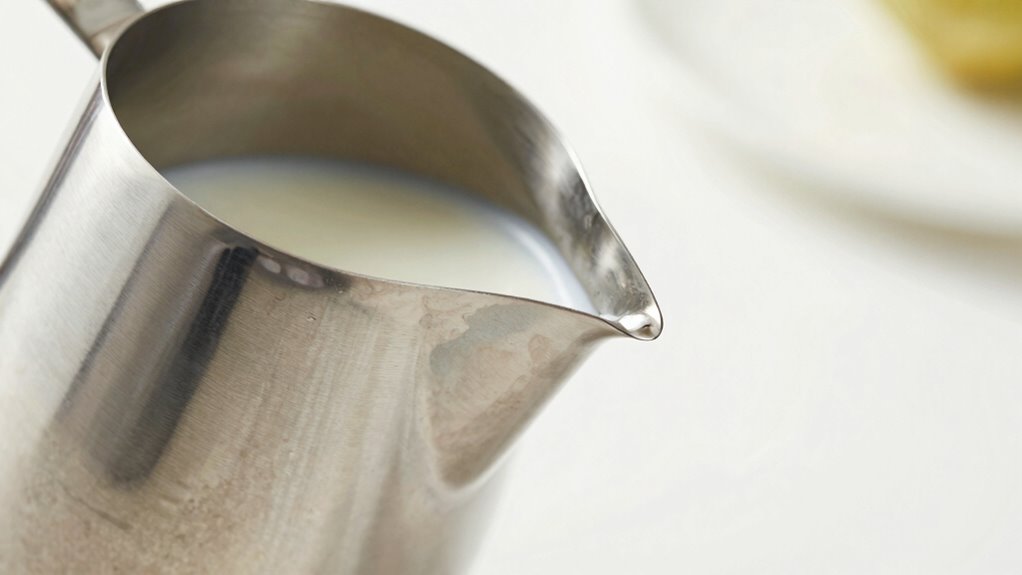
Pointy spouts enhance milk pouring precision by allowing you to direct the flow of milk more accurately. Their tapered design creates a focused stream, making it easier to control how much milk you pour and where it lands. This is especially helpful when pouring milk foam for latte art, as precise control helps you craft intricate patterns. Additionally, the shape of the spout works well with different pitcher materials, such as stainless steel or ceramic, which can influence the flow consistency. Pointy spouts reduce splashing and drips, giving you cleaner, more consistent pours. By improving control and minimizing mess, they help you achieve better latte art and a more professional presentation every time. Proper pouring technique combined with the spout design can elevate your coffee-making skills. The spout shape also affects how smoothly the milk flows, making the pouring experience more seamless and enjoyable.
Milk Frothing Pitcher, 8.5oz/12oz/20oz/32oz/50oz/66oz Milk Frother Cup Stainless Steel, Espresso Accessories, Milk Steaming Pitchers Coffee Cappuccino Latte Art Barista Milk Jug Cup with Art Pen,12oz
Perfect Combination Of Milk Frothing Pitcher And Latte Art Pen: The milk frother jug can be used in…
As an affiliate, we earn on qualifying purchases.
As an affiliate, we earn on qualifying purchases.
Comparing Spout Shapes: Pointed, Rounded, and Straight-Which Works Best?
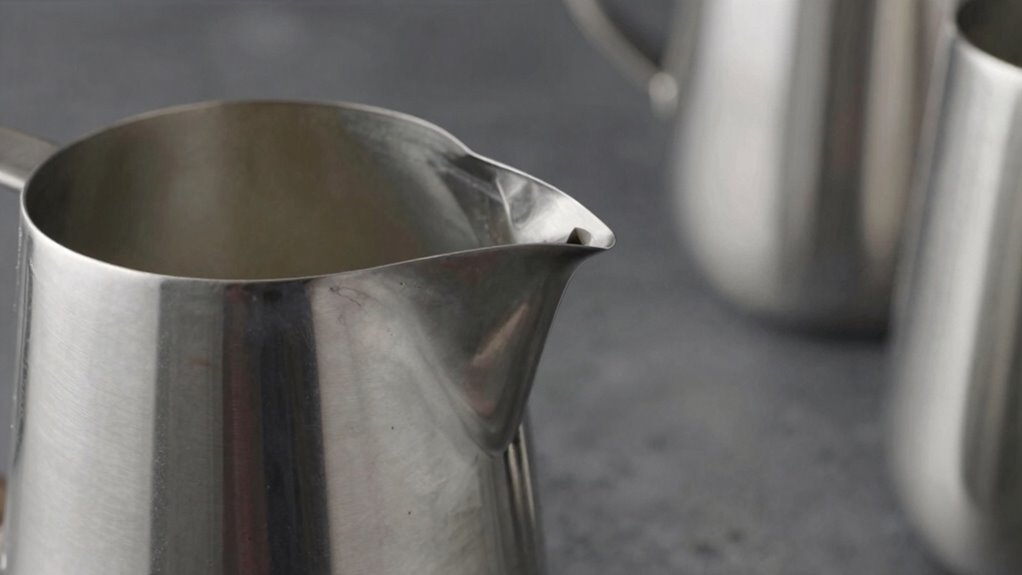
When choosing between pointed, rounded, and straight spouts, you’ll notice differences in how precisely you can pour and control the flow. Each shape offers unique advantages that can make your latte art and pouring tasks easier or more challenging. Let’s compare how these spout styles impact your accuracy and ease of handling.
Precision of Pouring
The shape of a milk pitcher’s spout plays a crucial role in how precisely you can pour. A pointed spout offers better control, allowing you to create detailed latte art with consistent milk temperature and minimal spillage. Rounded spouts provide smoother pours but less accuracy, especially with smaller pitcher capacity. Straight spouts tend to be less precise, often leading to uneven pours, especially when working with high milk temperature. Your choice impacts not only accuracy but also the flow rate. Consider this table for clarity:
| Spout Shape | Accuracy | Flow Control | Best Use Case |
|---|---|---|---|
| Pointed | High | Precise | Art and detail |
| Rounded | Moderate | Gentle | Pouring milk |
| Straight | Low | Variable | General use |
Choosing the right shape enhances your pouring precision. Additionally, understanding leverage and control can help you make better choices when selecting your milk pitcher. Mastering pouring technique can further improve your results and consistency.
Ease of Control
Choosing the right spout shape directly affects how easily you can control your pour. If you want precise latte art techniques, a pointed spout offers more finesse, allowing you to direct milk flow smoothly. Rounded spouts provide a gentler, more forgiving pour, ideal for beginners working on milk texture tips, as they help prevent splashing and uneven flow. Straight spouts give consistent control but may require more skill to master. Your choice impacts how seamlessly you can create intricate designs or simple rosettas. With practice, you’ll find the spout that best suits your style, making it easier to manage flow rate and angle. Ultimately, ease of control depends on matching your skill level and desired latte art results with the right spout shape. Additionally, understanding the Free Floating concept can help you optimize your pouring techniques for better results.

Milk Frothing Pitcher, 600ml (20oz) Milk Frother Cup Stainless Steel Jug Steaming Pitcher, Milk Coffee Cappuccino Latte Art Barista Steam Pitchers Milk Jug Cup with Decorating Pen
Food Grade Material : This milk frothing pitcher is made of high-quality 304 stainless steel, which is rust…
As an affiliate, we earn on qualifying purchases.
As an affiliate, we earn on qualifying purchases.
How Spout Shape Controls Milk Flow and Pour Speed
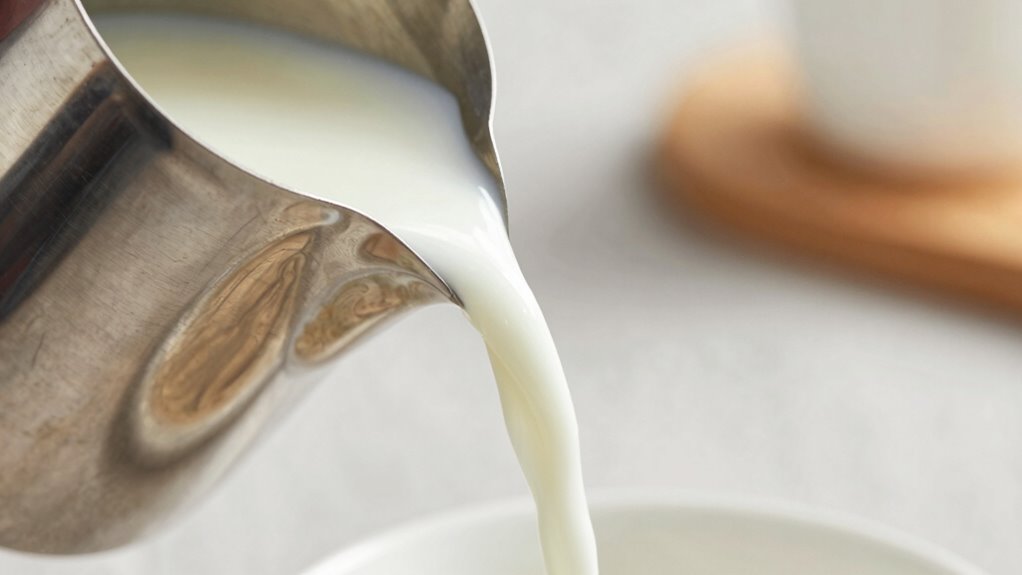
The shape of your pitcher’s spout directly influences how smoothly and quickly milk flows during pouring. A steeper spout angle can slow down the pour, giving you more control, while a shallower angle speeds things up. Understanding how spout shape affects flow rate helps you pour with precision and consistency. Additionally, the flow rate can be affected by the spout’s design, impacting your ability to create latte art or pour accurately. Recognizing the impact of spout design enables baristas to optimize their technique and achieve better results. The spout shape also plays a role in reducing drips and spills, making the process cleaner and more efficient. Properly designed spouts can also help maintain the temperature stability of the milk during pouring, which is crucial for high-quality espresso beverages. A well-designed spout can also improve overall pour control, especially for intricate latte art.
Spout Angle Effects
Since the spout angle directly influences how milk flows from your pitcher, adjusting it can considerably impact pour speed and control. A steeper spout angle directs milk more downward, increasing the flow rate and making your pour faster. Conversely, a shallower angle creates a gentler flow, giving you more precision and control. The spout angle determines how smoothly milk exits and how much pressure builds before pouring begins. If the angle is too steep, you risk splattering or uncontrolled streams; if too shallow, your flow may be sluggish. By fine-tuning the Spout Shape, you can optimize milk flow to suit your pouring style, ensuring steady, even streams that help you create perfect latte art or pour with confidence. Understanding the influence of native culture on traditional practices can also inspire more mindful and culturally respectful techniques. Additionally, experimenting with different spout designs can help you discover the ideal flow for your specific needs, emphasizing the importance of customization in achieving consistent results.
Flow Rate Control
The shape of your pitcher’s spout directly controls how quickly and smoothly milk flows out. A well-designed spout allows you to adjust the flow rate, giving you better control over pouring decorative patterns like rosettas or tulips. Pointy spouts typically provide a more consistent, controlled pour, helping you achieve delicate details without splashing. Additionally, a spout that directs milk smoothly helps maintain temperature control, preventing rapid cooling or overheating of the milk. When you master flow rate control, your pours become more precise, enabling you to craft intricate latte art with ease. The right spout shape helps you manage both speed and accuracy, making your milk pouring process more consistent and professional. Spout Shape significantly influences the overall pouring experience, empowering you to refine your skills and produce stunning latte art. Understanding how pouring techniques interact with spout design can further elevate your barista skills and improve your results. A well-designed spout also minimizes splattering, ensuring a cleaner and more efficient pour. Proper spout design also helps reduce drip and leak issues, making your pouring process cleaner and more efficient. Moreover, the material of the spout can affect the smoothness of the pour and durability over time.
How a Pointy Spout Can Elevate Your Latte Art Finesse

A pointy spout on a milk pitcher can make a significant difference in your latte art, giving you greater control over the pour. This precision helps you master latte art techniques and apply milk frothing tips more effectively. With a sharper spout, you can create finer, more detailed designs, ensuring your milk flows smoothly and accurately. The improved control allows for better manipulation of the milk flow, essential for intricate patterns. Consider this table to see how a pointy spout enhances your technique:
| Benefit | Explanation |
|---|---|
| Precise Pouring | Better control over milk flow enables detailed designs |
| Reduced Spills | Less mess during delicate latte art techniques |
| Improved Finesse | Elevates your overall latte art skill level |
Using a pointy spout truly upgrades your latte art finesse. Additionally, vintage tools can further refine your technique by providing a nostalgic feel that encourages precision and care.
Choosing the Right Milk Pitcher: Tips for Beginners and Pros
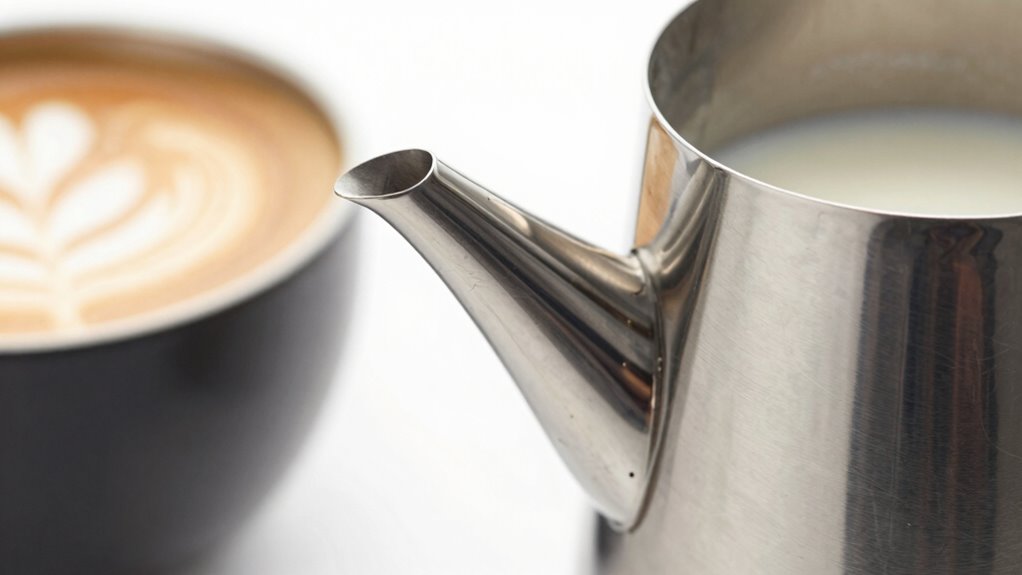
Choosing the right milk pitcher can make or break your latte art experience, whether you’re just starting out or already skilled. A good pitcher helps you control the milk foam and create smooth, consistent textures. Look for a pitcher with a comfortable grip that feels secure in your hand, making it easier to pour steadily. For beginners, a smaller capacity pitcher (12-20 oz) often provides better control. Pros might prefer larger pitchers for bigger pours but still prioritize a solid pitcher grip for precision. The shape influences how the milk foam flows, so choose one with a well-designed spout for better control. Additionally, selecting a pitcher with a well-designed spout can significantly improve pour accuracy and ease. Ultimately, selecting a pitcher that feels natural in your hand and suits your pouring style will improve your results and boost your confidence.
Common Mistakes to Avoid When Using Pointy Spouts
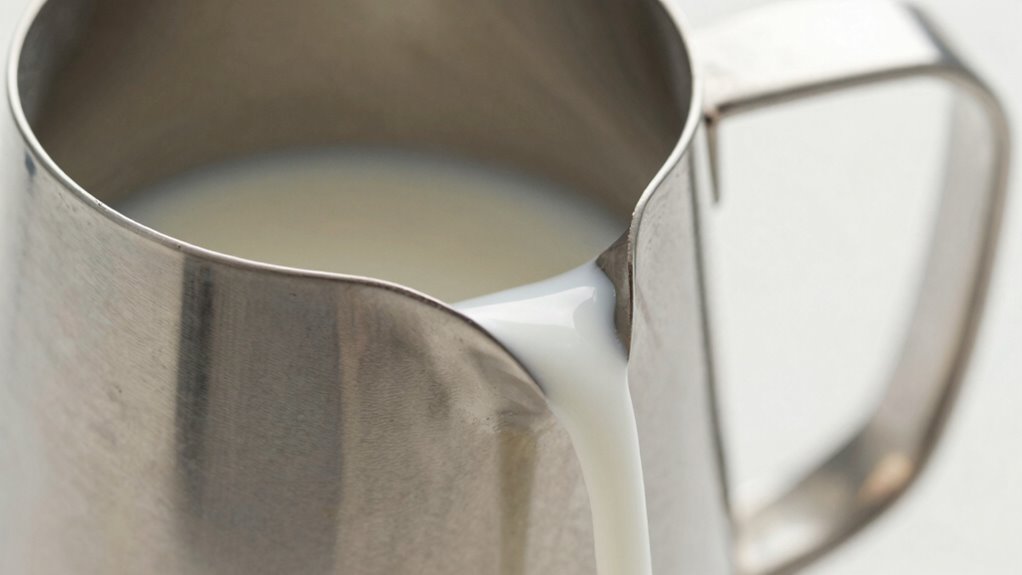
When using pointy spouts, you need to pay attention to your positioning to avoid uneven pours. Overfilling your pitcher can cause spills and make latte art harder, so fill it just right. Additionally, ignoring the spout’s angle can lead to drips or inconsistent flow, disrupting your technique.
Improper Spout Positioning
Improper spout positioning can lead to splattering and uneven milk pours, making it a common mistake when working with pointy spouts. If you don’t angle the spout correctly, you risk disrupting the flow, which affects your control during pouring. Pay attention to your milk temperature and frothing techniques, as these influence how smoothly the milk flows from the pitcher. When the spout isn’t aligned properly, you might struggle to achieve precise designs or even pour milk without creating messes. Keep the spout just above the surface of the milk, angled for ideal flow. Adjust your hand and wrist position to maintain steady control, ensuring a clean, consistent pour every time. Proper spout positioning is key to mastering latte art and ensuring a perfect milk texture.
Overfilling the Pitcher
Overfilling the pitcher can cause issues with control and pour accuracy, especially when using pointy spouts. When you fill the pitcher too high, it becomes harder to manage the flow and maintain precision. Proper filling techniques involve leaving enough space for smooth pouring and foam creation. Your pitcher grip also matters—hold it firmly but comfortably to prevent slipping or tipping. Overfilling can lead to spillage or uneven streams, disrupting your latte art. To avoid this, fill the pitcher only halfway or up to the spout’s base. Keep an eye on the level, and adjust your filling techniques accordingly. This ensures a steady pour and better control, making it easier to achieve consistent, professional results with pointy spouts.
- Use a steady, confident pitcher grip
- Keep filling levels consistent for each pour
- Leave enough space for foaming and steam expansion
- Practice filling techniques to control flow
- Avoid overfilling to prevent spills and uneven streams
Ignoring Spout Angles
Ignoring the angles of your spout can lead to uneven pours and messy latte art. Your spout design affects how smoothly the milk flows, especially with pointy spouts that require precise control. When you neglect to contemplate spout angles, your pouring techniques become inconsistent, making it harder to achieve clean, controlled streams. A misaligned spout forces you to compensate with awkward wrist movements, risking splashes or uneven foam distribution. To get the most from your pitcher, pay attention to the spout’s angle relative to the pitcher body. Practice adjusting your pouring position so the milk flows steadily and precisely. Proper awareness of spout angles helps you develop confident pouring techniques, resulting in better latte art and less frustration during your espresso art sessions.
Top Tips for Mastering Milk Pouring With Pointy Spouts
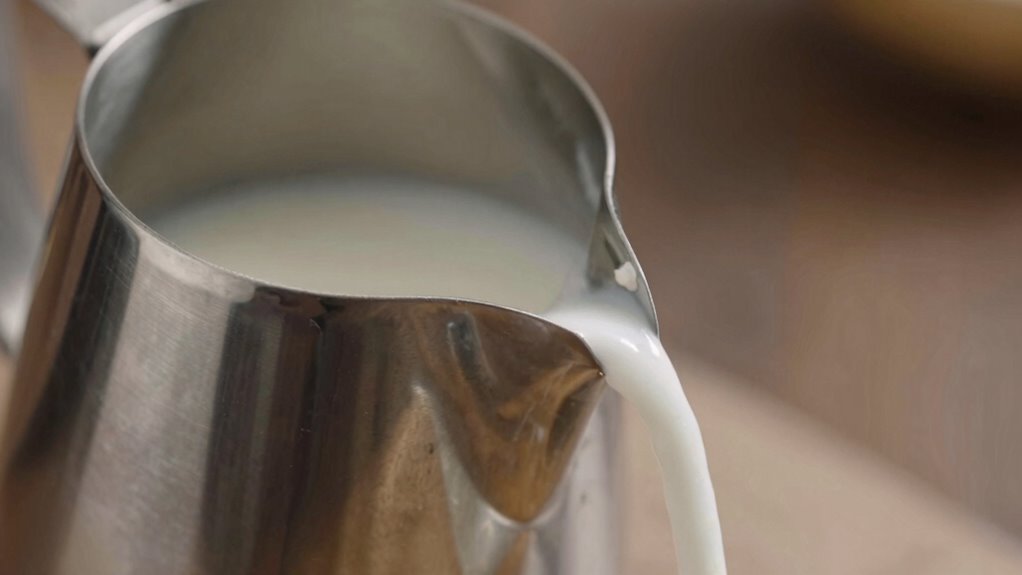
Mastering milk pouring with pointy spouts requires precision and control. To achieve smooth, consistent pours, focus on your milk frothing techniques and the right coffee temperature. Properly frothed milk creates a silky texture that flows easily through the spout, enhancing latte art. Maintain steady hand movements and a consistent pour angle to direct the milk precisely. Warm milk to around 140°F (60°C) for ideal flow without burning the milk or affecting the brew. Practice controlling the speed and height of your pour, especially when creating intricate designs.
- Use a steady hand to keep the spout aligned
- Adjust pour speed based on milk texture
- Keep milk at the right temperature for flow
- Practice with different pour heights
- Focus on the initial flow to shape your design
How to Care for and Maintain Your Pointy Milk Pitcher
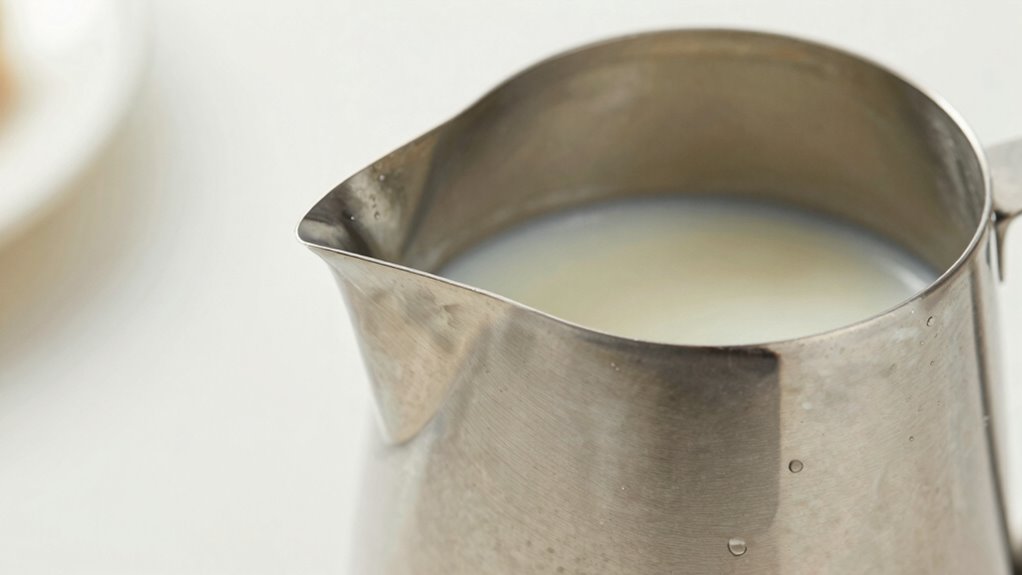
Proper care and maintenance of your pointy milk pitcher guarantee its longevity and peak performance. To assure milk hygiene, wash your pitcher promptly after each use with warm water and mild detergent. Avoid abrasive scrubbers to protect the pitcher’s surface, which maintains its durability. Regularly check for any chips or cracks that could compromise its integrity. Dry it thoroughly to prevent rust or corrosion, especially if it’s metal. Store it in a clean, dry place to keep it in top condition. Here’s a quick guide:
| Maintenance Step | Purpose |
|---|---|
| Hand wash after use | Preserves milk hygiene |
| Use soft sponge | Protects pitcher surface |
| Inspect for damage | Ensures pitcher durability |
| Dry completely | Prevents rust and corrosion |
| Store properly | Maintains longevity |
Do You Need a Pointy Spout to Make Professional-Quality Coffee Art?

While a pointy spout can certainly enhance your ability to create intricate coffee art, it isn’t an absolute requirement for producing professional-quality designs. Your success depends more on milk temperature control, pitcher material, and technique. A well-frothed, microfoam milk at the right temperature (around 140-150°F) is essential for smooth pouring. The pitcher material—stainless steel or ceramic—affects grip and heat retention, influencing pour control. You can still make impressive art with a rounded spout if your technique is precise. Focus on steady, controlled pours and consistent milk texture. Remember, mastering the basics often outweighs the fancy shape of your pitcher. With practice, you’ll develop a feel for your equipment, regardless of spout shape.
Frequently Asked Questions
Can Any Pitcher Shape Create Professional Latte Art?
Not all pitcher shapes can create professional latte art. Your success depends on factors like milk temperature and pitcher capacity, which influence your control and flow. A pitcher with a well-designed spout, such as a pointy one, helps you pour precise, consistent patterns. While shape matters, mastering your technique with the right milk temperature and a suitable capacity pitcher makes all the difference in achieving those intricate latte art designs.
Do Different Milk Types Affect Pouring With Pointy Spouts?
Yes, different milk types affect pouring with pointy spouts. You’ll notice that milk consistency varies, influencing how smoothly you can pour, while pour speed needs adjustment based on the milk’s texture. For example, whole milk creates a velvety pour, making latte art easier, whereas skim milk requires a faster pour to achieve similar effects. Experimenting with milk types helps you master the flow and control for perfect latte art.
Are There Specific Brands Known for Best Pointy Spouts?
Some brands are known for their excellent pointy spouts, thanks to their reputation for quality and customer reviews. You’ll find that brands like Rattleware and Motta consistently receive praise for their precise spouts, making your pouring easier and more controlled. When choosing a brand, check customer reviews to guarantee the spout design meets your needs, and opt for those with solid reputation to enhance your latte art and pouring experience.
How Does Pitcher Material Influence Milk Pouring Control?
Perfect pitchers promote pouring precision, and material influence plays a pivotal role. Think stainless steel’s sleek, sturdy structure offers superior control, helping you pour smoothly and precisely. Meanwhile, ceramic pitchers provide a warm, weighty feel, making steady pouring easier. Plastic pitchers, lighter and less durable, can compromise control, leading to spills. So, choose your material wisely, and master your milk mastery with a pitcher that balances weight and stability for flawless, focused pours.
Can Beginners Effectively Use Pointy Spouts for Latte Art?
Yes, beginners can effectively use pointy spouts for latte art. Focus on maintaining the right milk temperature and a steady pitcher grip to control your pour. The pointy spout helps with precision, making it easier to create detailed designs. Practice your wrist movements and pour slowly, adjusting as needed. With patience, you’ll improve your latte art skills and master beautiful patterns even with a new pitcher shape.
Conclusion
So, next time you’re tempted to stick with that boring, rounded spout, remember: a pointy spout isn’t just about fancy latte art. It’s about embracing the power to control every drip, every swirl—like a true coffee wizard. Or, you know, just impress your friends at brunch. Either way, don’t settle for mediocrity when a simple tip can elevate your brew game. After all, why just pour coffee when you can pour art?