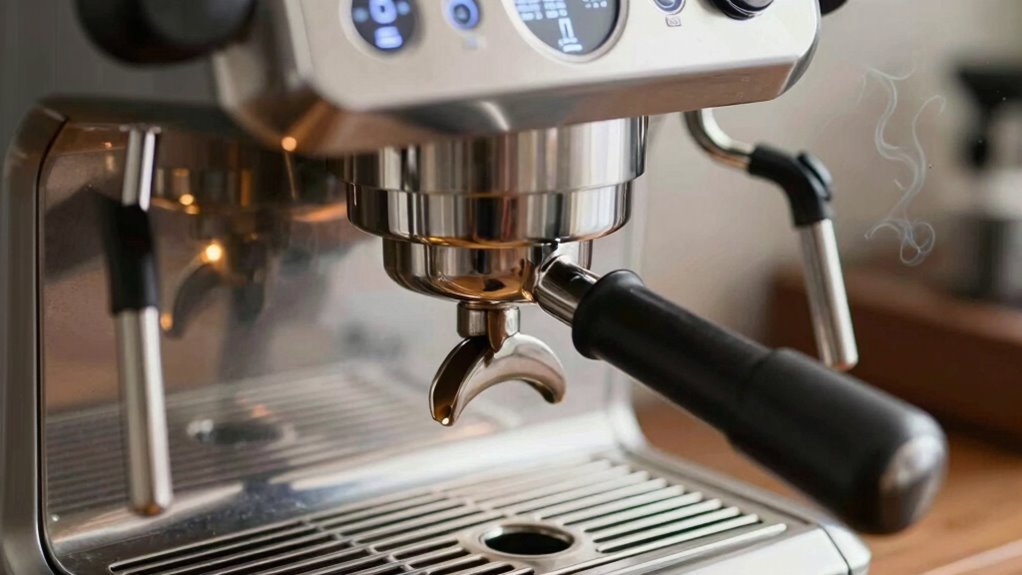

To preheat your portafilter without overheating, start by using hot water or a warming tray to warm it evenly, ensuring it’s warm but not hot to the touch. Avoid overheating by monitoring the temperature and stopping once it feels comfortably warm. Proper preheating helps maintain stable temperature during extraction, but you should also pay attention to grind size and tamping pressure to keep everything balanced. Keep going, and you’ll discover more tips for perfect espresso.

Get kitchen gear delivered free with Prime
- Fast, free delivery on millions of items
- Prime Video, Amazon Music and more included
- Member-only deals all year
Key Takeaways
- Preheat the portafilter with hot water or a warming tray to reach optimal temperature before brewing.
- Avoid overheating by monitoring water temperature and limiting preheat duration.
- Use consistent grind size and tamping pressure to maintain stable resistance and prevent temperature loss.
- Gradually adjust grind size to balance flow rate and heat transfer, preventing overcooling or overheating.
- Regularly check portafilter temperature during preparation and refine preheating techniques accordingly.
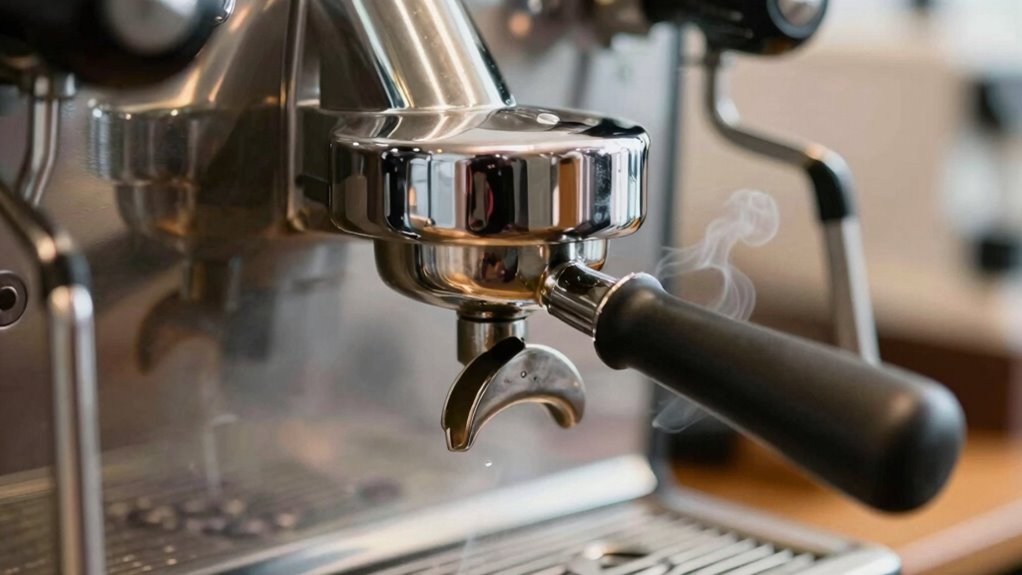
Maintaining the right portafilter temperature is essential for brewing excellent espresso, as it directly affects extraction and flavor. When your portafilter is too cold, the water cools quickly upon contact, resulting in under-extraction and a sour, flat taste. Conversely, if it’s overheated, it can cause over-extraction, leading to bitter, burnt flavors. Achieving the perfect temperature balance involves more than just preheating; it requires attention to details like grind size and tamping pressure, which influence how heat interacts with coffee grounds during extraction. Proper temperature regulation is crucial for consistent results in espresso making. Start by ensuring your portafilter is properly preheated. Many baristas warm it with hot water or a dedicated warming tray. This initial step helps maintain stable temperature during brewing. However, preheating alone isn’t enough; you must also consider how your grind size and tamping pressure influence temperature consistency. Finer grinds increase resistance, requiring more force during tamping. Applying consistent tamping pressure ensures even resistance and prevents channeling, which can cause uneven extraction and temperature fluctuations. If your tamping pressure is inconsistent, the water may flow unevenly through the coffee bed, disrupting temperature stability and affecting flavor. Your grind size plays a crucial role in temperature management. A grind that’s too fine creates high resistance, which can cause the portafilter’s temperature to drop as the water struggles to pass through. This can lead to under-extraction and weak flavors. On the other hand, a grind that’s too coarse reduces resistance, allowing water to flow too quickly, risking over-extraction and bitterness. Finding the right grind size means balancing resistance to maintain a stable temperature and proper extraction. Adjust the grind size gradually until you notice a steady flow rate that allows the water to extract flavors evenly without cooling or overheating the puck. Pay attention to tamping pressure, as it directly influences how heat transfers during extraction. Too much pressure compacts the coffee tightly, increasing resistance and potentially causing the portafilter to cool as water works harder to pass through. Too little pressure results in a loose coffee bed, which can cause uneven extraction and temperature instability. Aim for consistent tamping pressure—around 30 pounds of force—to ensure uniform density and temperature stability. Ultimately, successful portafilter temperature control hinges on a combination of preheating, grind size, and tamping pressure. By maintaining consistent grind size and tamping technique, you help ensure that heat is transferred smoothly and evenly, resulting in a balanced, flavorful espresso. Remember, small adjustments in these factors profoundly impact how your espresso turns out, so pay close attention and refine your technique to achieve that perfect brew every time.
As an affiliate, we earn on qualifying purchases.
Frequently Asked Questions
How Does Ambient Temperature Affect Portafilter Preheating?
Ambient influence plays a significant role in portafilter preheating, as your surroundings’ temperature affects how quickly and evenly it warms. If the room is cold, you might need to adjust your temperature calibration to prevent underheating. Conversely, in a warm environment, reduce preheating time to avoid overheating. Always monitor your portafilter’s temperature closely, considering ambient factors, to guarantee consistent extraction and ideal espresso quality.
What Are the Signs of an Overheated Portafilter?
An overheated portafilter shows signs like temperature fluctuations, making your espresso taste off. You might notice condensation on the portafilter’s surface, indicating it’s too hot. When it’s overheated, it’s like trying to cool a flame—you risk burning your coffee and damaging equipment. Always check the portafilter’s temperature before brewing; if it feels too hot to touch comfortably, it’s time to let it cool down. Remember, a little heat goes a long way.
Can Preheating Damage the Espresso Machine?
Preheating your portafilter doesn’t harm your espresso machine if you do it correctly. Using the right portafilter material, like stainless steel, helps maintain temperature stability, preventing overheating. Be cautious not to leave it too long or set the temperature too high, as this could strain the machine. Proper preheating ensures consistent extraction without risking damage, so always follow your machine’s guidelines for best results.
How Often Should I Reheat My Portafilter?
Think of your portafilter as a dance partner that needs warming up. You should reheat it just enough to maintain temperature consistency, ideally before each shot. Use gentle preheat techniques like rinsing with hot water, avoiding overheating. If you notice your espresso cooling too quickly, reheat it more often. Keep it warm but not hot, like a cozy sweater — this balance ensures ideal extraction and flavor.
Is There a Recommended Preheating Duration for Different Beans?
For different beans, a preheating duration of about 5 to 10 seconds works best, depending on bean freshness and grind consistency. Fresher beans and finer grinds may require shorter preheating to avoid overheating, while slightly older beans or coarser grinds benefit from a slightly longer warm-up. Always monitor your portafilter’s temperature, ensuring it’s warm enough for extraction but not overheated, to preserve flavor.
coffee tamper with pressure gauge
As an affiliate, we earn on qualifying purchases.
As an affiliate, we earn on qualifying purchases.
Conclusion
Remember, a well-preheated portafilter is your silent partner in brewing perfect espresso. If you preheat too much, you risk overheating and losing control; too little, and your shot may suffer. Like a delicate dance, balancing temperature requires attention and finesse. Master this rhythm, and you’ll release the true potential of your beans—turning each cup into a symphony of flavor. After all, in coffee, as in life, harmony is the key to excellence.
As an affiliate, we earn on qualifying purchases.
coffee grinder with adjustable grind size
As an affiliate, we earn on qualifying purchases.
As an affiliate, we earn on qualifying purchases.
Halloween Picks
halloween
As an affiliate, we earn on qualifying purchases.