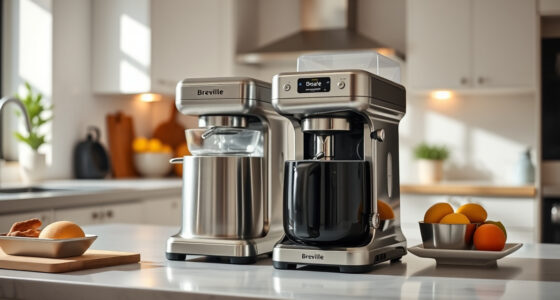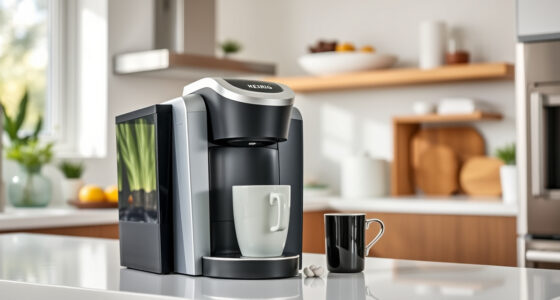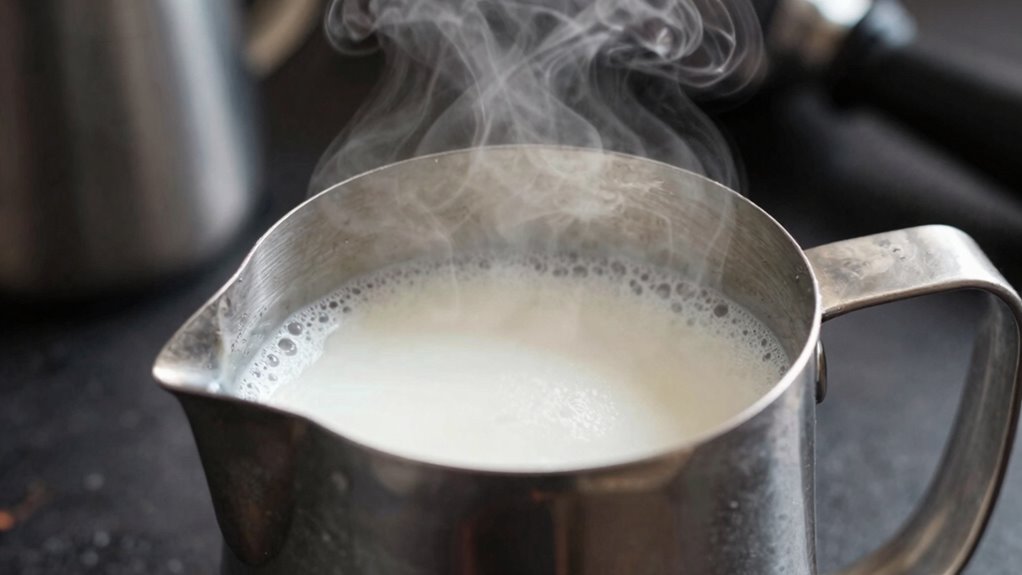

If your milk isn’t foaming even with a strong steam, it’s likely due to temperature issues or improper technique. Milk that’s too cold can prevent proteins and fats from forming stable bubbles, while milk that’s too hot may cause proteins to break down and foam to collapse. Make certain your milk stays within the ideal range of 140°F to 160°F, and position the wand correctly. For more tips on achieving perfect microfoam, keep exploring these key techniques.
Key Takeaways
- Milk temperature may be outside the ideal range (140°F to 160°F), preventing proper foam formation.
- The steam wand might be improperly positioned, either too deep or too close to the surface, hindering microfoam creation.
- Milk quality or freshness issues can affect its ability to foam, resulting in poor or no foam.
- Insufficient or uneven aeration due to technique errors can prevent foam development despite strong steam.
- Residue or blockage in the steam wand can reduce airflow, impacting foam quality even with strong steam.
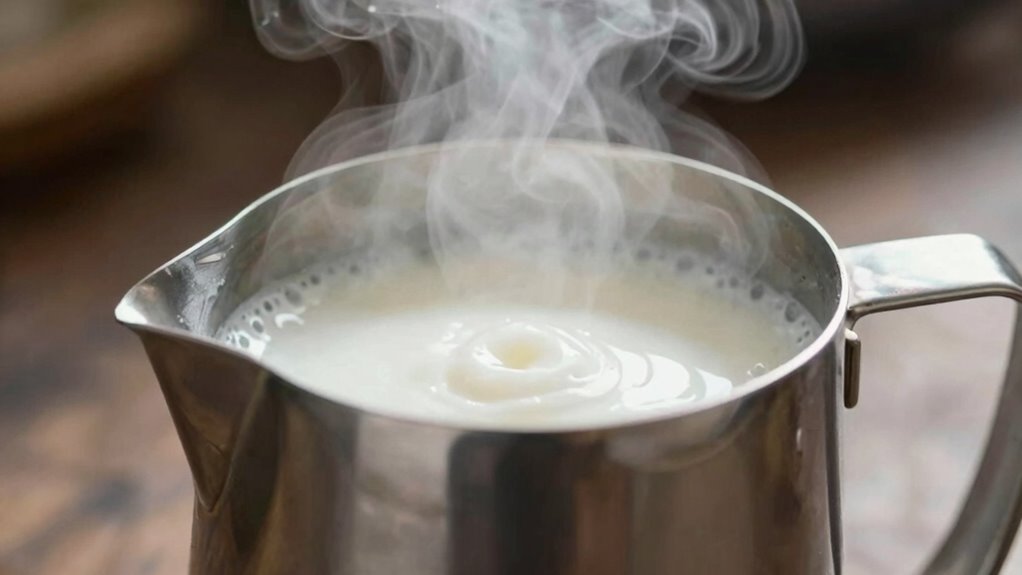
Even when your steam wand feels powerful, milk might still resist forming that creamy foam you’re after. This can be frustrating, especially when you’re aiming for that perfect microfoam to top your coffee. One common reason is the milk temperature. If your milk is too cold, it won’t foam well because the proteins and fats haven’t reached the right temperature to create stable bubbles. Conversely, if it’s too hot, the proteins break down, and the foam collapses quickly. The ideal milk temperature for frothing is between 140°F and 160°F. Use a thermometer to keep track, and stop steaming once you hit that sweet spot. This guarantees the milk is warm enough for proper expansion and foam stability without turning into overheated liquid. Maintaining proper milk temperature is crucial for achieving the perfect foam consistency. Additionally, ensuring the correct steaming technique not only produces better foam but also preserves the milk’s natural sweetness and texture. Another critical factor is steam wand positioning. Even if your steam wand produces a lot of steam, improper placement can prevent proper foam formation. You want to submerge the tip of the wand just below the milk’s surface, at a slight angle, so it introduces air into the milk gently. If the wand is too deep, it won’t incorporate enough air, resulting in flat, thin milk rather than a rich foam. If it’s too close to the surface, you may end up with large bubbles or splattering, which disrupts the microfoam. The goal is to create a vortex in the milk, drawing air in smoothly while heating it evenly. Keep the wand steady, and gently tilt the pitcher to maintain a consistent whirlpool. This technique ensures the milk heats evenly, and the foam develops a creamy, velvety texture. Proper steam wand technique is essential for consistent and high-quality frothing results. Additionally, cleaning the wand regularly prevents milk residue buildup, which can affect airflow and foam quality over time. To achieve the best results, paying attention to milk quality and freshness can also make a noticeable difference in the final foam texture.
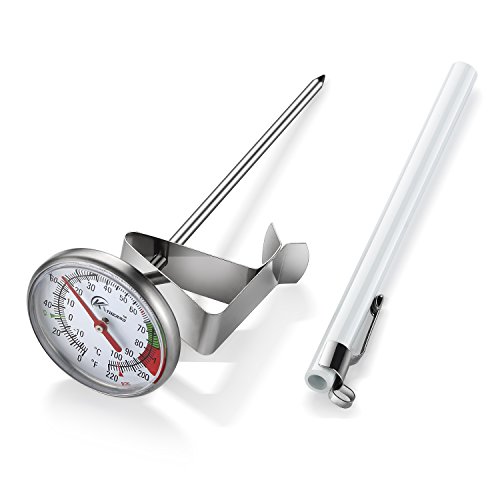
KT THERMO Instand Read 2-Inch Dial Thermometer,Best for The Coffee Drinks,Chocolate Milk Foam
- Multi-stage clip design: Adjusts for easy temperature reading
- Safe, simple measurement: Accurately measures coffee and milk foam
- Wide temperature range: 0°F to 220°F for boiling or freezing
As an affiliate, we earn on qualifying purchases.
As an affiliate, we earn on qualifying purchases.
Frequently Asked Questions
Can Milk Temperature Affect Frothing Quality?
Yes, milk temperature can affect frothing quality. If the frothing temperature is too high or too low, it impacts the milk’s acidity and ability to foam properly. When milk gets too hot, its proteins break down, reducing froth stability. Conversely, too cold milk doesn’t froth well. Maintain the ideal frothing temperature, around 140°F to 155°F, to optimize milk acidity and achieve creamy, stable foam.
Is It Better to Use Fresh or Aged Milk for Frothing?
Using fresh milk is your best bet for perfect frothing, as it creates the most stable and velvety froth. Fresh milk’s natural sugars and proteins enhance froth stability, making your foam last longer and stay creamy. Aged milk, on the other hand, can produce weak, frothy bubbles that quickly deflate. So, for that cafe-quality microfoam, always choose fresh milk—it’s the secret to barista-worthy drinks.
Does the Type of Milk (Dairy vs. Plant-Based) Influence Foaming?
Yes, the type of milk, whether dairy or plant-based, influences foaming because of differences in milk texture. Dairy milk, especially whole milk, generally produces creamier, longer-lasting foam. Alternative milks like almond, soy, or oat milk can vary widely in their ability to foam due to their unique compositions. You might find some plant-based options don’t froth as well, so experimenting helps you find the best fit for your preferred foam quality.
How Does Milk Fat Content Impact Foam Stability?
Think of milk like a lively party—milk fat acts as the graceful host, stabilizing foam. Higher fat content, with more fat globules, creates richer, more stable foam, while lower fat milk can produce thin, fleeting bubbles. Milk protein also plays a key role, forming a network that traps air. So, if your foam collapses quickly, try using milk with higher fat and protein levels to keep that foam lively and lasting.
Can Water Quality Affect the Frothing Process?
Yes, water quality can affect the frothing process. Water impurities and high mineral content can interfere with steam delivery and create uneven heating, making it harder to achieve good foam. Minerals like calcium and magnesium can also affect the milk’s texture and stability. Using clean, filtered water helps guarantee consistent frothing, giving you smooth, stable foam every time.

Espresso Machine Cleaning Brush with 36 Inch Silicone Hose Steam Wand Tool
- Multi-Use Steam Brush: Effective for espresso steam wands and group heads
- 36-Inch Silicone Hose: Flexible, long reach, replaceable head
- Thorough Cleaning Bristles: Efficient, scratch-free cleaning for delicate surfaces
As an affiliate, we earn on qualifying purchases.
As an affiliate, we earn on qualifying purchases.
Conclusion
Remember, even with strong steam, if your milk isn’t properly prepared, it won’t foam well. Like trying to start a fire with wet wood, the best tools and conditions matter. Make sure your milk is fresh, at the right temperature, and you’re using the right technique. With patience and attention to detail, you’ll eventually get that perfect froth. After all, “You can’t make an omelette without breaking eggs,” and sometimes, it takes a little trial and error to master the art.
milk frothing pitcher with temperature guide
As an affiliate, we earn on qualifying purchases.
As an affiliate, we earn on qualifying purchases.
KT THERMO Instand Read 2-Inch Dial Thermometer,Best for The Coffee Drinks,Chocolate Milk Foam
- Multi-stage clip design: Adjusts for easy temperature reading
- Safe, simple measurement: Accurately measures coffee and milk foam
- Wide temperature range: 0°F to 220°F for boiling or freezing
As an affiliate, we earn on qualifying purchases.
As an affiliate, we earn on qualifying purchases.