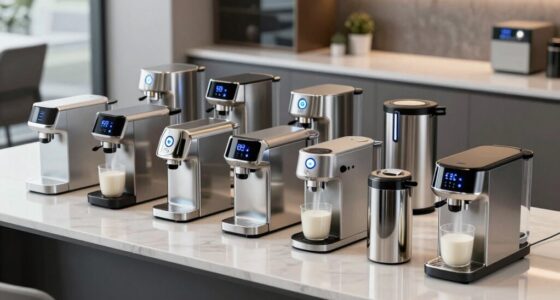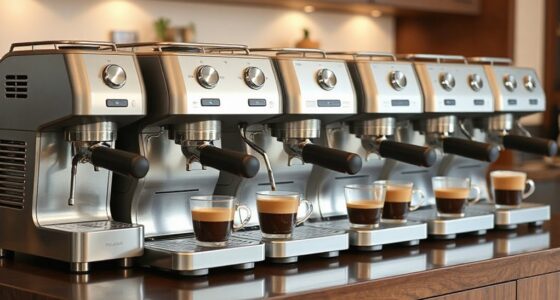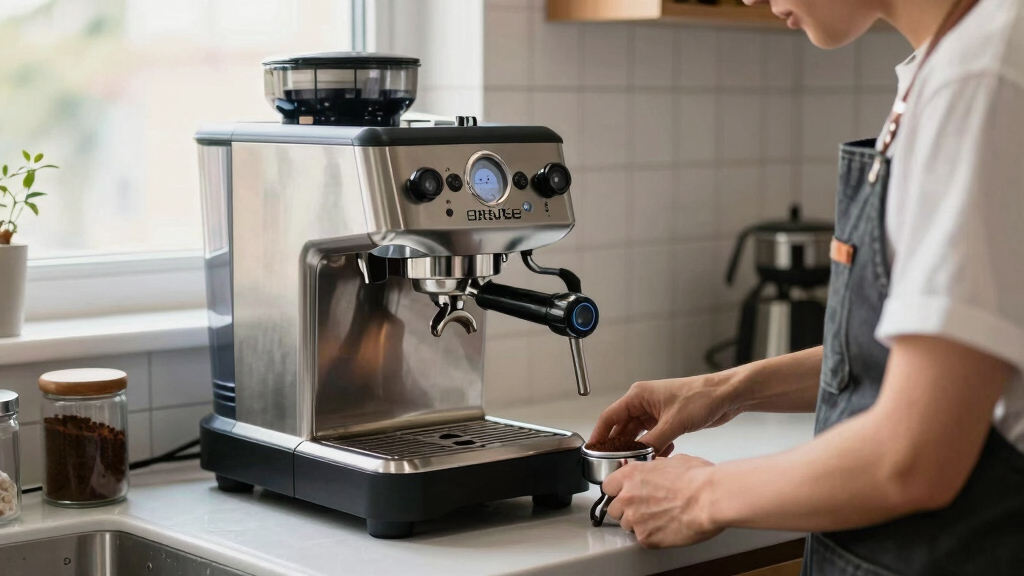

For a 58mm espresso machine upgrade from Breville, I’d start with the Fellow Espresso Series 1 for its pressure-profiling focus, while the Breville Barista Pro suits buyers who want a quicker workflow and the Gevi Dual Boiler appeals to those seeking simultaneous brewing and steaming. The right choice depends on what feels limiting now: control, speed, milk-drink capacity, or the convenience of an integrated grinder. A 58mm portafilter can open up wider accessory compatibility, but it does not automatically mean better espresso or a meaningful upgrade from every Breville model. I compare the six machines by workflow, control, grinder setup, and the compromises attached to each. Read on for the full breakdown and help matching a machine to your routine.

Get kitchen gear delivered free with Prime
- Fast, free delivery on millions of items
- Prime Video, Amazon Music and more included
- Member-only deals all year
Complete the kit



Key Takeaways
- Fellow Espresso Series 1 is the clearest choice for buyers prioritizing pressure profiling and hands-on shot control over an all-in-one setup.
- Breville Barista Pro offers a more direct workflow step up from the Barista Express, but its built-in grinder means less freedom to choose a separate grinder.
- Gevi Dual Boiler stands apart for buyers who make milk drinks back to back; its dual-boiler design addresses workflow more directly than a change in portafilter size.
- Breville Barista Touch emphasizes guided operation and convenience, making it a better fit for buyers seeking easier repetition than deeper manual control.
- AMZCHEF with Grinder brings many grind settings in an integrated package, while the BES870 is better treated as a familiar baseline than an upgrade for current Barista Express owners.
| AMZCHEF Espresso Machine with Grinder, 1500W, 40 Grind Settings |  | Best All-in-One Feature Set | Portafilter: 58mm | Grinder: 40 settings; 40mm conical burr | Power: 1500W | VIEW LATEST PRICE | See Our Full Breakdown |
| Breville BES870BSXL Barista Express Espresso Machine, Black Sesame |  | Best Familiar Breville, Not a 58mm Upgrade | Portafilter: 54mm stainless steel | Bean hopper: 1/2 lb | Water tank: 67 oz | VIEW LATEST PRICE | See Our Full Breakdown |
| Breville Barista Pro Espresso Machine with Built-In Grinder, Brushed Stainless Steel |  | Best Faster Breville Workflow | Model: BES878BSS | Portafilter: 54mm Breville format | Heating system: ThermoJet; 3-second heat-up | VIEW LATEST PRICE | See Our Full Breakdown |
| Fellow Espresso Series 1 – Espresso Machine, Pressure Profiling |  | Best Guided 58mm Upgrade | Portafilter: 58mm bottomless | Coffee input: Ground coffee | Water capacity: 2L | VIEW LATEST PRICE | See Our Full Breakdown |
| Gevi Dual Boiler Espresso Machine With Built‑In Burr Grinder |  | Best for Simultaneous Brew and Steam | Portafilter: 58mm | Boiler design: Dual boiler | Grinder: Built-in burr grinder with 31 grind levels | VIEW LATEST PRICE | See Our Full Breakdown |
| Breville BES880BSS Barista Touch Espresso Machine, Brushed Stainless Steel |  | Best for Guided, Milk-Forward Upgrades | Portafilter size: 54mm | Heating system: ThermoJet | Temperature control: PID | VIEW LATEST PRICE | See Our Full Breakdown |
| 58mm espresso machine for upgrade from Breville | Portafilter | Grinder | Dimensions | Temperature control |
|---|---|---|---|---|
| AMZCHEF Espresso Machine with | 58mm | 40 settings; 40mm conical burr | 10.4 × 13.0 × 15.9 in | — |
| Breville BES870BSXL Barista Ex | 54mm stainless steel | Integrated conical burr grinder | — | Digital PID |
| Breville Barista Pro Espresso | 54mm Breville format | Integrated precision conical burr grinder | 13 × 14 × 16 in (D × W × H) | PID, ±2°C |
| Fellow Espresso Series 1 | 58mm bottomless | — | 23.07 × 14.57 × 12.6 in (D × W × H) | — |
| Gevi Dual Boiler Espresso Mach | 58mm | Built-in burr grinder with 31 grind levels | 18.85 × 15.66 × 18.85 in (D × W × H) | NTC and PID for extraction and milk frothing |
| Breville BES880BSS Barista Tou | — | Integrated precision conical burr grinder | 12.7 in deep × 15.5 in wide × 16 in high | PID |
More Details on Our Top Picks
AMZCHEF Espresso Machine with Grinder, 1500W, 40 Grind Settings
For a Breville owner who wants to move to a 58mm portafilter without buying a separate grinder, the AMZCHEF bundles a 40-setting conical burr grinder, adjustable temperature, pre-infusion, and a touchscreen. Its screen also remembers preferred settings, which can make repeat drinks less fiddly than on the manual-first Breville Barista Express. The machine adds cold-brew and hot-water options, so it covers more drink styles than the espresso-focused Breville models here.
The tradeoff is that this is still an all-in-one machine with a plastic exterior, and its listed 20-bar pressure figure does not by itself establish better espresso than a competitor. Its 58mm format is a meaningful move from Breville’s 54mm ecosystem, but buyers should check accessory compatibility rather than assume existing baskets or tools will fit. I’d choose it for feature breadth, not for a proven build-quality upgrade.
Pros:- 58mm portafilter offers a larger-format workflow than the 54mm Barista Express.
- Built-in 40-setting conical burr grinder avoids the need to source a grinder separately.
- Touchscreen, temperature adjustment, pre-infusion, and saved settings support repeatable adjustments.
- Cold-brew, hot-water, and milk-drink functions broaden its use beyond espresso.
Cons:- Plastic exterior may feel like a less substantial upgrade than a stainless-steel machine.
- Built-in grinder ties grinder replacement and machine replacement together.
- The listed 20-bar pump figure is not a substitute for evidence of controlled extraction performance.
Best for: Breville owners seeking a 58mm portafilter, built-in grinder, and one machine for espresso, milk drinks, and cold coffee.
Not ideal for: Buyers prioritizing premium materials, a separate grinder for easier upgrades, or established compatibility with their existing 54mm Breville accessories.
- Portafilter:58mm
- Grinder:40 settings; 40mm conical burr
- Power:1500W
- Water tank:1.8L, removable
- Controls:Touchscreen with grind time, brew time, and temperature adjustment
- Pre-infusion:Two-stage adjustable
- Heating system:1500W; listed 30-second heat-up
- Dimensions:10.4 × 13.0 × 15.9 in
Our verdict“Choose the AMZCHEF if you want a 58mm all-in-one with broad drink options and guided controls, rather than a clearly documented premium-build upgrade.”
Breville BES870BSXL Barista Express Espresso Machine, Black Sesame
The Barista Express is the useful reference point for this roundup, but it does not meet the 58mm requirement: its supplied portafilter is 54mm. That matters if the reason for leaving a Breville is access to the wider 58mm accessory ecosystem. Against the newer Breville Barista Pro, the Express keeps the familiar integrated grinder, PID temperature control, pre-infusion, and manual steam wand, but lacks the Pro’s 3-second ThermoJet heat-up and LCD workflow display.
I’d include it only for someone replacing an older machine with the same familiar setup, not for a buyer specifically upgrading to 58mm. Its grinder and espresso controls make it a capable all-in-one, while the smaller portafilter limits accessory continuity with 58mm machines such as the Fellow Espresso Series 1. Manual dosing and steaming also ask more of the user than Fellow’s guided prompts and temperature-sensing wand.
Pros:- Integrated conical burr grinder keeps grinding and brewing in one machine.
- PID temperature control and pre-infusion give users useful extraction controls.
- Manual steam wand supports hands-on milk texturing.
- Includes single- and dual-wall baskets plus routine cleaning accessories.
Cons:- 54mm portafilter does not satisfy the roundup’s 58mm upgrade criterion.
- Manual grinding, dosing, and milk texturing create a learning curve.
- Requires regular grinder and machine cleaning.
Best for: A Breville owner replacing a worn Barista Express who wants the same integrated-grinder workflow and is comfortable staying with 54mm.
Not ideal for: Anyone whose upgrade goal is a 58mm portafilter or a faster warm-up and more guided operation.
- Portafilter:54mm stainless steel
- Bean hopper:1/2 lb
- Water tank:67 oz
- Power:1600W
- Temperature control:Digital PID
- Grinder:Integrated conical burr grinder
- Steam wand:Manual microfoam wand
- Included accessories:Single- and dual-wall baskets, tamper, milk jug, cleaning tools, and water filter
Our verdict“Buy the Barista Express only if you want a familiar Breville replacement and are willing to forgo the 58mm format this roundup targets.”
Breville Barista Pro Espresso Machine with Built-In Grinder, Brushed Stainless Steel
The Barista Pro is a stronger choice than the Barista Express for buyers who want a quicker daily routine, but it is still a 54mm Breville, not a 58mm upgrade. Its ThermoJet reaches extraction temperature in three seconds, while the LCD shows grinding and extraction progress; together, those features cut waiting and make the sequence easier to follow than on the Express. PID control and low-pressure pre-infusion keep meaningful shot adjustments in the workflow.
Compared with the Fellow Espresso Series 1, the Pro pairs its grinder with the machine, while Fellow offers guided shot feedback and pressure profiling but requires ground coffee. That integrated grinder is convenient, yet it also keeps the Pro in Breville’s smaller portafilter ecosystem. I’d recommend it to someone who values speed and a familiar all-in-one setup more than the specific accessory flexibility of a 58mm machine.
Pros:- Three-second ThermoJet heat-up shortens the wait before brewing.
- PID control and low-pressure pre-infusion support more controlled extraction.
- LCD progress display makes grinding and brewing steps easier to track.
- Integrated conical burr grinder and manual steam wand cover the core espresso workflow.
Cons:- 54mm portafilter falls short of the roundup’s 58mm upgrade goal.
- Manual preparation and milk texturing still require practice.
- Half-pound hopper may call for frequent refilling for heavy use.
Best for: Breville owners who want a faster warm-up, an integrated grinder, and a clearer display while keeping a familiar manual workflow.
Not ideal for: Buyers set on a 58mm portafilter, or those who want a separate grinder and machine for independent upgrades.
- Model:BES878BSS
- Portafilter:54mm Breville format
- Heating system:ThermoJet; 3-second heat-up
- Temperature control:PID, ±2°C
- Grinder:Integrated precision conical burr grinder
- Bean hopper:1/2 lb
- Water tank:67 oz
- Dimensions:13 × 14 × 16 in (D × W × H)
Our verdict“Choose the Barista Pro for a faster, more informative Breville workflow, but skip it if moving to 58mm is non-negotiable.”
Fellow Espresso Series 1 – Espresso Machine, Pressure Profiling
For a Breville owner who wants to learn more about extraction rather than simply change portafilter size, the Fellow Series 1 is the most instructive pick here. Its 58mm bottomless portafilter changes the accessory format, while pressure profiling, controlled flow, and adjustable temperature offer more direct ways to shape a shot than the Barista Express’s listed controls. On-screen shot feedback suggests grind changes when a pull runs too fast or slow, giving beginners a practical next step instead of guesswork.
Unlike the grinder-equipped AMZCHEF and Barista Pro, Fellow takes ground coffee, so you need a separate grinder and counter space for it. The trade is a more modular setup and guided learning, plus a temperature-sensing steam wand that stops at the chosen milk temperature. Its listed dimensions are deep, however, and the guided interface may feel less appealing to experienced users who prefer a fully manual routine.
Pros:- 58mm bottomless portafilter provides the format sought by this roundup.
- Pressure profiling and controlled flow add shot-shaping options beyond basic brew controls.
- Shot feedback and recipes help newer users respond to fast or slow extractions.
- Temperature-sensing steam wand stops at the selected milk temperature.
Cons:- Ground-coffee input means a separate grinder is required.
- Listed depth of 23.07 inches calls for substantial counter space.
- Guided prompts may be less appealing to experienced users who prefer manual control.
Best for: Breville owners ready to buy a separate grinder and wanting a 58mm platform with shot guidance, pressure control, and assisted milk steaming.
Not ideal for: Buyers who need a built-in grinder, a shallow counter footprint, or a fully hands-on machine without on-screen prompts.
- Portafilter:58mm bottomless
- Coffee input:Ground coffee
- Water capacity:2L
- Heating time:Under 2 minutes
- Brew controls:Pressure profiling, controlled flow, and adjustable temperature
- Milk steaming:Temperature-sensing assisted steam wand
- Dimensions:23.07 × 14.57 × 12.6 in (D × W × H)
- Included accessories:18g single-wall and pressurized baskets, tamper, 10 oz pitcher, and cleaning items
Our verdict“Pick the Fellow Series 1 if you want a guided 58mm upgrade and are prepared to pair it with a separate grinder.”
Gevi Dual Boiler Espresso Machine With Built‑In Burr Grinder
The Gevi’s defining difference is its dual-boiler design: separate brewing and steaming systems are intended to let you prepare espresso and milk without waiting for one function to follow the other. For a Breville owner who regularly makes several milk drinks, that workflow is more relevant than another collection of single-boiler controls. It also checks the core upgrade box with a 58mm commercial-style portafilter, built-in burr grinder, adjustable shot volume, and pre-infusion.
Compared with the Fellow Espresso Series 1, Gevi includes a grinder but does not list Fellow’s shot feedback or pressure profiling. Its NTC and PID temperature controls cover brew and milk functions, though the supplied details do not specify boiler capacity or a heat-up time. The listed footprint is also notably large, so I’d verify counter clearance before choosing it over the more compact AMZCHEF.
Pros:- Dual-boiler layout is designed to support brewing and steaming without the same changeover workflow as a single boiler.
- 58mm commercial-style portafilter meets the roundup’s upgrade format.
- Built-in grinder offers 31 grind levels and accepts whole beans.
- NTC and PID controls are specified for both extraction and milk frothing.
Cons:- Large listed dimensions require careful counter-space checks.
- Product details do not state boiler capacities or heat-up time.
- No shot-feedback or pressure-profiling guidance is listed, unlike the Fellow Series 1.
Best for: Households making several milk-based drinks in sequence that want a 58mm machine with an integrated grinder and separate brew and steam systems.
Not ideal for: Small-kitchen owners, or buyers who want documented shot-feedback features and a compact all-in-one footprint.
- Portafilter:58mm
- Boiler design:Dual boiler
- Grinder:Built-in burr grinder with 31 grind levels
- Temperature control:NTC and PID for extraction and milk frothing
- Shot functions:Adjustable shot volume and pre-infusion
- Dimensions:18.85 × 15.66 × 18.85 in (D × W × H)
- Weight:15 lb
- Included accessories:Milk pitcher, portafilter, four filters, measuring spoon, tamper, and cleaning tool
Our verdict“Choose the Gevi if simultaneous brew-and-steam workflow and an integrated grinder matter more than a compact footprint or guided shot coaching.”
Breville BES880BSS Barista Touch Espresso Machine, Brushed Stainless Steel
The Barista Touch is a convenience-focused upgrade for Breville owners who want a more guided drink-making routine, not a move to a 58mm workflow: its included portafilter is 54mm. The touchscreen walks you through grind, brew, and milk, while the automatic steam wand lets you set milk temperature and texture. That makes repeatable lattes easier than on the Barista Express, which relies more on manual milk steaming and physical controls. Its ThermoJet heating system is specified to reach extraction temperature in three seconds, and PID temperature control supports consistent brewing. The tradeoff is less hands-on control over milk than a fully manual setup, alongside a smaller portafilter than the 58mm machines this roundup targets. Choose it for streamlined drinks and saved recipes; skip it if your upgrade priority is standard 58mm accessories or deeper manual practice.
Pros:- Touchscreen guides the grind, brew, and milk steps and supports up to eight custom drinks.
- Automatic steam wand offers adjustable milk temperature and texture for repeatable milk drinks.
- ThermoJet heating system is specified to reach extraction temperature in three seconds.
- Integrated conical burr grinder, PID temperature control, and low-pressure pre-infusion are built in.
Cons:- The included 54mm portafilter does not meet the roundup’s 58mm upgrade target.
- Automatic milk texturing offers less direct steaming practice than a fully manual workflow.
- Its touchscreen and guided features may be unnecessary for buyers who prefer simple physical controls.
Best for: Breville owners who make milk drinks often and want touchscreen guidance, adjustable automatic milk texturing, and saved drink settings.
Not ideal for: Buyers specifically seeking a 58mm portafilter and compatibility with standard 58mm baskets or accessories; this model includes a 54mm portafilter.
- Portafilter size:54mm
- Heating system:ThermoJet
- Temperature control:PID
- Grinder:Integrated precision conical burr grinder
- Water tank capacity:67 oz
- Bean hopper capacity:1/2 lb
- Power:1680 watts
- Dimensions:12.7 in deep × 15.5 in wide × 16 in high
Our verdict“Choose the Barista Touch for guided, customizable milk drinks, but skip it if moving to a 58mm portafilter is your main reason for upgrading.”
How We Picked
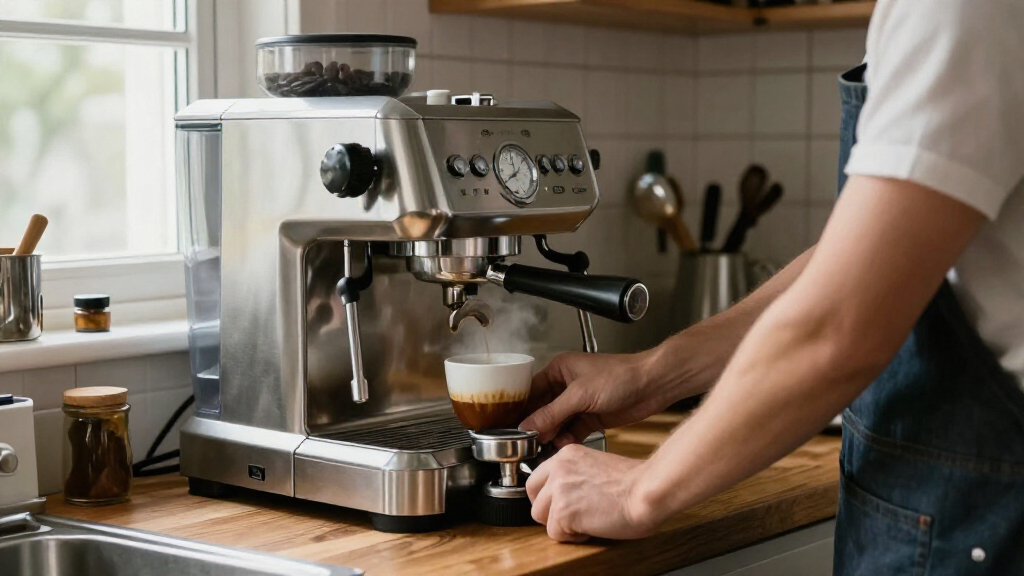
I ranked these machines around the specific needs of a Breville owner looking for a meaningful 58mm-platform upgrade. I weighed portafilter and accessory compatibility alongside the differences a buyer will feel day to day: shot control, heating and milk workflow, grinder flexibility, ease of use, and maintenance demands. A larger portafilter alone did not count as an upgrade; I looked for a clear gain in control, speed, capacity, or convenience.
The Fellow Espresso Series 1 leads for buyers who want a distinct move toward pressure control, while the Barista Pro and Gevi Dual Boiler rank highly for different workflow needs. The Barista Touch favors guided use, and the AMZCHEF prioritizes an integrated grinder setup. I placed the Barista Express last for this particular search because it is a familiar starting point for many Breville owners, not an obvious upgrade from the same machine. Features and model configurations can vary, so buyers should verify the exact portafilter size and included accessories for the version they plan to buy.
| 58mm espresso machine for upgrade from Breville | Temperature control |
|---|---|
| AMZCHEF Espresso Machine with | — |
| Breville BES870BSXL Barista Ex | Digital PID |
| Breville Barista Pro Espresso | PID, ±2°C |
| Fellow Espresso Series 1 | — |
| Gevi Dual Boiler Espresso Mach | NTC and PID for extraction and milk frothing |
| Breville BES880BSS Barista Tou | PID |
Factors to Consider When Choosing Best 58mm Espresso Machine For Upgrade From Breville
Before choosing, decide what you want to improve over your current Breville. Portafilter size is only one part of the upgrade; your grinder, brewing control, temperature workflow, and daily routine may matter more. These checks can help you avoid paying for a feature that does not solve your actual bottleneck.
Check the Exact Portafilter and Accessory Fit
Do not assume that a machine described as a 58mm model will accept every 58mm basket, tamper, or portafilter accessory you already own. Basket depth, ear shape, portafilter locking angle, and manufacturer-specific fittings can differ even when the nominal diameter matches. Before buying, check the machine manual and confirm compatibility for the exact accessory you plan to reuse. If you are upgrading from a Breville with a smaller basket, budget for a compatible tamper and baskets rather than treating your current tools as a guaranteed fit. A change in diameter can broaden accessory choices, but it does not by itself improve extraction. Prioritize confirmed fit over a general claim of professional-style sizing.
Decide Whether to Keep or Replace Your Grinder
An integrated grinder can reduce counter clutter and simplify the routine, but it ties your grinder choice to the espresso machine. A separate grinder gives you more freedom to upgrade one component at a time and can remain useful if you later change machines. Before choosing an all-in-one model, ask whether your current grinder is actually the weak link: inconsistent dosing, limited adjustment, or difficulty dialing in may call for a grinder change more than a new machine. Also account for how you make coffee, since switching between espresso and other brew methods can make a dedicated setup less convenient. Built-in grind-setting counts are not a direct measure of grind quality or adjustment precision. Choose based on the workflow and flexibility you need, not the largest number on a spec sheet.
Match Heating Design to Your Milk-Drink Routine
Heating architecture shapes how comfortably a machine handles drinks that combine espresso and steamed milk. If you often prepare several milk drinks in succession, simultaneous or quicker brew-and-steam operation can matter more than fine-grained shot features. Buyers who mainly drink straight espresso may get more value from brew control and consistency than from a machine designed around high-volume milk workflow. A dual-boiler layout can reduce waiting between brewing and steaming, but it may add complexity and more equipment to maintain. Think about your usual number of drinks per session, not an occasional hosting scenario. The right design is the one that removes friction from your normal routine.
Choose the Kind of Control You Will Actually Use
Pressure profiling and other manual adjustments can give experienced users more ways to shape a shot, but extra control also asks for more experimentation. Guided programs and simplified interfaces can make repeatable drinks easier for households where several people use the machine. Neither approach is automatically better: a highly adjustable machine can feel wasted if you prefer a consistent preset routine, while a guided machine can feel limiting if you want to change variables shot by shot. Consider whether you enjoy recording recipes and dialing in coffee or mainly want a dependable morning drink. Keep learning time in your comparison alongside features. Buy for the level of involvement you will sustain, not the most advanced-looking control panel.
Account for Counter Space and Maintenance
Machines with integrated grinders and more elaborate heating systems can take up more space and introduce extra areas to clean. Measure the available counter depth and height, including room to fill the water tank and open any lid or hopper. Check how the drip tray, grinder chute, and steam wand are accessed; awkward cleanup can make a sophisticated machine less pleasant to use every day. A machine with fewer integrated parts may leave room for a separate grinder but can spread the setup across a wider area. Also check water-filter availability and the manufacturer’s cleaning schedule before committing. A realistic maintenance routine is more useful than a feature you rarely touch.
Spend on the Bottleneck, Not the Upgrade Label
“Upgrade” can mean better shot control, faster drinks, more convenient grinding, or simply a different portafilter ecosystem. Identify which of those is missing from your current setup and compare machines against that single need first. If your Breville already makes espresso you enjoy, replacing the whole machine may not help as much as improving the grinder, baskets, or puck-preparation tools. If workflow is the frustration, a machine that speeds up brewing and steaming may offer a more noticeable change than a model with additional shot adjustments. Leave room in your plan for compatible accessories and a grinder if the machine does not include one. Paying more makes sense only when the added capability changes how you make coffee.
Frequently Asked Questions
Will a 58mm machine automatically make better espresso than my Breville?
No. Portafilter diameter affects accessory options and basket format, but it does not guarantee better extraction or more consistent shots. Coffee quality also depends on the grinder, fresh beans, puck preparation, temperature stability, and dialing in. If your current Breville is producing good shots, changing to a 58mm machine may feel more like a change in workflow than a leap in cup quality. Choose a machine for a specific improvement you can name, such as pressure control or faster milk-drink preparation.
Is the Barista Express a real upgrade if I already own one?
For most current Barista Express owners, another BES870 is a replacement rather than a meaningful upgrade. It may suit someone replacing a worn machine or seeking the same familiar integrated workflow in a different configuration, but the core ownership proposition remains similar. If you want a new capability, compare machines that change shot control, speed, or brew-and-steam workflow. You could also improve the grinder or accessories separately if those are the limits you notice. Check the exact model specifications before assuming a different finish or listing represents a different machine.
Should I choose a built-in grinder or buy a separate one?
A built-in grinder is a sensible choice when you value a compact, coordinated setup and want fewer separate purchases. A separate grinder is usually the more flexible path if you expect to change machines, use multiple brew methods, or upgrade grinding independently. The key question is whether your current grinder limits your espresso: if it does, compare grinder performance and adjustment behavior rather than relying on the number of settings. An integrated machine can still be convenient, but its grinder cannot be swapped as freely as a standalone unit. Include counter space, cleaning, and future upgrade plans in the decision.
Is pressure profiling worth choosing over a dual boiler?
These features solve different problems. Pressure profiling gives you more ways to shape the brewing process, which suits a buyer who enjoys experimenting with recipes and coffee variables. A dual boiler is more directly useful when you frequently alternate between espresso extraction and steaming milk, especially for several drinks in a row. If you mostly make milk drinks and want less waiting, prioritize workflow; if you focus on dialing in espresso, pressure control may be more appealing. Neither feature substitutes for a capable grinder or careful preparation.
What should I verify before reusing my Breville accessories?
Confirm the portafilter diameter, basket dimensions, and portafilter fitting for the exact machine and accessory combination. A matching nominal size does not always mean the basket depth or portafilter ears will fit correctly. Check compatibility with the manufacturer or seller, particularly for tampers, dosing funnels, and replacement baskets. Also confirm what comes in the box so you do not buy tools that are already included—or assume an accessory is compatible when it is not. Set aside room in your upgrade plan for replacements if the fit cannot be verified.
Conclusion
My best overall pick is the Fellow Espresso Series 1 for Breville owners whose main goal is more hands-on pressure control. Choose the Gevi Dual Boiler as the best fit for milk-drink workflow, and the Breville Barista Pro as the best practical step up if you want a faster integrated routine. The Barista Touch is my beginner-friendly choice for buyers who value guided operation, while the AMZCHEF is the integrated-grinder alternative for shoppers seeking an all-in-one setup. For best value, I’d first identify whether a grinder or accessory upgrade solves your problem before replacing the machine; the Barista Express makes more sense as a familiar replacement than as an upgrade from itself. Pick the machine that addresses your biggest daily frustration, then confirm portafilter and accessory compatibility before buying.