Minerals like calcium, magnesium, and sodium profoundly influence water’s mouthfeel and its overall sensory profile. They affect how water feels on your palate—making it seem crisp, smooth, or sometimes metallic. The levels and interactions of these minerals determine water’s viscosity, freshness, and balance, shaping your drinking experience. If you want to understand how mineral content can enhance or alter your water’s texture and taste, there’s more to uncover just ahead.
Key Takeaways
- Minerals like calcium and magnesium influence water’s viscosity, creating smoother or more textured mouthfeel sensations.
- Mineral solubility determines how minerals interact with water, affecting texture and perceived smoothness or grittiness.
- The balance of minerals impacts bubble formation and gas retention, contributing to water’s lively or flat mouthfeel.
- Calcium promotes microcrystal formation, adding a velvety or grainy feel to the water’s texture.
- Proper mineral composition enhances water’s overall sensory profile, shaping perceptions of crispness, freshness, and softness.
How Do Minerals Influence Water’s Mouthfeel?
Minerals in water, such as calcium, magnesium, and sodium, play a crucial role in shaping its mouthfeel. Their mineral solubility affects how much of each mineral dissolves, impacting water’s overall texture. When minerals are highly soluble, they contribute to a smoother, more rounded sensation, whereas low solubility can create a more astringent or metallic feel. These minerals also influence water viscosity, which determines how thick or thin the water feels on your palate. Higher mineral content usually increases viscosity slightly, giving water a fuller, heavier mouthfeel. Conversely, water with fewer minerals tends to feel lighter and more fluid. Understanding how mineral solubility and water viscosity work together helps explain why different waters feel so varied in your mouth. Additionally, the interplay between mineral composition and water chemistry can affect not only mouthfeel but also the stability and taste profile of bottled or tap water.
The Science Behind Minerals and Water Texture

The texture of water results from the complex interactions between mineral particles and the liquid’s molecular structure. Minerals influence how water feels in your mouth by affecting its viscosity and smoothness, which directly impacts flavor enhancement. Stable minerals maintain consistent interactions within the water, ensuring that the texture remains balanced and predictable. When minerals are stable, they support a harmonious mouthfeel, making the water feel more rounded and satisfying. Conversely, unstable mineral compositions can cause irregularities, leading to a gritty or metallic sensation. Understanding this science helps you appreciate how mineral stability shapes the overall sensory experience. The stability of mineral ions plays a crucial role in maintaining consistent mouthfeel and flavor profile. Ultimately, the right mineral balance enhances water’s mouthfeel, making it more enjoyable and better suited to complement different flavors.
Which Minerals Shape Water’s Sensory Profile?
Calcium adds a crisp texture to water, enhancing its perceived freshness. Magnesium contributes to a smooth, rounded mouthfeel that many find pleasing. Sodium influences water’s overall balance, affecting how you perceive its taste and sensation on your palate. Additionally, the presence of these minerals can impact the water’s sensory profile, shaping your overall drinking experience.
Calcium’s Impact on Texture
When calcium interacts with water, it plays a crucial role in shaping its texture and mouthfeel. Calcium promotes mineral crystallization, leading to calcium deposits that influence water’s viscosity and smoothness. These deposits can create a slight chalkiness, affecting the overall sensory experience. The following table highlights calcium’s impact:
| Effect | Description | Resulting Texture |
|---|---|---|
| Mineral Crystallization | Calcium forms microcrystals in water | Slightly gritty or smooth |
| Calcium Deposits | Accumulate on surfaces or within water | Creates a subtle hardness |
| Mouthfeel | Alters water’s viscosity and body | More velvety or chalky |
| Taste | Affects mineral flavor contribution | Mildly bitter or metallic |
| Texture Perception | Influences how water feels in your mouth | Ranges from silky to grainy |
Additionally, the presence of calcium can influence the water’s mineral balance, which ultimately affects its sensory profile.
Magnesium’s Influence on Mouthfeel
Magnesium considerably influences water’s mouthfeel by interacting with its mineral content and altering sensory perceptions. It affects mineral solubility, which in turn impacts how smooth or gritty water feels on your palate. Higher magnesium levels can increase water viscosity, giving a creamier or more substantial sensation. Conversely, low magnesium content results in a lighter, less viscous mouthfeel. Magnesium’s presence can also modify how other minerals interact, shaping the overall sensory profile. This mineral’s influence isn’t just about taste; it subtly changes how water interacts with your mouth, affecting texture and perception. Additionally, magnesium can influence the healing process of piercings, ensuring proper recovery and reducing infection risks. Understanding magnesium’s role helps explain why mineral-rich waters often feel more complex, with a noticeable weight or body, directly linked to its effects on mineral solubility and water viscosity.
Sodium and Water Balance
Sodium plays a key role in shaping water’s sensory profile by influencing its overall balance and mouthfeel. It interacts with other minerals, affecting taste perception and creating a more rounded flavor experience. When sodium levels are just right, they enhance the water’s smoothness and reduce flatness, making it feel more satisfying on the palate. Mineral interactions are essential here, as they determine how sodium influences mouthfeel and taste. Too much sodium can make water taste overly salty or harsh, while too little may result in a flat, dull sensation. By balancing sodium with other minerals, you can optimize water’s sensory qualities, ensuring an invigorating, pleasant drinking experience that highlights the subtle complexities of mineral interactions. Understanding mineral interactions is crucial for appreciating how these elements work together to create a balanced and enjoyable water taste.
What Makes Some Water Feel Crisp and Refreshing?
The way water feels in your mouth often depends on its mineral content, which can add a crisp sensation. Bubbles and gases create a tingling effect that makes water feel lively and revitalizing. Additionally, the pH level influences how sharp or smooth the water tastes, shaping your overall experience. Understanding filtration systems can help you choose water that maintains optimal mineral balance for the best mouthfeel.
Mineral Content Influence
Mineral content plays an essential role in how water feels when you drink it, with certain minerals enhancing its crispness and invigorating quality. For example, higher levels of calcium and magnesium can give water a smoother, more rounded mouthfeel, while lower mineral content often results in a flatter taste. Artificial additives, such as flavorings or stabilizers, can sometimes alter this natural sensation, making water feel different than intended. Packaging influences also matter; mineral levels can shift depending on storage methods, affecting mouthfeel over time. Some bottled waters are processed to adjust mineral content, aiming for a specific crispness, but natural mineral balance remains key. Additionally, mineral composition can be affected by environmental factors, which in turn impacts how water is perceived in terms of freshness and texture. Ultimately, the mineral profile determines whether water feels lively and refreshing or dull and flat.
Gas and Bubble Effect
Fizziness and bubbles are key factors that make water feel crisp and invigorating. Bubbles and carbonation create a lively sensation on your tongue, enhancing the overall mouthfeel. This effect depends on how well the water retains gas, known as gas retention, which influences the duration and intensity of the bubbles. When carbonation is high, the bubbles are more abundant and last longer, giving a revitalizing, tingling sensation. Conversely, poor gas retention results in flatter water with fewer bubbles and less crispness. The size and formation of bubbles also matter—smaller, uniform bubbles produce a smoother, more persistent fizz. Overall, the balance of bubbles and carbonation plays an essential role in shaping the lively, invigorating character of sparkling waters. gas retention is influenced by minerals and mouthfeel, which affect how well the water can hold onto carbonation over time.
pH Level Impact
Have you ever noticed how some waters feel noticeably crisper and more invigorating than others? That sensation often comes down to the pH balance. Water with a slightly higher pH, closer to neutral or mildly alkaline, tends to taste cleaner and feel more revitalizing. This is because pH level influences mineral solubility; certain minerals dissolve better at specific pH levels, affecting mouthfeel. When minerals are more soluble, they enhance the water’s crispness without adding heaviness. Conversely, waters with a lower pH may taste flat or dull, lacking that invigorating sensation. Understanding pH helps explain why some waters feel more revitalizing—it’s all about the delicate balance that impacts mineral solubility and, ultimately, your mouthfeel experience. Additionally, craftsmanship in water treatment can influence how these mineral profiles are optimized for sensory appeal.
How Mineral Levels Affect Water’s Freshness and Cleanliness
The mineral content in water plays a crucial role in shaping its perceived freshness and cleanliness. When minerals like calcium and magnesium are balanced, your water feels crisp and revitalizing, boosting flavor enhancement and making each sip more enjoyable. Low mineral levels can make water taste flat, dull, or unclean, while higher mineral content can give it a clean, invigorating feel. Imagine:
- A sparkling mountain stream, with minerals that awaken your senses.
- A smooth, velvety finish that leaves you feeling rejuvenated.
- A mineral-rich sip that hints at health benefits, supporting your well-being. These levels influence not just taste but also health implications, as minerals contribute to hydration and mineral intake. Proper mineral balance ensures your water feels pure and satisfying, elevating your overall drinking experience.
Achieving the right mineral levels also impacts the water’s mineral profile and its ability to provide essential nutrients, promoting better health and hydration.
How to Choose Water Based on Mineral Content for Better Taste

Choosing water with the right mineral content begins with understanding your taste preferences and how minerals influence flavor. If you prefer a smoother, less bitter taste, look for water with balanced mineral levels that support pH balancing, helping to maintain a neutral or slightly alkaline feel. Water filtration systems can remove excess minerals or impurities that may alter taste, ensuring cleaner water that highlights desired mineral qualities. For a more mineral-rich taste, select waters with higher calcium or magnesium content, which can add body and complexity. Conversely, if you want a lighter, crisper taste, opt for mineral levels that are lower. Ultimately, experimenting with different mineral contents helps you find the water that best complements your palate and enhances your drinking experience. Additionally, understanding water safety and proper mineral levels can help prevent potential health issues related to mineral imbalance.
Can Adjusting Mineral Levels Change How Your Favorite Drinks Feel?

Adjusting mineral levels in water can considerably influence how your favorite drinks feel on your palate. When you modify mineral content, you also affect the pH balance and water clarity, both of which shape mouthfeel. Imagine: complex, multifaceted figures created by mineral interactions that influence taste perception; for example, the crispness in sparkling water, enhanced by balanced minerals that boost water clarity. Additionally, the smooth, velvety texture of a well-balanced coffee, where mineral levels create a softer mouthfeel. Finally, the invigorating zing of mineral-rich mineral water, which sharpens acidity and enhances overall drink sensation.
Practical Tips for Picking Mineral-Rich or Low-Mineral Waters

When selecting mineral-rich or low-mineral waters, consider your taste preferences and how you want your drinks to feel. Bottled water options vary widely in mineral content, so check labels to find the right fit. If you prefer a fuller mouthfeel, look for waters with higher mineral levels, such as calcium or magnesium. Conversely, if you want a lighter, crisper experience, choose waters with low mineral content. You can also use mineral additives to customize your water at home, adding small amounts of minerals to achieve your desired mouthfeel. Keep in mind that some bottled waters naturally contain more minerals, which influence both taste and texture. Experiment with different brands and mineral levels to discover what best complements your palate and drinking habits. Additionally, understanding your water mineral content can help you make more informed choices tailored to your preferences.
How Mineral Content Impacts Overall Beverage Quality
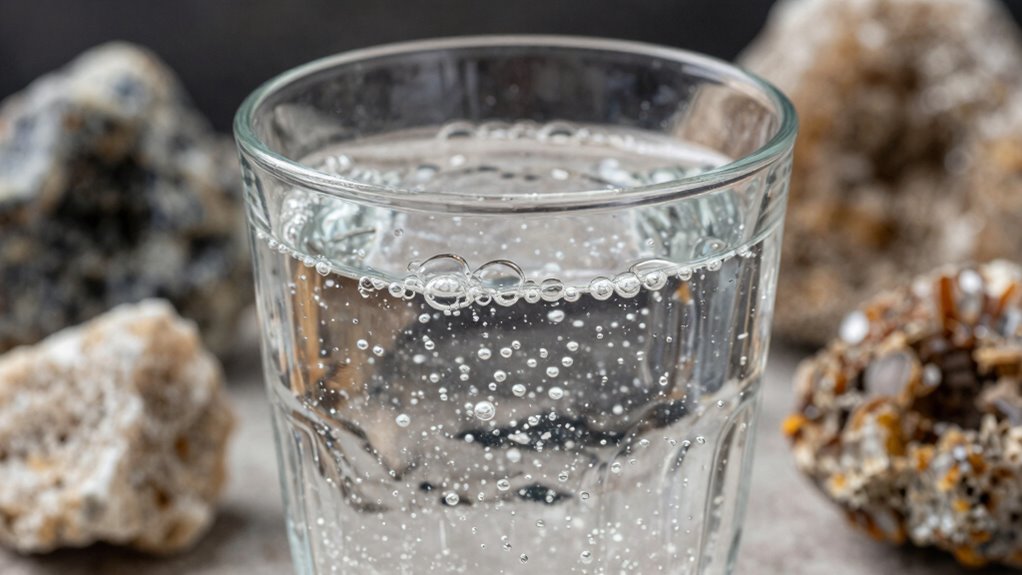
Mineral content substantially influences the overall quality of a beverage, shaping its taste, texture, and appeal. When minerals interact, they create complex flavor profiles that can enhance or diminish your experience. For example,
- Calcium adds a smooth, rounded mouthfeel, balancing acidity.
- Sodium heightens saltiness, boosting flavor perception without overpowering.
- Magnesium introduces subtle bitterness, influencing overall taste perception. These mineral interactions directly affect how you perceive a beverage’s freshness and depth. High mineral content can make water seem more vibrant and lively, while low mineral levels often produce a softer, more neutral taste. Understanding these nuances helps in selecting beverages that align with your preferences, ensuring a more satisfying drinking experience. Additionally, shop fundamentals such as mineral balance are crucial considerations for crafting the perfect beverage profile. Ultimately, mineral content shapes not just what you taste but how you feel about each sip.
Frequently Asked Questions
How Do Minerals Affect Water’s pH Levels and Acidity?
Mineral influence directly impacts water’s pH balance and acidity. When minerals like calcium and magnesium are present, they often raise the pH, making water more alkaline. Conversely, minerals such as sulfur or iron can lower pH, increasing acidity. You’ll notice that mineral-rich waters tend to taste smoother and less sharp, reflecting how minerals shape water’s overall mouthfeel and flavor profile through pH modulation.
Can Mineral Content Influence Water’s Temperature Perception?
Yes, mineral content influences your temperature perception of water. Mineral influence can affect how warm or cool water feels on your tongue, as certain minerals like calcium or magnesium can enhance the sensation of temperature. When minerals are present in higher concentrations, they may make water feel slightly warmer or cooler, affecting your overall perception. So, the mineral profile directly impacts your experience of water’s temperature, shaping how you perceive it.
Do Minerals Impact the Shelf Life of Bottled Water?
Think of minerals in bottled water as the guardians of freshness. Yes, they impact shelf life by influencing mineral stability, which helps preserve water quality over time. For example, mineral-rich water with stable compositions resists bacterial growth better, extending its freshness. Proper bottling processes guarantee mineral stability, making bottled water last longer. So, minerals play an essential role in bottled water preservation, keeping it safe and tasty for months.
Are Certain Minerals Better for Specific Health Benefits?
Certain minerals do offer specific health benefits. For example, calcium supports strong bones, magnesium aids muscle function, and potassium helps regulate blood pressure. By choosing mineral waters rich in these beneficial minerals, you can enhance your health implications naturally. Recognizing mineral benefits allows you to select waters tailored to your wellness needs, making hydration both nutritious and therapeutic. Always check mineral content to optimize your health benefits effectively.
How Do Minerals in Water Interact With Different Food Pairings?
You’ll find that minerals in water interact with your food by enhancing taste and balancing flavors. When you pair mineral-rich water with certain dishes, it can heighten the taste experience, making flavors more vibrant. For example, mineral content can mellow acidity or accentuate sweetness, creating a more harmonious bite. Pay attention to how different mineral levels influence your palate, helping you select water that complements your meal perfectly.
Conclusion
By paying attention to minerals in water, you gently tune your sensory experience, revealing subtle nuances that can uplift or soften your favorite drinks. Embracing these tiny, unseen influences allows you to savor each sip more fully, turning everyday hydration into a small yet meaningful moment. So, trust your palate and choose wisely—sometimes, the quietest elements make the most lasting impression, leaving you with a sense of refreshment that lingers just beyond words.