
If your water causes instant scale, it likely has high mineral content, especially calcium and magnesium, making it hard water. These minerals quickly precipitate when heated or exposed to evaporation, forming deposits on appliances and surfaces. Elevated pH levels and water temperature also speed up this process. To prevent damage, you can test your water, install water softeners, or use filtration systems. Keep exploring for practical tips to protect your home from rapid scale buildup.
Key Takeaways
- Hard water with high calcium and magnesium minerals precipitates quickly when heated, causing instant scale formation.
- Elevated pH levels reduce mineral solubility, increasing the likelihood of rapid scale buildup.
- Higher water temperatures decrease mineral solubility, accelerating scale development in appliances.
- Regular testing of water mineral content helps identify hard water that promotes instant scaling.
- Installing water softeners and filtration systems reduces mineral levels, preventing immediate scale formation.
How to Tell If Your Water Is Causing Instant Scale
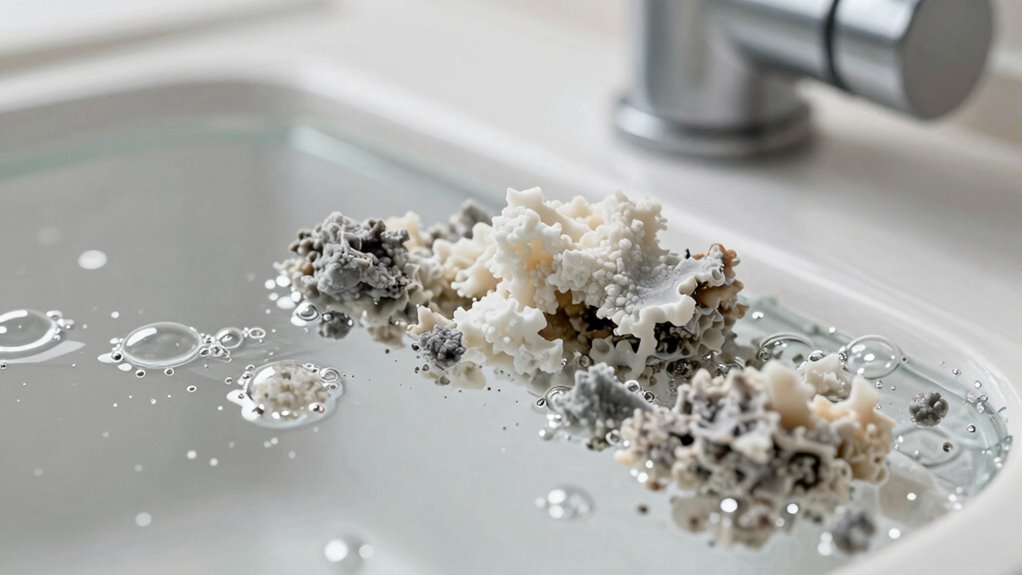
If you notice white, chalky deposits on your fixtures or appliances soon after using water, it’s a clear sign your water may be causing instant scale. To confirm, consider a water treatment or mineral analysis. These tests reveal the levels of minerals like calcium and magnesium, which contribute to scaling. If the analysis shows high mineral content, your water is likely causing the deposits. Simple home test kits are available, but for accurate results, professional testing is recommended. Regularly inspecting appliances and fixtures helps you identify early signs of scale buildup. Recognizing these signs promptly allows you to take action, such as adjusting water treatment methods or installing scale prevention solutions, to protect your plumbing and appliances from damage. Understanding your water quality through comprehensive testing is essential for choosing the most effective treatment options.
What Causes Instant Scale? The Role of Minerals and Water Chemistry
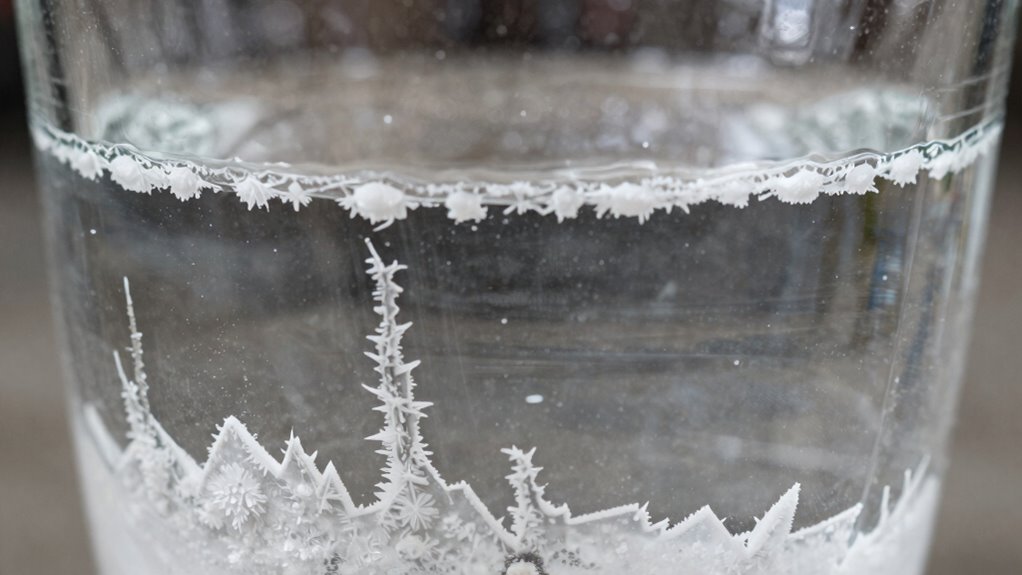
High mineral content in water is the main cause of instant scale formation. When minerals like calcium and magnesium dissolve, they interact through mineral interactions, especially as the water’s chemistry shifts. These interactions can trigger minerals to precipitate quickly, forming scale almost instantly. Water chemistry, including pH balance, plays a vital role; higher pH levels make minerals less soluble, increasing the likelihood of scale. If your water has a high mineral load and an alkaline pH, you’re more prone to immediate scaling. Understanding how minerals react in different water conditions helps explain why some water causes rapid scale buildup. Adjusting pH or using water treatment methods can help prevent minerals from precipitating and reducing the risk of instant scale formation. mineral interactions are key to understanding this process and managing scale development effectively.
Hard Water vs. Soft Water: Which Is More Prone to Scaling?
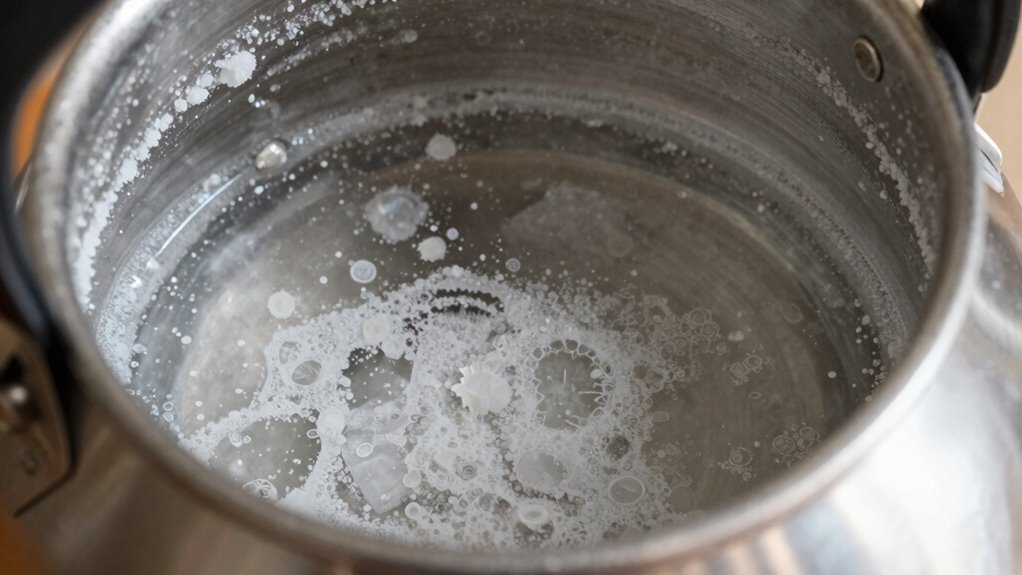
Hard water contains higher mineral levels, making it more likely to cause scale buildup, especially on appliances. Soft water has fewer minerals, so it’s less prone to scaling but may still cause other issues. Understanding these differences helps you choose the right water for your home and prevent damage. Additionally, awareness of auditory processing challenges can aid in managing communication effectively in environments with varying noise levels.
Mineral Content Differences
Mineral content plays a vital role in determining how quickly water causes scaling. Water mineralization, especially the levels of calcium and magnesium, directly impacts scale formation. Hard water, rich in these minerals, is more prone to causing mineral deposits on surfaces. Soft water, with fewer dissolved minerals, tends to resist scale buildup. Here’s a quick comparison:
| Mineral Content | Effect on Scale Formation |
|---|---|
| High calcium & magnesium | Increased tendency for scale formation |
| Low minerals | Less prone to scaling |
| Water mineralization | Determines the rate of deposit buildup |
| Hard water | More likely to cause instant scale |
| Soft water | Less prone, safer for appliances |
Understanding these differences helps you predict and prevent rapid scale buildup. Additionally, water hardness can be measured and adjusted to control scaling tendencies.
Scaling Propensity Factors
While both hard and soft water can cause scaling, their tendency to form deposits varies considerably. Hard water, rich in minerals like calcium and magnesium, is more prone to scaling due to mineral saturation. Soft water, having fewer dissolved minerals, generally causes less buildup. However, factors like pH imbalance can increase scaling risk in soft water, especially if the water becomes more alkaline, promoting mineral precipitation. Temperature fluctuations also influence scaling propensity; higher temperatures reduce mineral solubility, leading to faster scale formation. When water heats, minerals precipitate out more quickly, making hard water more likely to cause instant scale in appliances. Additionally, water treatment methods can alter mineral content and influence scaling potential. Understanding these factors helps you anticipate where scaling might occur and take preventive measures accordingly.
Impact on Appliances
Although soft water may seem less likely to cause scaling, hard water actually poses a greater risk to your appliances. When water contains high mineral levels, it leads to mineral buildup inside your appliances, like your water heater, dishwasher, and washing machine. This buildup reduces efficiency, increases energy consumption, and shortens appliance lifespan. Proper water treatment can help prevent these issues, reducing mineral content before it reaches your appliances. Without it, you’ll need more frequent appliance maintenance—descaling, cleaning, and repairs—to keep everything running smoothly. Soft water, with fewer minerals, minimizes scale formation and decreases the need for ongoing maintenance. Implementing water softening systems can effectively reduce mineral levels and protect your appliances from damage. Choosing the right water treatment not only protects your appliances but also saves you money on repairs and extends their lifespan.
Common Water Sources That Lead to Immediate Mineral Buildup
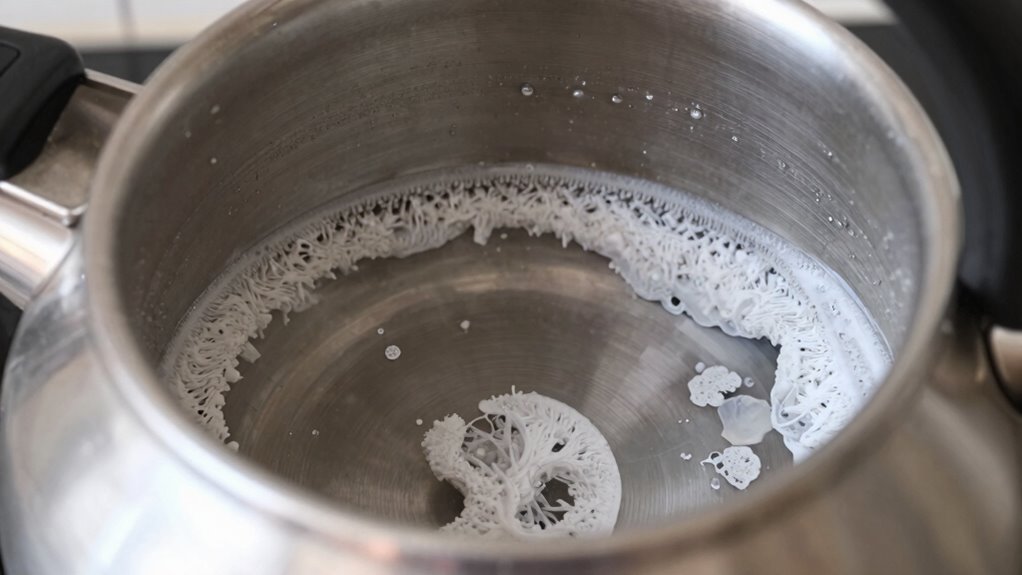
Certain water sources are more prone to causing immediate mineral buildup because of their high mineral content. Hard water, which has high water hardness, contains elevated levels of calcium and magnesium. These minerals readily precipitate out when heated, forming scale. Additionally, pH levels influence mineral solubility; water with higher pH levels tends to cause more rapid scaling. Well water often falls into this category, especially if it’s drawn from underground sources rich in minerals. City water can also be problematic if it contains added minerals or treatment chemicals that increase mineral content. When these water sources are heated, the minerals quickly deposit onto surfaces, leading to stubborn scale buildup. Recognizing these sources helps you take preventative steps before scaling becomes a problem. Understanding mineral content in your water can help you determine the best treatment options to prevent scaling.
How to Test Your Water for Scale-Forming Minerals
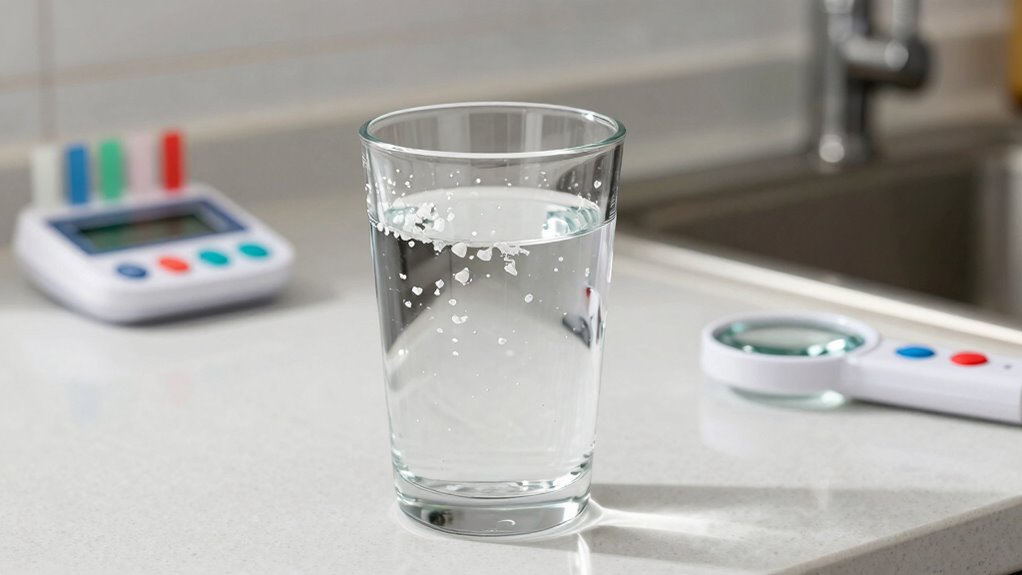
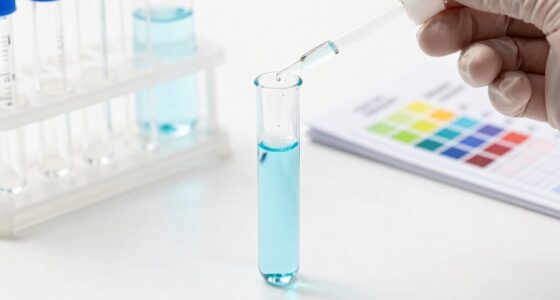
Are you unsure if your water contains minerals that cause scale? Testing your water is straightforward. Start by using a water testing kit designed to detect calcium and magnesium levels, the main minerals responsible for scale buildup. These kits are affordable and easy to use at home; simply collect a sample and follow the instructions. Additionally, check your water’s pH balance, since water that’s too alkaline or acidic can influence mineral solubility and scale formation. A pH test strip can help you determine this. For more accurate results, consider sending a sample to a laboratory. Knowing the mineral content and pH balance of your water helps you decide whether water filtration systems are necessary to reduce scale-causing minerals and protect your appliances. Understanding projector technology can also aid in selecting appropriate filtration to prevent mineral buildup on sensitive optical components.
Preventing Instant Scale: Simple Tips for Home and Appliances
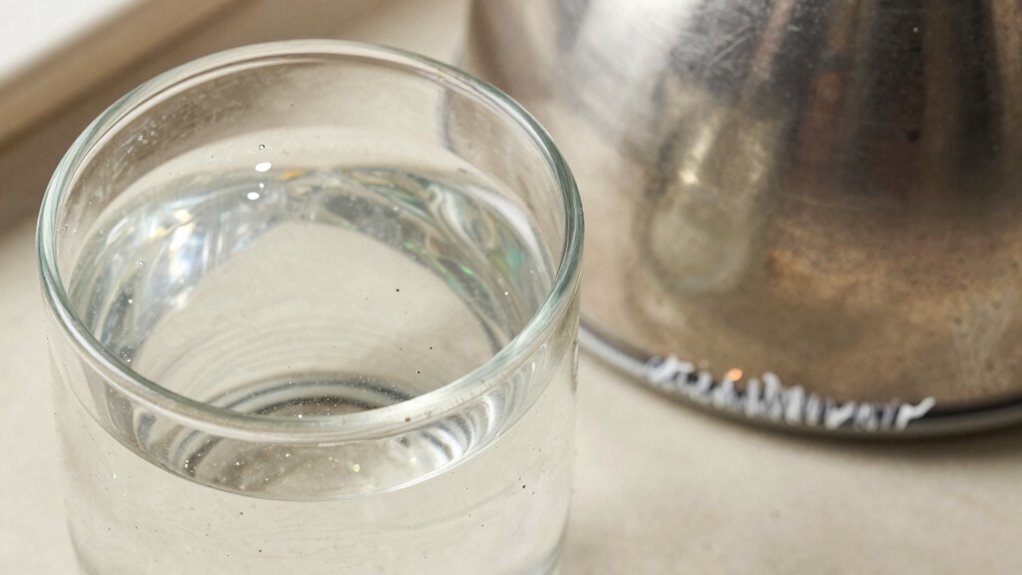
To prevent instant scale from forming in your home and appliances, taking simple proactive steps can make a big difference. Installing a water softening system reduces mineral content, preventing scale buildup. Alternatively, using mineral filtration filters treats water before it reaches your appliances, lowering calcium and magnesium levels. Regularly maintaining and replacing filters guarantees consistent protection. Here’s a quick guide:
| Tip | Method | Benefit |
|---|---|---|
| Water Softening | Install a softener system | Stops scale formation |
| Mineral Filtration | Use targeted filters | Reduces mineral levels |
| Routine Maintenance | Check and replace filters | Maintains effectiveness |
Implementing free floating techniques can also help prevent mineral deposits from settling in hard-to-reach areas. These simple measures help keep your appliances running smoothly and free of damaging scale.
How to Remove Existing Scale From Appliances and Surfaces
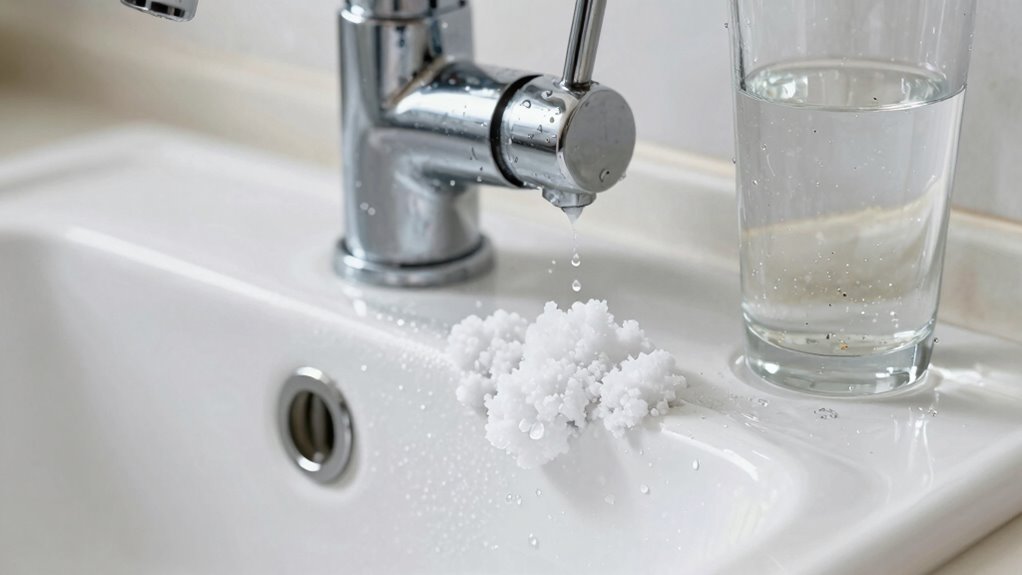
When scale has already formed on your appliances and surfaces, quick action can help restore their condition. Start by applying a vinegar solution or a commercial descaling product designed for appliance cleaning. Vinegar is effective for dissolving mineral deposits caused by hard water. For stubborn scale, soak affected parts, such as showerheads or kettle elements, in vinegar for at least 30 minutes. Use a soft brush or cloth to gently scrub away remaining deposits. Regular water softening, like installing a water conditioner, helps prevent future buildup. Remember, cleaning surfaces and appliances promptly stops scale from causing permanent damage or efficiency loss. Proper maintenance and consistent appliance cleaning combined with water softening methods maintains your appliances and surfaces free from scale, prolonging their lifespan and ensuring ideal performance.
Keeping Your Water Scale-Free: Maintenance Tips for Long-Term Protection
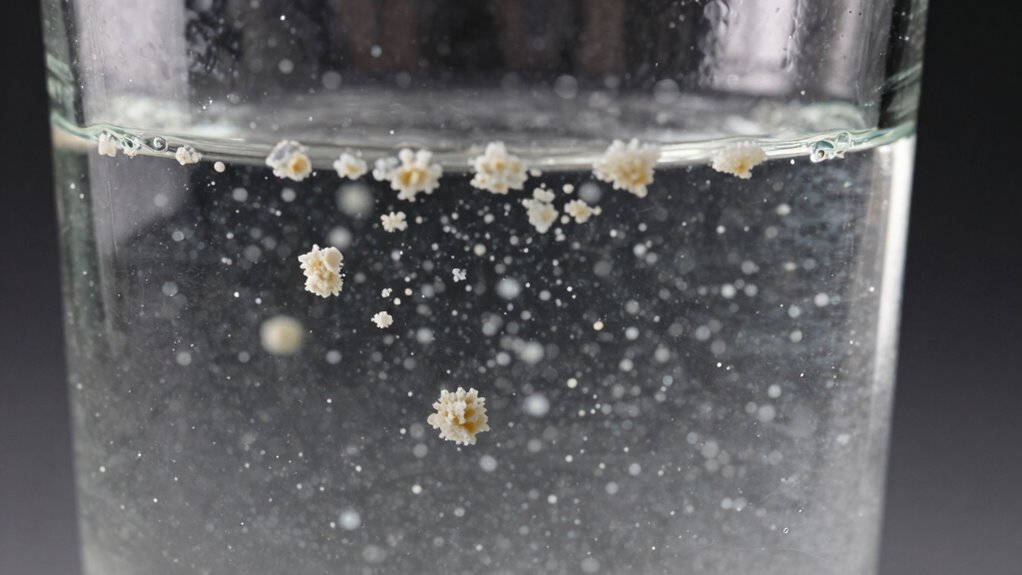
Maintaining a scale-free water system requires consistent effort and proactive measures. Regular water filtration helps remove minerals that cause scaling, keeping your appliances running efficiently. Invest in high-quality filters suited to your water’s specific hardness level, and change them as recommended. Water softening is also essential; installing a water softener reduces calcium and magnesium levels, preventing scale buildup over time. Keep an eye on your system’s salt levels and maintain it according to manufacturer instructions. Routine maintenance, such as flushing your softener and cleaning filters, ensures ideal performance. Additionally, consider testing your water periodically to identify any changes in mineral content. Understanding water mineral content and its effects can help you make informed decisions about your water treatment options. Combining effective water filtration with proper water softening creates a protective barrier against scale, ensuring your water stays clean and appliances last longer.
Frequently Asked Questions
Can Water Temperature Influence How Quickly Scale Forms?
Yes, water temperature effects how quickly scale forms. When you heat water, minerals like calcium and magnesium become less soluble, causing them to deposit as scale faster. Water heating accelerates this process, especially at higher temperatures. So, if you notice rapid scale buildup, it’s often due to hot water’s increased ability to deposit minerals. To minimize this, consider lowering water temperature or using water softeners.
Are There Specific Minerals That Cause Instant Scaling More Than Others?
Yes, specific minerals like calcium and magnesium cause instant scaling more than others. When calcium hardness levels are high and mineral saturation reaches a critical point, scale forms quickly. You can reduce this by treating your water with water softeners or using descaling agents. Monitoring calcium hardness and mineral saturation helps prevent rapid scale buildup, ensuring your appliances and pipes stay protected from damaging deposits.
Does pH Level Affect the Likelihood of Immediate Mineral Buildup?
Yes, pH balance affects the likelihood of immediate mineral buildup. When water’s pH is high (alkaline), mineral solubility decreases, making minerals like calcium and magnesium more likely to precipitate and cause scale. Conversely, acidic water (low pH) keeps minerals dissolved longer. Regularly testing and adjusting your water’s pH can help prevent rapid scale formation, saving you time and maintenance efforts.
Can Water Filtration Systems Prevent Instant Scale Formation?
Think of a water filtration system as a shield that blocks mineral troublemakers. Yes, it can prevent instant scale formation if it’s effective at mineral removal techniques like reverse osmosis or activated carbon filters. By choosing a high-quality water filter, you guarantee water with fewer minerals, reducing the risk of scale. Keep in mind, regular maintenance boosts filter effectiveness, guarding your appliances from mineral buildup and keeping your water crystal clear.
How Does Plumbing Material Impact Mineral Deposit Adhesion?
Your plumbing pipe material influences mineral adhesion considerably. Smooth, non-porous pipes like PVC or PEX make it harder for mineral deposits to stick, reducing scale buildup. In contrast, metal pipes like copper or galvanized steel have rougher surfaces that promote mineral adhesion, leading to faster scale formation. Choosing the right plumbing pipe material can help minimize mineral deposits and extend the lifespan of your plumbing system.
Conclusion
Understanding why some water causes instant scale helps you protect your home. While hard water can quickly leave mineral deposits, soft water often seems harmless until minerals build up silently. By testing your water and taking simple preventive steps, you can avoid the frustration of stubborn scale. Think of it as choosing between a smooth ride or a rough, mineral-laden road—your efforts determine whether your appliances stay pristine or coated in deposits.