To spot over-extraction before tasting, pay attention to the aroma and brewing time. If your coffee smells sharp, burnt, or overly harsh, it’s likely over-extracted. An extraction time longer than 3-4 minutes also raises a red flag. If the flavor feels bitter and lacks balance, you may have gone too far. Monitoring your brew parameters can help prevent this, and exploring more tips will help you perfect your coffee.
Key Takeaways
- Over-extraction often produces an overpowering, harsh aroma indicating excessive solubles and bitterness brewing during long or hot extraction.
- Extraction times exceeding 3–4 minutes typically signal over-extraction, leading to a bitter, unbalanced flavor profile.
- A burnt or acrid aroma suggests over-extraction, as undesirable compounds are released from over-brewing.
- Using too fine a grind increases surface area, accelerating extraction and risking over-extraction signs before tasting.
- Controlling brewing variables like time, temperature, and grind size helps prevent over-extraction, which can be identified through aroma cues.
What Is Over-Extraction and Why Does It Affect Your Coffee?
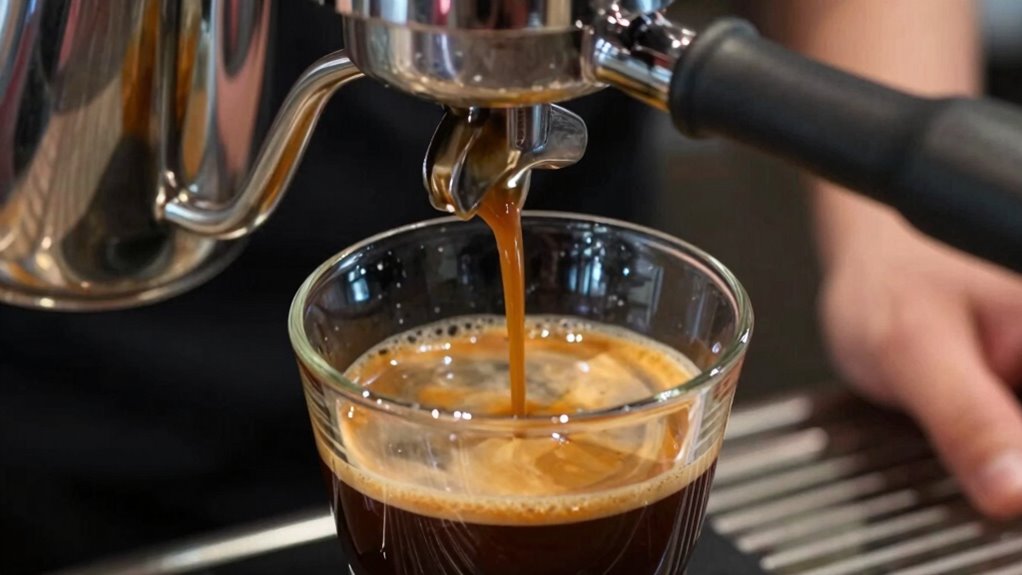
Over-extraction happens when you brew coffee too long or use water that’s too hot, causing undesirable flavors to seep into your cup. This process disrupts the delicate balance of coffee flavor, resulting in a bitter, overly strong taste. Understanding brewing science helps you see how extraction impacts flavor; when extraction goes beyond ideal levels, it pulls compounds from the coffee grounds that shouldn’t be there. These include bitter tannins and undesirable solubles, which mask the coffee’s natural sweetness and nuanced notes. Over-extraction isn’t just a matter of time—it’s about controlling variables like temperature and grind size. When you grasp how these factors influence extraction, you can refine your brewing technique to prevent over-extraction, ensuring your coffee retains its intended flavor profile without bitterness or harshness. Additionally, experimenting with different brewing methods can help optimize extraction levels for a balanced cup.
How to Spot Over-Extraction Before Your First Sip

Recognizing over-extraction early can save you from ending up with a bitter, unbalanced cup. Pay attention to the coffee aroma—if it’s overly intense or has a harsh, astringent scent, that’s a sign of over-extraction. During extraction timing, if your brew takes longer than *ideal*, it’s likely pulling too many bitter compounds from the grounds. A properly extracted coffee should have a balanced aroma, with pleasant notes that invite you in. If the smell is sharp or overpowering, it suggests over-extraction. Keep track of your extraction time, generally between 3 to 4 minutes for drip coffee, and adjust if you notice these signs. Spotting these cues before your first sip helps you tweak your process for a smoother, more enjoyable cup. Additionally, understanding the contrast ratio of your projector can help you optimize your viewing environment to better appreciate visual details and color nuances.
Common Mistakes That Lead to Over-Extracted Coffee
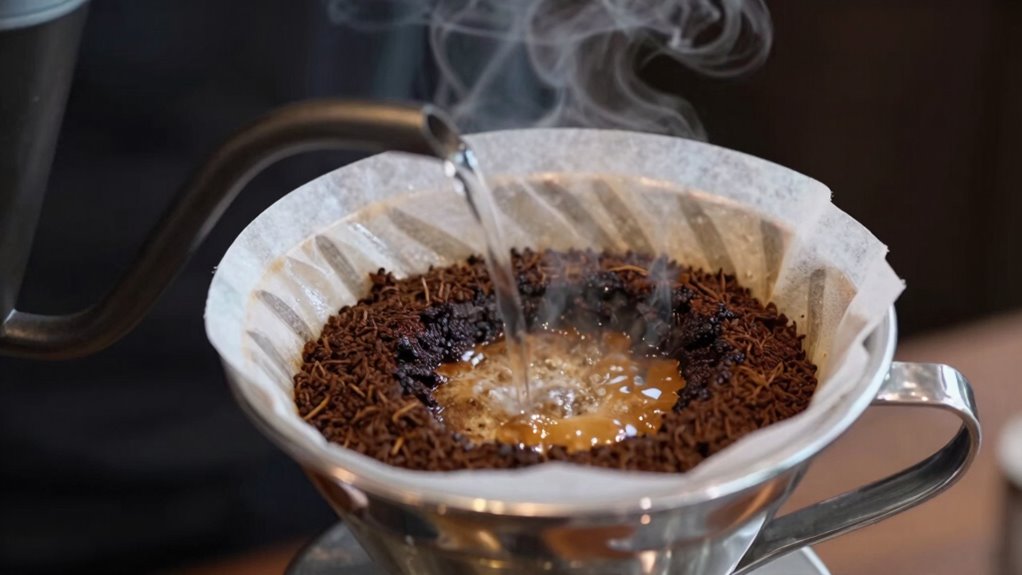
One common mistake that leads to over-extracted coffee is using too fine a grind size. When your grind is too fine, water struggles to flow evenly through the coffee, disrupting the extraction balance. This often results in over-extraction because the water extracts too many solubles from the beans, pulling out bitter flavors. Additionally, poor coffee bean selection can contribute, especially if the beans are old or of low quality, which can skew extraction results. To avoid this, choose a grind size suited to your brewing method and select fresh, high-quality beans. Maintaining proper extraction balance is key; too fine a grind can upset this balance, leading to bitter, harsh flavors that signal over-extraction. Proper use of performance cookies can also help optimize brewing parameters by analyzing user feedback and preferences.
Easy Tips to Prevent Over-Extraction While Brewing

To prevent over-extraction during brewing, start by paying close attention to your grind size and brewing time. A consistent grind ensures uniform extraction, which helps preserve the coffee’s rich aroma and prevents bitterness. Keep your brewing process consistent by following a set routine, so variables stay controlled. Avoid grinding too fine, as it increases extraction and can dull the coffee aroma. Likewise, don’t brew too long; overextending the brewing time pulls out bitter compounds. Use a timer to monitor your process precisely. By maintaining proper grind size and timing, you’ll help prevent over-extraction, resulting in a balanced flavor profile, a pleasing coffee aroma, and a more enjoyable cup every time. Consistency is key to avoiding the pitfalls of over-extraction. Additionally, understanding how extraction level impacts flavor can help you fine-tune your brewing technique for optimal results.
How to Adjust Grind Size and Brew Time for Perfect Flavor

To fine-tune your coffee’s flavor, start by adjusting the grind coarseness—finer for stronger extraction, coarser to slow it down. Keep an eye on your brew time and modify it if your coffee tastes off, aiming for a balanced extraction. Taste your coffee, then tweak the grind size or brew duration until you find that perfect flavor. Remember, document organization can help you keep track of your preferred settings to recreate your ideal brew every time.
Adjust Grind Coarseness
Adjusting the grind coarseness is essential for controlling extraction and achieving the desired flavor. When your grind is too fine, it can lead to over-extraction, making your coffee bitter. Conversely, a grind that’s too coarse might cause under-extraction, resulting in weak, sour notes. To get it right, focus on grind consistency to ensure uniform particle size, which helps manage brewing variables effectively. Adjust your grinder in small increments, testing the flavor after each change. Remember, the grind size directly influences brew time and extraction rate, so fine-tuning it allows you to control how much solubles are extracted. Proper grind modification lets you balance flavors and avoid over-extraction, delivering a smoother, well-rounded cup every time. Paying attention to grind consistency is crucial for stable results and consistent taste.
Modify Brew Duration
When you want to perfect your coffee’s flavor, modifying brew duration is a key step that directly influences extraction. Start by adjusting your brewing time: too long can lead to over-extraction, while too short results in under-extraction. Incorporate blooming techniques to release trapped gases early, ensuring even extraction. Proper coffee storage also plays a role; fresh beans require different brew times than older ones. If your coffee tastes bitter or overly strong, try shortening the brew time or using a coarser grind. Conversely, if it’s weak or sour, increase the brew duration or grind finer. Consistently monitor and tweak your brew duration based on your beans’ freshness and your preferred flavor profile to avoid over-extraction and achieve balanced, flavorful coffee.
Taste and Tweak
Fine-tuning your coffee’s flavor often involves tweaking both grind size and brew time. When you adjust these, you influence the coffee aroma and overall taste. To improve your brew, consider these steps:
- Slightly coarsen the grind if your coffee tastes bitter or over-extracted, reducing the brewing temperature’s impact.
- Shorten the brew time if the flavor is overly bitter or astringent, allowing you to preserve desirable aromas.
- Increase brew time or fine-tune the grind if the coffee tastes weak or sour, balancing extraction for a richer flavor.
- Remember that understanding Youngster Choice can help you better grasp how subtle changes affect your brewing results.
Troubleshooting Over-Extraction: Simple Fixes and Adjustments

If your coffee tastes overly bitter or harsh, you can fix it with some simple adjustments. Try making your grind coarser, shortening your brew time, or ensuring your water temperature isn’t too high. These quick changes can often smooth out over-extraction and improve your brew. Additionally, using energy-efficient cloud solutions can help reduce environmental impact and promote sustainable practices in your daily routine.
Adjust Grind Size
Adjusting the grind size is one of the quickest ways to fix over-extraction issues. When your coffee tastes overly bitter and harsh, changing the grind can help balance the extraction. Finer grounds increase surface area and extraction, while coarser grounds reduce it. To see immediate results:
- Visualize your coffee aroma becoming more inviting, less burnt or acrid.
- Imagine adjusting your grinder to produce a slightly coarser grind if your brew is bitter.
- Remember that a coarser grind also helps maintain proper brewing temperature, preventing over-heat that intensifies over-extraction.
- Keep in mind that Aloe Vera Plant Problems can sometimes be linked to environmental stress, which is also important to consider when optimizing your brewing conditions.
Fine-tuning the grind size allows better control over extraction, keeping the coffee’s flavor profile smooth and well-rounded. Always consider how your grind impacts coffee aroma and the overall brewing temperature, ensuring a perfect cup.
Shorten Brew Time
When your coffee tastes overly bitter and harsh, shortening the brew time can quickly reduce over-extraction. During the bloom phase, fresh coffee releases gases that can extend extraction if the brew goes on too long. By reducing the overall brewing time, you prevent too many solubles from dissolving, which causes bitterness. Keep in mind that coffee freshness affects how quickly over-extraction happens; fresher beans tend to extract faster. If your brew is too bitter, try cutting a few seconds from the total brew time. This adjustment helps you maintain a balanced extraction, preserving the desirable flavors while avoiding the harsh, over-extracted taste. Shortening the brew time is a simple yet effective way to fine-tune your coffee and improve its overall flavor profile. Understanding extraction can help you better tailor your brewing process for optimal taste.
Use Proper Water Temperature
Using the right water temperature is essential for preventing over-extraction in your coffee. When you maintain ideal water temperature, you ensure thermal stability, which helps control how flavors are extracted. Too hot, and you risk pulling bitter, undesirable compounds; too cold, and your brew may taste weak or sour. To achieve this, focus on these key points:
- Use water around 195°F to 205°F (90°C to 96°C) for balanced extraction.
- Avoid temperature fluctuations that disrupt thermal stability during brewing.
- Keep your equipment properly heated to maintain consistent water temperature throughout the process.
- Proper thermal stability is critical for consistent flavor extraction and avoiding over-extraction issues.
Frequently Asked Questions
Can Over-Extraction Cause Health Issues Besides Bad Taste?
Over-extraction can impact your health beyond just causing bad taste. It often increases coffee acidity, which may irritate your stomach or cause acid reflux. High acidity levels can also lead to tooth enamel erosion over time. While moderate consumption is generally safe, excessive over-extraction might contribute to digestive discomfort or other health implications, especially if you’re sensitive to acidity. Be mindful of brewing times to avoid these potential issues.
Does Over-Extraction Affect All Coffee Brewing Methods Equally?
Think of your brew method as a stage where extraction factors play their roles. Over-extraction affects all brewing methods, but how much depends on variables like grind size, brew time, and temperature. For example, a French press might be more forgiving than a delicate pour-over. Adjust these factors carefully, because over-extraction can lead to bitter, harsh flavors regardless of your chosen method.
How Long Does Over-Extraction Typically Take to Develop?
Over-extraction typically develops within the brewing duration, usually taking around 4 to 6 minutes depending on your method. The extraction timeline begins quickly, but if you leave the coffee too long, bitter compounds release, resulting in over-extraction. Keep an eye on your brewing duration, and aim for a balanced extraction. Adjust your grind size or brew time if you notice flavors turning bitter or harsh.
Is Over-Extraction More Common With Certain Coffee Beans?
You’ll find over-extraction more common with certain coffee beans, especially those with specific bean characteristics or lighter roast levels. Light roasts tend to be more porous, making them prone to over-extraction if brewing times or grind sizes aren’t adjusted. Beans with dense characteristics may also require longer extraction, increasing the risk. Pay attention to these factors to prevent over-extraction and achieve a balanced, flavorful cup.
Can Over-Extraction Be Completely Avoided With Proper Technique?
Over-extraction is nearly impossible to avoid completely, but you can get very close with proper technique. You need to carefully control your grind size and brew time—think of it as fine-tuning a musical instrument. If your grind is too fine or brew time too long, over-extraction will happen. Adjust these factors consistently, and you’ll minimize over-extraction, making your coffee taste balanced and delightful nearly every time.
Conclusion
If you ignore over-extraction, your coffee could turn into a bitter nightmare, tasting like burnt toast soaked in dirt. But by paying attention to grind size, brew time, and flavor clues, you wield the power to transform every cup into a silky-smooth, flavor-packed masterpiece. Don’t let over-extraction hijack your brew—take control, make tiny adjustments, and enjoy a coffee so perfect, it’ll make your taste buds do a happy dance every single time.